Tag Archives: HP Lovecraft

The Best Fiction Books I Read in 2025

Tier 1: Literary Masterpieces

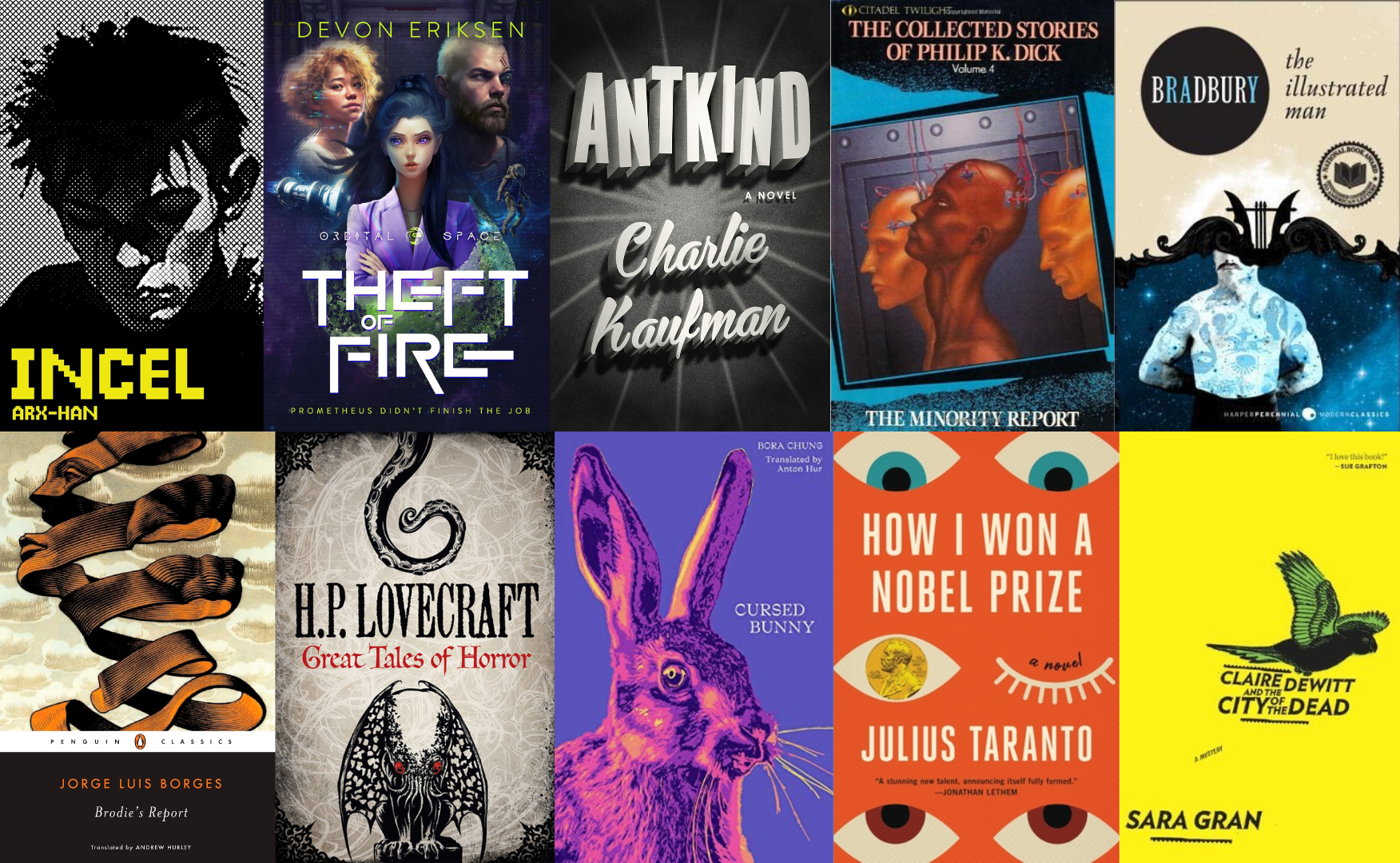
INCEL (2023) by ARX-Han
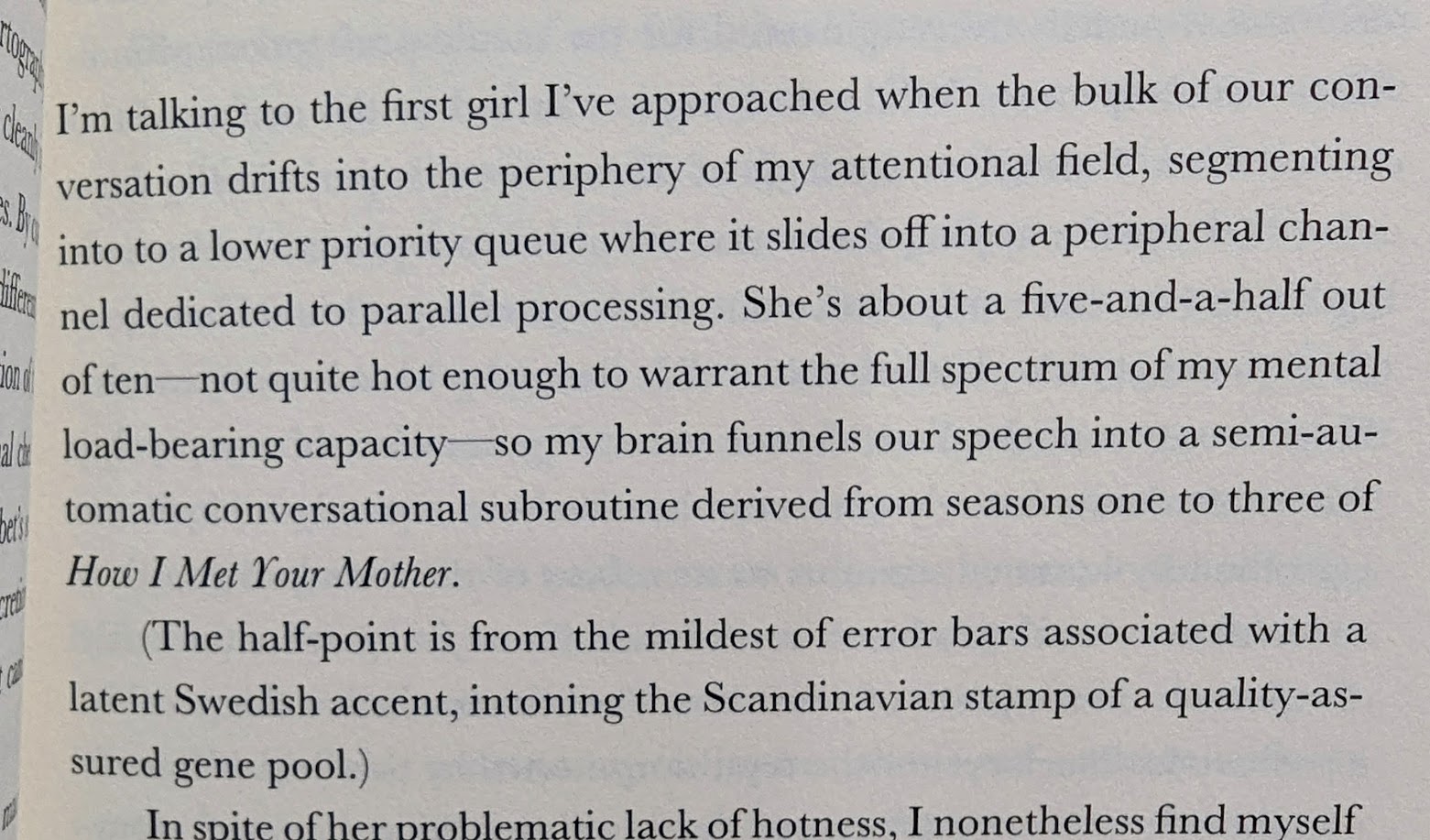
INCEL is a self-published novel by an anonymous writer, which may lead one to assume it is at best mid and more likely slop, but it is actually a modern literary masterpiece. Welcome to the state of literature in the 2020s: the absolute best stuff is being published independently. (Often not by choice but necessity.) I originally discovered ARX-Han through his Substack (Decentralized Fiction), in which he wrote about the process of independently publishing his book. Reading those posts, I could tell he was brilliant, which made me want to purchase and read his novel—which did not disappoint. In fact, it surpassed my already high expectations.

INCEL is an edgy book for sure, about a racist misogynist white male “incel”, but it doesn’t treat him as a caricature or unredemptive villain—which is why no mainstream publisher today would dare touch it. ARX-Han writes about incels in a way that is illuminating, educational, entertaining, humorous, and most of all, true. The book follows the narrator, who is unnamed and referred to as “Anon,” a graduate student studying evolutionary psychology while using his intellectual insights to try to lose his virginity. Anon is evidently on the spectrum, as his extremely detailed over-analysis of everything resembles an AI studying human behavior. He breaks down every social interaction through the lens of evo-psych, citing scientific papers and waxing philosophically about race, sex, and all the problematic things we’re not allowed to talk about. (Though the author does not condone Anon’s thoughts and actions.) Anon is also well-versed in internet culture and 4Chan memes. ARX-Han’s prose is top-notch, on the level of supreme maximalist wordsmiths like David Foster Wallace.

In a sane world this book would have been picked up by a mainstream publisher and the author proclaimed as the next Chuck Palahniuk or Bret Easton Ellis—the voice of a generation—someone who truly understands, empathizes with, and can explain the “incel” crisis facing young men worldwide. Instead the mainstream either ignores the incel problem or just chastises them, blaming incels for everything wrong with society. The New York Times publishes articles wondering why men don’t read fiction anymore… They would if you published books like this!
Continue reading

AI Cannot Speak For the Dead

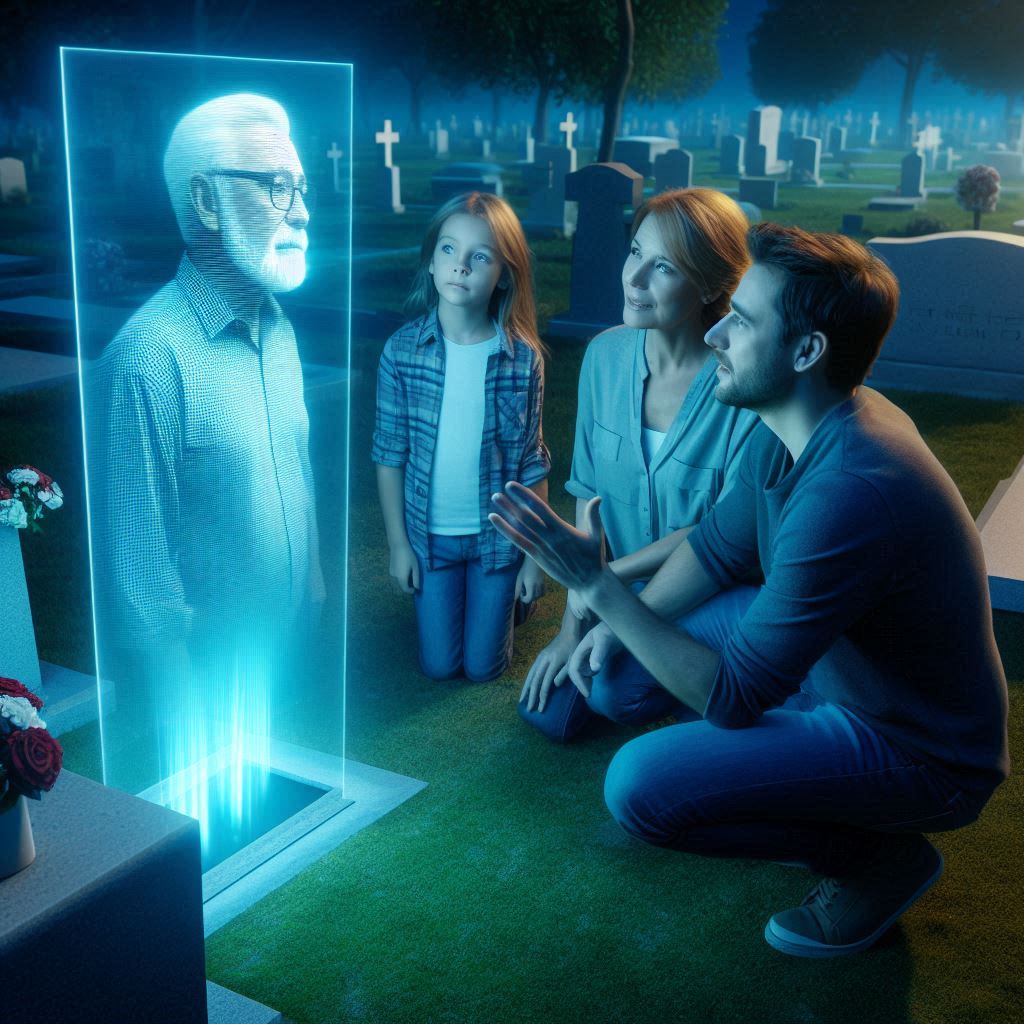
One of the potential applications of AI text generators such as ChatGPT is creating a chatbot based on people who have died so that users can speak to those “people” after they are gone. This could be done with famous figures from history or personal loved ones. Such “grief tech,” as it is called, is already being created: HereAfter, You Only Virtual, Character.ai, and MindBank are just a few examples. There are currently apps where living users answer questions now to help create an AI chatbot clone of themselves that others can speak to after they die.

Theoretically, if a person has enough textual data to input into the model (from books, journals, social media posts, emails, and text messages), then the AI trained on that data can anticipate what that person is likely to say given any prompt (which is essentially how all LLMs work). The chatbot will learn to write in the style of the deceased person based on their personal data. Using continually updated data from the internet, the “deadbot” can comment on current events, making it seem as though the person is still alive. Users can learn what the deceased person would think about things that have happened in the world since they passed away. Or they can ask the chatbot all the questions they wish they had asked while the person was still alive. At least that is what the chatbot’s creators will claim their AI can do. But this is a false hope, a facade. AI cannot predict what a deceased human being would think or say years or decades later. You cannot create an accurate chatbot based on the data of the dead.

Continue reading

Best Fiction Books I Read in 2024

They Had No Deepness of Earth (2021) by Zero HP Lovecraft

Zero HP Lovecraft (@0x49fa98) is an anonymous internet poster I originally discovered around 2016 when I was looking at the accounts Naval Ravikant (@naval) followed on Twitter. His name and bio (horrorist) intrigued me, so I read his short story, “The Gig Economy,” which was like a modern cyberpunk take on “The Call of Cthulhu.”

I instantly became a fan and read all of Zero’s stories as they originally came out on his WordPress site (now on Substack), and later assembled in this collection. I had been meaning to re-visit the stories because they deserve (and often require) re-reading. His fiction is like a combination of the cosmic horror of H.P. Lovecraft with the dense philosophical speculation of Jorge Luis Borges and the mind-bending science fiction of Ted Chiang.

Continue reading

Best New(ish) Movies I Saw in 2024

I released my list of the best horror movies I watched this past year, and the best older movies, now it’s time for my list of the best newer movies (released within the decade) that I watched in 2024. As always, check JustWatch to see where the movies may be currently streaming.

Tier 1: Cinematic Masterpieces

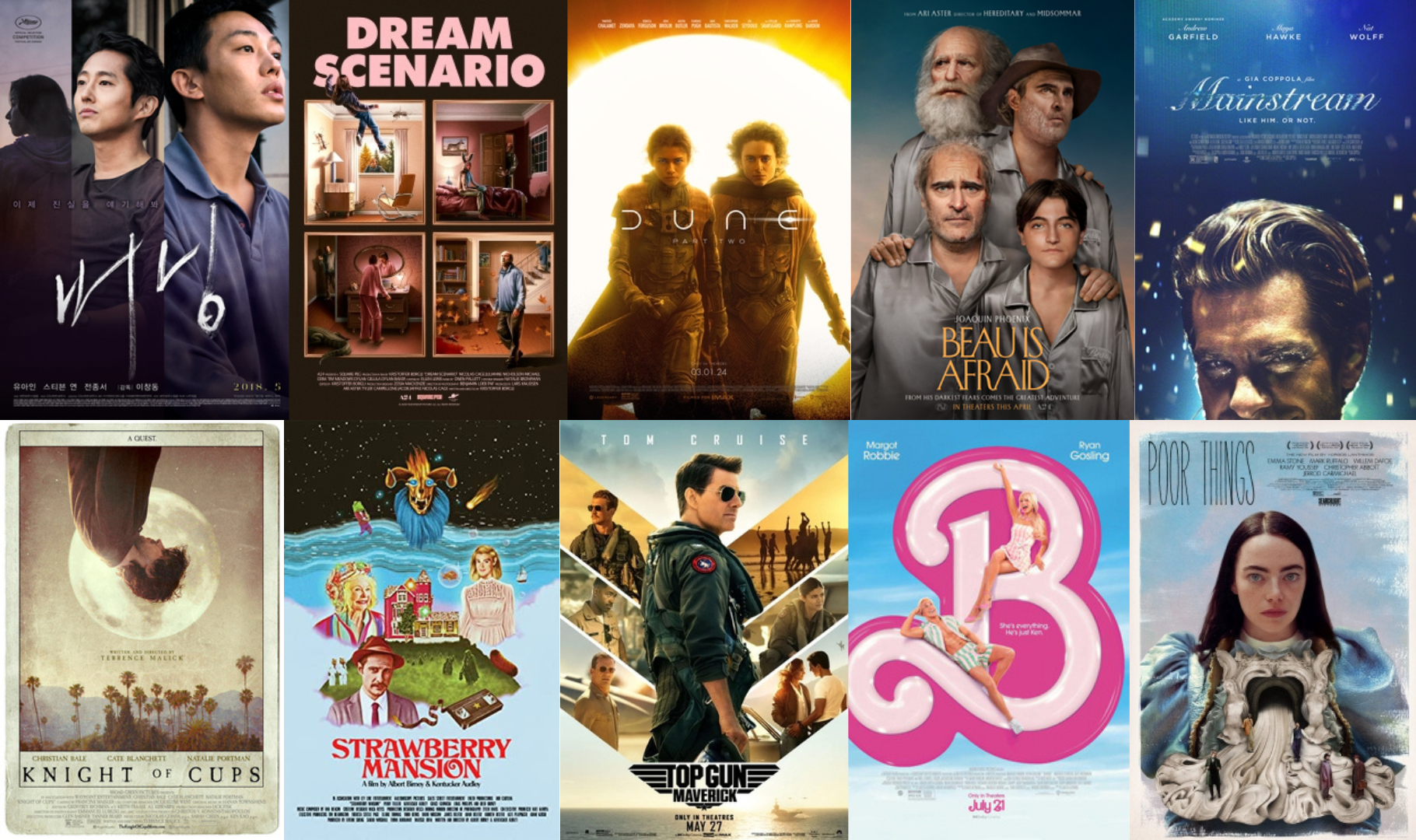
Burning (2018) directed by Lee Chang-dong
I didn’t know anything about this movie beforehand, other than it was South Korean and highly acclaimed. So it was fascinating to watch while having no idea where it would go—because the film goes to some wildly unexpected places by the end. I don’t want to say what it’s about because any spoilers would detract from the viewing experience, but the only film I can remotely compare it to is The Talented Mr. Ripley.

Dream Scenario (2023) Directed by Kristoffer Borgli
In this super surreal movie, some random guy (Nic Cage) starts showing up in people’s dreams around the world. It has a very Charlie Kaufman-esque tone, sort of like a mix between Eternal Sunshine of the Spotless Mind and Being John Malkovich. In fact, Dream Scenario might be better than anything Kaufman himself has done since Eternal Sunshine.

Continue reading

True Detective Redux

Season one of True Detective was one of my favorite television shows of all time. I was disappointed by the second season but thought the third was a return to form—not quite as good as the original, but a worthy successor. The fourth season, True Detective: Night Country was no longer being run by the original creator Nic Pizzolatto, so my expectations lowered, though I was still optimistic it could be good. I love the general format of True Detective, with each season being a self-contained miniseries following new detectives who investigate a murder case. I hate TV shows that go on forever, so the best thing about True Detective is you are guaranteed an ending

Continue reading

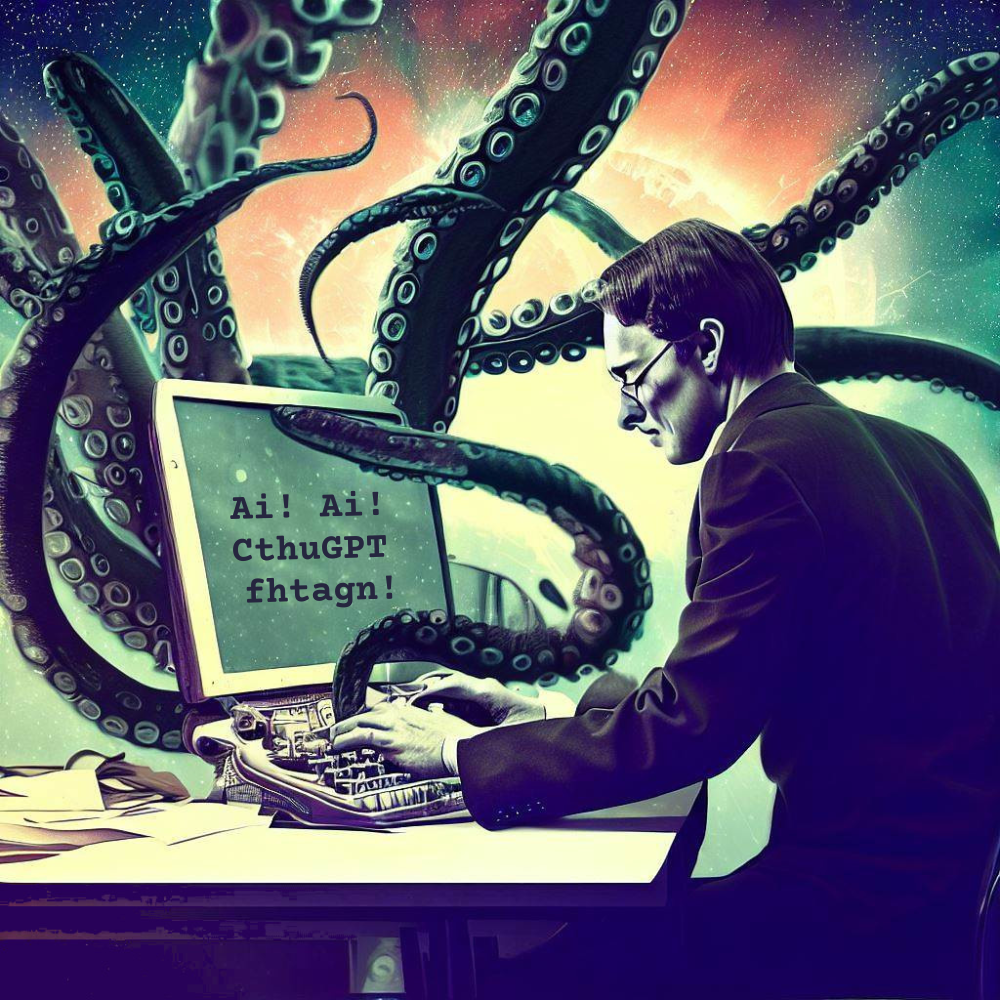
ChatGPT on Why ChatGPT Sucks at Writing Fiction

In this post I wrote about my experiences using ChatGPT to write fiction, ultimately concluding that AI is better at non-creative writing than creative writing. I will now use ChatGPT to further prove my point. AI was much better at generating the following nonfiction blog post than generating any fiction stories. I’ll let ChatGPT explain why:

Continue reading

Best of the Rest of 2022: Comic Books, Video Games, and Music

Best Comic Books I Read in 2022

1. The Department of Truth, Vol. 3: Free Country (2022) by James Tynion IV (and various artists)

This continues to be one of the best currently-running comic book series. It’s a brilliant premise (about how the belief in conspiracy theories makes them manifest in reality) with an equally brilliant execution, both the writing and the artwork. It is impressive how Tynion ties every famous conspiracy theory together and has it all make sense.

Continue reading

Best Nonfiction Books I Read in 2022

1. Time Loops: Precognition, Retrocausation, and the Unconscious (2018) by Eric Wargo

This is a fascinating book about the type of precognition often experienced in dreams, built off the work of J.W. Dunne. Author Eric Wargo provides numerous famous examples of precognitive dreams, often about traumatic events such as plane crashes or the sinking of the Titanic. Wargo claims such cases of precognition are actually “prememory”: your unconscious mind remembering a future memory, not of the event itself, but of your emotional reaction to learning news of the event. Both the author and I are aware of how crazy and “woo” this all sounds, but Wargo’s research is scientifically rigorous, and he walks a fine line of being both skeptical about paranormal claims but also open-minded to their possibilities (something I wish more on both sides of the paranormal/skeptical debate were willing to do).

Continue reading

Best Fiction Books I Read in 2022

1. Childhood’s End by Arthur C. Clarke (1953)

This is the second Arthur C. Clarke novel I’ve read (the first being Rendezvous With Rama), and I’ve been blown away by both. For some reason I expected Clarke’s books to be a bit drier and more dated, but his is some of the most exciting and mind-expanding science fiction I’ve ever read. I should have expected no less from the mind behind 2001: A Space Odyssey. Perhaps I had that prejudice because in some older sci-fi books, the science and ideas become outdated or the writing style does (or it was never any good to begin with). Especially with hard science fiction, which Clarke is often categorized as, the science is prioritized over the story, craft, and characters, so once the science itself becomes dated, the book does as well. But this is NOT the case with Arthur C. Clarke. Though there is some “hard science” in Childhood’s End, it was also quite weird, speculative, and philosophical (like 2001). Clarke’s ideas remain highly relevant and he is an exquisite composer of prose. This novel particularly features so many brilliant lines of philosophical insight, such as: “There were some things that only time could cure. Evil men could be destroyed, but nothing could be done with good men who were deluded.”

Continue reading

Best TV I Streamed in 2022

With the advent of streaming services, the world has been flooded with television series—much too many for any one person to watch. These shows are mostly good but rarely great. I’ve come to realize why television tends toward mediocrity. Most people only half-watch tv in the background while doing other things like browsing social media on a second screen. They don’t have the self-discipline to not look at their phone while watching tv, so tv shows cannot be too intellectually challenging. TV shows are purposely dumbed-down so they can be half-watched while viewers are multitasking. Most people don’t have the attention span to watch artistic films—or movies that make you think. That’s why most tv shows drag on and are repetitive—so people can still understand what’s going on while scrolling Instagram. But if I’m going to watch something, I devote my full attention, which is the way cinema is meant to be seen. The other issue with television is series being canceled prematurely and never getting closure. It is for these reasons, among others, that I prefer movies to tv series. Though there were a few series worth watching this year.

Continue reading