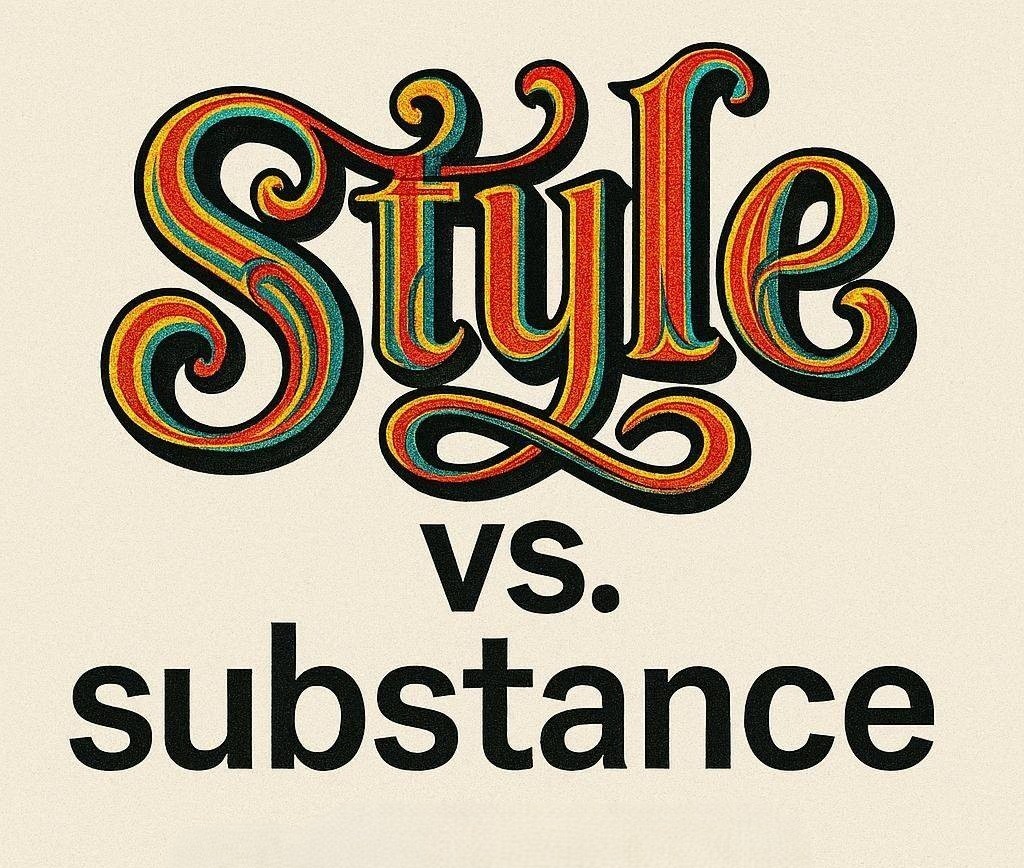
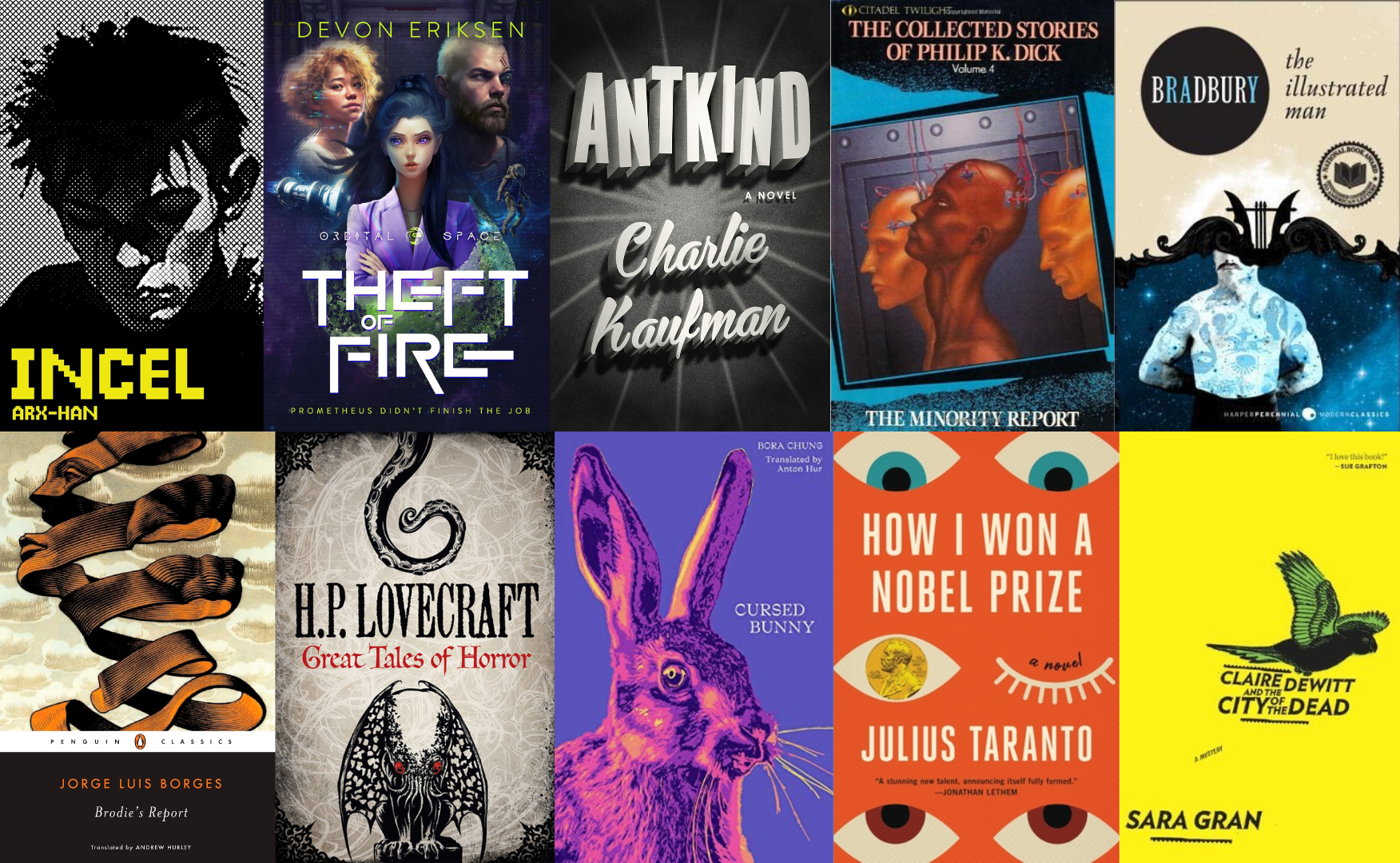
What matters more in writing, style or substance? It is an age-old debate, and there is no clear answer, other than “it depends.” It depends on what type of piece you are writing and the ultimate intent of the writer. A literary poem is heavily weighted toward style, while a technical essay is heavily weighted toward substance. However, some essays can be highly stylized, such as those by David Foster Wallace. Fiction sits somewhere between poetry and essays. Some fiction is much more about the style of the prose than the substance of the plot, as in most literary fiction. The unique voice of the writer is more important than the plot, which sometimes doesn’t even exist. Meanwhile commercial fiction (romance and page-turning thrillers) is much more about the substance of the plot and characters. Readers of commercial fiction don’t care about highly stylized prose—in fact that is a distraction. They prefer straightforward, journalistic essay-like prose that delivers the story clearly.
INCEL (2023) by ARX-Han INCEL is a self-published novel by an anonymous writer, which may lead one to assume it is at best mid and more likely slop, but it is actually a modern literary masterpiece. Welcome to the state of literature in the 2020s: the absolute best stuff is being published independently. (Often not by choice but necessity.) I originally discovered ARX-Han through his Substack (Decentralized Fiction), in which he wrote about the process of independently publishing his book. Reading those posts, I could tell he was brilliant, which made me want to purchase and read his novel—which did not disappoint. In fact, it surpassed my already high expectations.
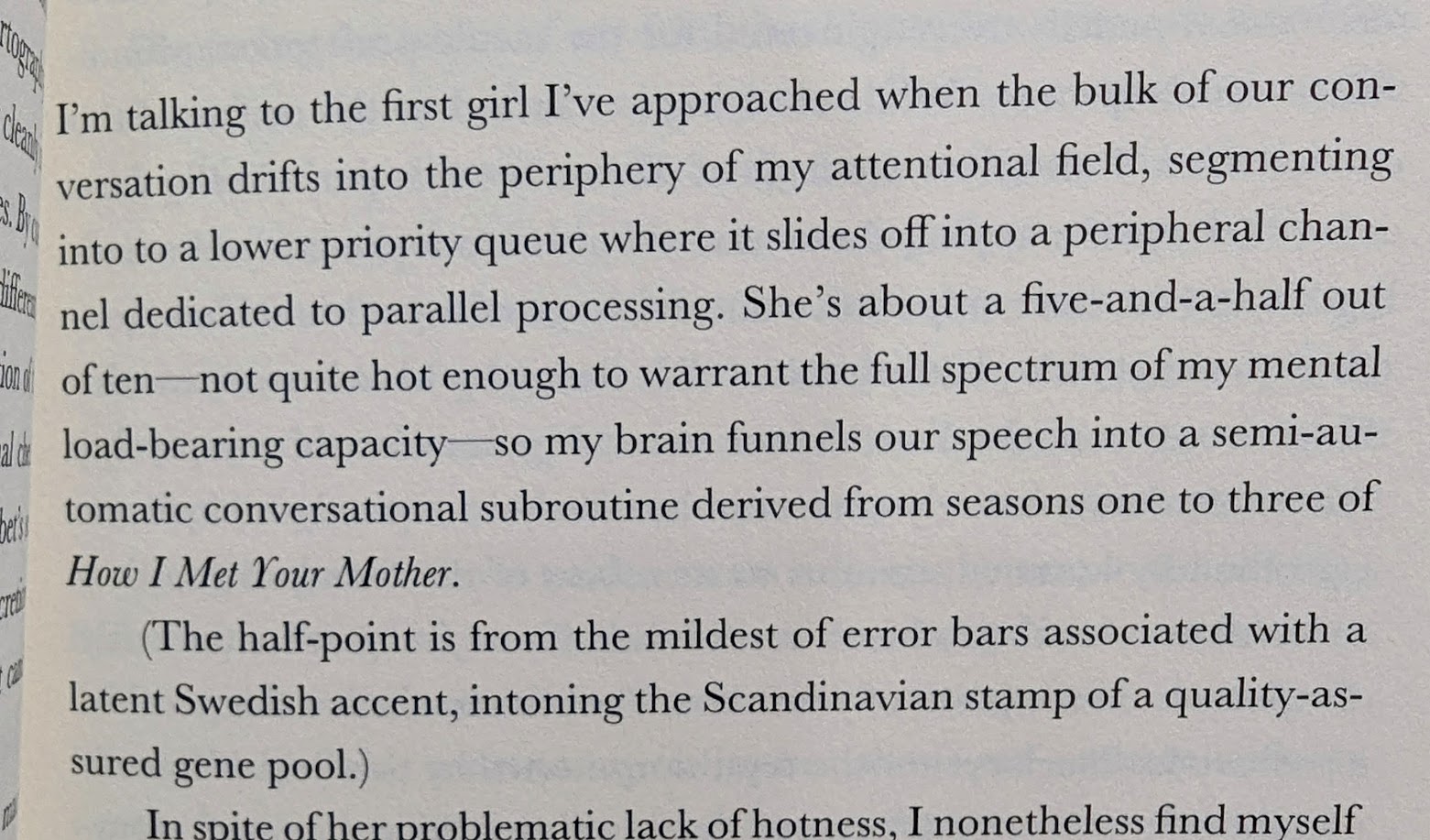
INCEL is an edgy book for sure, about a racist misogynist white male “incel”, but it doesn’t treat him as a caricature or unredemptive villain—which is why no mainstream publisher today would dare touch it. ARX-Han writes about incels in a way that is illuminating, educational, entertaining, humorous, and most of all, true. The book follows the narrator, who is unnamed and referred to as “Anon,” a graduate student studying evolutionary psychology while using his intellectual insights to try to lose his virginity. Anon is evidently on the spectrum, as his extremely detailed over-analysis of everything resembles an AI studying human behavior. He breaks down every social interaction through the lens of evo-psych, citing scientific papers and waxing philosophically about race, sex, and all the problematic things we’re not allowed to talk about. (Though the author does not condone Anon’s thoughts and actions.) Anon is also well-versed in internet culture and 4Chan memes. ARX-Han’s prose is top-notch, on the level of supreme maximalist wordsmiths like David Foster Wallace.
In a sane world this book would have been picked up by a mainstream publisher and the author proclaimed as the next Chuck Palahniuk or Bret Easton Ellis—the voice of a generation—someone who truly understands, empathizes with, and can explain the “incel” crisis facing young men worldwide. Instead the mainstream either ignores the incel problem or just chastises them, blaming incels for everything wrong with society. The New York Times publishes articles wondering why men don’t read fiction anymore… They would if you published books like this!
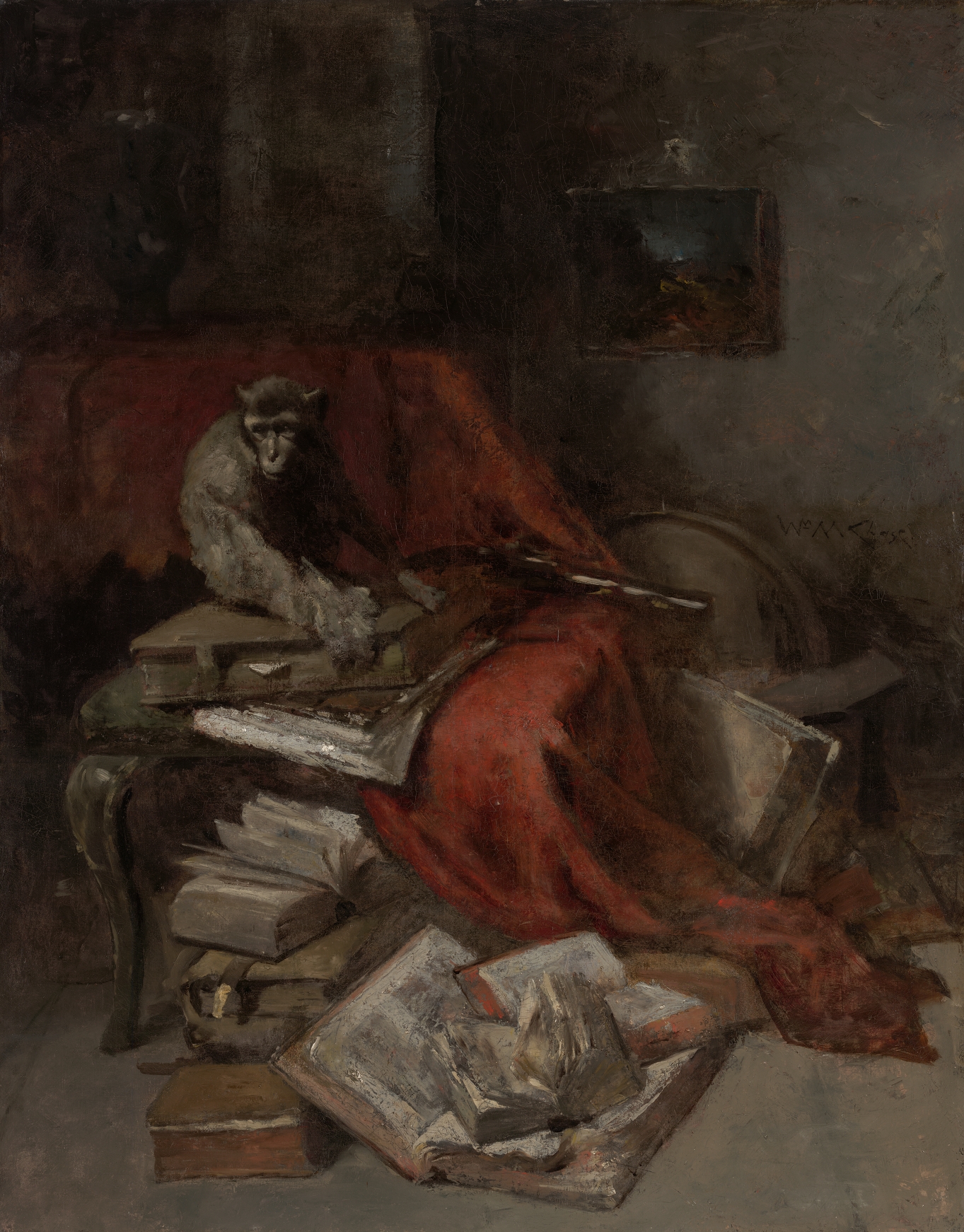
“Monkeying with Literature” (ca. 1877–78) by William Merritt Chase
When I read the fiction of 19th-century writers like Edgar Allan Poe, Fyodor Dostoyevsky, and Herman Melville (among others), I am amazed by the depth and sophistication of their work, both psychologically and philosophically—not to mention the craftsmanship of their prose. Is anybody writing such complex fiction today? Society does not seem to make writers like they used to. (Myself included—though such writers inspire me to elevate my work.) Keep in mind that those writers were not professionally trained to be writers—almost all were self-taught. How were people so long ago seemingly so much more knowledgeable than we are today when we have so much more knowledge? Perhaps that very “knowledge” is the problem.
I often feel anxiety about the overwhelming amount of books I want to read, knowing I won’t live long enough to read them all. This has been a problem for all humans throughout history—the race against time—but the problem grows exponentially over time as the amount of content continually increases.
“The Hunger Artist” is one of Franz Kafka’s most well-known short stories. It’s about a man who is a hunger artist—that is, he sits in a cage and fasts for upwards of forty days as crowds walk by to watch and admire his feat. The story is often viewed as an allegory, though interpretations vary. In my opinion, Kafka’s story of the hunger artist is a metaphor for Kafka’s own life as a “starving artist.”
Story Addict is a collection of 27 short stories written between 2010 and 2018, spanning a variety of genres including science fiction, fantasy, horror, crime, thriller, literary, magical realism, dark humor, and satire. There’s time travel, telepathy, parallel universes, aliens, robots, artificial intelligence, hackers, spies, invisibility, dinosaurs, wizards, talking jellyfish, and more. The lengths of the stories vary from 300 words to over 6,000 (60,000 words in total). Eight of the stories have been previously published, while nineteen are new to this collection. The stories are not connected and can be read in any order.
Siddhartha is a 1922 novel by Hermann Hesse, and while it is not directly about social anxiety, it is about mindfulness and meditation—the tools that helped me with social anxiety. In the book, Siddhartha, a character from the time of Gautama Buddha, goes on a spiritual journey, eventually coming to self-realizations that helped him overcome his suffering in life, much in the same way I did. Through select quotes from the text, I will explain how Siddhartha’s journey related to my own journey overcoming social anxiety. Continue reading →