Tag Archives: Philip K. Dick

AI Cannot Speak For the Dead

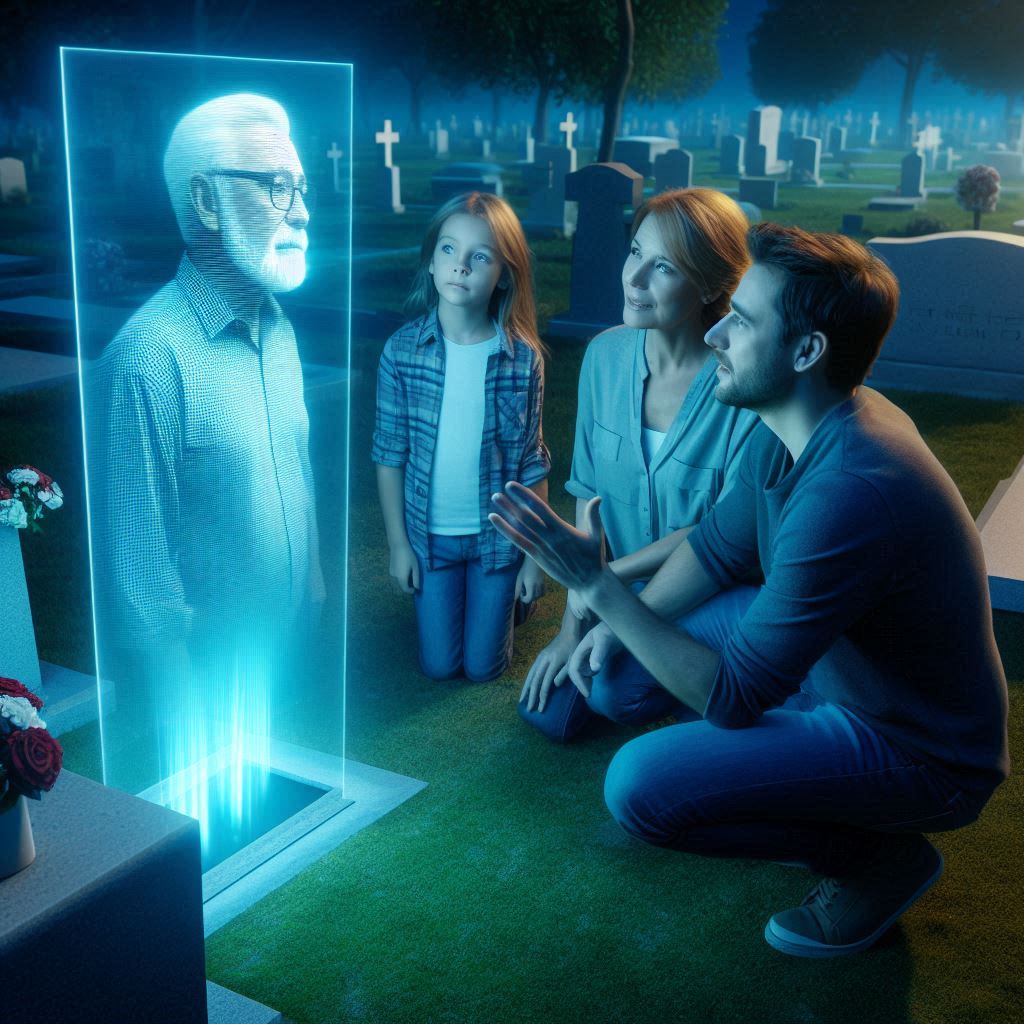
One of the potential applications of AI text generators such as ChatGPT is creating a chatbot based on people who have died so that users can speak to those “people” after they are gone. This could be done with famous figures from history or personal loved ones. Such “grief tech,” as it is called, is already being created: HereAfter, You Only Virtual, Character.ai, and MindBank are just a few examples. There are currently apps where living users answer questions now to help create an AI chatbot clone of themselves that others can speak to after they die.

Theoretically, if a person has enough textual data to input into the model (from books, journals, social media posts, emails, and text messages), then the AI trained on that data can anticipate what that person is likely to say given any prompt (which is essentially how all LLMs work). The chatbot will learn to write in the style of the deceased person based on their personal data. Using continually updated data from the internet, the “deadbot” can comment on current events, making it seem as though the person is still alive. Users can learn what the deceased person would think about things that have happened in the world since they passed away. Or they can ask the chatbot all the questions they wish they had asked while the person was still alive. At least that is what the chatbot’s creators will claim their AI can do. But this is a false hope, a facade. AI cannot predict what a deceased human being would think or say years or decades later. You cannot create an accurate chatbot based on the data of the dead.

Continue reading

Best Fiction Books I Read in 2024

They Had No Deepness of Earth (2021) by Zero HP Lovecraft

Zero HP Lovecraft (@0x49fa98) is an anonymous internet poster I originally discovered around 2016 when I was looking at the accounts Naval Ravikant (@naval) followed on Twitter. His name and bio (horrorist) intrigued me, so I read his short story, “The Gig Economy,” which was like a modern cyberpunk take on “The Call of Cthulhu.”

I instantly became a fan and read all of Zero’s stories as they originally came out on his WordPress site (now on Substack), and later assembled in this collection. I had been meaning to re-visit the stories because they deserve (and often require) re-reading. His fiction is like a combination of the cosmic horror of H.P. Lovecraft with the dense philosophical speculation of Jorge Luis Borges and the mind-bending science fiction of Ted Chiang.

Continue reading

Best Fiction Books I Read in 2022

1. Childhood’s End by Arthur C. Clarke (1953)

This is the second Arthur C. Clarke novel I’ve read (the first being Rendezvous With Rama), and I’ve been blown away by both. For some reason I expected Clarke’s books to be a bit drier and more dated, but his is some of the most exciting and mind-expanding science fiction I’ve ever read. I should have expected no less from the mind behind 2001: A Space Odyssey. Perhaps I had that prejudice because in some older sci-fi books, the science and ideas become outdated or the writing style does (or it was never any good to begin with). Especially with hard science fiction, which Clarke is often categorized as, the science is prioritized over the story, craft, and characters, so once the science itself becomes dated, the book does as well. But this is NOT the case with Arthur C. Clarke. Though there is some “hard science” in Childhood’s End, it was also quite weird, speculative, and philosophical (like 2001). Clarke’s ideas remain highly relevant and he is an exquisite composer of prose. This novel particularly features so many brilliant lines of philosophical insight, such as: “There were some things that only time could cure. Evil men could be destroyed, but nothing could be done with good men who were deluded.”

Continue reading

Philip K. Dick’s Advice for Worldbuilding Science Fiction

The book The Shifting Realities of Philip K. Dick: Selected Literary and Philosophical Writings features several interviews and essays by author Philip K. Dick. In the following excerpt, PKD gives some helpful advice on worldbuilding for science fiction writers.

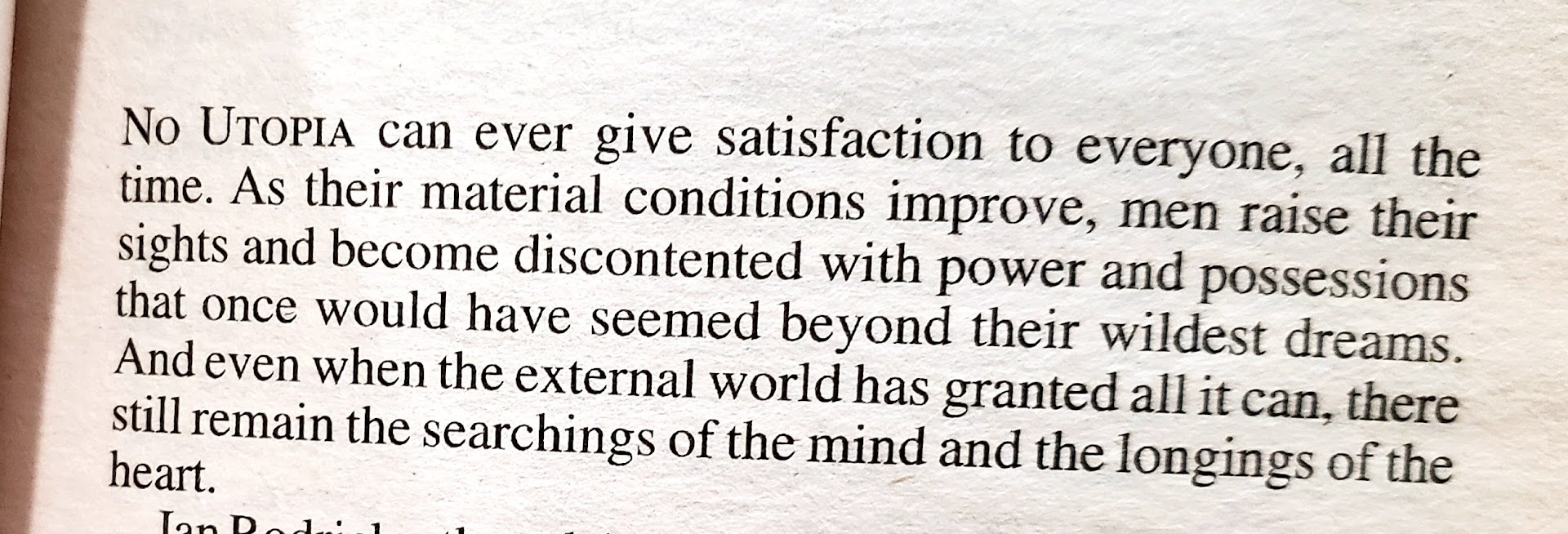
“This world must differ from the given in at least one way, and this one way must be sufficient to give rise to events that could not occur in our society — or in any known society present or past. There must be a coherent idea involved in this dislocation; that is, the dislocation must be a conceptual one, not merely a trivial or a bizarre one — this is the essence of science fiction, the conceptual dislocation within the society so that as a result a new society is generated in the author’s mind, transferred to paper, and from paper it occurs as a convulsive shock in the reader’s mind, the shock of dysrecognition. He knows that it is not his actual world that he is reading about.”

Philip K. Dick on worldbuilding a science fiction story
Continue reading

Best Fiction Books I Read in 2021

1) Songs of a Dead Dreamer (1986) and Grimscribe (1991) by Thomas Ligotti (2015)

I was looking forward to reading this double collection of horror short stories after hearing Ligotti be recommended by so many other writers I admire. And I can see why there was so much hype. I was immensely impressed, and Ligotti has become my favorite living horror writer and probably the best writer of weird fiction since Lovecraft. Ligotti is like the Ted Chiang of horror—not in terms of theme or content, but in the fact that they only write short stories and their stories are all fantastic and deep philosophically. Ligotti’s brand of horror is highly cerebral. He is a master of prose style, which is similar to Lovecraft’s in its verbosity and poetic beauty. Ligotti is also similar to Lovecraft in his content and themes—primarily extreme nihilism. His nonfiction book, The Conspiracy Against the Human Race, which I read last year, lays out his antinatalist worldview—a worldview I do not share—though I enjoy reading about those dark themes in fiction. After all, what could be more horrific than the idea that human life doesn’t matter and it would be better if we did not exist?

Continue reading

Top 10 Movies (at Least 10 Years Old) I Saw in 2021

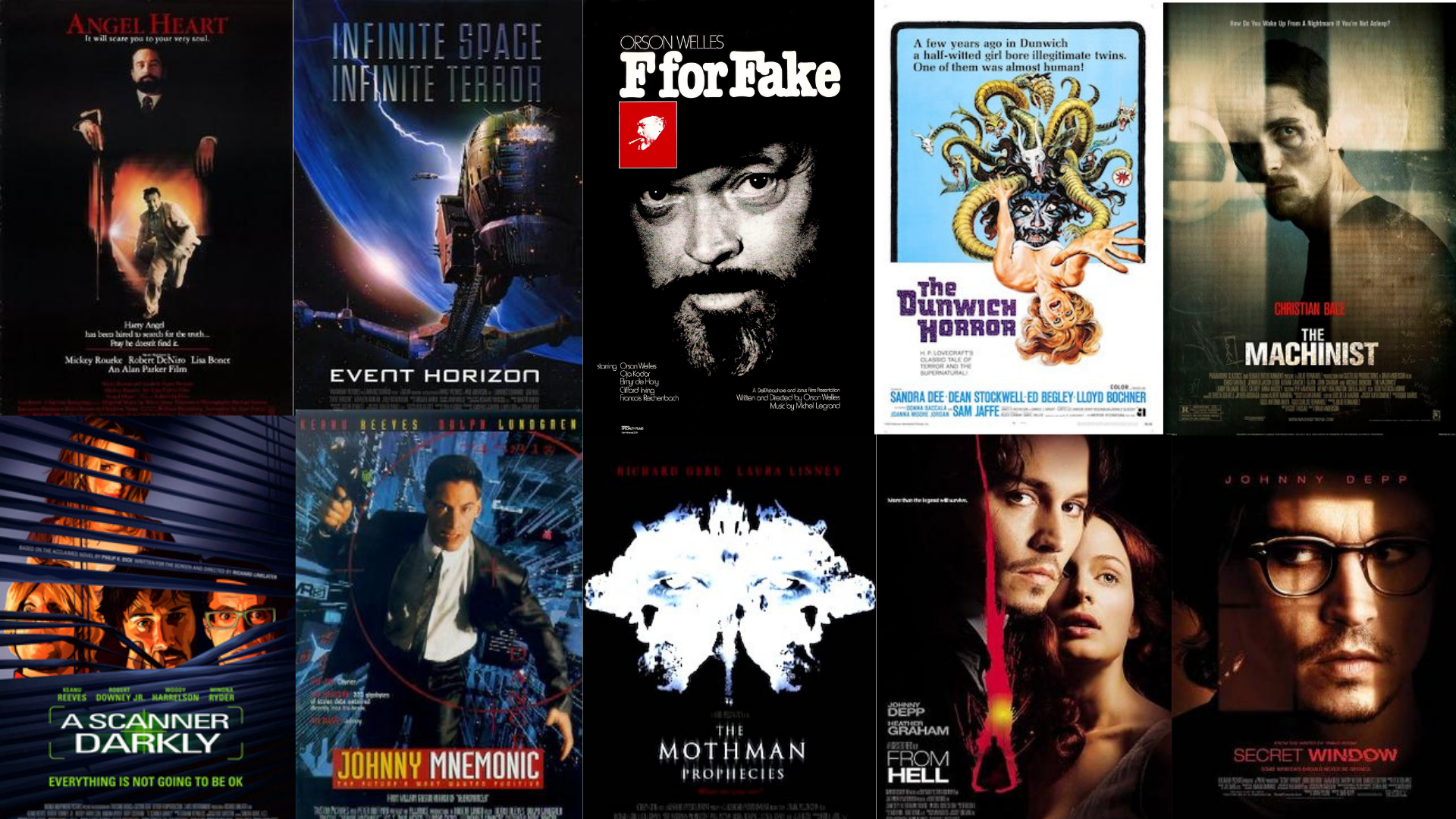
It is time for my sixth annual list of the best movies at least ten years old that I arbitrarily watched this past year. There isn’t much of a method to the movies I choose to watch, some of which are re-watches and others I’m seeing for the first time. The common themes that emerged from this year’s list are psychological horror, literary adaptations, twist endings, plus a lot of Johnny Depp and Keanu Reeves.

Continue reading

Do Artists Get Less Creative Over Time?

Picasso’s paintings grew more creative over time

Have you ever noticed that most artists tend to get less creative when they get older? A band’s first album is often their best—or maybe their second or third album is better—but rarely does a band record their most creative music on their twelfth album. Sure, some artists like The Rolling Stones continue to perform well into their 70s, but they are only rehashing the creativity of their 20s and 30s. They are not recording new songs, or if they are, those new songs are nowhere near as beloved or creative as their earlier work. That is the normal life cycle of most musical artists: they release creative music when young, get popular, then “play the hits” for the rest of their career.

Continue reading

Best Nonfiction Books I Read in 2020

According to my Goodreads stats (which I use to track every book I read), I read 95 books in 2020, which is down slightly from last year (114). Though that includes comic books, which are shorter and quicker to read, plus audiobooks, and I read less comics, so more full-books in all. My increased reading was not due to being stuck at home during quarantine as that didn’t affect my lifestyle much—it’s primarily because I severely cut down on reading Twitter and other online news. I previously wrote about the futility of following the daily news closely, but I still clung to Twitter—a little too much—sometimes a lot too much. I will expand upon how I broke my Twitter addiction in a future post, but suffice it to say, these days I check Twitter just once a day (at night after getting my work done) for only a couple minutes—if at all. This immediately reduced my stress levels and gave me much more time to read more valuable things that will stand the test of time, such as the following books.

Continue reading

Best Fiction Books I Read in 2020

1. Snow Crash by Neal Stephenson (1992)

I first read this book about ten years ago when I started reading science fiction novels. I repeatedly saw Snow Crash on many “greatest sci-fi books” lists and it was considered the best in the cyberpunk genre (along with William Gibson’s Neuromancer). When I first read Snow Crash, (and Neuromancer for that matter) I liked parts of it, but most of the book went over my head. I was looking for cyberpunk action (such as the computer hacking and futuristic skateboarding) and became bored by the ancient religious and evolution of language aspects, which I did not fully understand. I didn’t recognize it as being a portrayal of an anarcho-capitalist society the first time around, as I did not know what that was. Ten years older and wiser, I now find the philosophical aspects of the book the most fascinating, and the hacking, action, and skateboarding parts are like gravy on top. Snow Crash is like all my varied interests (technology, futurism, virtual reality, hacking, skateboarding, pizza delivery, punk rock, samurai swords, economics, history, philosophy, libertarianism, ancient religion, language, and the evolution of consciousness) all rolled into one book. It doesn’t seem like there can be that many different ideas in one novel but there are and it all somehow fits together.

Continue reading

Top 10 Movies (at Least 10 Years Old) I Saw in 2020

Finding older movies is surprisingly difficult in the age of online streaming. Netflix has severely cut down on their movie catalogue, focusing on their own original television series, and most other streaming services do the same. Amazon has a decent collection of movies, as does the new HBO Max, and I’ve also found some rare gems on Vudu and Tubi, streaming services that are free with ads. JustWatch has become essential in figuring out where and how to watch any given movie. I wish the streaming services would focus more on making original movies rather than television series, but it’s in their economic interest to create addictive TV series that will keep you watching longer. Just as it is in the Hollywood movie studios’ interest to make $100+ million tentpole blockbusters based on pre-existing material. 

Continue reading