Category Archives: Health

Growing Up With the Internet as a Millennial vs Gen-Z

I recently listened to a podcast with Zoomers talking about their experience of growing up with the internet as they came of age. It made me realize how different things were for my generation, the Millennials. Your “coming of age” years are when you transition from childhood into adulthood, roughly from middle school through high school and college. Those years are enormously influential on your development, as the core experiences during that period influence the type of person you will ultimately become for the rest of your life. I came of age during the 1990s and early 2000s, whereas Gen-Z came of age in the 2010s and early 2020s. The year 2005 does not seem that long ago, but in many ways the world then is unrecognizable to the world young people face today—at least online.

Continue reading

Best Nonfiction Books I Read in 2024

Man and His Symbols (1968) by Carl G. Jung

I have been wanting to read Jung for a while after hearing so much about his work second-hand through podcasts, blogs, and books. Jung has been highly influential on so many writers, thinkers, and artists I admire—and I can see why. His symbolic and mythological approach to psychology is sorely needed in our overly reductionist materialistic world. This book serves as a great introduction to Jung’s work. It features one chapter by Jung himself while the rest are written by his associates. The book also features lots of images to help illustrate the points about symbols because visual symbols are so powerful. Jung writes about the unconscious and the role of the artist:

Continue reading

Shoulder Pain? Hang on a Minute…

About thirteen years ago I started experiencing shoulder pain, but I had no specific injury or event that seemed to have caused it. The pain was persistent, lingering for months, and though it was not overly painful, it was enough to affect my golf swing and other athletic activities. I visited an orthopedic doctor hoping to discover what was wrong and see if the shoulder could be repaired. He sent me for an x-ray, then an MRI, but neither revealed any broken bones or ligament tears. The doctor then recommended I do physical therapy, which I did for several months, but that didn’t seem to help—the nagging pain and lack of motion in my shoulder persisted. He said the only other option at that point was surgery. 

Continue reading

How to Expand Your Attention Span

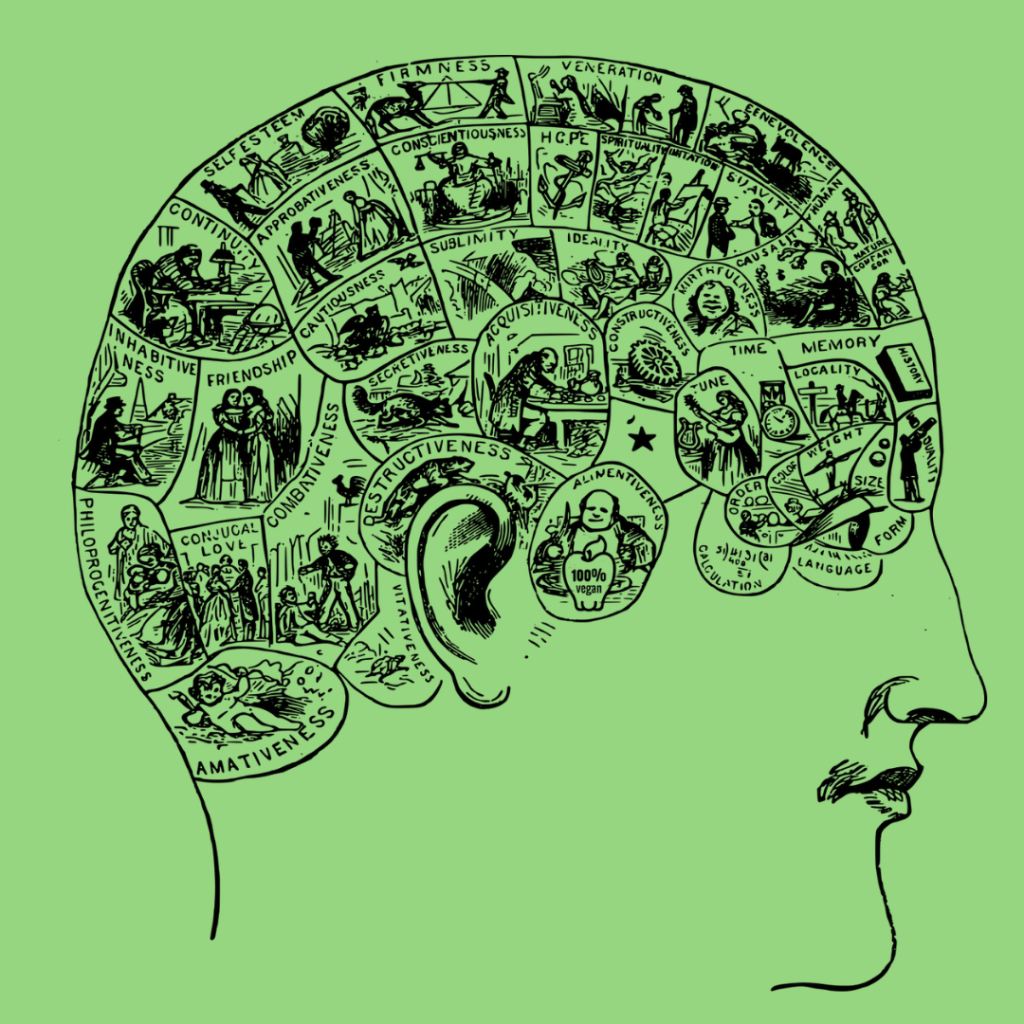
Many people today claim they don’t have the attention span, patience, or self-discipline to read dense books and long-form content. That is because they have become too accustomed to the quick short-form hyperactive content on the internet like tweets, Instagram stories, YouTube videos, memes, and TikToks. In this post, I wrote about breaking my Twitter addiction and focusing my efforts and time on reading books. I suggested Twitter and social media are like drugs in that they change your brain chemistry. That is not hyperbole. Social media changes your brain by shortening your attention span.

Continue reading

My Twitter Detox

I am a recovering Twitter junkie. I used to be addicted to the social media network—that is addicted to reading others’ tweets as opposed to tweeting myself. When I first joined Twitter in 2009 I would only read my timeline. I didn’t tweet anything myself until much later. At first I only followed a couple dozen people, but over time the number of people I followed grew and grew. I don’t know if it was some kind of obsessive compulsive trait of mine, but I felt a need to read every tweet in my timeline. When I woke up in the morning I’d scroll back through all the tweets I missed the previous night. Such a practice was manageable then because I wasn’t following too many people (in the dozens), and those I followed didn’t tweet too often.

Continue reading

Writing to Relieve Anxiety

“I have now, and have had since this afternoon, a great yearning to write all my anxiety entirely out of me, write it into the depths of the paper just as it comes out of the depths of me, or write it down in such a way that I could draw what I had written into me completely.”

— Franz Kafka

Whenever something is bothering me, and I am overcome with running thoughts, the best way to relieve that anxiety is to write my thoughts down. Afterwards, I almost always feel better and the running thoughts subside. Simply writing about my fears and worries helps in easing them. Why is that?

Continue reading

Writing with the Pomodoro Technique (For Productivity and Health)

Writing is not the hardest thing in the world to do, but the easiest thing to do is not write. A nice thing about being a writer is the freedom to set your own hours, but that freedom can also be a curse. It’s difficult to stay focused and avoid procrastination and distractions, especially today with the internet, when the tool you write with (a computer) is connected to all the information in the world, including email, Twitter, Facebook, YouTube, Reddit, and other applications designed to waste time.

Continue reading

Born Vegetarian? The Evolutionary Psychology Behind Not Eating Meat

I’ve been a vegetarian my entire life. No one in my family or anyone I knew was vegetarian; it was something I came to on my own. When I was a child, people would often ask me why I didn’t eat meat, as if there was some moment or reason that precipitated it, but I never had an answer. Today I can name a whole host of reasons to be a vegetarian—ethical, health-related, and environmental—but I wasn’t aware of those benefits of vegetarianism when I was four years old. Yet as far back as I can remember, I’ve had an instinctual disgust toward meat. It was as though I was born a vegetarian. But is that possible? Are certain people natural vegetarians?

Continue reading

Why Are so Many Creative People Anxious and/or Depressed?

Introducing Kafka by R. Crumb

Consciousness, or what makes humans human, is inherently tied to imagination. Imagination allows you to predict possible futures before they happen—be it what a predator such as a tiger will do (harm you), what a rock could turn into (a tool), or what a seed could become if you plant it (food). That type of future-thinking birthed agriculture and civilization, and it all stemmed from imagination—imagining what not yet is but could be. No other species can do that (that we know of).

Continue reading

The Power of Journaling

journals2

Journaling has been one of the most beneficial practices for my mental health. It’s a powerful and freeing method to clear your mind. Writing about everything in your head—all your deepest and darkest and most private thoughts—gets those thoughts out of your head and onto paper. For this to work, the journal must remain private. You need the complete freedom to know that no one else will ever see it so you can write with complete inhibition. Once the thoughts get out of your head and onto paper, you can detach from the thoughts and view them from a distance. Continue reading