Category Archives: Authors

Goosebumps Books and 90s Nostalgia

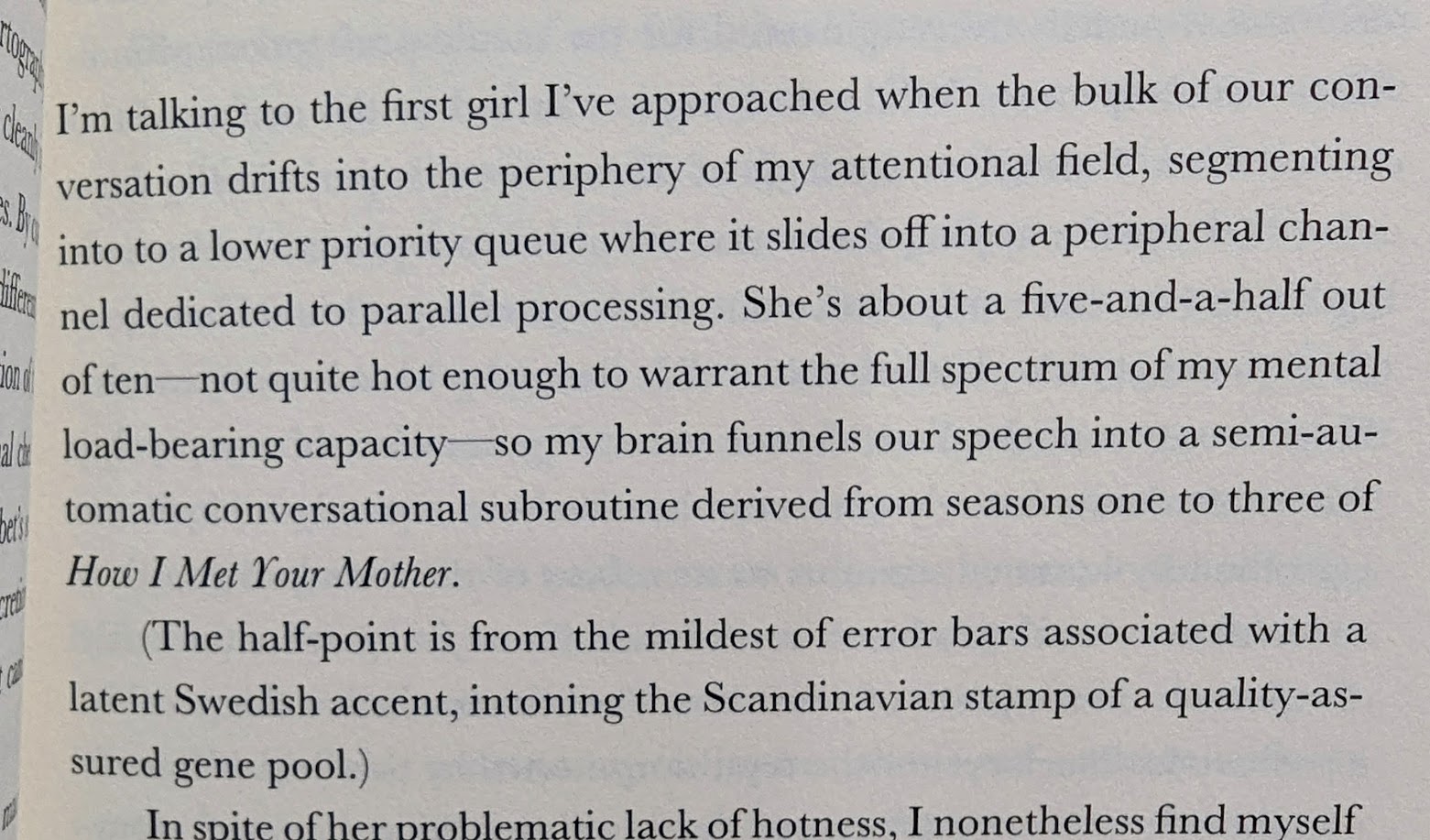
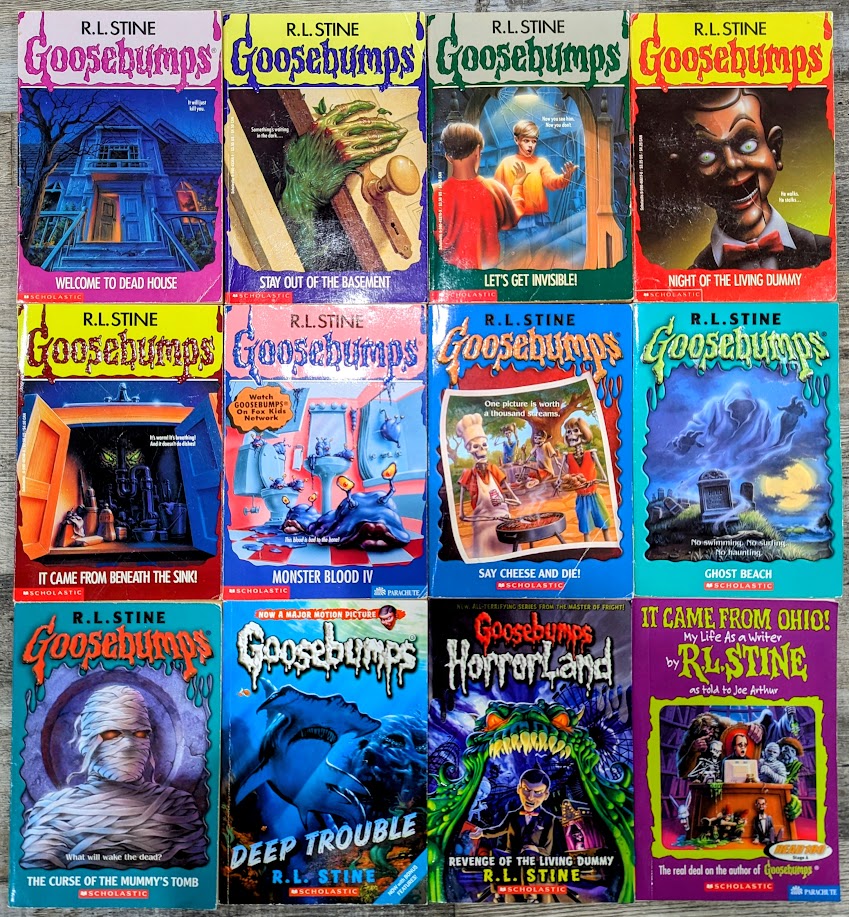
One of my favorite hobbies is going to used book sales and finding rare gems for low prices. It’s not just about paying less; it is more fun and fulfilling to find books in the wild rather than simply ordering a copy on Amazon. It’s akin to treasure-hunting—you never know what you might find. At one such sale, I acquired a collection of Goosebumps books for $0.25 each.

Written by R.L. Stine in the 1990s, Goosebumps was a series of horror books aimed at kids in the “middle grade” level. Goosebumps books were massively popular bestsellers in the 90s and were adapted into a television show, and the franchise remains popular today, with Stine still writing more books, Hollywood movie adaptations, and a rebooted TV series.

Despite being in the target age range at the time, I never read Goosebumps as a kid—though I was always curious about the books because of their evocative covers. Last year, while working on my re-write of Trick or Zombie Treat (a horror book about kids in the 1990s, very much in the vein of Goosebumps), I was feeling nostalgic for the 90s, the formative decade of my childhood, so I decided to see if the Goosebumps books were worth the hype (or at least worth a quarter).

Continue reading

Indie Publishing is Free Market Publishing

Professional publishing is fiat publishing, while indie publishing is free market publishing. The professional publishing industry, which consists of the “Big 5” book publishers (Penguin Random House, HarperCollins, Macmillan, Hachette Book Group, and Simon & Schuster) and literary agencies, are like central banks in the economy: they manipulate the market and create artificial scarcity by limiting which authors and books can be published. Indie publishing (self-publishing and small independent presses) is the free market for books, as it has a more natural flow of supply and demand. Everyone has the same opportunity, and success is more closely correlated with merit—or how much readers actually enjoy a book.

Continue reading

When AI Creates “Perfect” Art for You

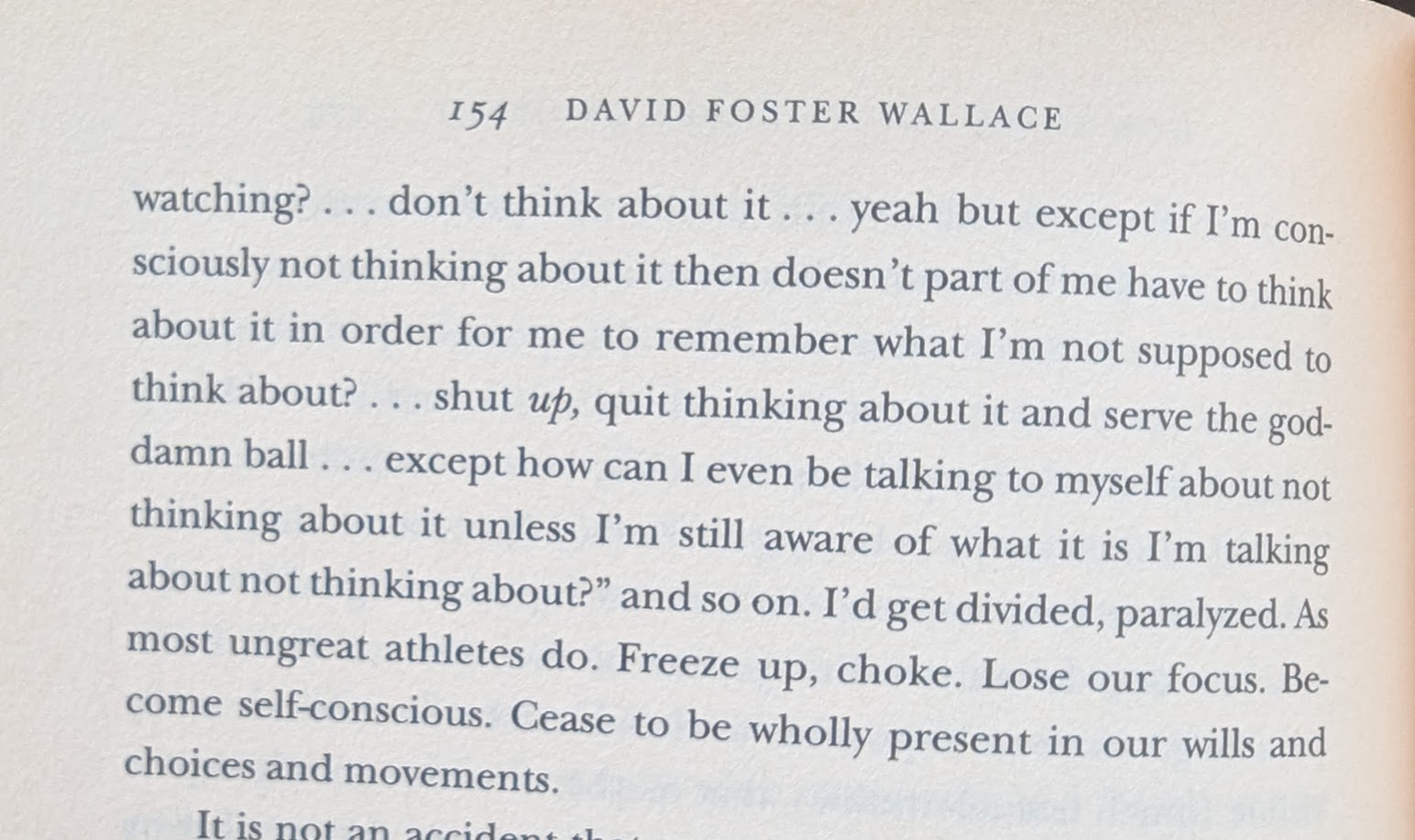
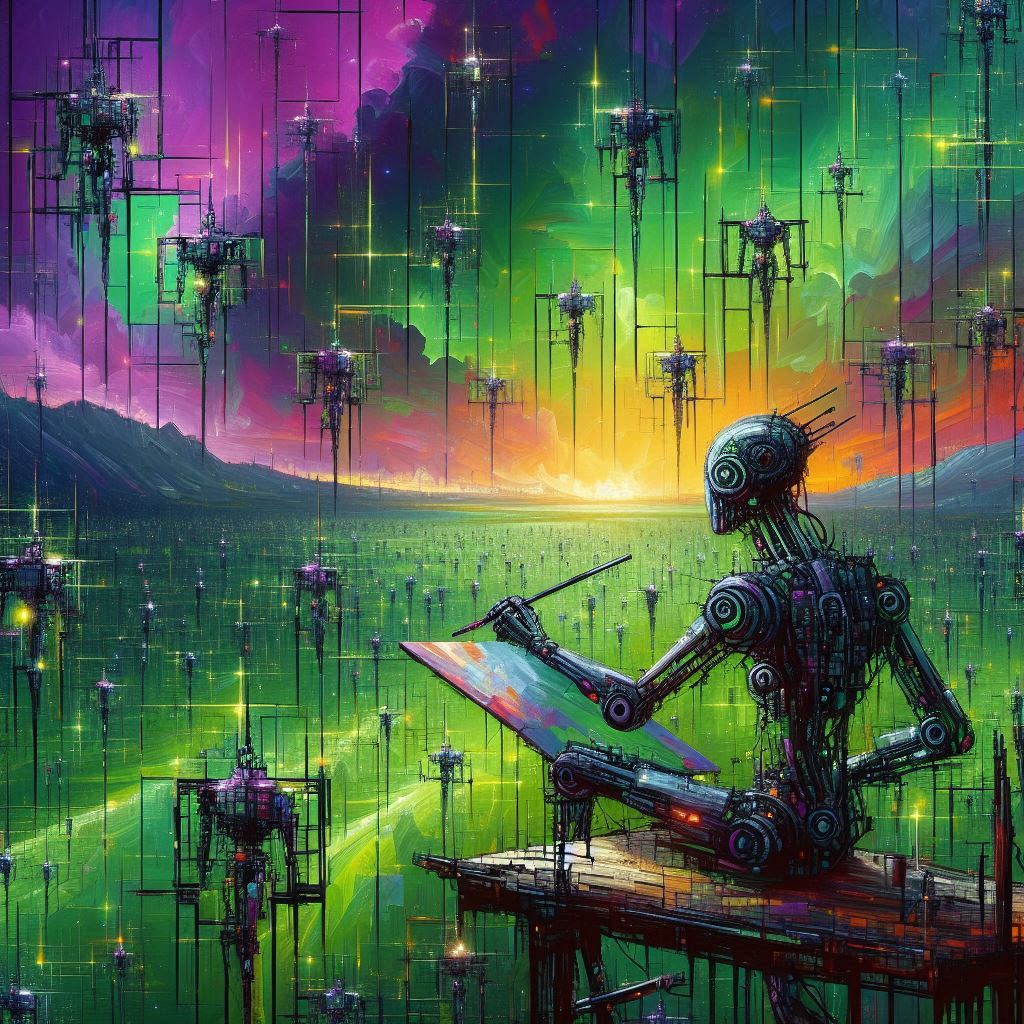
In the future, it may be possible for AI to create art (including books, movies, music, and videogames) that is so perfectly attuned to an individual’s preferences, perhaps even directly using brain scans to determine the precise ingredients that will give the person the ultimate entertainment experience (like from David Foster Wallace’s Infinite Jest), whatever that may be for the particular individual. This AI would essentially create better art than humans—not that it would be objectively better than anything created by humans, but it would be subjectively better to that one particular human for whom the artwork is specifically created for. And AI could conceivably do this for every single human in the world: create unique works of art tailored to be the best work of art for that individual (whatever the criteria for “best” is for them). How could human artists compete with that?

Continue reading

Blake Crouch’s Upgrade and the Recursion of Pandora’s Box

I have a love/hate relationship with Blake Crouch’s books. He has fantastic premises about cutting-edge science and writes fast-paced thrillers that keep you eagerly turning the pages to the end. Crouch has been compared to Michael Crichton, in that they both write grounded techno-thrillers about plausible future technology with high-concept books that are ripe for adaptation to the screen (TV and movies). But despite me loving the premises of Crouch’s two previous books, Upgrade and Recursion, ultimately I didn’t like the books as a whole—or more precisely I was let down by their endings.

Continue reading

AI Cannot Speak For the Dead

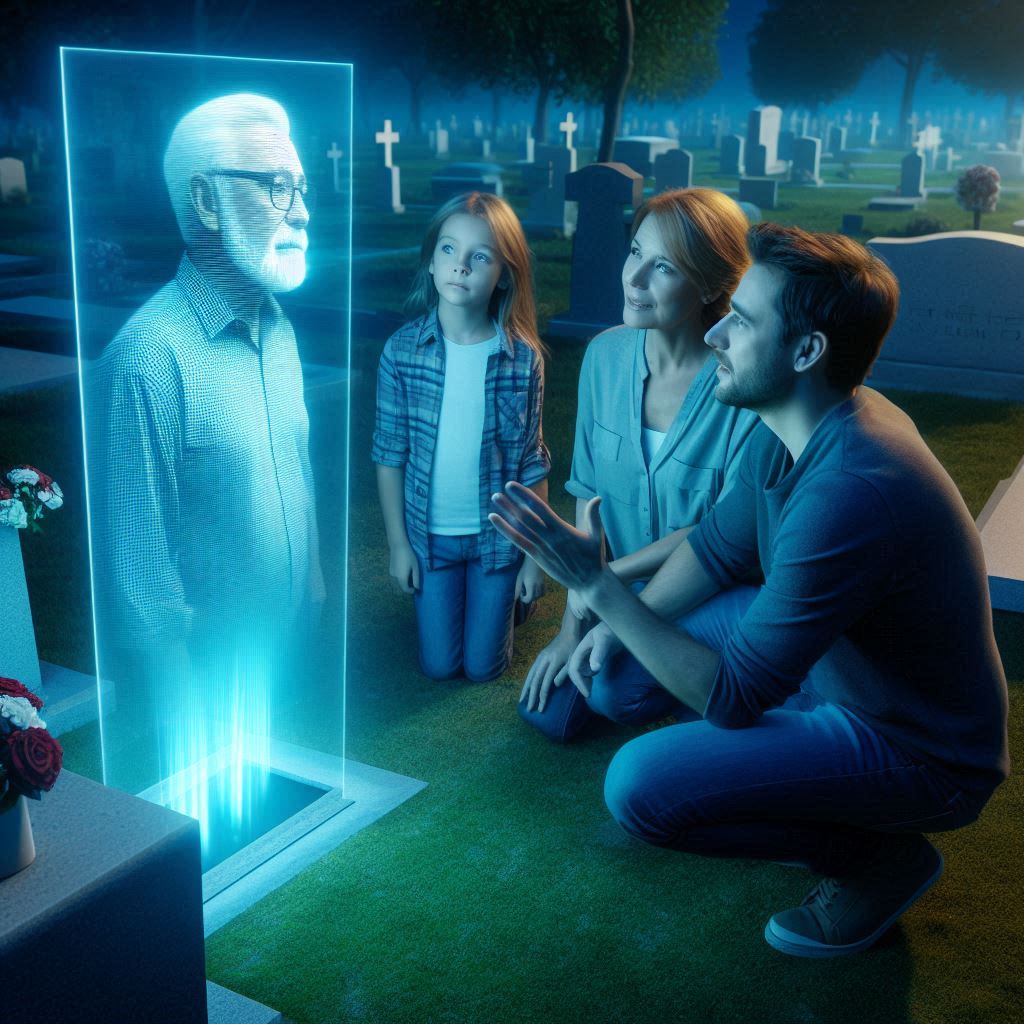
One of the potential applications of AI text generators such as ChatGPT is creating a chatbot based on people who have died so that users can speak to those “people” after they are gone. This could be done with famous figures from history or personal loved ones. Such “grief tech,” as it is called, is already being created: HereAfter, You Only Virtual, Character.ai, and MindBank are just a few examples. There are currently apps where living users answer questions now to help create an AI chatbot clone of themselves that others can speak to after they die.

Theoretically, if a person has enough textual data to input into the model (from books, journals, social media posts, emails, and text messages), then the AI trained on that data can anticipate what that person is likely to say given any prompt (which is essentially how all LLMs work). The chatbot will learn to write in the style of the deceased person based on their personal data. Using continually updated data from the internet, the “deadbot” can comment on current events, making it seem as though the person is still alive. Users can learn what the deceased person would think about things that have happened in the world since they passed away. Or they can ask the chatbot all the questions they wish they had asked while the person was still alive. At least that is what the chatbot’s creators will claim their AI can do. But this is a false hope, a facade. AI cannot predict what a deceased human being would think or say years or decades later. You cannot create an accurate chatbot based on the data of the dead.

Continue reading

Putting Messages in Fiction

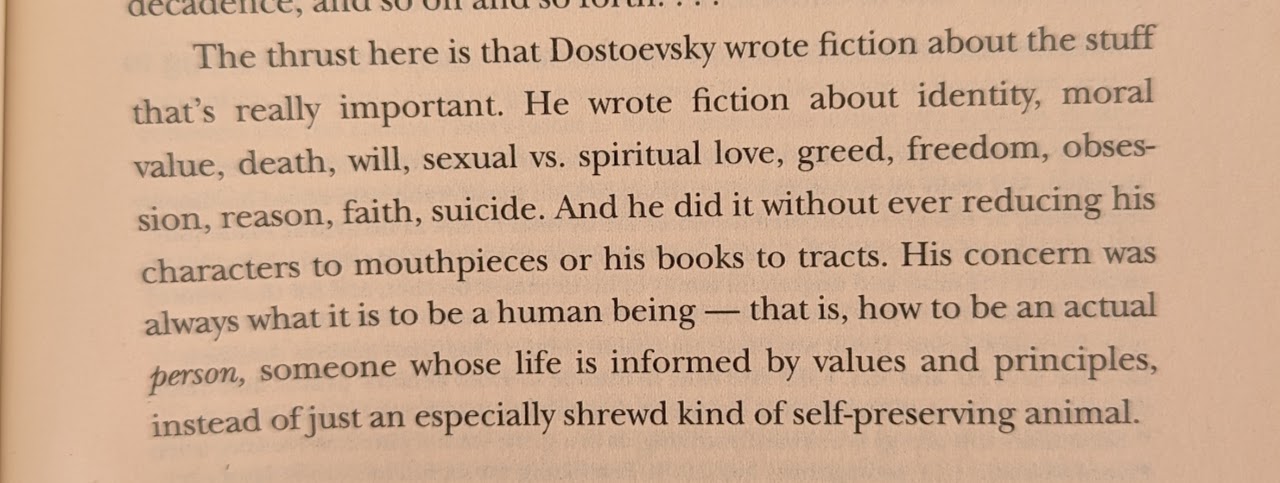
People often say that if you want to include a didactic message in your fiction story, then you should just write an essay. Which is true—but not because essays are better, or because art can’t have a message. But messages should be put in essays rather than art, more due to the audience of the medium than the medium itself.

Continue reading

On Titles and Naming Things

“It is a sad truth, but we have lost the faculty of giving lovely names to things. Names are everything.” — Oscar Wilde

One of my favorite parts of writing a piece of fiction is coming up with the title. I agree with Oscar Wilde: Naming a work of art is an art in itself and should always be treated as such. The name that is given to a work of art is massively influential on how that work is received. As a result, I spend an inordinate amount of time thinking about the titles of my books (and the names of my characters, but that’s a topic for another day).

Continue reading

Best Nonfiction Books I Read in 2024

Man and His Symbols (1968) by Carl G. Jung

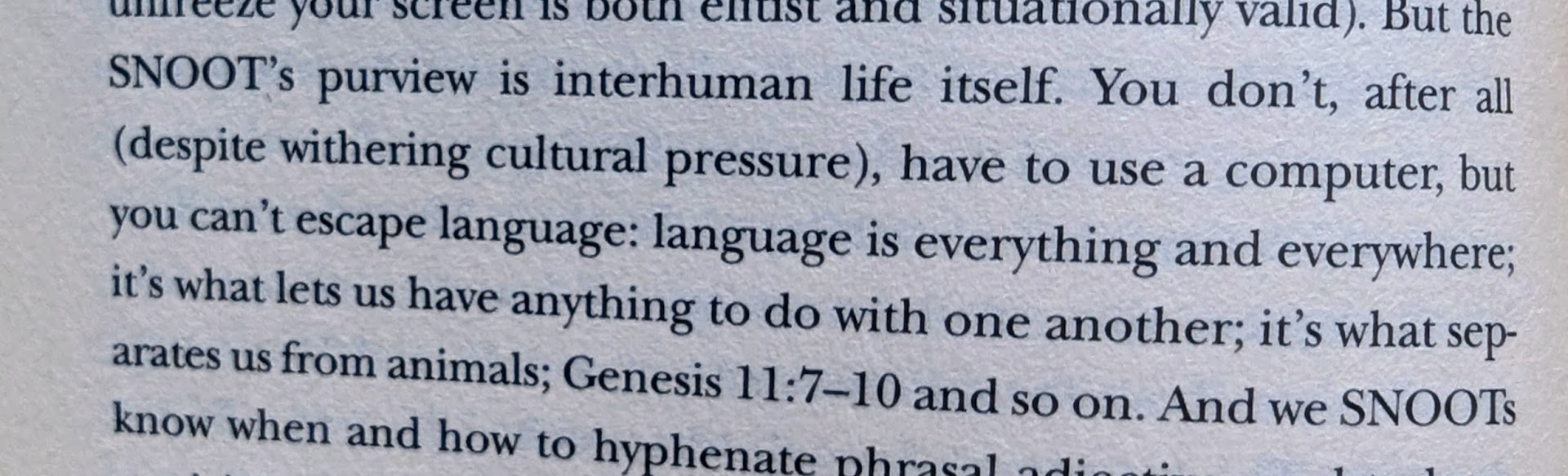
I have been wanting to read Jung for a while after hearing so much about his work second-hand through podcasts, blogs, and books. Jung has been highly influential on so many writers, thinkers, and artists I admire—and I can see why. His symbolic and mythological approach to psychology is sorely needed in our overly reductionist materialistic world. This book serves as a great introduction to Jung’s work. It features one chapter by Jung himself while the rest are written by his associates. The book also features lots of images to help illustrate the points about symbols because visual symbols are so powerful. Jung writes about the unconscious and the role of the artist:

Continue reading

Best Fiction Books I Read in 2024

They Had No Deepness of Earth (2021) by Zero HP Lovecraft

Zero HP Lovecraft (@0x49fa98) is an anonymous internet poster I originally discovered around 2016 when I was looking at the accounts Naval Ravikant (@naval) followed on Twitter. His name and bio (horrorist) intrigued me, so I read his short story, “The Gig Economy,” which was like a modern cyberpunk take on “The Call of Cthulhu.”

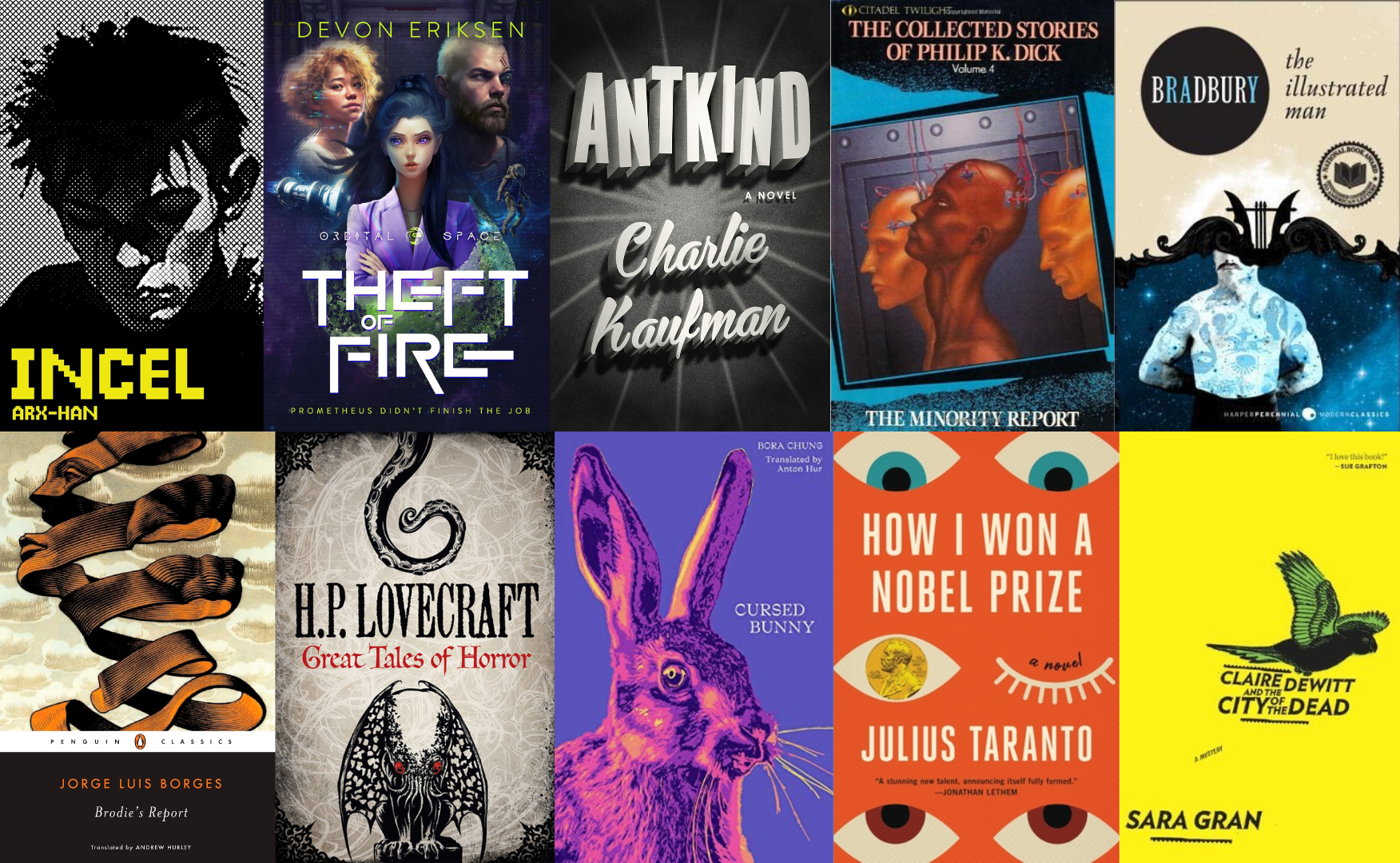
I instantly became a fan and read all of Zero’s stories as they originally came out on his WordPress site (now on Substack), and later assembled in this collection. I had been meaning to re-visit the stories because they deserve (and often require) re-reading. His fiction is like a combination of the cosmic horror of H.P. Lovecraft with the dense philosophical speculation of Jorge Luis Borges and the mind-bending science fiction of Ted Chiang.

Continue reading

True Detective Redux

Season one of True Detective was one of my favorite television shows of all time. I was disappointed by the second season but thought the third was a return to form—not quite as good as the original, but a worthy successor. The fourth season, True Detective: Night Country was no longer being run by the original creator Nic Pizzolatto, so my expectations lowered, though I was still optimistic it could be good. I love the general format of True Detective, with each season being a self-contained miniseries following new detectives who investigate a murder case. I hate TV shows that go on forever, so the best thing about True Detective is you are guaranteed an ending

Continue reading