Tag Archives: writing advice

The Art of Storytelling and Developing Your Voice as a Writer

Storytelling is the key to good fiction. What is storytelling? It is the way you tell a story. A story is not merely a plot plus characters. If you give ten writers the same plot and characters, you will end up with ten wildly different stories (of varying levels of quality). That is where the talent of storytelling enters the equation. You can have a compelling plot and interesting characters, but if you don’t have a skilled storyteller to deliver those elements you’re not going to have a good story. It is not just a matter of being able to compose grammatically clean prose—ChatGPT can do that. Good storytelling is composing the story, from sentence to sentence, in a compelling way.

Continue reading

Putting Messages in Fiction

People often say that if you want to include a didactic message in your fiction story, then you should just write an essay. Which is true—but not because essays are better, or because art can’t have a message. But messages should be put in essays rather than art, more due to the audience of the medium than the medium itself.

Continue reading

Control and the Storytelling Tradeoff in Video Games

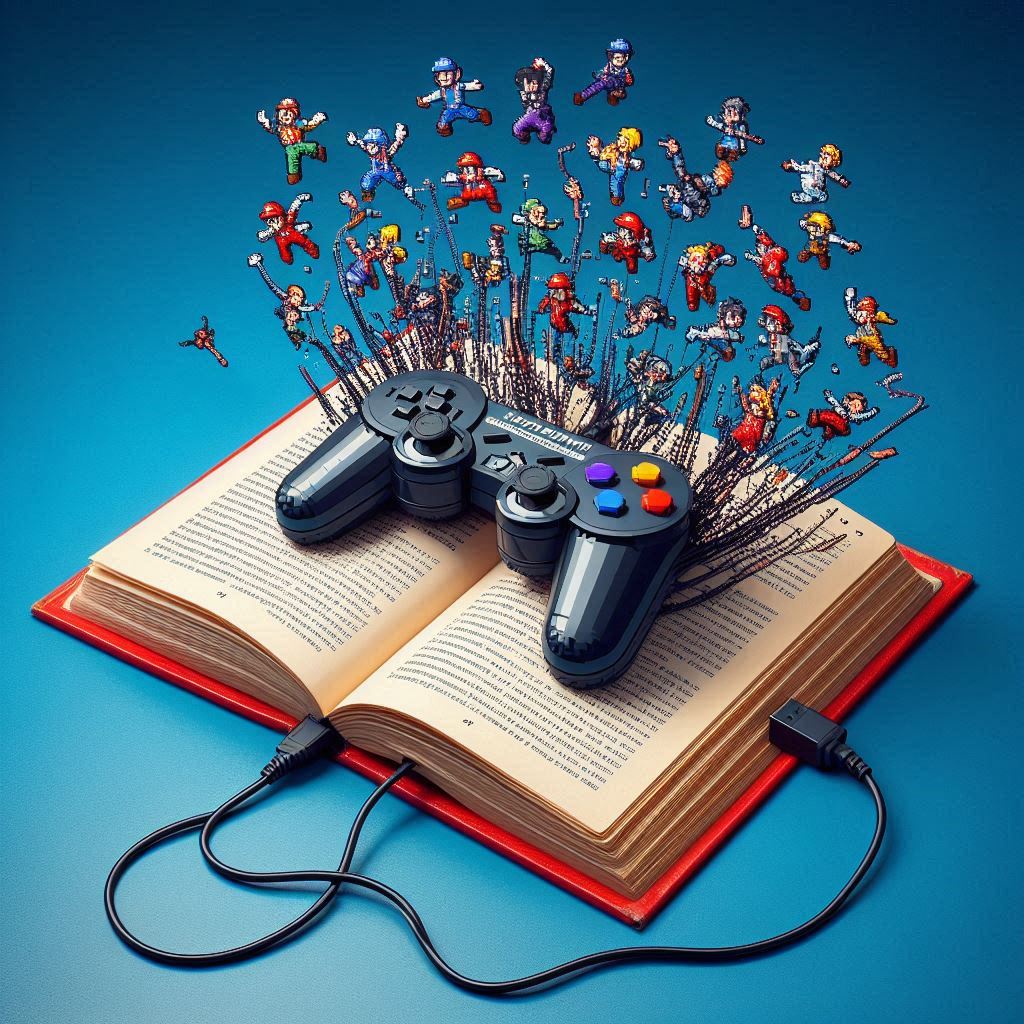
Stories can be great, and video games can be great, but video games are not the greatest medium for stories. This realization came to me after seeing the television adaptation of The Last of Us. I played the post-apocalyptic video game around the time it first came out in 2013, when it was hailed as one of “the best video games ever.” While I had some fun playing the game, I thought it was overrated and undeserving of its massive hype. The gameplay itself didn’t feel all that fun or inventive. Instead, what was so critically acclaimed was not the gameplay but the story

Continue reading

Writers Must Read

I often hear published writers say they don’t have time to read anymore. It is often in interviews while promoting their own work, when they are asked what books they have read lately. Some writers say they don’t have time to read at all, others not as much as they would like to. Those who do read often only read ARCs (advanced reader copies) of new books they have been asked to write a blurb for, or nonfiction books as research for their fiction. They are too busy writing books to be reading books for leisure, or so they say. But this is not an excuse—it is cope. All writers need to always be reading. (ABR)

Continue reading

To Plan or To Pants? Writing Advice on Plotting vs Pantsing

There are essentially two types of writers: plotters and pantsers. Those who outline their plot beforehand, and those who write from the seat of their pants (AKA go in blind and make everything up as they go along). I said in the past that I was an outliner, but I now outline less than I used to. 

Outlines make it easier to know where you have to go in the plot. But one benefit of writing from the seat of your pants is that you are motivated to write more often and faster because you want to know what happens next. If the full story is thoroughly outlined, writing can become more of a tedious transcription-like process with little surprise for the writer. Less planning can create more fun, though I don’t know if I would recommend that approach to someone who doesn’t have sufficient writing experience

Continue reading

Incubate Stories Subconsciously Before Writing

When I get a new idea for a fiction story I become obsessed. I am flooded with inspiration, developing the story in my mind while researching online, and rapidly taking notes for a potential plot and characters. I can see a flash of the entire story in my mind like a movie, and I feel the urge to follow this burst of obsessive inspiration to write the story ASAP. Sometimes I do write it right away, while other times I set the notes aside to finish whatever else I was working on at the time (because I am always working on something else). I have found the latter to be more productive for my creative process. It is better to wait and incubate the story for some time rather than rush in prematurely.

Continue reading

Algorithmic Fiction is Not For Me

Welcome to the age of algorithmic fiction. Thanks to tools like GPT-4, a human writer with a library of previously written books can simply write a one-page outline for a new novel, and AI can write an entire novel in their style. In many cases the book will be good enough to pass as if it was written by the human authors themselves, allowing writers to publish more frequently. However, GPT fiction will only work with formulaic writers whose books are all similar. In other words, those writers who were already writing algorithmic fiction before the aid of AI.

Continue reading

Sunk Cost Writing: Use AI to Kill Your Darlings

One of the most difficult parts of writing is “killing your darlings.” That might mean cutting out a part you liked to make the story as a whole better. Or, more generally, it can simply mean deleting the boring parts of your story. (As Elmore Leonard said, there should be no boring parts.) Perhaps one of the greatest upsides of writing with AI is that it can help eliminate the “sunk cost fallacy” that authors often face with the words they have already written.

Continue reading

Thomas Ligotti on the Superiority of Short Fiction Over Novels

image from filth.com.mx

Thomas Ligotti has become one of my favorite contemporary horror writers. Like my favorite contemporary science fiction writer, Ted Chiang, Ligotti writes exclusively short stories. Both writers have never published anything longer than a novella. In this excerpt from an interview, Ligotti explains why he has not and never will write a novel:

I think it’s safe to say that I will never write a novel. The reason is this: I really don’t like fiction, and novels are what fiction is all about. The only fictional works that I’ve ever admired are those which have their formal basis in essays (Borges), poetry (Bruno Schulz), monologues (Thomas Bernhard), or all three (Poe and Lovecraft). I want to hear a writer speaking, not see a movie in my mind that takes days or weeks to get through rather than 100 minutes or the time it takes to watch a multi-part mini-series. Why would anyone want to read The Silence of the Lambs when they could see the movie?

– Thomas Ligotti interviewed by Mark McLaughlin at Horror Garage
Continue reading