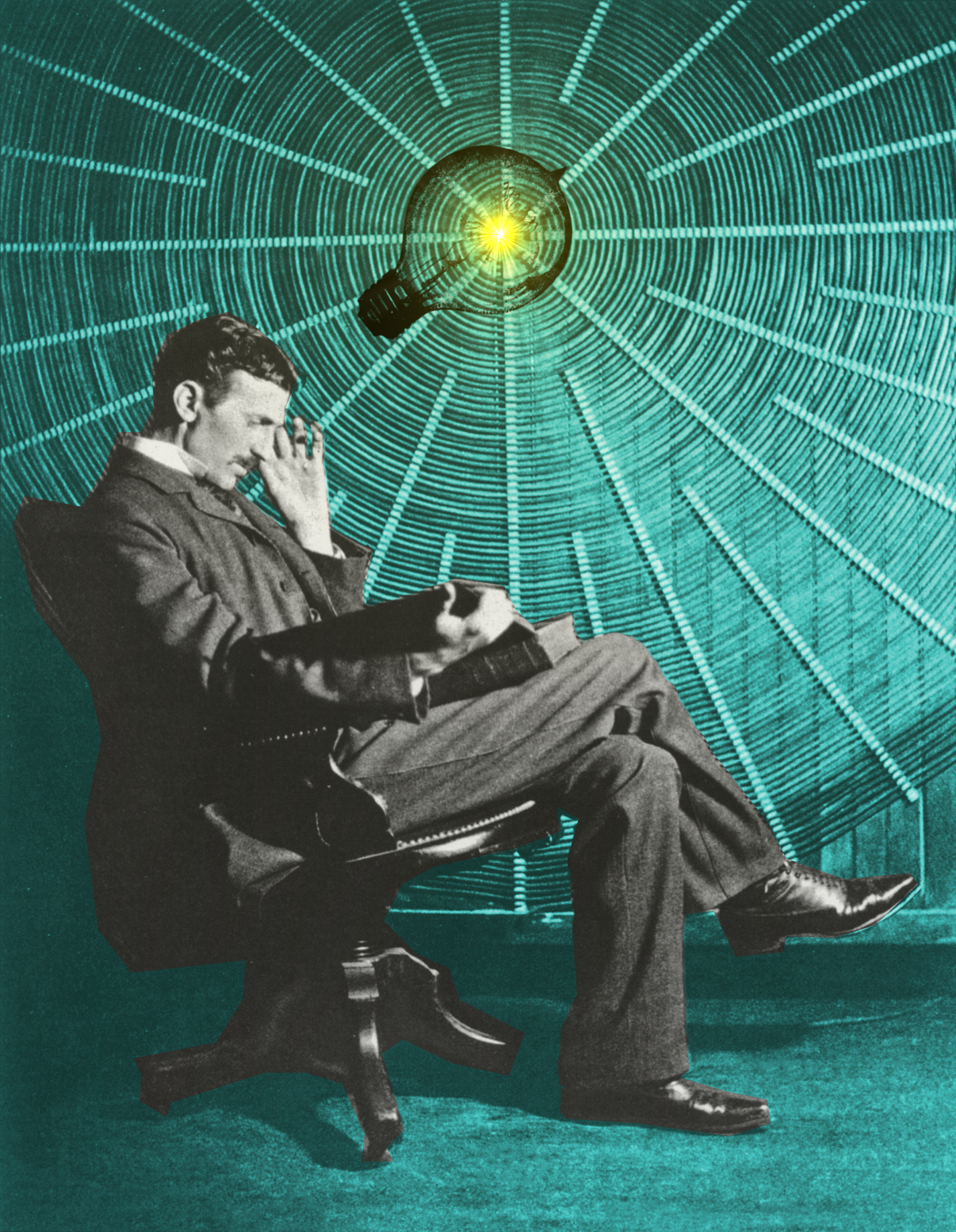
One of the most difficult parts of writing is “killing your darlings.” That might mean cutting out a part you liked to make the story as a whole better. Or, more generally, it can simply mean deleting the boring parts of your story. (As Elmore Leonard said, there should be no boring parts.) Perhaps one of the greatest upsides of writing with AI is that it can help eliminate the “sunk cost fallacy” that authors often face with the words they have already written.
Thomas Ligotti has become one of my favorite contemporary horror writers. Like my favorite contemporary science fiction writer, Ted Chiang, Ligotti writes exclusively short stories. Both writers have never published anything longer than a novella. In this excerpt from an interview, Ligotti explains why he has not and never will write a novel:
I think it’s safe to say that I will never write a novel. The reason is this: I really don’t like fiction, and novels are what fiction is all about. The only fictional works that I’ve ever admired are those which have their formal basis in essays (Borges), poetry (Bruno Schulz), monologues (Thomas Bernhard), or all three (Poe and Lovecraft). I want to hear a writer speaking, not see a movie in my mind that takes days or weeks to get through rather than 100 minutes or the time it takes to watch a multi-part mini-series. Why would anyone want to read The Silence of the Lambs when they could see the movie?
– Thomas Ligotti interviewed by Mark McLaughlin at Horror Garage
A story is most powerful and memorable when tethered to an emotional reaction. People become emotional when something negative happens to someone they care about. That’s why you will never forget traumatic events involving close family members, whereas a story about an acquaintance from years ago may easily slip your mind. Likewise, you will struggle to remember anything from a history test you studied for twenty years ago. With no emotional connection to those events, they did not get stored as lasting memories.
Tenet is Christopher Nolan’s most ambitious film conceptually to date, which is saying something considering he made Memento, The Prestige, Inception, and Interstellar. Without spoilers, Tenet involves time travel, but it is a unique version of time travel—perhaps the most inventive form of time travel I’ve ever seen in a movie—and the most complex.
Mystery is the key to every successful story. Even if a story is not explicitly a mystery, it needs to have some element of mystery within it. If there’s no mystery, wherein the reader is wondering what will happen next, they have little reason to continue reading the story.
Writing fiction is not something that can be taught with a simple “how-to” book. A creative artistic endeavor like fiction writing is something you have to learn by doing yourself. Each writer is different—at least the good ones are—therefore their method to write fiction is different. So this post is not “how to write fiction like others” but “how to teach yourself to write fiction your own way.”
When you’ve written and read enough, you begin to develop an inherent feel for the rhythm of prose. Amateur writers often write sentences without much thought to the rhythm and flow, resulting in a series of short sentences which begin to sound stiff and boring—or a series of exceptionally long complex sentences that also become too stiff and boring to follow.
Most of my toughest problems writing fiction come from hitting a wall midway through the first draft when I realize I must alter the narrative in some dramatic way, requiring massive rewrites of what I’d written so far. This doesn’t always happen, but when it does, it is demoralizing—especially for longer projects like novels. I dread going back to do that rewriting work because it is difficult, tedious, and time-consuming. Fixing what I wrote before often takes longer than it took to write in the first place.
My first foray into creative writing was through screenplays. I always loved movies and thought in moving images, so screenwriting came naturally to me. After about four years of writing roughly ten screenplays, I decided to try shifting to prose. I decided to adapt my best screenplay into a novel. I already had all the plot and characters and world-building done. It should have been easy, right?