I have a love/hate relationship with Blake Crouch’s books. He has fantastic premises about cutting-edge science and writes fast-paced thrillers that keep you eagerly turning the pages to the end. Crouch has been compared to Michael Crichton, in that they both write grounded techno-thrillers about plausible future technology with high-concept books that are ripe for adaptation to the screen (TV and movies). But despite me loving the premises of Crouch’s two previous books, Upgrade and Recursion, ultimately I didn’t like the books as a whole—or more precisely I was let down by their endings.
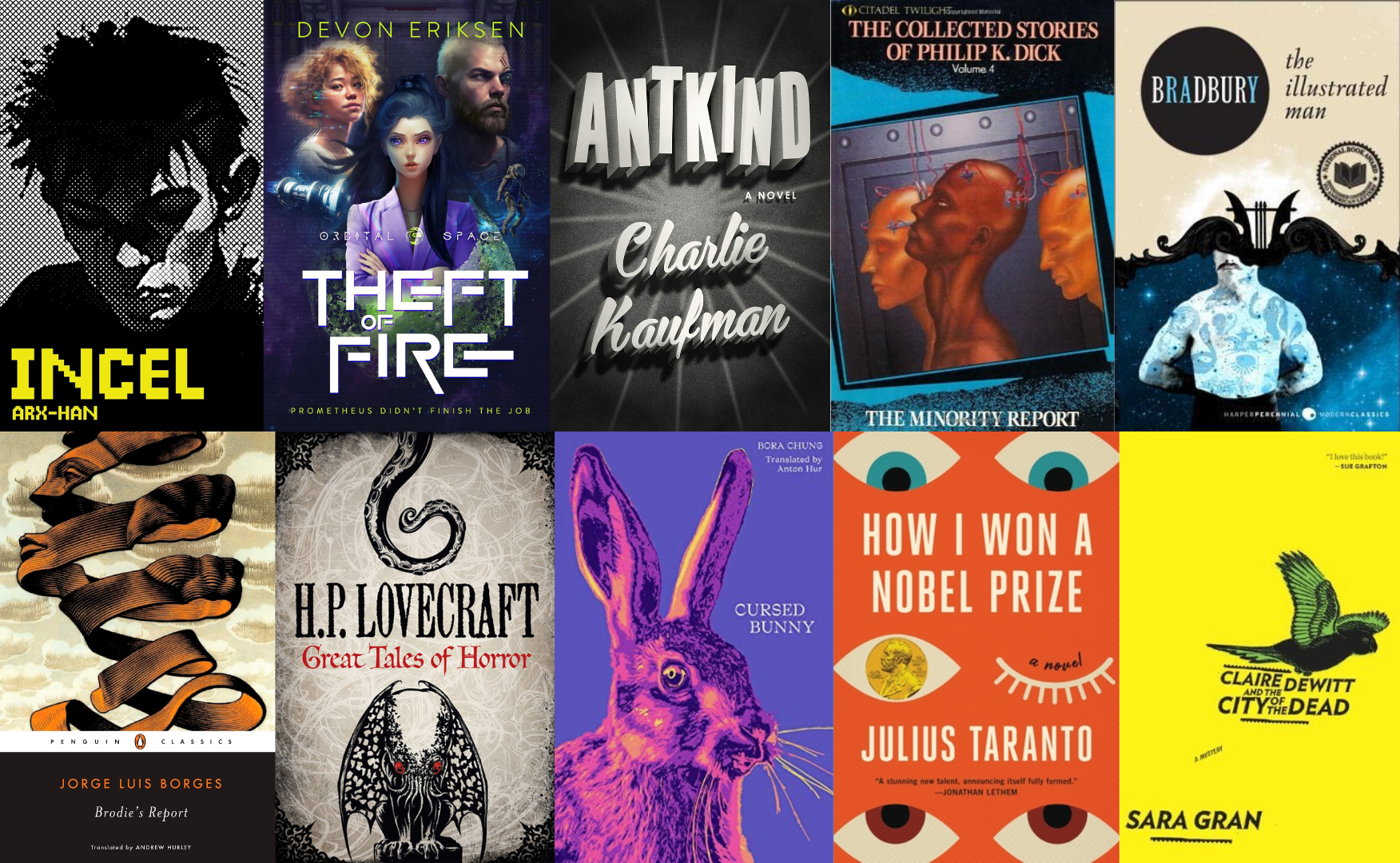
Zero HP Lovecraft (@0x49fa98) is an anonymous internet poster I originally discovered around 2016 when I was looking at the accounts Naval Ravikant (@naval) followed on Twitter. His name and bio (horrorist) intrigued me, so I read his short story, “The Gig Economy,” which was like a modern cyberpunk take on “The Call of Cthulhu.”
I instantly became a fan and read all of Zero’s stories as they originally came out on his WordPress site (now on Substack), and later assembled in this collection. I had been meaning to re-visit the stories because they deserve (and often require) re-reading. His fiction is like a combination of the cosmic horror of H.P. Lovecraft with the dense philosophical speculation of Jorge Luis Borges and the mind-bending science fiction of Ted Chiang.
This continues to be one of the most uniquely brilliant shows on television. It blows my mind how John Wilson is even able to create this show, what his process must be, constantly filming his daily life and somehow editing it all into something cohesive and interesting. There is nothing else like it on TV. It’s almost like an entire show built around synchronicity. He follows serendipity wherever it takes him, around New York City and the entire country. He finds the weirdest people, and like Nathan Fielder, isn’t afraid to get super awkward. But the show is also quite heartfelt at times. Sadly, this is the final season, but I will eagerly watch whatever John Wilson does next.
2. Succession
I wrote about all four seasons of Successionhere (and a fictional fifth season here).
I had been planning to read this book for a while after repeatedly hearing it recommended as one of the greatest American novels. When Cormac McCarthy passed away this year, I thought it would be a good time to finally do so. I’d seen and loved several movies based on McCarthy’s books but had never read one.
There’s not much of a plot to Blood Meridian: it’s basically a group of men riding across the Old West, encountering gruesome scenes of violence in and between skirmishes with Apaches. What really sets the book apart—why it is hailed as one of the greatest modern novels by one of the greatest modern writers—is McCarthy’s writing style, painting portraits of the scenes with beautifully simple poetry and deep philosophical insight, mostly through the character of “the judge.” Which is the second thing that sets Blood Meridian apart. The character of judge Holden is an all-time classic antihero (or outright villain). He studies nature and catalogs specimens in his journal, yet kills men, women, and children, sometimes just for the thrill of it.
The story is told from the perspective of “the kid,” a young man riding with the judge and their leader, Glanton. But whenever the focus drifted away from the judge, I wanted to return to him. He is such a fascinating character and if/when the book is made into a movie, whoever plays the judge will likely win an Oscar. The book is full of violence but not gratuitously—it is there for a reason. The book explores the very nature of violence and war, how it is fundamental to life, inescapable. Perhaps the central question of the book is who or what is Holden the judge of?
I already did my annual list of the ten best older movies I saw in 2023, so here is a list of the newer movies I saw this past year. They are separated into five tiers based on quality and listed alphabetically within each tier. (Check JustWatch.com to see where they are currently streaming.)
I sat stunned as the credits rolled, amazed at how great this low-budget indie horror film was. It is an absolute masterpiece, maybe my favorite horror movie ever—at least of the new millennium. I was on edge throughout, legitimately frightened—all without a single jump scare. It is an occult horror movie about black magick and rituals, but they take the subject matter extremely seriously and clearly did research to make it seem realistic—which makes it all the more haunting. [Slight Spoilers Ahead] The story is about a grieving mother who hires an occultist to perform a ritual to summon her guardian angel to ask a favor so she can speak to her murdered son—and get revenge against his killers (who used him to perform an occult ritual). The ritual in the film is based on an actual ritual from The Book of Abramelin, which the famous occultist Aleister Crowley performed in real life. I find the world of occult ritual magic fascinating but also frightening. Occult horror scares me more than most other subgenres because the type of dark magic portrayed in the film might actually exist. Whether such dark forces are real or not doesn’t matter, because there certainly do exist occultists who believe them to be real and actually perform these magical rituals—but to what end?
One of my works in progress is a science fiction novella about the creation of an artificial general intelligence (AGI). The story features a scene where the human programmers are amazed that the AGI can create original artwork of any kind on demand. I wrote the first draft in 2018. Yes, just four years ago an AI that could create art seemed like a speculative bit of futurism. Now it appears I will need to revise that scene, as what was “sci-fi” then is now just “sci.” Reality is progressing faster than I can publish science fiction.
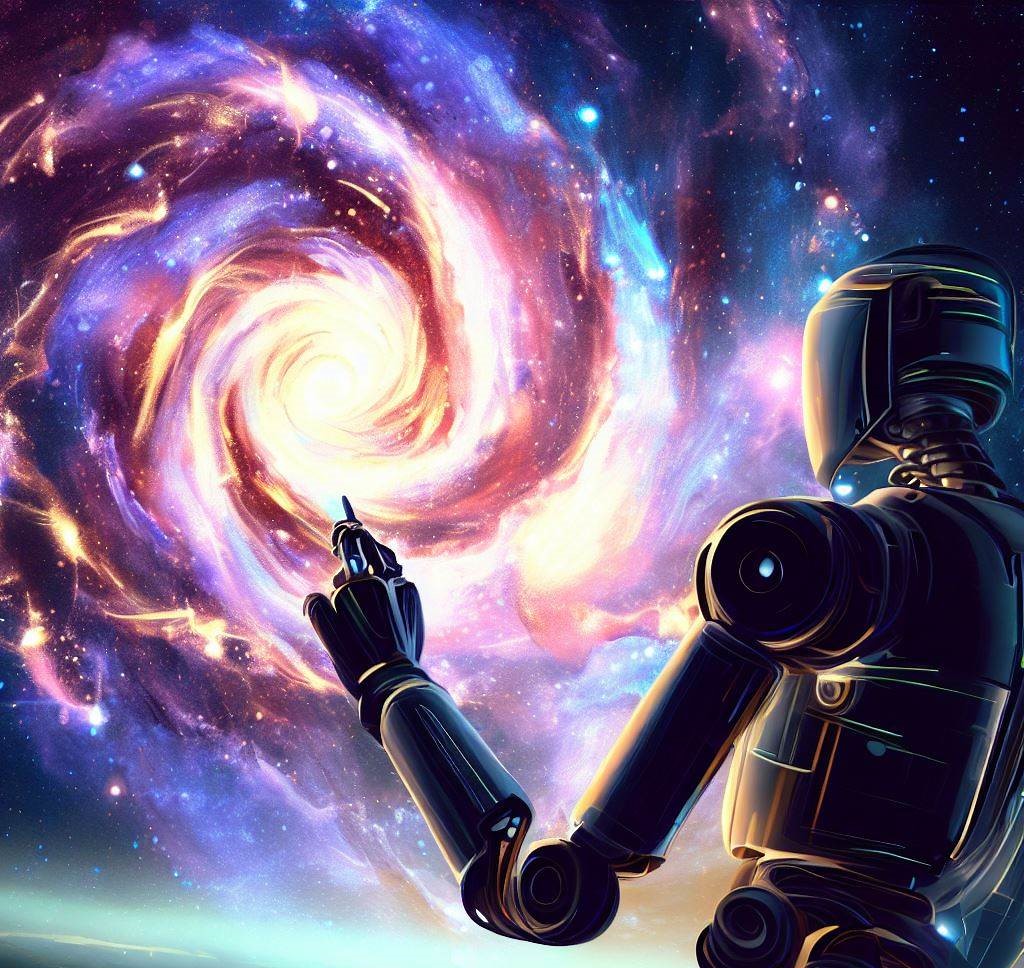
When I wrote this post about DALL-E last May, I had only seen others’ generative-AI creations; I hadn’t gotten the chance to create my own AI art yet. Now I have and am utterly addicted. There was much hype around AI image generators like DALL-E and Midjourney when they were first released. Usually when something is hyped that much in the media it is overblown; the reality is far less dramatic. But after DALL-E became public, plus the release of the free and open-source Stable Diffusion, I have had the chance to create my own AI art (thousands of images at this point—and counting). While the initial hype was quite high, I would venture to say it was not nearly high enough. Most people still don’t realize how significant generative AI is/will be. In the future, people will look back at the world pre-AI art as a distinct, unrecognizable time. Generative AI is a total game-changer, an artistic singularity.
I rarely see movies in the theater anymore and instead wait until new releases are available for streaming, so my reviews of “new” movies are not so “new.” It sometimes takes me a year or two to catch up. There are still a lot of 2022 movies I want to see (look for those on next year’s list). I’ll break this year’s list into tiers, Tier-1 being the best and Tier-5 being the worst. The movies in each tier are sorted alphabetically as it’s pointless to rank equally great works of art over each other. One is not better than the other—they are just different. (Check JustWatch.com to see where movies on this list are currently streaming.)
This is a fascinating book about the type of precognition often experienced in dreams, built off the work of J.W. Dunne. Author Eric Wargo provides numerous famous examples of precognitive dreams, often about traumatic events such as plane crashes or the sinking of the Titanic. Wargo claims such cases of precognition are actually “prememory”: your unconscious mind remembering a future memory, not of the event itself, but of your emotional reaction to learning news of the event. Both the author and I are aware of how crazy and “woo” this all sounds, but Wargo’s research is scientifically rigorous, and he walks a fine line of being both skeptical about paranormal claims but also open-minded to their possibilities (something I wish more on both sides of the paranormal/skeptical debate were willing to do).
This is the second Arthur C. Clarke novel I’ve read (the first being Rendezvous With Rama), and I’ve been blown away by both. For some reason I expected Clarke’s books to be a bit drier and more dated, but his is some of the most exciting and mind-expanding science fiction I’ve ever read. I should have expected no less from the mind behind 2001: A Space Odyssey. Perhaps I had that prejudice because in some older sci-fi books, the science and ideas become outdated or the writing style does (or it was never any good to begin with). Especially with hard science fiction, which Clarke is often categorized as, the science is prioritized over the story, craft, and characters, so once the science itself becomes dated, the book does as well. But this is NOT the case with Arthur C. Clarke. Though there is some “hard science” in Childhood’s End, it was also quite weird, speculative, and philosophical (like 2001). Clarke’s ideas remain highly relevant and he is an exquisite composer of prose. This novel particularly features so many brilliant lines of philosophical insight, such as: “There were some things that only time could cure. Evil men could be destroyed, but nothing could be done with good men who were deluded.”
With the advent of streaming services, the world has been flooded with television series—much too many for any one person to watch. These shows are mostly good but rarely great. I’ve come to realize why television tends toward mediocrity. Most people only half-watch tv in the background while doing other things like browsing social media on a second screen. They don’t have the self-discipline to not look at their phone while watching tv, so tv shows cannot be too intellectually challenging. TV shows are purposely dumbed-down so they can be half-watched while viewers are multitasking. Most people don’t have the attention span to watch artistic films—or movies that make you think. That’s why most tv shows drag on and are repetitive—so people can still understand what’s going on while scrolling Instagram. But if I’m going to watch something, I devote my full attention, which is the way cinema is meant to be seen. The other issue with television is series being canceled prematurely and never getting closure. It is for these reasons, among others, that I prefer movies to tv series. Though there were a few series worth watching this year.