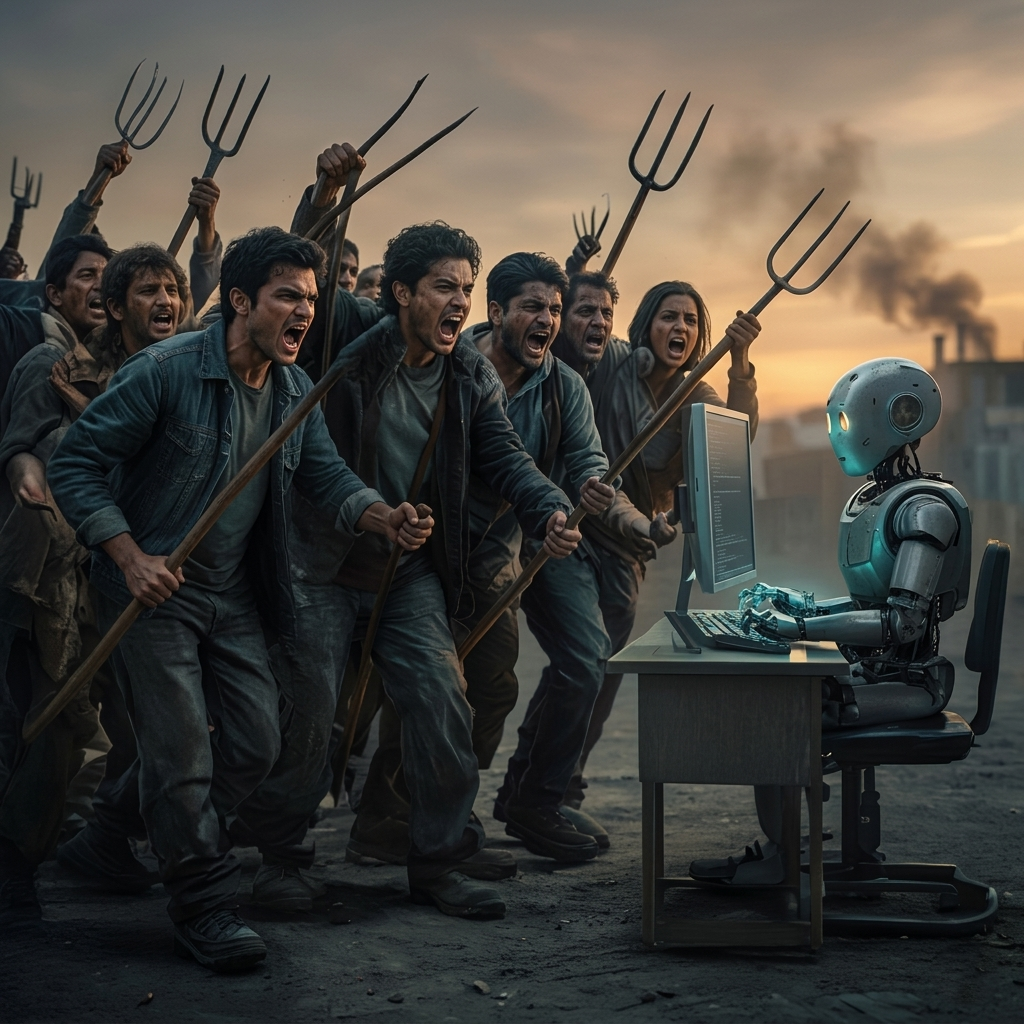
The anti-AI sentiment within the writing community is rabid. Many writers say that all AI writing is slop, and you should never use it. But I think that’s mostly denial and cope. LLMs are getting better by the day, and while I still mostly stand by this piece about the limits of ChatGPT at writing fiction, AI (Claude in particular) has gotten orders of magnitude better at writing fiction over the two and a half years since I wrote that—and it will only get better in the future. If you think AI cannot contribute to good writing, you’re not trying hard enough (or prompting well enough).
One of the best use cases for AI in writing fiction is as an expert personal research assistant. A common writing tip is to “write what you know.” This doesn’t mean to only write about your personal life, but to write about things you personally know about. That could mean doing research about certain topics you haven’t experienced personally until you are familiar enough to convincingly write about that topic. The problem with research is that it can take a lot of time, which limits the amount of actual creative writing you can do. That’s where AI comes in.
If you want to submit a short story or novel to any publisher today, you will inevitably find a disclaimer on their submission guidelines page that forbids submitting a story that used AI. But what exactly does “using AI” entail? If you dictate a story with an app that uses AI to transcribe it, is that using AI? If you then use Grammarly to proofread and edit, is that using AI? If you upload your manuscript to use Perplexity as a fact-checker and research assistant, is that using AI? If you use ChatGPT to help generate ideas during the outline phase but then write the actual story yourself, is that using AI? If you generate the first draft of a story with an LLM, but then rewrite every single word, is that still considered using AI? What if you only change 95% of the words? 75%? 50%?
Storytelling is the key to good fiction. What is storytelling? It is the way you tell a story. A story is not merely a plot plus characters. If you give ten writers the same plot and characters, you will end up with ten wildly different stories (of varying levels of quality). That is where the talent of storytelling enters the equation. You can have a compelling plot and interesting characters, but if you don’t have a skilled storyteller to deliver those elements you’re not going to have a good story. It is not just a matter of being able to compose grammatically clean prose—ChatGPT can do that. Good storytelling is composing the story, from sentence to sentence, in a compelling way.
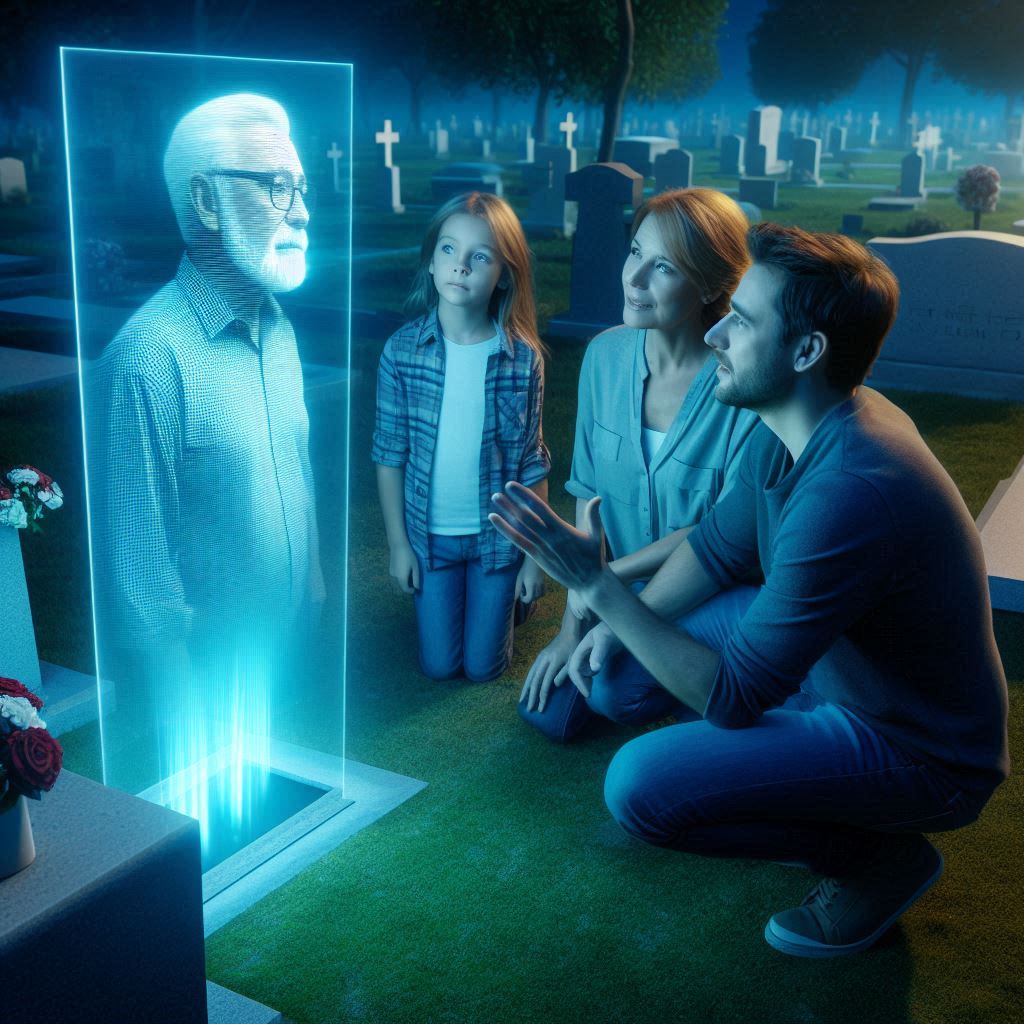
One of the potential applications of AI text generators such as ChatGPT is creating a chatbot based on people who have died so that users can speak to those “people” after they are gone. This could be done with famous figures from history or personal loved ones. Such “grief tech,” as it is called, is already being created: HereAfter, You Only Virtual, Character.ai, and MindBank are just a few examples. There are currently apps where living users answer questions now to help create an AI chatbot clone of themselves that others can speak to after they die.
Theoretically, if a person has enough textual data to input into the model (from books, journals, social media posts, emails, and text messages), then the AI trained on that data can anticipate what that person is likely to say given any prompt (which is essentially how all LLMs work). The chatbot will learn to write in the style of the deceased person based on their personal data. Using continually updated data from the internet, the “deadbot” can comment on current events, making it seem as though the person is still alive. Users can learn what the deceased person would think about things that have happened in the world since they passed away. Or they can ask the chatbot all the questions they wish they had asked while the person was still alive. At least that is what the chatbot’s creators will claim their AI can do. But this is a false hope, a facade. AI cannot predict what a deceased human being would think or say years or decades later. You cannot create an accurate chatbot based on the data of the dead.
There are essentially two types of writers: plotters and pantsers. Those who outline their plot beforehand, and those who write from the seat of their pants (AKA go in blind and make everything up as they go along). I said in the past that I was an outliner, but I now outline less than I used to.
Outlines make it easier to know where you have to go in the plot. But one benefit of writing from the seat of your pants is that you are motivated to write more often and faster because you want to know what happens next. If the full story is thoroughly outlined, writing can become more of a tedious transcription-like process with little surprise for the writer. Less planning can create more fun, though I don’t know if I would recommend that approach to someone who doesn’t have sufficient writing experience.
Welcome to the age of algorithmic fiction. Thanks to tools like GPT-4, a human writer with a library of previously written books can simply write a one-page outline for a new novel, and AI can write an entire novel in their style. In many cases the book will be good enough to pass as if it was written by the human authors themselves, allowing writers to publish more frequently. However, GPT fiction will only work with formulaic writers whose books are all similar. In other words, those writers who were already writing algorithmic fiction before the aid of AI.
One of the most difficult parts of writing is “killing your darlings.” That might mean cutting out a part you liked to make the story as a whole better. Or, more generally, it can simply mean deleting the boring parts of your story. (As Elmore Leonard said, there should be no boring parts.) Perhaps one of the greatest upsides of writing with AI is that it can help eliminate the “sunk cost fallacy” that authors often face with the words they have already written.
In this post I wrote about my experiences using ChatGPT to write fiction, ultimately concluding that AI is better at non-creative writing than creative writing. I will now use ChatGPT to further prove my point. AI was much better at generating the following nonfiction blog post than generating any fiction stories. I’ll let ChatGPT explain why:
There was much hype on the internet upon the release of ChatGPT, OpenAI’s free-to-use text-generating artificial intelligence program based on a Large Language Model (LLM). You can write any prompt, and ChatGPT will instantly produce grammatically correct text—of just about any type (fiction, nonfiction, poetry, etc.). Some worry this could spell the end of human writers. It is admittedly impressive what GPTs can produce—though it is still limited. As an experiment, I tried writing several fiction stories with ChatGPT. I have literally thousands of story ideas, more than I could ever write myself. So I figured I’d take some of the lesser ideas at the bottom of my queue, those I’d probably never get around to, and let the AI write it for me—if it could.







 T.Z. Barry