Category Archives: Writing

Best Nonfiction Books I Read in 2018

nonfiction-2018

At all times, I am reading at least one fiction book and one nonfiction book. The nonfiction subjects vary: science, history, philosophy, psychology, and writing. There’s so much I want to learn about the world and so little time to do it. The nonfiction books I read often inspire and influence the fiction I write, though really I’m just hoping to learn something new from each book I read, and I learned a lot from those I read this past year. Continue reading

Where Do You Get Your Ideas?

ideas

Where do you get your ideas? That seems to be a question that every writer hates. Most don’t have an answer. It almost seems kind of magical how ideas come to them. But I don’t think it’s magic at all. I think I know how every writer and artist gets their ideas: data inputs to their consciousness. Continue reading

Writing is a Transfer of Consciousness

writing-consciousness

I’ve always been more comfortable writing than speaking. But beyond the comfort level, there’s a power to writing, or recording your ideas, that speaking lacks. When you write something, it is recorded on paper or online forever. Any human now or in the future for hundreds, thousands, millions, even billions of years, could read what you had to say. That seems so much more powerful and important than communicating in person, wherein whatever you say is lost in the wind of the universe forever. One person (or small group) hears it, then it’s gone forever. Continue reading

Verisimilitude in Fiction: Books, Movies, and Virtual Reality

verisimilitude

Verisimilitude, or the appearance of being real, is the key to a successful story. It’s what allows one to get completely lost in a narrative and forget it’s a work of fiction. Verisimilitude doesn’t necessarily mean the story must represent the real world as we know it. A story set in a science fiction or fantasy world must also have verisimilitude, or in other words, everything must seem real and believable within the world of the story. While movies may appear to be the more “realistic” medium, I think it may be easier to achieve verisimilitude in books. Continue reading

The Greatest Invention in Human History

stone-2574317_1920

The greatest invention in human history is written language. Before writing, to convey any information to anyone, you could only do it through word of mouth to people you saw face to face. For most of human history, we lived in small tribes as hunter-gatherers, so knowledge was only passed on to fellow members of one’s tribe (family and close friends). A son would only know what his father remembered from what his father directly told him, and so on. Continue reading

New Pen Name: T.Z. Barry

tz-logo-MAIN
From now on, I will be going by the pen name “T.Z. Barry.” The website URL will be changing to tzbarry.com. All the links and everything should automatically transfer over. I’ll just be changing the name. It’s kind of a long boring story, and it doesn’t really matter why, but if you’re interested I’ll explain. Continue reading

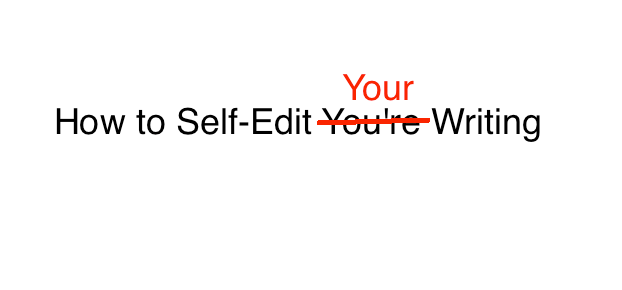
How to Self-Edit Your Writing

Sel-Editing

No piece of writing is done until you’ve edited it. I’ve mentioned before how I’m not a fan of editing. I find it the most tedious part of the writing process, but it needs to be done. You can’t expect others to read something full of typos and mistakes. But finding all your typos can be difficult because your brain naturally corrects mistakes in your head as you read, so you don’t even notice them. The best thing to do is hire a professional editor. But not everybody can afford to do that. (Especially for a blog post like this.) So I’ll share some tricks I’ve used to help self-edit my own writing. Continue reading

Idea Inception: Outlining and the Future of Writing

incubate5

My favorite part of writing might be outlining. Not actually creating a formal outline, but the moment I first hatch the idea and jot notes down. It’s more like free-writing. The ideas come to me rapidly, and I just try to get it all down as fast as I can. They come out of order: plot points, characters, action scenes, settings… My mind naturally sculpts the ideas into stories with three acts: a beginning, middle, and end. In a half-hour, I could have a page or two—and it may look like a mess—but it’ll contain the structure of an entire screenplay/novel. I can see the entire story in my head like a movie. My mind fills in the gaps between the scenes. It feels complete. I don’t even need to write it—other than to share it with other people. Continue reading