
Common advice to writers is to “write what you know.” Which I agree with. But people often misunderstand what “write what you know” means. Continue reading

Common advice to writers is to “write what you know.” Which I agree with. But people often misunderstand what “write what you know” means. Continue reading
No piece of writing is done until you’ve edited it. I’ve mentioned before how I’m not a fan of editing. I find it the most tedious part of the writing process, but it needs to be done. You can’t expect others to read something full of typos and mistakes. But finding all your typos can be difficult because your brain naturally corrects mistakes in your head as you read, so you don’t even notice them. The best thing to do is hire a professional editor. But not everybody can afford to do that. (Especially for a blog post like this.) So I’ll share some tricks I’ve used to help self-edit my own writing. Continue reading

Shadow puppets on cave walls were one of the earliest forms of visual storytelling, or in other words, the first movies. Visual stories are the simplest and most basic form of storytelling, which is why people love movies so much today. Continue reading
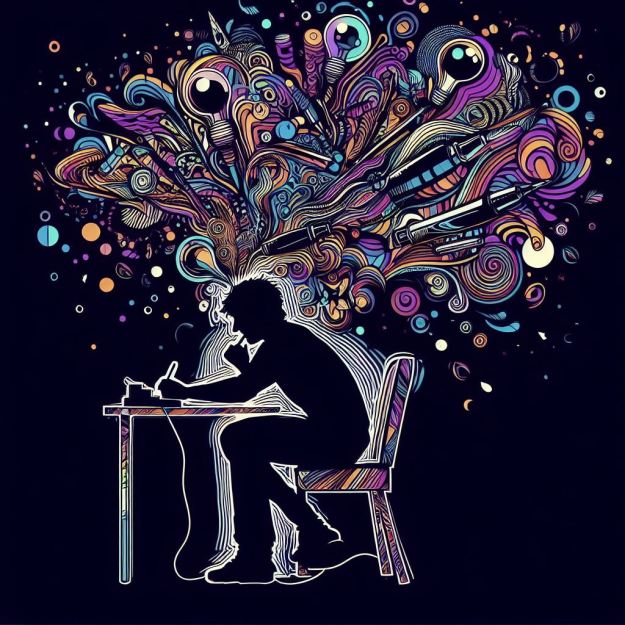
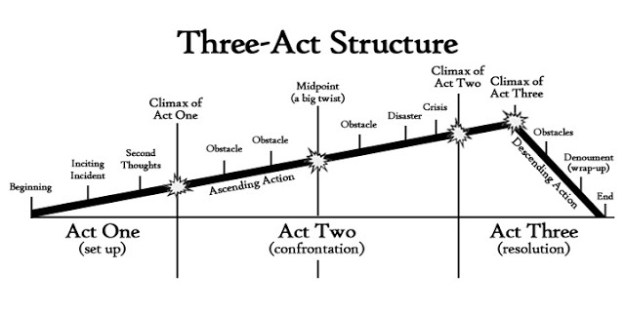
My favorite part of writing might be outlining. Not actually creating a formal outline, but the moment I first hatch the idea and jot notes down. It’s more like free-writing. The ideas come to me rapidly, and I just try to get it all down as fast as I can. They come out of order: plot points, characters, action scenes, settings… My mind naturally sculpts the ideas into stories with three acts: a beginning, middle, and end. In a half-hour, I could have a page or two—and it may look like a mess—but it’ll contain the structure of an entire screenplay/novel. I can see the entire story in my head like a movie. My mind fills in the gaps between the scenes. It feels complete. I don’t even need to write it—other than to share it with other people. Continue reading

There are so many stories I want to write, books I want to read, movies, TV shows, and documentaries I want to watch, video games I want to play, music and podcasts I want to listen to, and places I want to go. I never seem to have enough time to do everything I want to. But when I look around, everybody else seems to be having no problem finding the time to do it all. Which drives me crazy. Why does everybody have so much more free time than me? Continue reading
One of the big debates in writing fiction is plotting versus pantsing. Outlining your story ahead of time, or making it up as you go along. Continue reading

I love listening to podcasts, but for some reason I never got into audiobooks. I couldn’t quite connect with a novel by listening to it in the same way I did by reading it. Which I found odd. Oral storytelling is evolutionarily ingrained in humans, dating back to when our prehistoric ancestors told stories around the campfire. Therefore, audiobooks should be more natural than reading. Which explains why I prefer listening to podcasts over reading transcripts or articles. However, I still prefer reading books over audiobooks. Why the apparent discrepancy? Continue reading

I wish I could be like J.D. Salinger or Thomas Pynchon, a famous author who stays completely out of the public eye. No interviews. No social media. No website. Retain an air of mystery about myself. Build a mystique. It’s an alluring idea, but I’m not sure if it’s possible anymore to be both a famous author and a recluse. Continue reading

They say writing is rewriting. Well, I love writing, but I hate rewriting.
The first draft is my favorite part of the process. While it’s often difficult, I enjoy the challenge because it’s pure creativity. Rewriting and editing, on the other hand, feels like drudgery. I know it’s important and makes the work better, but I just want to get it over with and move on to the next project and write something new. Continue reading

I was thinking about the artificial intelligence (AI) revolution and how robots and automation will take over most if not all human jobs. But what about mine? The fiction writer. Or any other kind of artist: painter, musician, actor, etc… Will robots replace humans in creating art? Continue reading

