Category Archives: Science

What Will Aliens Look Like?

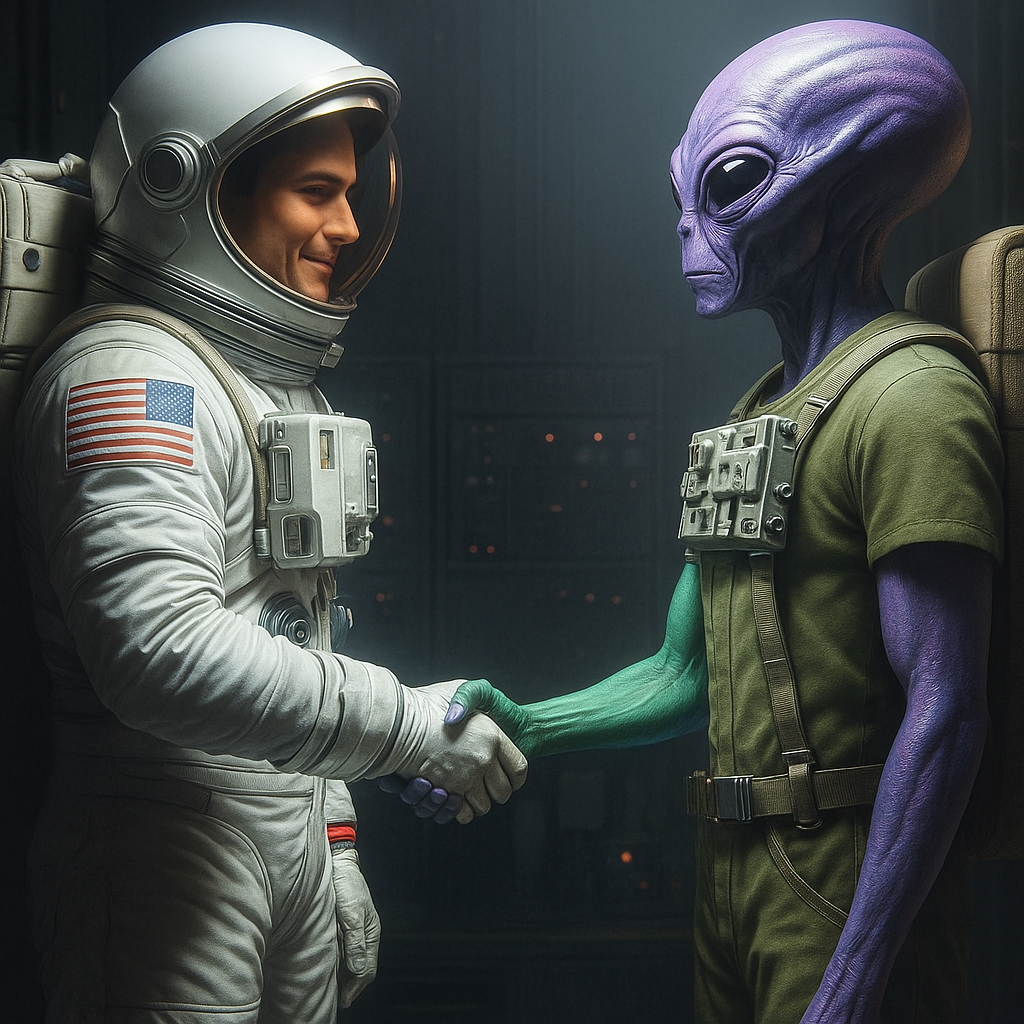
When people speculate about what alien life forms might look like, most experts think it is extremely unlikely that they will be anything like humans. Neil deGrasse Tyson has critiqued Star Trek for its “lack of imagination” by making all their alien species somewhat humanoid in form with only slight cosmetic differences (although that was probably more due to lack of finances rather than lack of imagination). Regardless, I think experts like NDT are wrong. Intelligent aliens, if they exist, will probably look somewhat similar to humans, as Star Trek portrayed.

Continue reading

Blake Crouch’s Upgrade and the Recursion of Pandora’s Box

I have a love/hate relationship with Blake Crouch’s books. He has fantastic premises about cutting-edge science and writes fast-paced thrillers that keep you eagerly turning the pages to the end. Crouch has been compared to Michael Crichton, in that they both write grounded techno-thrillers about plausible future technology with high-concept books that are ripe for adaptation to the screen (TV and movies). But despite me loving the premises of Crouch’s two previous books, Upgrade and Recursion, ultimately I didn’t like the books as a whole—or more precisely I was let down by their endings.

Continue reading

Best Nonfiction Books I Read in 2024

Man and His Symbols (1968) by Carl G. Jung

I have been wanting to read Jung for a while after hearing so much about his work second-hand through podcasts, blogs, and books. Jung has been highly influential on so many writers, thinkers, and artists I admire—and I can see why. His symbolic and mythological approach to psychology is sorely needed in our overly reductionist materialistic world. This book serves as a great introduction to Jung’s work. It features one chapter by Jung himself while the rest are written by his associates. The book also features lots of images to help illustrate the points about symbols because visual symbols are so powerful. Jung writes about the unconscious and the role of the artist:

Continue reading

Shoulder Pain? Hang on a Minute…

About thirteen years ago I started experiencing shoulder pain, but I had no specific injury or event that seemed to have caused it. The pain was persistent, lingering for months, and though it was not overly painful, it was enough to affect my golf swing and other athletic activities. I visited an orthopedic doctor hoping to discover what was wrong and see if the shoulder could be repaired. He sent me for an x-ray, then an MRI, but neither revealed any broken bones or ligament tears. The doctor then recommended I do physical therapy, which I did for several months, but that didn’t seem to help—the nagging pain and lack of motion in my shoulder persisted. He said the only other option at that point was surgery. 

Continue reading

Plan Your Creative Career Like Evolution

Planning your life can be difficult because there are so many possibilities. It may be best to take a lesson from nature and choose your career path like evolution. DNA evolves by reproduction with random mutations. Many variations are created, not knowing which will succeed. When one trait does succeed, it replicates and builds upon that mutation. This system of evolution clearly works—it produced us, humans, from a single cell of bacteria.

Continue reading

The Totally Surreal Experience of Seeing a Total Solar Eclipse 

On April 8, 2024 in Burlington, Vermont I witnessed my first total solar eclipse. The moment of totality in which the moon covered the sun was the most awe-inspiring act of nature I have ever seen. No photograph or video can do it justice. Words fail to convey the experience. There is no comparison to seeing a total eclipse in person with your own eyes. It is an unforgettable sight every human being should see at least once in their lives. 

The last total solar eclipse visible in the United States was in 2017. I was not in the path of totality, and I couldn’t get a pair of glasses, so I only saw the second-hand effects of the partial eclipse. I watched videos of totality, which looked impressive, and I heard accounts of people saying how transcendent it was, but there was a disconnect. It was like hearing somebody else talk about their dreams. The events in a dream may be astounding, but it doesn’t matter to anyone but the dreamer. Likewise, you can see videos of a total eclipse and hear people describe what they saw, but it will never matter as much to those who witnessed it firsthand. Regardless, I will attempt to describe my experience that day. 

Continue reading

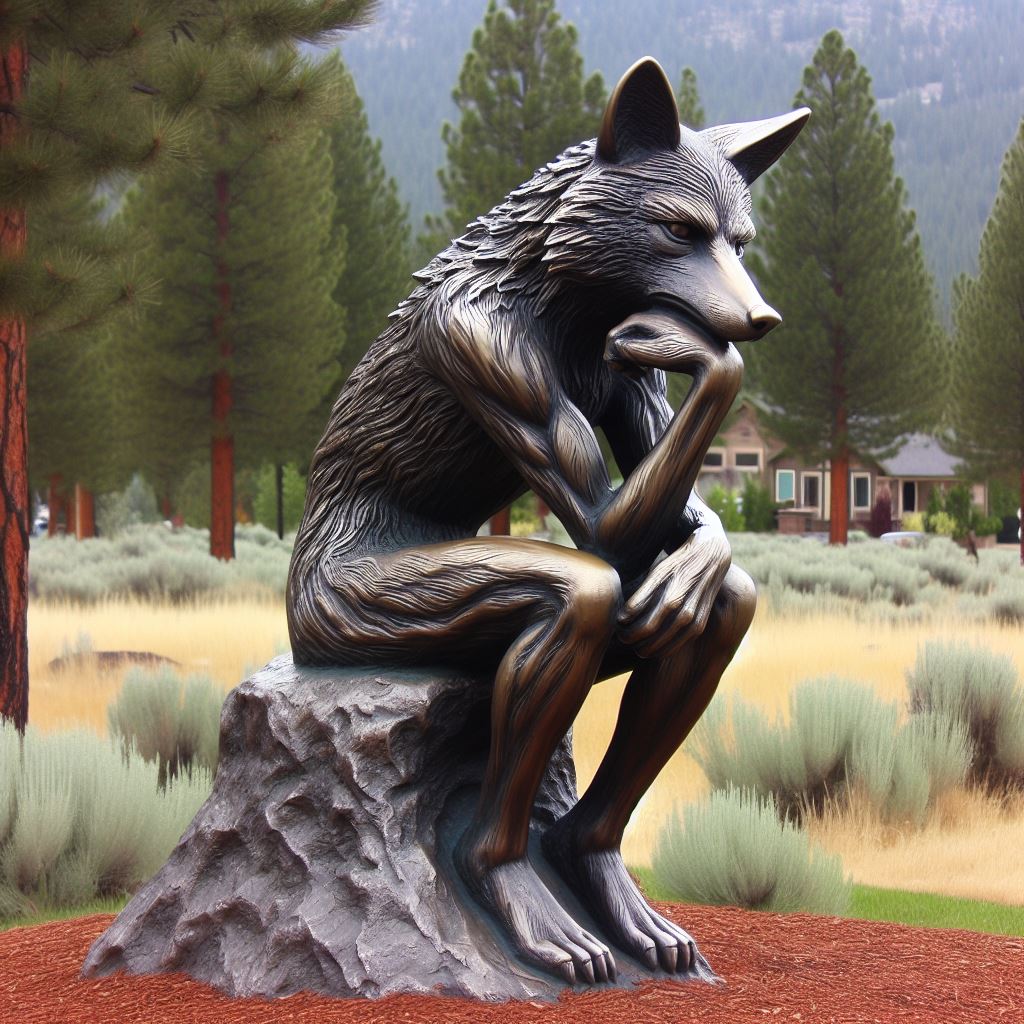
What is it Like to be a Coyote?

One day while hiking I encountered a couple of coyotes along the trail. At first I got frightened, wondering if they were dangerous. But the coyotes just stood still, watching me from a distance and minding their own business. I walked away, continuing along the trail, while googling for information on my phone. With relief, I learned coyotes rarely ever attack adult humans—only small pets and children. (So don’t leave them out alone in coyote-populated areas.)

I then started wondering what it feels like to be a coyote. What was going through that creature’s mind as it watched me hiking by. Is anything going through its mind? What I mean to say is, are coyotes conscious? But not just consciousness as subjective experience, or the classic definition by Thomas Nagel—that there is something that it is like to be that thing. I mean are coyotes—or dogs, cats, and any animals other than humans—conscious in the same way humans are, with self-awareness, an inner monologue, and imagination? Does any species besides Homo Sapiens possess “sapience?”

Continue reading

Best Nonfiction Books I Read in 2023

1. A Supposedly Fun Thing I’ll Never Do Again: Essays and Arguments (1997) by David Foster Wallace

I have yet to read Infinite Jest (it is on my bucket list), but I enjoyed this collection of DFW’s long nonfiction essays, maybe even more than his short fiction. They are absolutely genius—not just in their content but in the craftsmanship of the prose on a sentence level. I read a couple of these essays several years ago but struggled with Wallace’s complicated syntax. Between the page-long sentences, invented words and acronyms, and multi-paged footnotes, you practically need a map to read a David Foster Wallace book. With my reading comprehension having expanded since then, I can now better understand and appreciate the complexity of his prose. Few writers could string words together better than DFW (RIP). The essays in this collection include: 

Continue reading

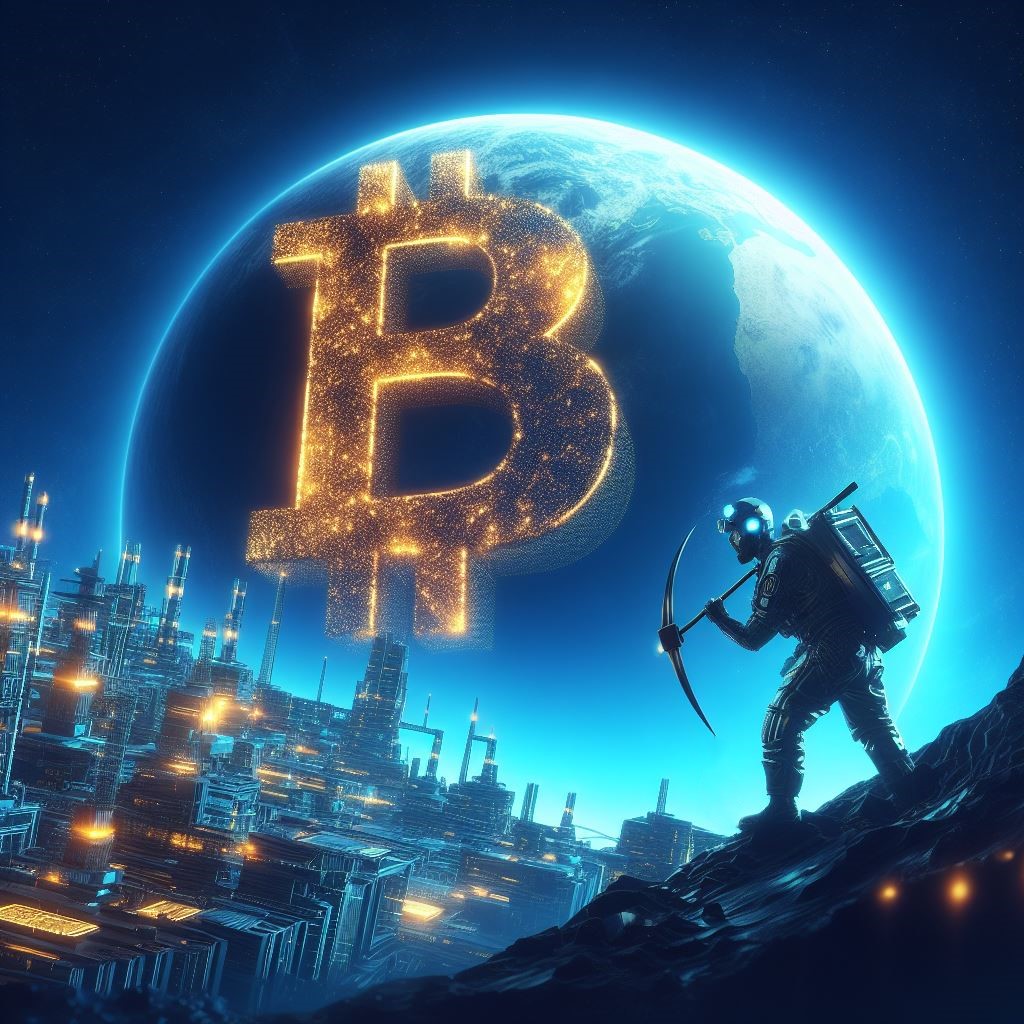
Why Isn’t Bitcoin Fixing This (Yet)?

A common meme among Bitcoin enthusiasts is the phrase “Bitcoin fixes this,” used in response to any current societal problem. Whether it’s an economic issue, political conflict, or social ill, many bitcoiners believe the root cause is the money supply and the Federal Reserve’s inflationary policy—therefore a decentralized cryptocurrency like Bitcoin can provide the solution. “Fix the money, fix the world” is another popular meme phrase among bitcoiners.

However, Bitcoin and its supporters have their critics. Many do not care for the “Bitcoin maximalists,” their toxicity, and their repeated claims that “Bitcoin fixes this” for every societal problem. I cannot claim to be a full-on Bitcoin maximalist since I hold several alt-coins, but I am a Bitcoin mostlyist—as the majority of my crypto hodlings are BTC, and I think Bitcoin is the best and most important cryptocurrency in the world. I agree with the Bitcoin maximalists on most things, including that bitcoin will fix many of society’s current problems, which are often economic in nature. (Read Robert Breedlove for more on this.)

Continue reading

Best Nonfiction Books I Read in 2022

1. Time Loops: Precognition, Retrocausation, and the Unconscious (2018) by Eric Wargo

This is a fascinating book about the type of precognition often experienced in dreams, built off the work of J.W. Dunne. Author Eric Wargo provides numerous famous examples of precognitive dreams, often about traumatic events such as plane crashes or the sinking of the Titanic. Wargo claims such cases of precognition are actually “prememory”: your unconscious mind remembering a future memory, not of the event itself, but of your emotional reaction to learning news of the event. Both the author and I are aware of how crazy and “woo” this all sounds, but Wargo’s research is scientifically rigorous, and he walks a fine line of being both skeptical about paranormal claims but also open-minded to their possibilities (something I wish more on both sides of the paranormal/skeptical debate were willing to do).

Continue reading