Category Archives: Psychology

Growing Up With the Internet as a Millennial vs Gen-Z

I recently listened to a podcast with Zoomers talking about their experience of growing up with the internet as they came of age. It made me realize how different things were for my generation, the Millennials. Your “coming of age” years are when you transition from childhood into adulthood, roughly from middle school through high school and college. Those years are enormously influential on your development, as the core experiences during that period influence the type of person you will ultimately become for the rest of your life. I came of age during the 1990s and early 2000s, whereas Gen-Z came of age in the 2010s and early 2020s. The year 2005 does not seem that long ago, but in many ways the world then is unrecognizable to the world young people face today—at least online.

Continue reading

The Ceramic Jet

When I was in the seventh grade, we had an art class assignment to make a small sculpture out of clay. It could be anything we wanted. I was fascinated by fighter jets at the time, partly inspired by the recent movie Independence Day, so I decided to make an F-16. We had art class one day a week, so I molded the clay over several weeks into a fighter jet about the size of my hand. Once it was hardened I painted it. After the paint dried, my work of art was completed and ready to be taken home.

Continue reading

90s AIM vs Current Social Media

In the late 1990s, AOL instant messenger (AIM) was the first social network I used, and it is still my favorite form of social media. What was different about AIM is that it was more social, whereas modern social media is more parasocial.

Continue reading

Best Nonfiction Books I Read in 2024

Man and His Symbols (1968) by Carl G. Jung

I have been wanting to read Jung for a while after hearing so much about his work second-hand through podcasts, blogs, and books. Jung has been highly influential on so many writers, thinkers, and artists I admire—and I can see why. His symbolic and mythological approach to psychology is sorely needed in our overly reductionist materialistic world. This book serves as a great introduction to Jung’s work. It features one chapter by Jung himself while the rest are written by his associates. The book also features lots of images to help illustrate the points about symbols because visual symbols are so powerful. Jung writes about the unconscious and the role of the artist:

Continue reading

From TRL to TikTok: Millennial Pop Culture vs. Gen-Z

Generation-Z is the first generation to grow up entirely online. For as long as Zoomers can remember, the internet has been ubiquitous and pervasive to daily life through smartphones. As a result, Gen-Z has no consensus culture—no TV shows, movies, or music they all consumed growing up. Everything had fractured into thousands of subcultures on the internet. Each Zoomer is an island. There may be another person who shares all your same niche cultural interests, but you are unlikely to ever randomly meet that person in person. You will only ever “meet” that person online. This fragmentation of culture is not necessarily good or bad. It just is. And it is different from every other generation that came before. 

Continue reading

Plan Your Creative Career Like Evolution

Planning your life can be difficult because there are so many possibilities. It may be best to take a lesson from nature and choose your career path like evolution. DNA evolves by reproduction with random mutations. Many variations are created, not knowing which will succeed. When one trait does succeed, it replicates and builds upon that mutation. This system of evolution clearly works—it produced us, humans, from a single cell of bacteria.

Continue reading

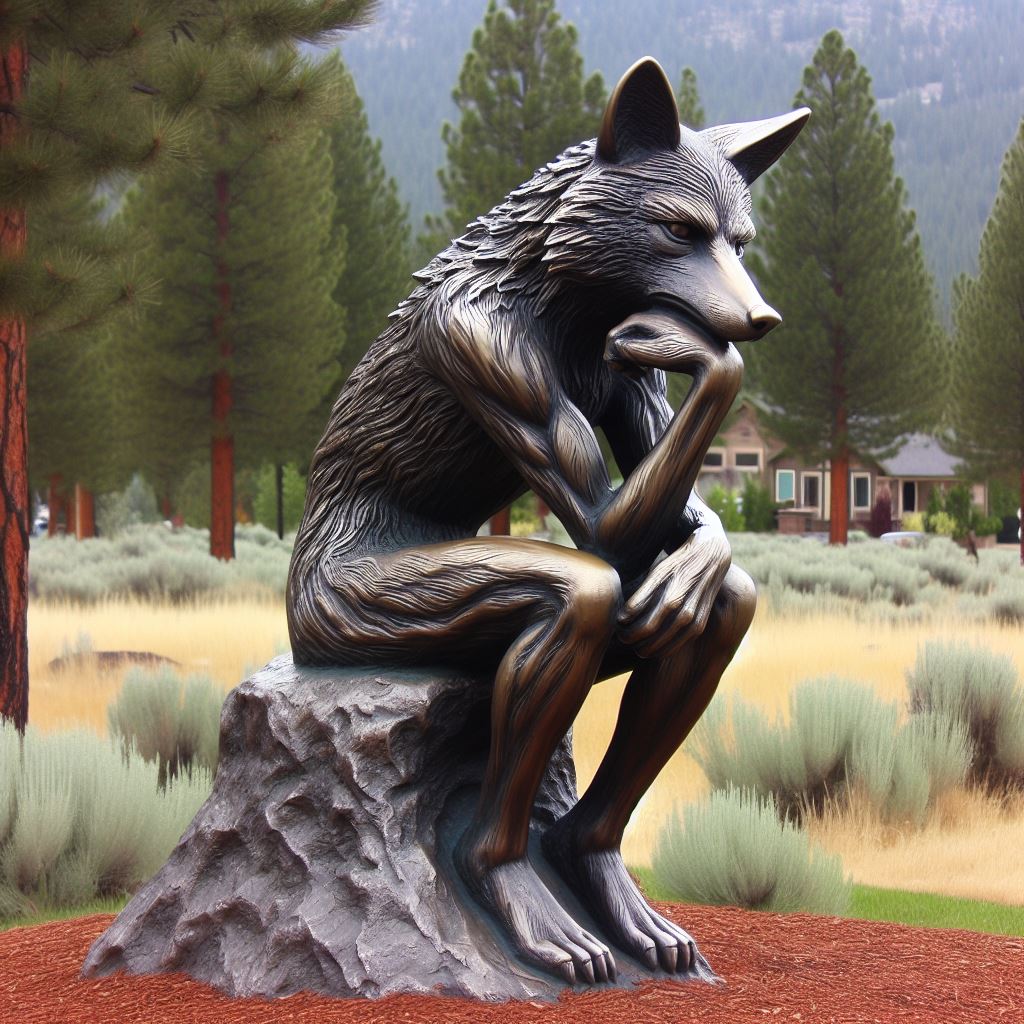
What is it Like to be a Coyote?

One day while hiking I encountered a couple of coyotes along the trail. At first I got frightened, wondering if they were dangerous. But the coyotes just stood still, watching me from a distance and minding their own business. I walked away, continuing along the trail, while googling for information on my phone. With relief, I learned coyotes rarely ever attack adult humans—only small pets and children. (So don’t leave them out alone in coyote-populated areas.)

I then started wondering what it feels like to be a coyote. What was going through that creature’s mind as it watched me hiking by. Is anything going through its mind? What I mean to say is, are coyotes conscious? But not just consciousness as subjective experience, or the classic definition by Thomas Nagel—that there is something that it is like to be that thing. I mean are coyotes—or dogs, cats, and any animals other than humans—conscious in the same way humans are, with self-awareness, an inner monologue, and imagination? Does any species besides Homo Sapiens possess “sapience?”

Continue reading

Best Nonfiction Books I Read in 2023

1. A Supposedly Fun Thing I’ll Never Do Again: Essays and Arguments (1997) by David Foster Wallace

I have yet to read Infinite Jest (it is on my bucket list), but I enjoyed this collection of DFW’s long nonfiction essays, maybe even more than his short fiction. They are absolutely genius—not just in their content but in the craftsmanship of the prose on a sentence level. I read a couple of these essays several years ago but struggled with Wallace’s complicated syntax. Between the page-long sentences, invented words and acronyms, and multi-paged footnotes, you practically need a map to read a David Foster Wallace book. With my reading comprehension having expanded since then, I can now better understand and appreciate the complexity of his prose. Few writers could string words together better than DFW (RIP). The essays in this collection include: 

Continue reading

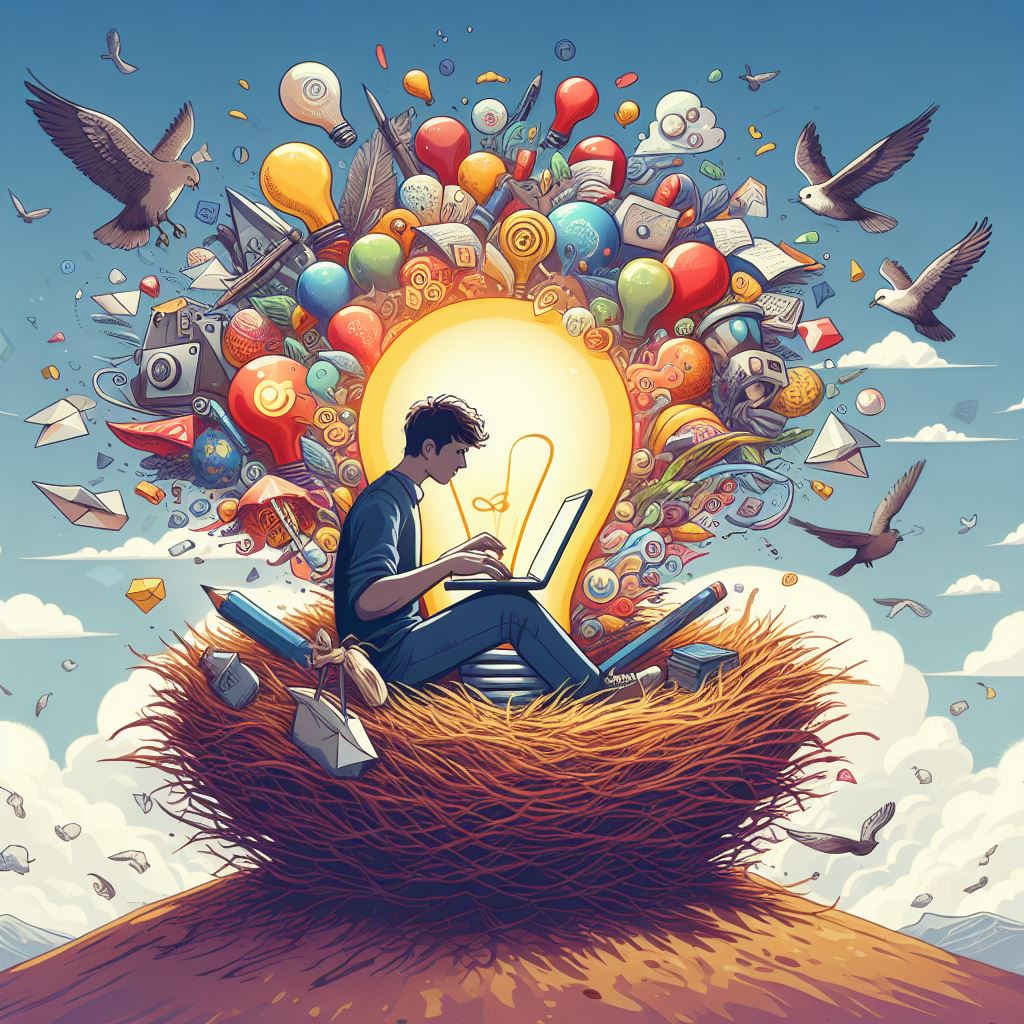
Incubate Stories Subconsciously Before Writing

When I get a new idea for a fiction story I become obsessed. I am flooded with inspiration, developing the story in my mind while researching online, and rapidly taking notes for a potential plot and characters. I can see a flash of the entire story in my mind like a movie, and I feel the urge to follow this burst of obsessive inspiration to write the story ASAP. Sometimes I do write it right away, while other times I set the notes aside to finish whatever else I was working on at the time (because I am always working on something else). I have found the latter to be more productive for my creative process. It is better to wait and incubate the story for some time rather than rush in prematurely.

Continue reading