Every society is built on myths. Myths are stories and legends about the history of that society. Those myths shape the culture in the present. Societal elites and nobles with money and power propagate myths that they want the culture to adopt. The elites create (or fund the creation of) stories to mythologize themselves to maintain and increase their wealth and power in the future.
I have been wanting to read Jung for a while after hearing so much about his work second-hand through podcasts, blogs, and books. Jung has been highly influential on so many writers, thinkers, and artists I admire—and I can see why. His symbolic and mythological approach to psychology is sorely needed in our overly reductionist materialistic world. This book serves as a great introduction to Jung’s work. It features one chapter by Jung himself while the rest are written by his associates. The book also features lots of images to help illustrate the points about symbols because visual symbols are so powerful. Jung writes about the unconscious and the role of the artist:
Many people today think America is more polarized than ever due to social media and the proliferation of fake news on the internet. But the country was just as polarized (if not more so) in the 1770s and 1860s when there were major wars fought between fellow citizens on American soil. Those were times before television and radio, when newspapers were the only form of media. The early American era was more akin to the present, with rival sources from each side of the political spectrum giving biased news to their bases. The difference then was political conflicts were more localized. Each town had multiple competing local newspapers, so political attention was more regional, as opposed to a national bipolar culture war between two diametrically opposed tribes. The advent of decentralized mass media on the internet allowed that.
Generation-Z is the first generation to grow up entirely online. For as long as Zoomers can remember, the internet has been ubiquitous and pervasive to daily life through smartphones. As a result, Gen-Z has no consensus culture—no TV shows, movies, or music they all consumed growing up. Everything had fractured into thousands of subcultures on the internet. Each Zoomer is an island. There may be another person who shares all your same niche cultural interests, but you are unlikely to ever randomly meet that person in person. You will only ever “meet” that person online. This fragmentation of culture is not necessarily good or bad. It just is. And it is different from every other generation that came before.
I have yet to read Infinite Jest (it is on my bucket list), but I enjoyed this collection of DFW’s long nonfiction essays, maybe even more than his short fiction. They are absolutely genius—not just in their content but in the craftsmanship of the prose on a sentence level. I read a couple of these essays several years ago but struggled with Wallace’s complicated syntax. Between the page-long sentences, invented words and acronyms, and multi-paged footnotes, you practically need a map to read a David Foster Wallace book. With my reading comprehension having expanded since then, I can now better understand and appreciate the complexity of his prose. Few writers could string words together better than DFW (RIP). The essays in this collection include:
With 2023 winding down, it is time for my annual list of the ten best movies (at least ten years old) that I watched this past year. As always, this is not a list of the best movies ever, just those I chose to watch in 2023. I ranked the top ten, but the order doesn’t matter as much as the “tiers,” which I separated into five groups: I) Cinematic Masterpieces, II) Great Films, III) Just Good, IV) Flawed But Watchable, and V) Disappointing (Don’t Bother). The ordering of films within each tier are interchangeable. [Use JustWatch.com to see if/where these films are currently streaming.]
This is an amazing piece of cinema. It feels like a documentary following actual Spanish conquistadors in the 16th century searching for El Dorado. The opening shot is stunning, as hundreds of people descend a steep mountain trail carrying all their supplies. With so many of today’s movies shot on green-screen using CGI, the verisimilitude of this film was a breath of fresh air—literally. You feel like you are there in the verdant jungles of the Amazon with the actors—because the film was shot on location in the jungles of the Amazon. As a result, you feel the same constant dread that the crew felt, of trekking into the complete unknown, not knowing what danger may be lurking in the thick forest or around the next river bend.
This is a fascinating book about the type of precognition often experienced in dreams, built off the work of J.W. Dunne. Author Eric Wargo provides numerous famous examples of precognitive dreams, often about traumatic events such as plane crashes or the sinking of the Titanic. Wargo claims such cases of precognition are actually “prememory”: your unconscious mind remembering a future memory, not of the event itself, but of your emotional reaction to learning news of the event. Both the author and I are aware of how crazy and “woo” this all sounds, but Wargo’s research is scientifically rigorous, and he walks a fine line of being both skeptical about paranormal claims but also open-minded to their possibilities (something I wish more on both sides of the paranormal/skeptical debate were willing to do).
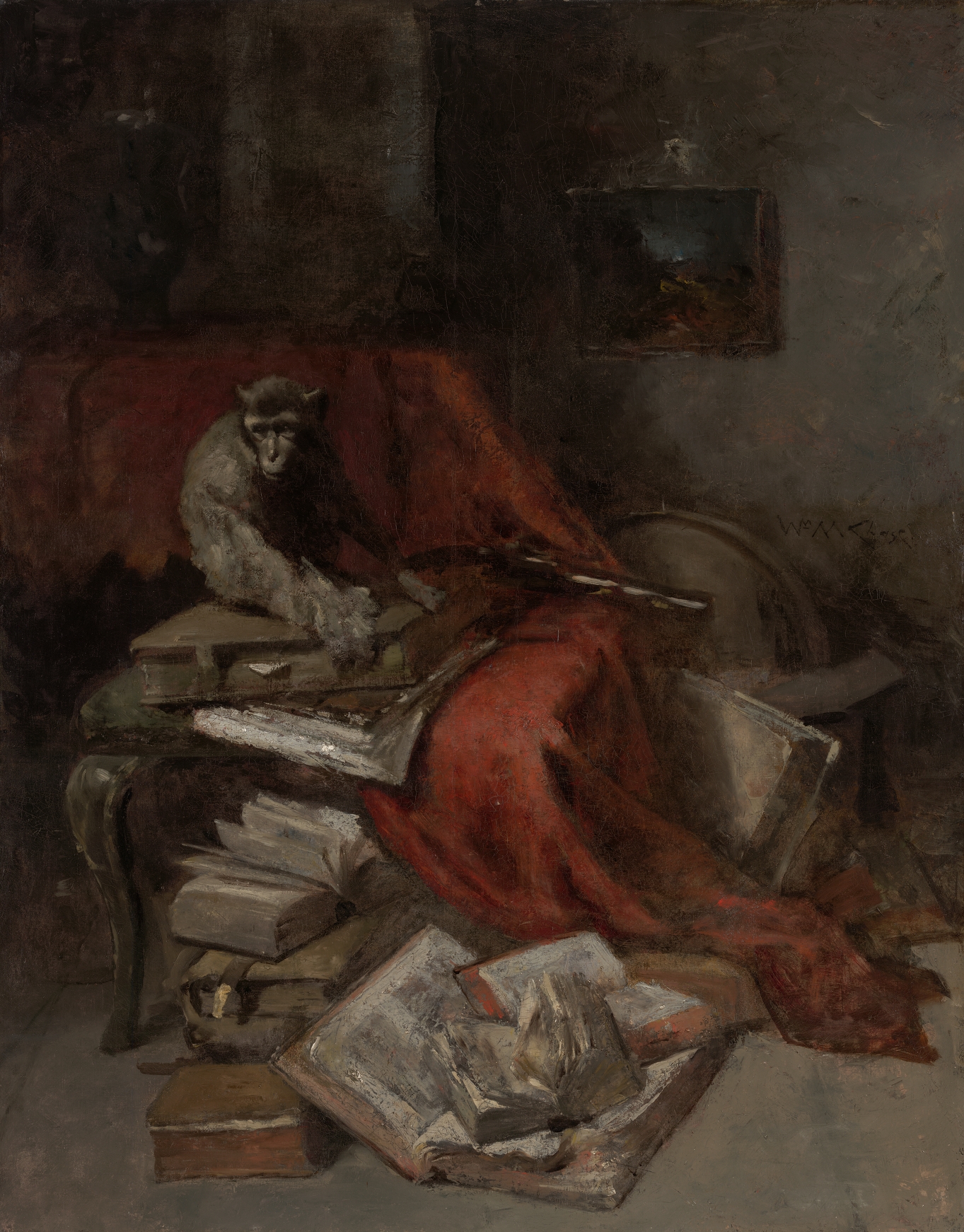
“Monkeying with Literature” (ca. 1877–78) by William Merritt Chase
When I read the fiction of 19th-century writers like Edgar Allan Poe, Fyodor Dostoyevsky, and Herman Melville (among others), I am amazed by the depth and sophistication of their work, both psychologically and philosophically—not to mention the craftsmanship of their prose. Is anybody writing such complex fiction today? Society does not seem to make writers like they used to. (Myself included—though such writers inspire me to elevate my work.) Keep in mind that those writers were not professionally trained to be writers—almost all were self-taught. How were people so long ago seemingly so much more knowledgeable than we are today when we have so much more knowledge? Perhaps that very “knowledge” is the problem.
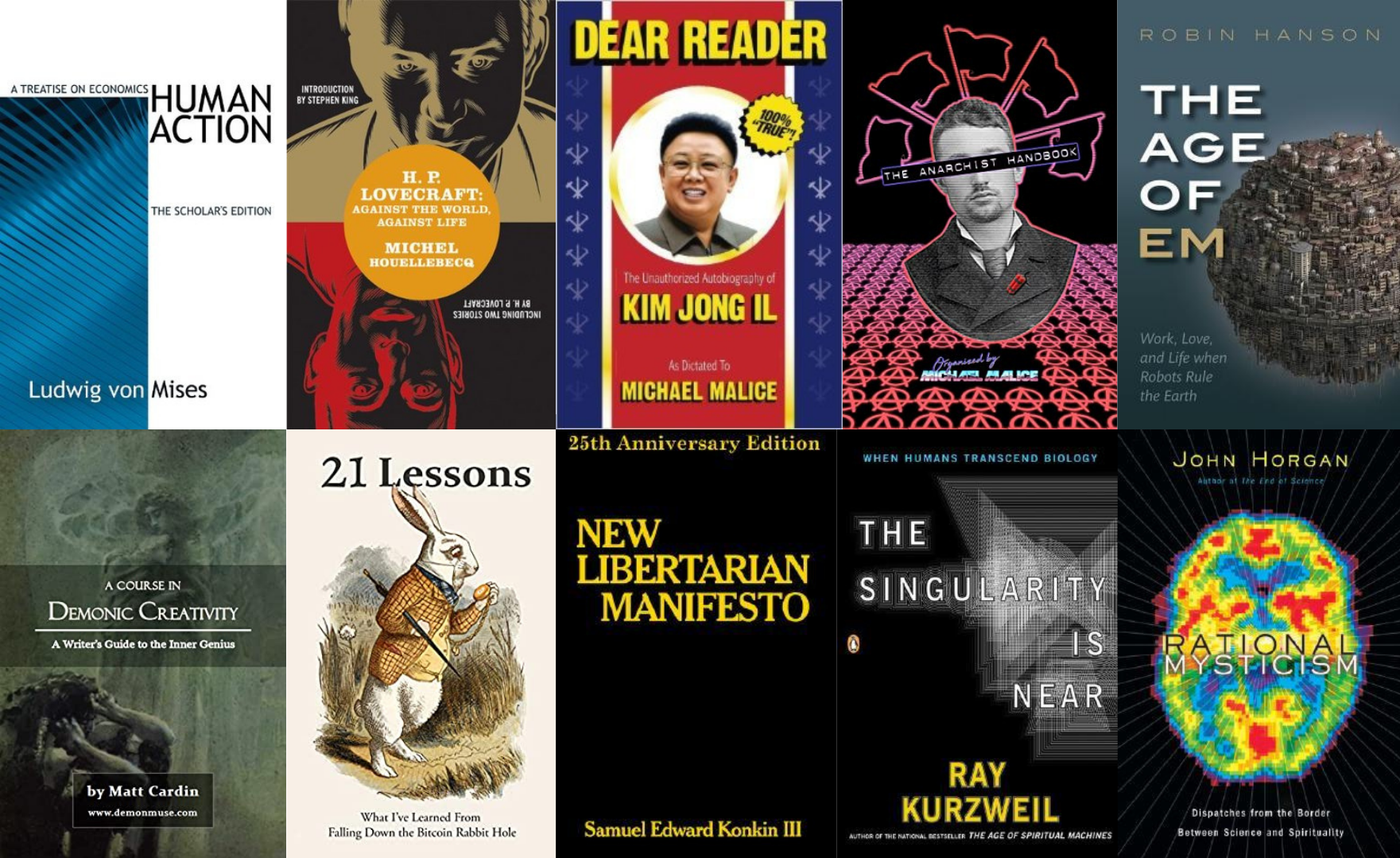
This is the bible of Austrian economics by the grandfather of Austrian economics, Ludwig von Mises. Human Action is Mises’ magnum opus on economics, philosophy, and history—or more precisely, it’s about what Mises terms “praxeology”: the study of human action, which all economic activity boils down to. This is a long book (it took me half the year to get through, which is why there are fewer honorable mentions this year) but it was worth it. You will better understand the world today by reading this 82-year-old tome than by reading today’s newspapers.
Have you ever noticed that most artists tend to get less creative when they get older? A band’s first album is often their best—or maybe their second or third album is better—but rarely does a band record their most creative music on their twelfth album. Sure, some artists like The Rolling Stones continue to perform well into their 70s, but they are only rehashing the creativity of their 20s and 30s. They are not recording new songs, or if they are, those new songs are nowhere near as beloved or creative as their earlier work. That is the normal life cycle of most musical artists: they release creative music when young, get popular, then “play the hits” for the rest of their career.






 T.Z. Barry