Category Archives: Consciousness

When AI Creates “Perfect” Art for You

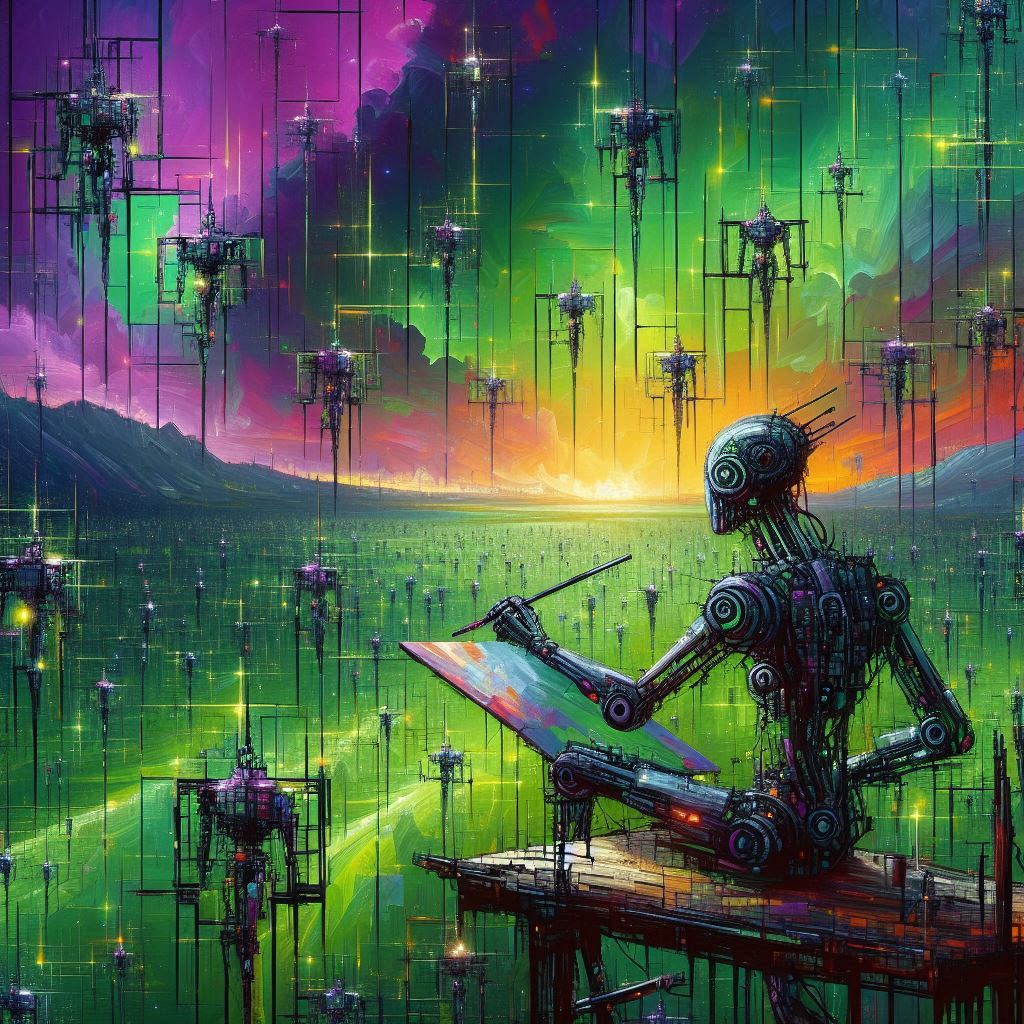
In the future, it may be possible for AI to create art (including books, movies, music, and videogames) that is so perfectly attuned to an individual’s preferences, perhaps even directly using brain scans to determine the precise ingredients that will give the person the ultimate entertainment experience (like from David Foster Wallace’s Infinite Jest), whatever that may be for the particular individual. This AI would essentially create better art than humans—not that it would be objectively better than anything created by humans, but it would be subjectively better to that one particular human for whom the artwork is specifically created for. And AI could conceivably do this for every single human in the world: create unique works of art tailored to be the best work of art for that individual (whatever the criteria for “best” is for them). How could human artists compete with that?

Continue reading

What Will Aliens Look Like?

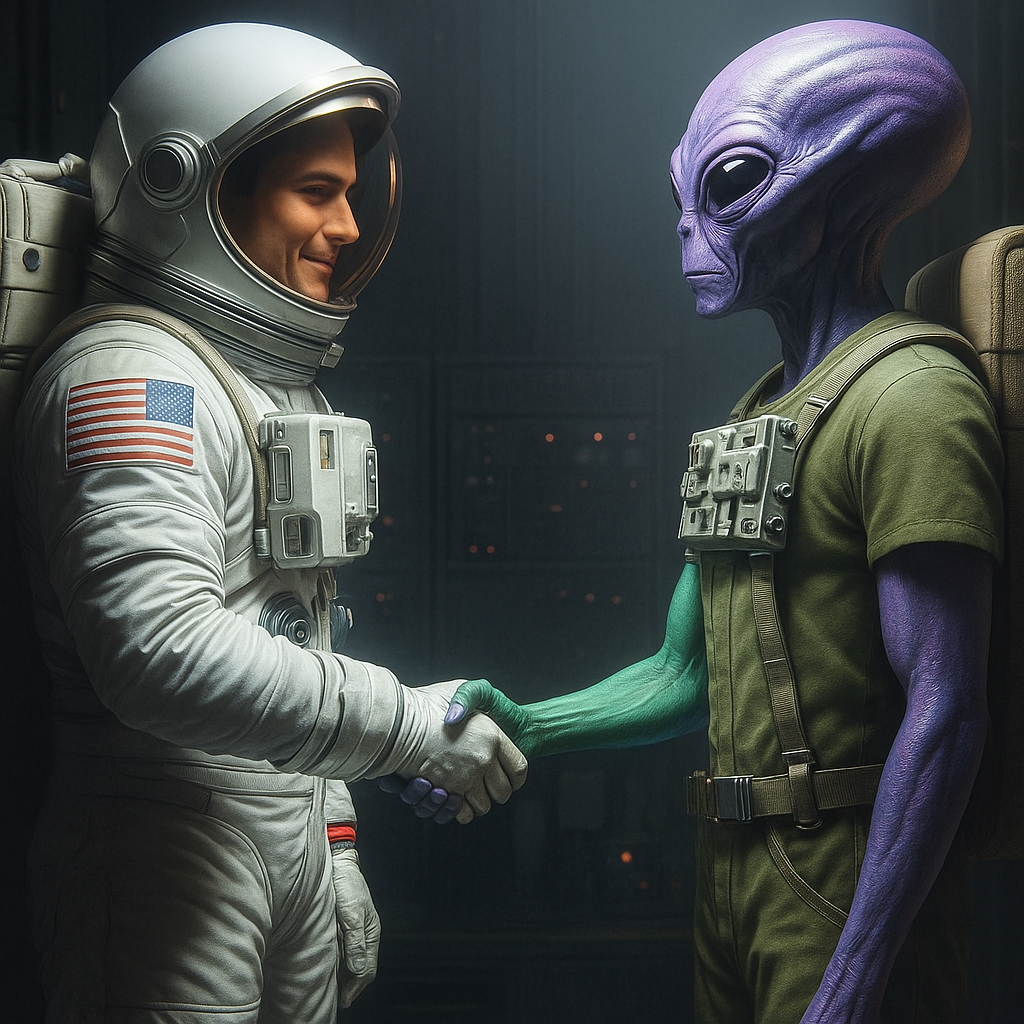
When people speculate about what alien life forms might look like, most experts think it is extremely unlikely that they will be anything like humans. Neil deGrasse Tyson has critiqued Star Trek for its “lack of imagination” by making all their alien species somewhat humanoid in form with only slight cosmetic differences (although that was probably more due to lack of finances rather than lack of imagination). Regardless, I think experts like NDT are wrong. Intelligent aliens, if they exist, will probably look somewhat similar to humans, as Star Trek portrayed.

Continue reading

AI Cannot Speak For the Dead

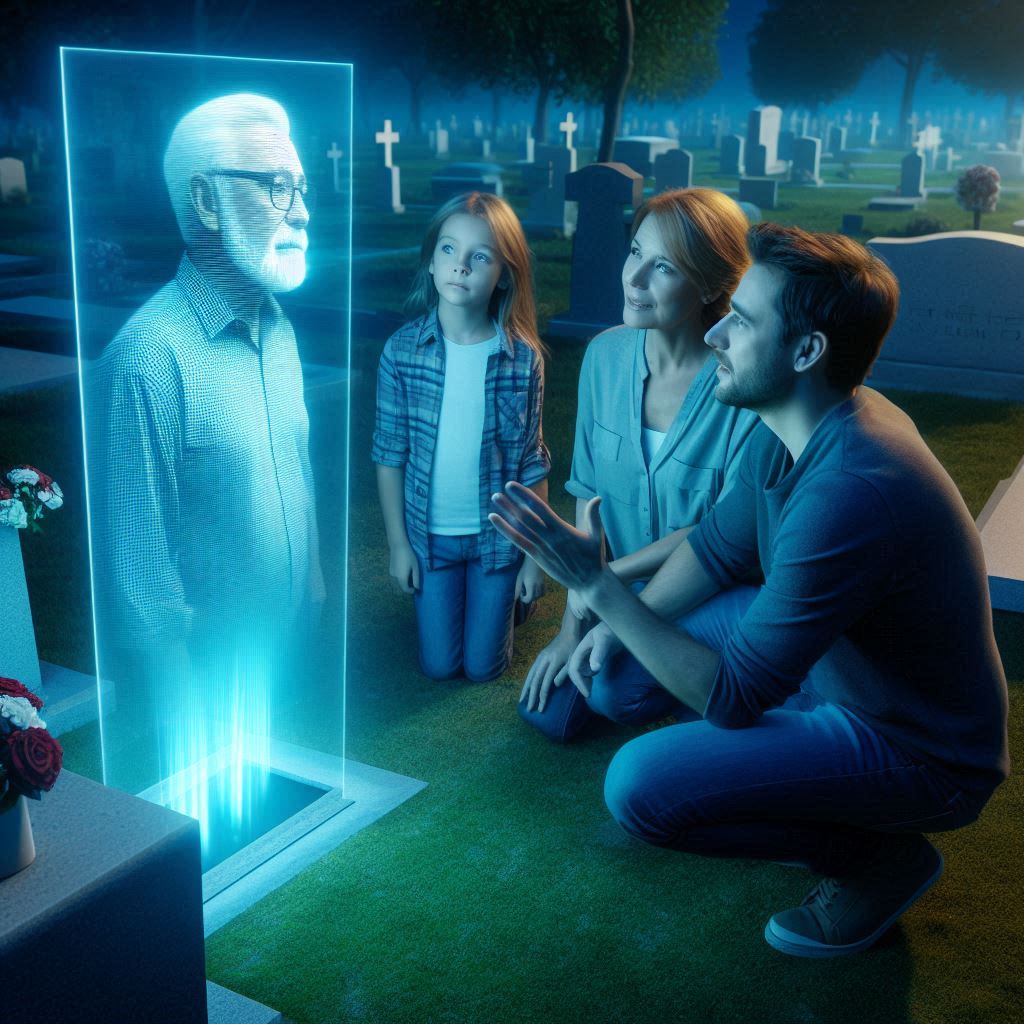
One of the potential applications of AI text generators such as ChatGPT is creating a chatbot based on people who have died so that users can speak to those “people” after they are gone. This could be done with famous figures from history or personal loved ones. Such “grief tech,” as it is called, is already being created: HereAfter, You Only Virtual, Character.ai, and MindBank are just a few examples. There are currently apps where living users answer questions now to help create an AI chatbot clone of themselves that others can speak to after they die.

Theoretically, if a person has enough textual data to input into the model (from books, journals, social media posts, emails, and text messages), then the AI trained on that data can anticipate what that person is likely to say given any prompt (which is essentially how all LLMs work). The chatbot will learn to write in the style of the deceased person based on their personal data. Using continually updated data from the internet, the “deadbot” can comment on current events, making it seem as though the person is still alive. Users can learn what the deceased person would think about things that have happened in the world since they passed away. Or they can ask the chatbot all the questions they wish they had asked while the person was still alive. At least that is what the chatbot’s creators will claim their AI can do. But this is a false hope, a facade. AI cannot predict what a deceased human being would think or say years or decades later. You cannot create an accurate chatbot based on the data of the dead.

Continue reading

Best Nonfiction Books I Read in 2024

Man and His Symbols (1968) by Carl G. Jung

I have been wanting to read Jung for a while after hearing so much about his work second-hand through podcasts, blogs, and books. Jung has been highly influential on so many writers, thinkers, and artists I admire—and I can see why. His symbolic and mythological approach to psychology is sorely needed in our overly reductionist materialistic world. This book serves as a great introduction to Jung’s work. It features one chapter by Jung himself while the rest are written by his associates. The book also features lots of images to help illustrate the points about symbols because visual symbols are so powerful. Jung writes about the unconscious and the role of the artist:

Continue reading

The Totally Surreal Experience of Seeing a Total Solar Eclipse 

On April 8, 2024 in Burlington, Vermont I witnessed my first total solar eclipse. The moment of totality in which the moon covered the sun was the most awe-inspiring act of nature I have ever seen. No photograph or video can do it justice. Words fail to convey the experience. There is no comparison to seeing a total eclipse in person with your own eyes. It is an unforgettable sight every human being should see at least once in their lives. 

The last total solar eclipse visible in the United States was in 2017. I was not in the path of totality, and I couldn’t get a pair of glasses, so I only saw the second-hand effects of the partial eclipse. I watched videos of totality, which looked impressive, and I heard accounts of people saying how transcendent it was, but there was a disconnect. It was like hearing somebody else talk about their dreams. The events in a dream may be astounding, but it doesn’t matter to anyone but the dreamer. Likewise, you can see videos of a total eclipse and hear people describe what they saw, but it will never matter as much to those who witnessed it firsthand. Regardless, I will attempt to describe my experience that day. 

Continue reading

What is it Like to be a Coyote?

One day while hiking I encountered a couple of coyotes along the trail. At first I got frightened, wondering if they were dangerous. But the coyotes just stood still, watching me from a distance and minding their own business. I walked away, continuing along the trail, while googling for information on my phone. With relief, I learned coyotes rarely ever attack adult humans—only small pets and children. (So don’t leave them out alone in coyote-populated areas.)

I then started wondering what it feels like to be a coyote. What was going through that creature’s mind as it watched me hiking by. Is anything going through its mind? What I mean to say is, are coyotes conscious? But not just consciousness as subjective experience, or the classic definition by Thomas Nagel—that there is something that it is like to be that thing. I mean are coyotes—or dogs, cats, and any animals other than humans—conscious in the same way humans are, with self-awareness, an inner monologue, and imagination? Does any species besides Homo Sapiens possess “sapience?”

Continue reading

Best Fiction Books I Read in 2023

1. Blood Meridian, or, the Evening Redness in the West (1985) by Cormac McCarthy

I had been planning to read this book for a while after repeatedly hearing it recommended as one of the greatest American novels. When Cormac McCarthy passed away this year, I thought it would be a good time to finally do so. I’d seen and loved several movies based on McCarthy’s books but had never read one.

There’s not much of a plot to Blood Meridian: it’s basically a group of men riding across the Old West, encountering gruesome scenes of violence in and between skirmishes with Apaches. What really sets the book apart—why it is hailed as one of the greatest modern novels by one of the greatest modern writers—is McCarthy’s writing style, painting portraits of the scenes with beautifully simple poetry and deep philosophical insight, mostly through the character of “the judge.” Which is the second thing that sets Blood Meridian apart. The character of judge Holden is an all-time classic antihero (or outright villain). He studies nature and catalogs specimens in his journal, yet kills men, women, and children, sometimes just for the thrill of it.

The story is told from the perspective of “the kid,” a young man riding with the judge and their leader, Glanton. But whenever the focus drifted away from the judge, I wanted to return to him. He is such a fascinating character and if/when the book is made into a movie, whoever plays the judge will likely win an Oscar. The book is full of violence but not gratuitously—it is there for a reason. The book explores the very nature of violence and war, how it is fundamental to life, inescapable. Perhaps the central question of the book is who or what is Holden the judge of? 

Continue reading

Incubate Stories Subconsciously Before Writing

When I get a new idea for a fiction story I become obsessed. I am flooded with inspiration, developing the story in my mind while researching online, and rapidly taking notes for a potential plot and characters. I can see a flash of the entire story in my mind like a movie, and I feel the urge to follow this burst of obsessive inspiration to write the story ASAP. Sometimes I do write it right away, while other times I set the notes aside to finish whatever else I was working on at the time (because I am always working on something else). I have found the latter to be more productive for my creative process. It is better to wait and incubate the story for some time rather than rush in prematurely.

Continue reading

Dogs Reject the Metaverse

Dogs have a better sense of reality than humans. Dogs become ecstatic when they see their human owners in person, even if the human was only gone for a couple of hours. The longer the human is gone, the happier the dog will be when they are reunited. If you go on vacation for a week, the dog will become saddened while you are gone, then overjoyed when you return.

But—and this is key—if you call home via telephone and the dog hears your voice, it will get excited for a second until it realizes that was just the phone. When the dog knows you are not actually there in person it won’t care anymore. Dogs have no interest in listening to your disembodied electronic voice or seeing your face on an iPad—because that is not you. Dogs’ primary sense of perception is smell. If they can’t smell you, you’re not real.

Continue reading