AI is continually getting better at creating “deepfakes” of real people. A deepfake is an AI-generated image or video that depicts real people saying and doing things they did not actually do. Such deepfakes have fooled viewers into believing the scenes depicted to be real. Many are understandably alarmed about these developments in AI and fear the implications for the future—the political chaos and societal upheaval deepfakes may cause. While such negative outcomes are a worrisome threat, there is an upside to deepfakes as well.
Storytelling is the key to good fiction. What is storytelling? It is the way you tell a story. A story is not merely a plot plus characters. If you give ten writers the same plot and characters, you will end up with ten wildly different stories (of varying levels of quality). That is where the talent of storytelling enters the equation. You can have a compelling plot and interesting characters, but if you don’t have a skilled storyteller to deliver those elements you’re not going to have a good story. It is not just a matter of being able to compose grammatically clean prose—ChatGPT can do that. Good storytelling is composing the story, from sentence to sentence, in a compelling way.
In the future, only creative people will survive. There will be no jobs. Even art could be better done by robots and AI. But humans can still be creative. And they can find purpose in creating art or music or businesses or hobbies. Anyone who is not creative will essentially be a human robot (but a less productive version of the actual robots).
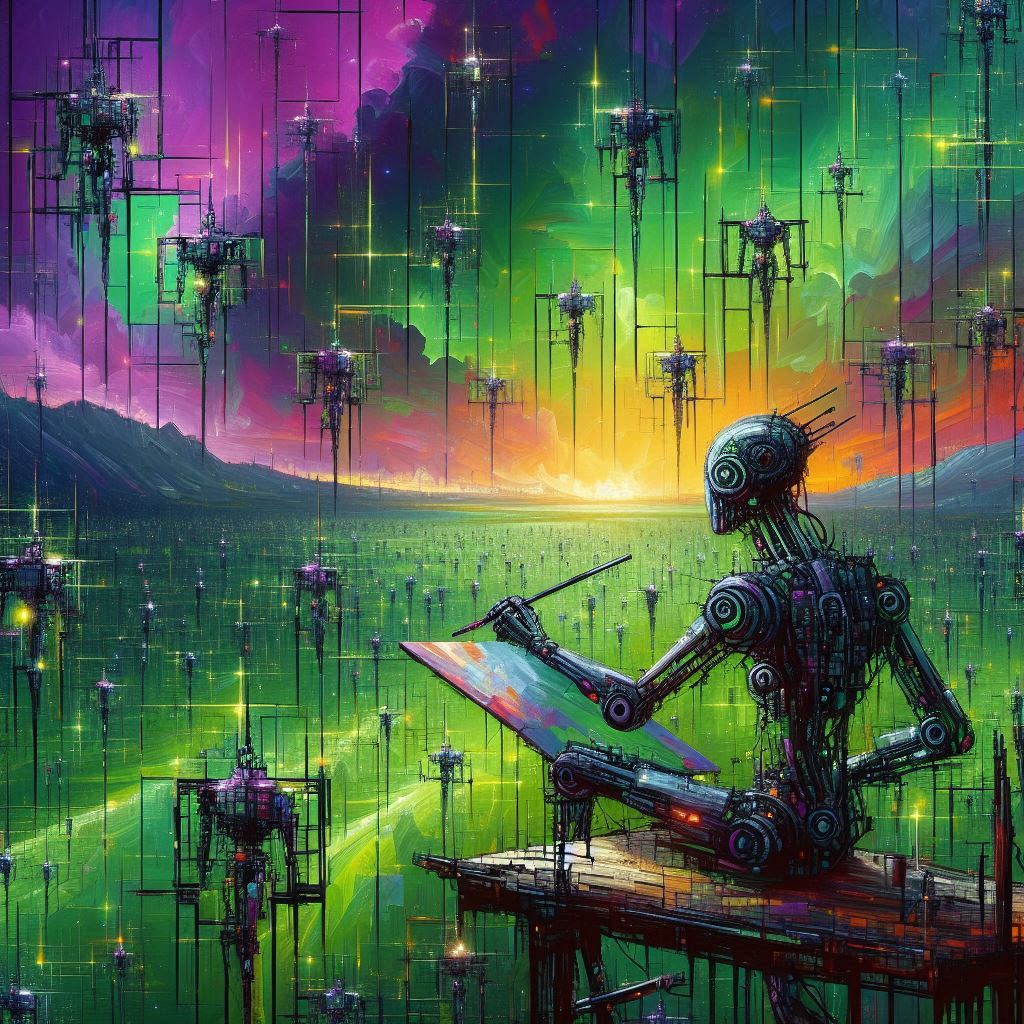
In the future, it may be possible for AI to create art (including books, movies, music, and videogames) that is so perfectly attuned to an individual’s preferences, perhaps even directly using brain scans to determine the precise ingredients that will give the person the ultimate entertainment experience (like from David Foster Wallace’s Infinite Jest), whatever that may be for the particular individual. This AI would essentially create better art than humans—not that it would be objectively better than anything created by humans, but it would be subjectively better to that one particular human for whom the artwork is specifically created for. And AI could conceivably do this for every single human in the world: create unique works of art tailored to be the best work of art for that individual (whatever the criteria for “best” is for them). How could human artists compete with that?
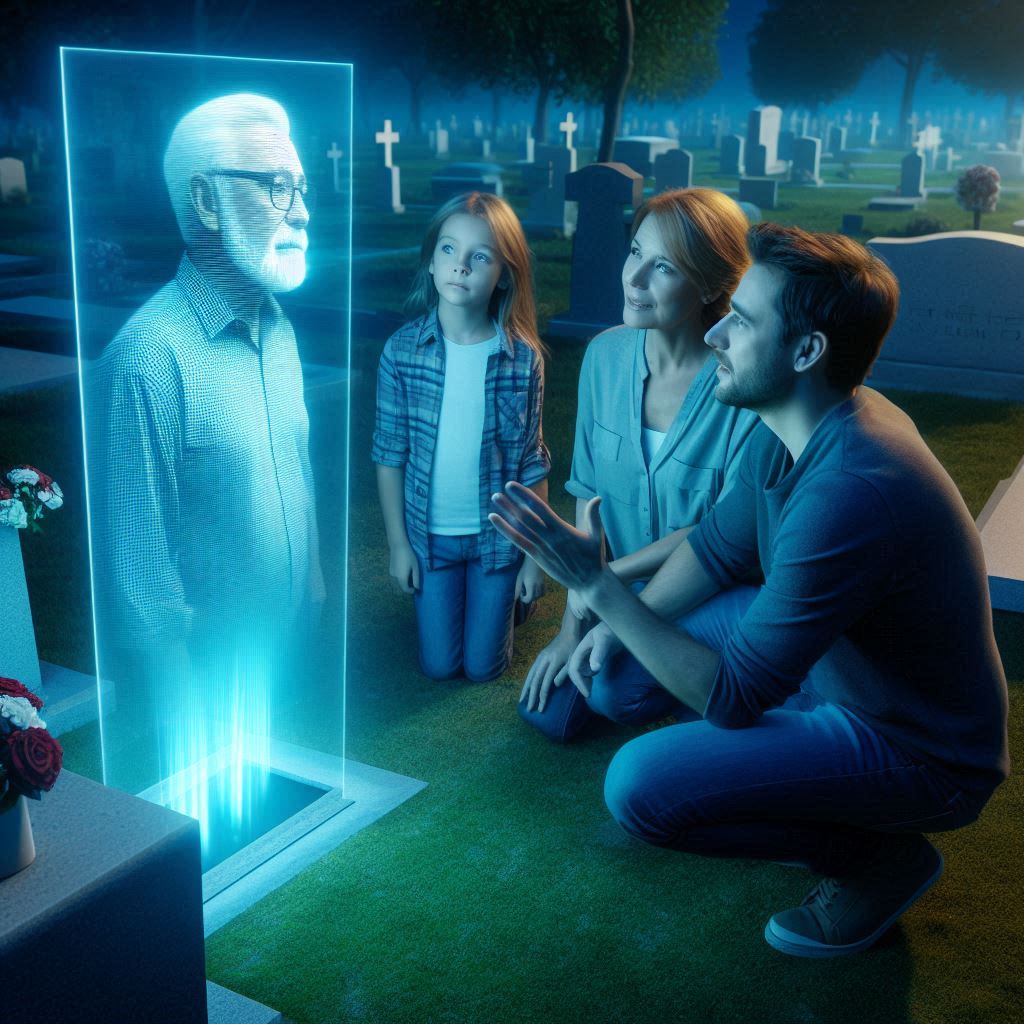
One of the potential applications of AI text generators such as ChatGPT is creating a chatbot based on people who have died so that users can speak to those “people” after they are gone. This could be done with famous figures from history or personal loved ones. Such “grief tech,” as it is called, is already being created: HereAfter, You Only Virtual, Character.ai, and MindBank are just a few examples. There are currently apps where living users answer questions now to help create an AI chatbot clone of themselves that others can speak to after they die.
Theoretically, if a person has enough textual data to input into the model (from books, journals, social media posts, emails, and text messages), then the AI trained on that data can anticipate what that person is likely to say given any prompt (which is essentially how all LLMs work). The chatbot will learn to write in the style of the deceased person based on their personal data. Using continually updated data from the internet, the “deadbot” can comment on current events, making it seem as though the person is still alive. Users can learn what the deceased person would think about things that have happened in the world since they passed away. Or they can ask the chatbot all the questions they wish they had asked while the person was still alive. At least that is what the chatbot’s creators will claim their AI can do. But this is a false hope, a facade. AI cannot predict what a deceased human being would think or say years or decades later. You cannot create an accurate chatbot based on the data of the dead.
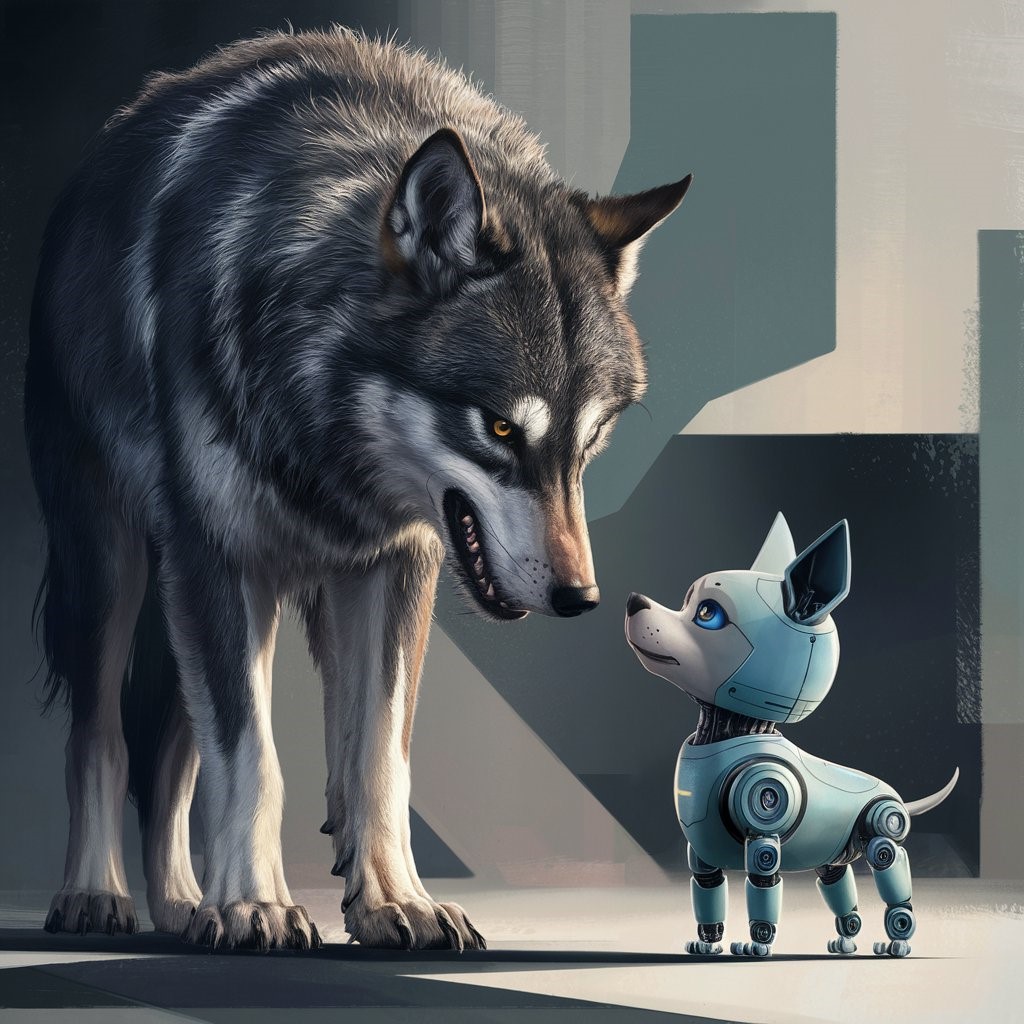
As artificial intelligence advances, many people are worrying about where it will lead. What happens if and when AI becomes more intelligent than humans? Will it grow beyond our control and have a will of its own? Will artificial general intelligence (AGI) result in the end of human civilization? To prevent such doom, AI must be aligned with humanity.
First there was AI images, then there was AI text. It was only a matter of time until AI music came along—and with Suno, it is here. The AI music generator (and others such as Udio) has become my latest obsession. It is simple to use with surprisingly good results. Just enter a text prompt with a subject matter and/or musical genre, and it will quickly produce a 2-minute song of professional quality. Of course the results vary—some songs are better than others. But in a short amount of time I have already created a few gems, such as this 1980s-style electronic anthem for “Time Zone Weird” that I can’t get out of my head:
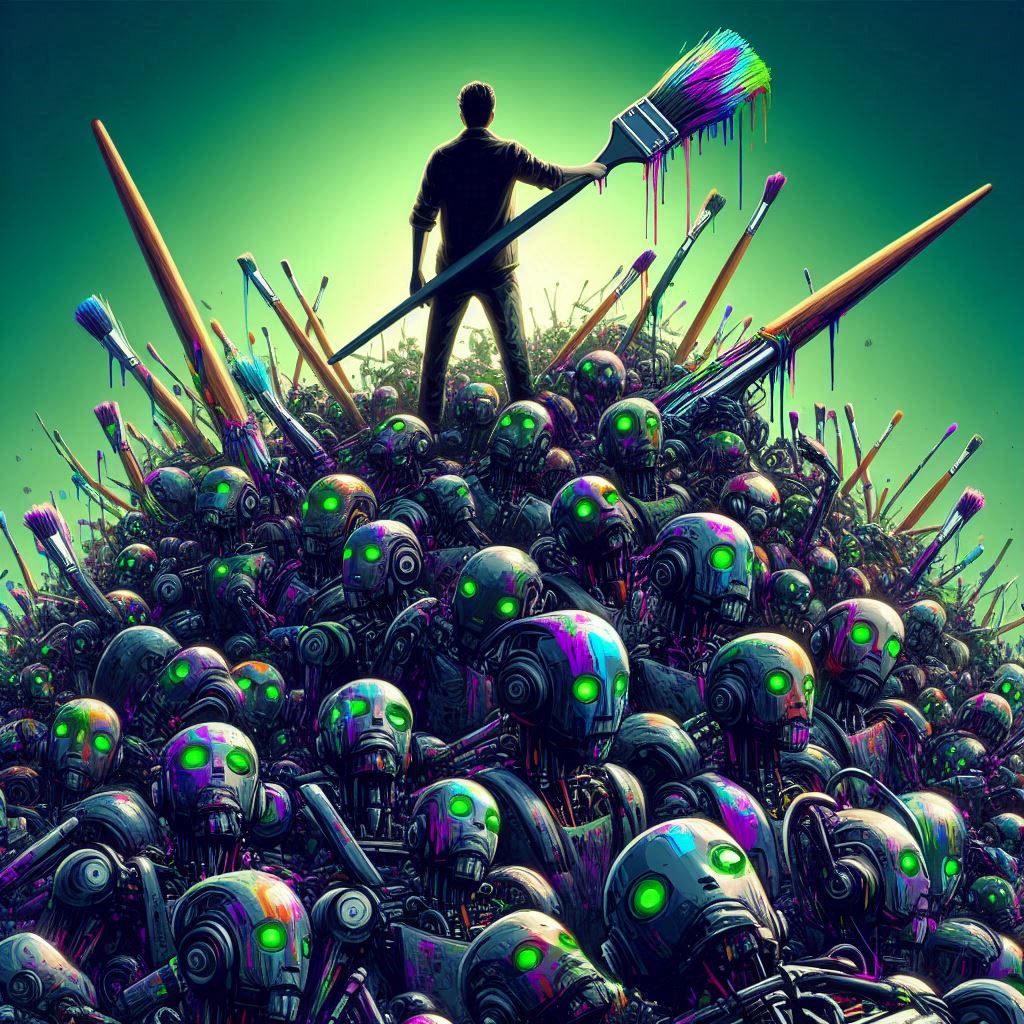
One of the great upsides of AI art is the ability for artistically unskilled people to create their own artwork. Instead of spending years learning the craft of how to paint or draw, you can instantly generate a skilled painting or drawing. The most artistic part of the process in AI art becomes choosing which image to create. For that image to be artistically meaningful, prompters must learn how to think like an artist.
Welcome to the age of algorithmic fiction. Thanks to tools like GPT-4, a human writer with a library of previously written books can simply write a one-page outline for a new novel, and AI can write an entire novel in their style. In many cases the book will be good enough to pass as if it was written by the human authors themselves, allowing writers to publish more frequently. However, GPT fiction will only work with formulaic writers whose books are all similar. In other words, those writers who were already writing algorithmic fiction before the aid of AI.
One of the most difficult parts of writing is “killing your darlings.” That might mean cutting out a part you liked to make the story as a whole better. Or, more generally, it can simply mean deleting the boring parts of your story. (As Elmore Leonard said, there should be no boring parts.) Perhaps one of the greatest upsides of writing with AI is that it can help eliminate the “sunk cost fallacy” that authors often face with the words they have already written.