Since a child, I always loved movies and television more than books or any other kind of art. Film was my favorite form of art because it encapsulated all other art forms: music, photography, cinematography, acting, writing, storytelling, painting, makeup, clothing, fashion, costumes, sculpture, props, architecture, computer graphics, animation, etc… The list goes on. That’s why there are so many names at the end of a movie. Almost all those people are artists in their own right, contributing to the master artwork that is the film. Continue reading
Black Mirror and the Future of Storytelling

Black Mirror is the future. I don’t mean the dystopian technological prophecies in the show will come true (though many of them might). I mean the format of 50 to 70-minute self-contained stories are the future of film and television storytelling. Continue reading
George of Thrones

The Game of Thrones television series concluded this past Sunday, but I won’t be talking about the finale or its quality. (No spoilers follow) Instead, I want to talk about the mastermind behind the entire Game of Thrones phenomenon. Not the actors or showrunners, but the author of the books upon which the show is based, George R.R. Martin. Continue reading
The Power of Journaling

Journaling has been one of the most beneficial practices for my mental health. It’s a powerful and freeing method to clear your mind. Writing about everything in your head—all your deepest and darkest and most private thoughts—gets those thoughts out of your head and onto paper. For this to work, the journal must remain private. You need the complete freedom to know that no one else will ever see it so you can write with complete inhibition. Once the thoughts get out of your head and onto paper, you can detach from the thoughts and view them from a distance. Continue reading
How Meditation Works

I’ve mentioned meditation and its benefits many times on this blog, but I’ve never devoted an entire post to explaining exactly what meditation is and how and why it works. So this is that. Continue reading
Recommendation Algorithms Rule Your Life

Cultural critics used to be essential curators of music, movies, books, and art. When there were only a couple of newspapers or radio stations or TV stations, the select few professional critics had enormous power in telling the public which art they should pay attention to. Then came the internet and everything changed. With blogs, message boards, and podcasts, anybody could become a critic. Both the creation and critique of art became more democratic. Traditional critics became less important. People preferred to take recommendations from like-minded people in their specific cultural niche. This gave real cultural power to bloggers and amateur critics on the internet who developed a following. Continue reading
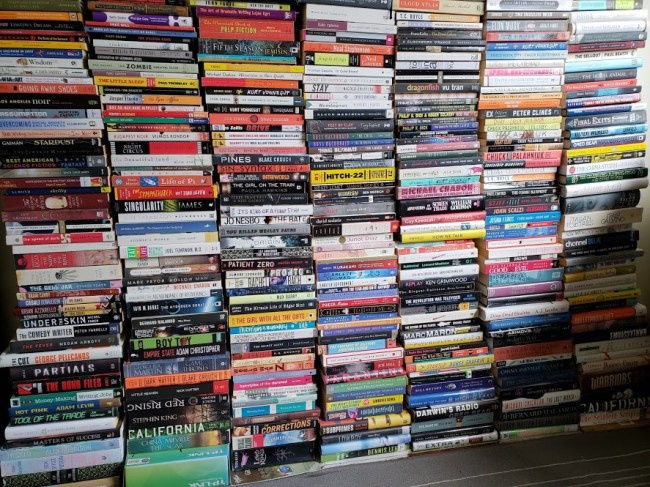
On Collecting: Books, Ebooks, Movies, and Music

A lot of people pick sides in the ebook vs. paper book debate, but I’m square in the middle. I use and enjoy both, finding positives and negatives for each. Continue reading
The Future of Screenwriting

In the future, I envision artificial intelligence (AI) becoming so advanced, that it could not only write a screenplay but convert it into a fully computer-generated (CGI) movie that looks 100% real. And it could do it all instantly—for free. Continue reading
The Power of Science Fiction

There are essentially two types of science fiction: hard and soft. Soft science fiction is more like fantasy, not obeying the laws of physics (Star Wars) while hard science fiction aims to be scientifically accurate (2001: A Space Odyssey). I love Star Wars, but my real favorite genre is near-future hard science fiction such as Blade Runner, Interstellar, The Martian, Ex Machina, and Her. I think those kinds of stories—built around accurate science and technological innovations that can conceivably happen in the near future—are perhaps the most important form of fiction. Continue reading
Exercise Anxiety Through Art
Anxiety is a product of imagination. We imagine potential scenarios in which all sorts of negative things might happen. This can manifest in various types of anxiety, such as a fear of flying: imagining all they ways a plane might crash. Or a fear of heights, spiders, confined places, etc. It’s the same with the type of fear I struggled with: social anxiety. Continue reading