One of the most difficult parts of writing is “killing your darlings.” That might mean cutting out a part you liked to make the story as a whole better. Or, more generally, it can simply mean deleting the boring parts of your story. (As Elmore Leonard said, there should be no boring parts.) Perhaps one of the greatest upsides of writing with AI is that it can help eliminate the “sunk cost fallacy” that authors often face with the words they have already written.
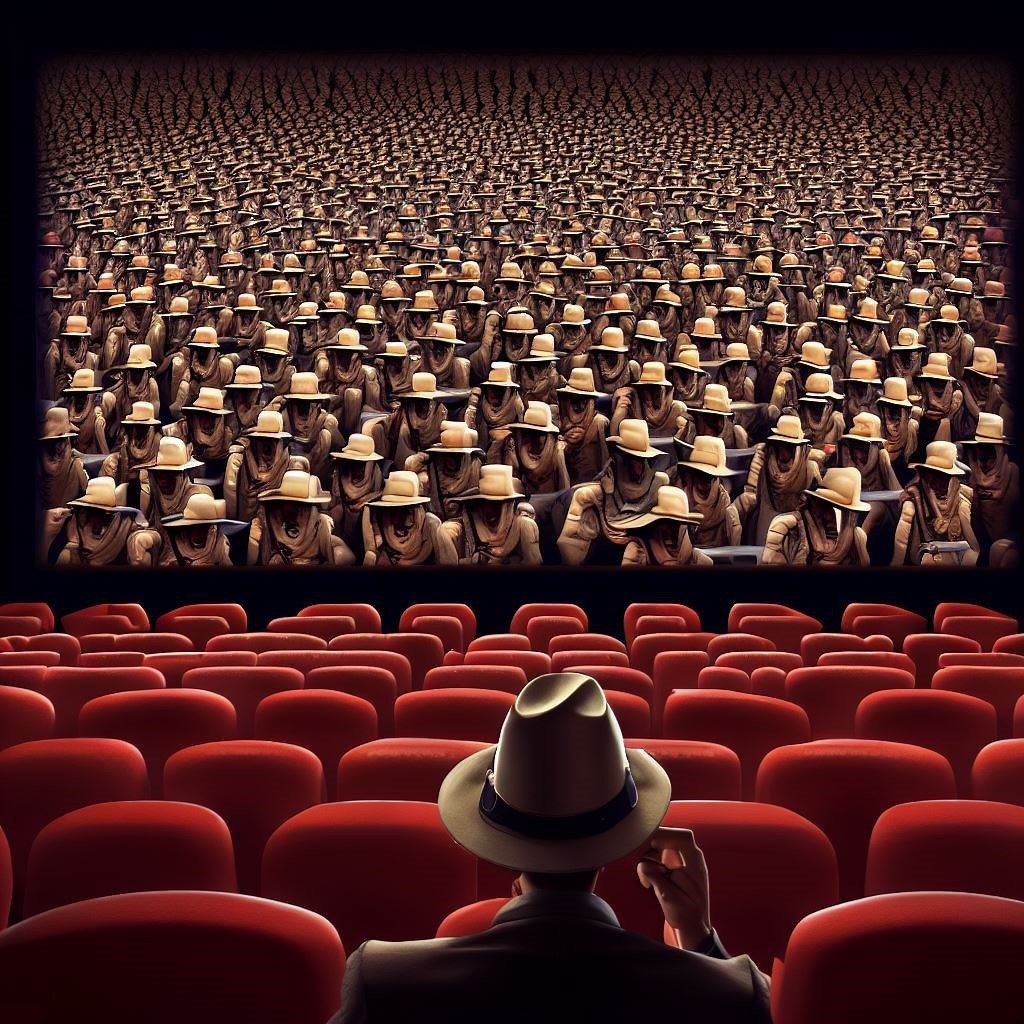
I used to work at a job where I had to watch cable TV all day. (It sounds more fun than it was.) One of the networks I had to watch would often replay the same movies over and over again. At that time I was studying screenwriting and wanted to write movies myself, so it was instructive to watch a single movie multiple times to deconstruct it and figure out what the filmmakers did right or wrong, how and why. I tend to avoid rewatching movies unless it’s one of my absolute favorites, and even then, only years later when I don’t remember it too well. But for this job, I wound up seeing the same movie multiple times in a single day, or two days in a row, or several times over the course of a week/month/year. I saw both good movies and bad movies this way—and some movies that I thought were good when I first saw them, but by the fifth or tenth time realized it wasn’t very good in the first place. One movie (or group of movies) that I repeatedly watched at my job was the Indiana Jones franchise.
In “E Unibus Pluram: Television and US Fiction,” David Foster Wallace’s brilliant 1990 essay1, he hypothesized that fiction writers (like himself and myself) are natural oglers or people-watchers. Writers used to have to observe people in the real world, in public, to get the material for their fiction. But fiction writers (like him and me) are often self-conscious types with social anxiety, which was why television was such a godsend for people like him. With TV, self-conscious writers could ogle and people-watch from the comfort of their own homes without the other people seeing them. In this sense, DFW argued, television is a form of voyeurism.
Dogs have a better sense of reality than humans. Dogs become ecstatic when they see their human owners in person, even if the human was only gone for a couple of hours. The longer the human is gone, the happier the dog will be when they are reunited. If you go on vacation for a week, the dog will become saddened while you are gone, then overjoyed when you return.
But—and this is key—if you call home via telephone and the dog hears your voice, it will get excited for a second until it realizes that was just the phone. When the dog knows you are not actually there in person it won’t care anymore. Dogs have no interest in listening to your disembodied electronic voice or seeing your face on an iPad—because that is not you. Dogs’ primary sense of perception is smell. If they can’t smell you, you’re not real.
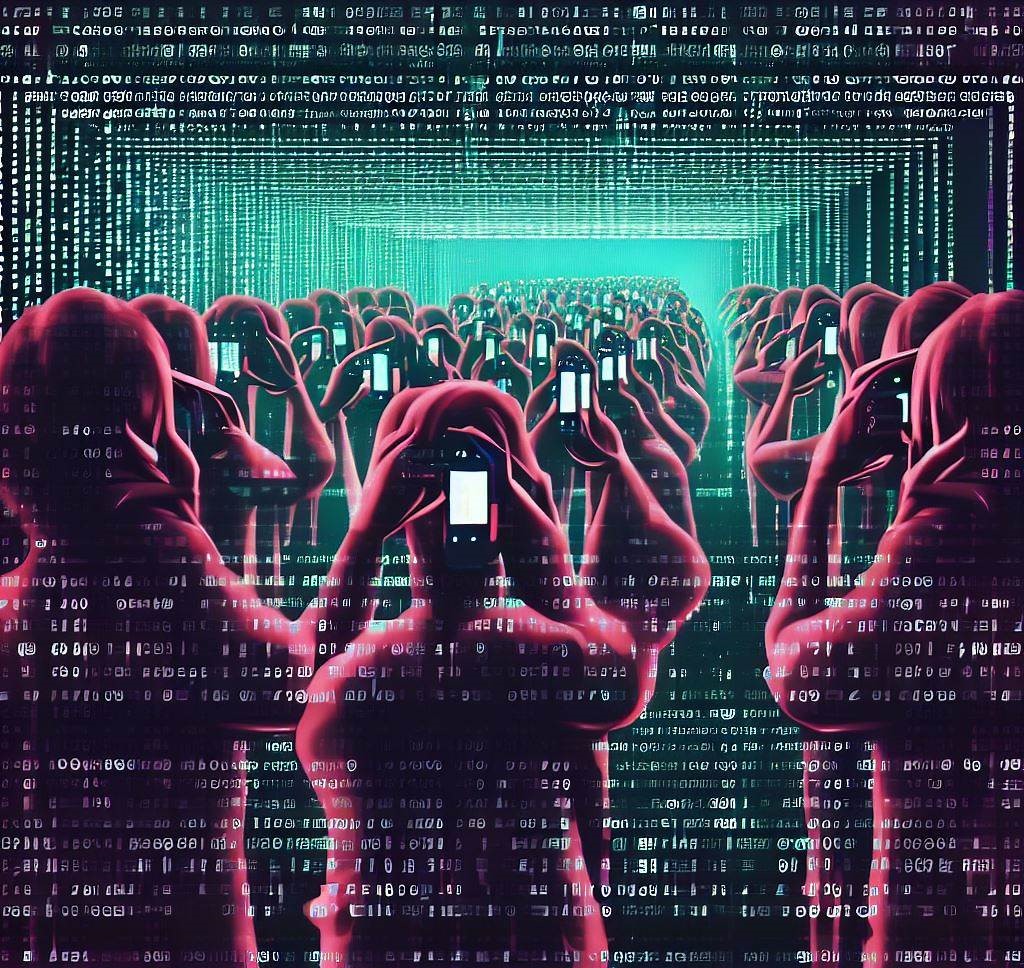
There is growing concern that the proliferation of generative AI will remove humans from the equation of creativity because eventually most art will be AI-generated images based on previous AI-generated images until all art is simulacra with no connection to reality. But in a way, this has already happened—before the invention of AI art.
Since Succession premiered in 2018, I repeatedly heard so many people I respect say how great the show was, but I hesitated to start watching. It wasn’t that I doubted them; I was just waiting to find the time to dive in. (Too much content.) With the final season airing this year, I thought it would be a good time to catch up before the finale. Part of the reason I hesitated to start Succession was fear of getting absorbed in yet another series that would go on indefinitely—or get canceled prematurely. Knowing there was an end in sight allowed me to begin. Long story short, it turns out all those people were right: Succession is a great show. It is highly dramatic with surprising twists and turns, but it is also extremely funny—funnier than most sitcoms, full of classic one-liners. It ranks up there with The Wire, The Sopranos, Mad Men, and Breaking Bad as one of the top television series of all time.
In this post I wrote about my experiences using ChatGPT to write fiction, ultimately concluding that AI is better at non-creative writing than creative writing. I will now use ChatGPT to further prove my point. AI was much better at generating the following nonfiction blog post than generating any fiction stories. I’ll let ChatGPT explain why:
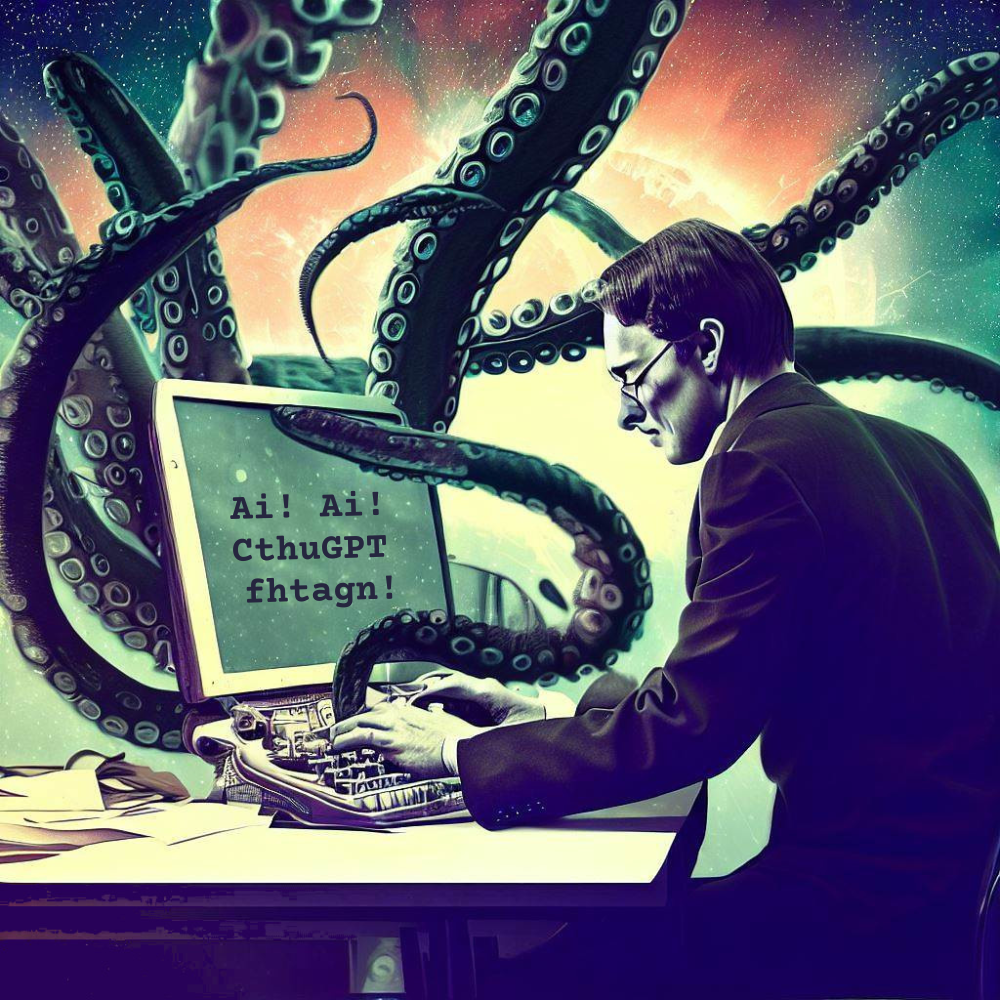
There was much hype on the internet upon the release of ChatGPT, OpenAI’s free-to-use text-generating artificial intelligence program based on a Large Language Model (LLM). You can write any prompt, and ChatGPT will instantly produce grammatically correct text—of just about any type (fiction, nonfiction, poetry, etc.). Some worry this could spell the end of human writers. It is admittedly impressive what GPTs can produce—though it is still limited. As an experiment, I tried writing several fiction stories with ChatGPT. I have literally thousands of story ideas, more than I could ever write myself. So I figured I’d take some of the lesser ideas at the bottom of my queue, those I’d probably never get around to, and let the AI write it for me—if it could.
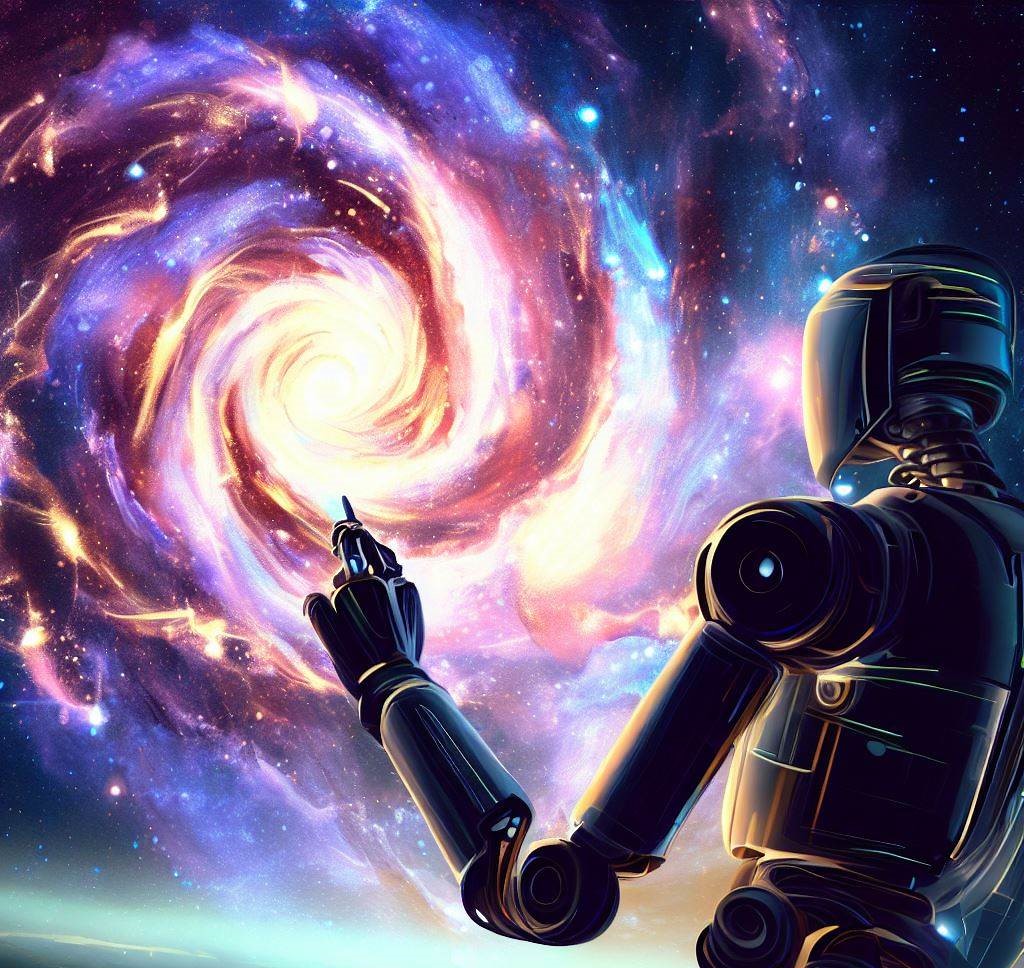
One of my works in progress is a science fiction novella about the creation of an artificial general intelligence (AGI). The story features a scene where the human programmers are amazed that the AGI can create original artwork of any kind on demand. I wrote the first draft in 2018. Yes, just four years ago an AI that could create art seemed like a speculative bit of futurism. Now it appears I will need to revise that scene, as what was “sci-fi” then is now just “sci.” Reality is progressing faster than I can publish science fiction.
When I wrote this post about DALL-E last May, I had only seen others’ generative-AI creations; I hadn’t gotten the chance to create my own AI art yet. Now I have and am utterly addicted. There was much hype around AI image generators like DALL-E and Midjourney when they were first released. Usually when something is hyped that much in the media it is overblown; the reality is far less dramatic. But after DALL-E became public, plus the release of the free and open-source Stable Diffusion, I have had the chance to create my own AI art (thousands of images at this point—and counting). While the initial hype was quite high, I would venture to say it was not nearly high enough. Most people still don’t realize how significant generative AI is/will be. In the future, people will look back at the world pre-AI art as a distinct, unrecognizable time. Generative AI is a total game-changer, an artistic singularity.
Writers have always struggled to get adequately paid for their work. Before the internet, publishing companies (for books, newspapers, and magazines) had the power as gatekeepers to take advantage of writers who had no other means to get their writing to the public. Publishers would take a large percentage of the pay—because they could. Today, the internet provides a way around traditional gatekeepers, but some writers still struggle to get paid. This could change in the future with the development of currently existing technology.






 T.Z. Barry