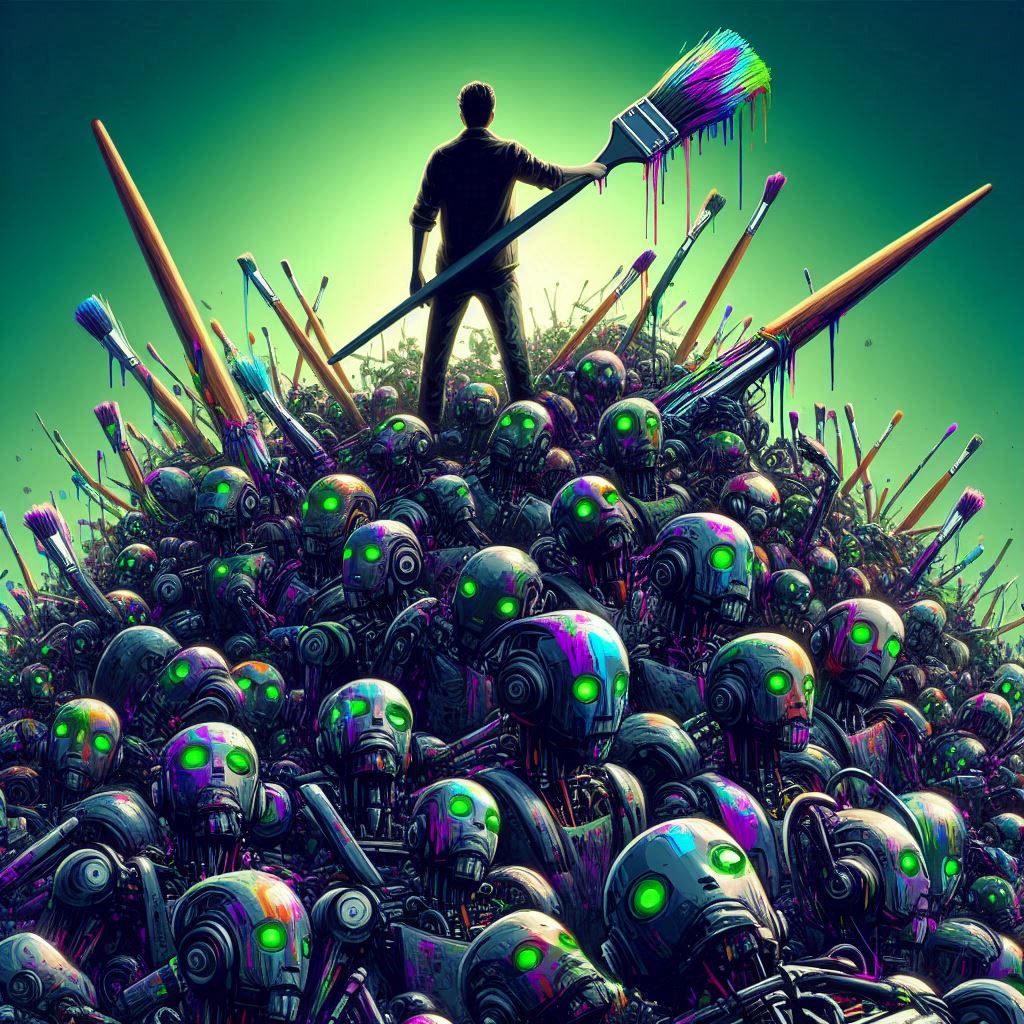
In the future, only creative people will survive. There will be no jobs. Even art could be better done by robots and AI. But humans can still be creative. And they can find purpose in creating art or music or businesses or hobbies. Anyone who is not creative will essentially be a human robot (but a less productive version of the actual robots).
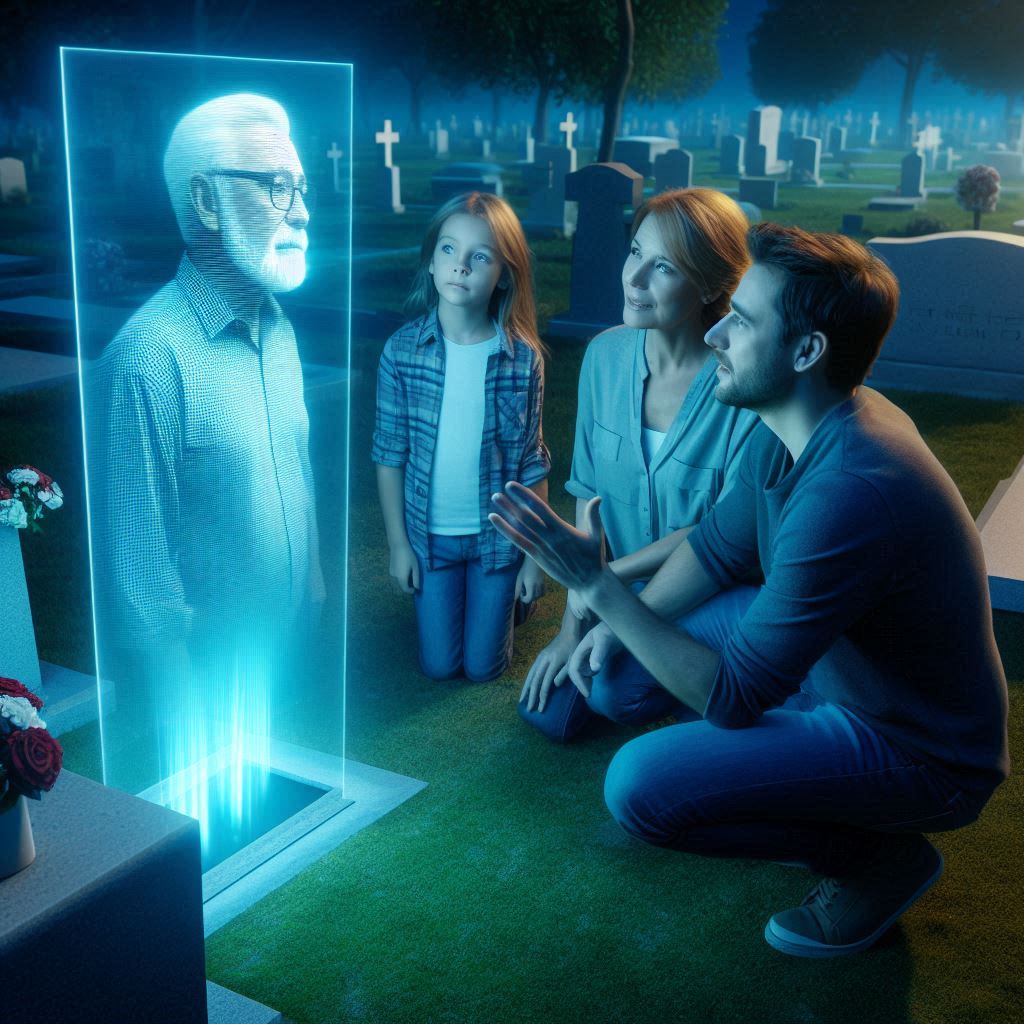
One of the potential applications of AI text generators such as ChatGPT is creating a chatbot based on people who have died so that users can speak to those “people” after they are gone. This could be done with famous figures from history or personal loved ones. Such “grief tech,” as it is called, is already being created: HereAfter, You Only Virtual, Character.ai, and MindBank are just a few examples. There are currently apps where living users answer questions now to help create an AI chatbot clone of themselves that others can speak to after they die.
Theoretically, if a person has enough textual data to input into the model (from books, journals, social media posts, emails, and text messages), then the AI trained on that data can anticipate what that person is likely to say given any prompt (which is essentially how all LLMs work). The chatbot will learn to write in the style of the deceased person based on their personal data. Using continually updated data from the internet, the “deadbot” can comment on current events, making it seem as though the person is still alive. Users can learn what the deceased person would think about things that have happened in the world since they passed away. Or they can ask the chatbot all the questions they wish they had asked while the person was still alive. At least that is what the chatbot’s creators will claim their AI can do. But this is a false hope, a facade. AI cannot predict what a deceased human being would think or say years or decades later. You cannot create an accurate chatbot based on the data of the dead.
There was much hype on the internet upon the release of ChatGPT, OpenAI’s free-to-use text-generating artificial intelligence program based on a Large Language Model (LLM). You can write any prompt, and ChatGPT will instantly produce grammatically correct text—of just about any type (fiction, nonfiction, poetry, etc.). Some worry this could spell the end of human writers. It is admittedly impressive what GPTs can produce—though it is still limited. As an experiment, I tried writing several fiction stories with ChatGPT. I have literally thousands of story ideas, more than I could ever write myself. So I figured I’d take some of the lesser ideas at the bottom of my queue, those I’d probably never get around to, and let the AI write it for me—if it could.
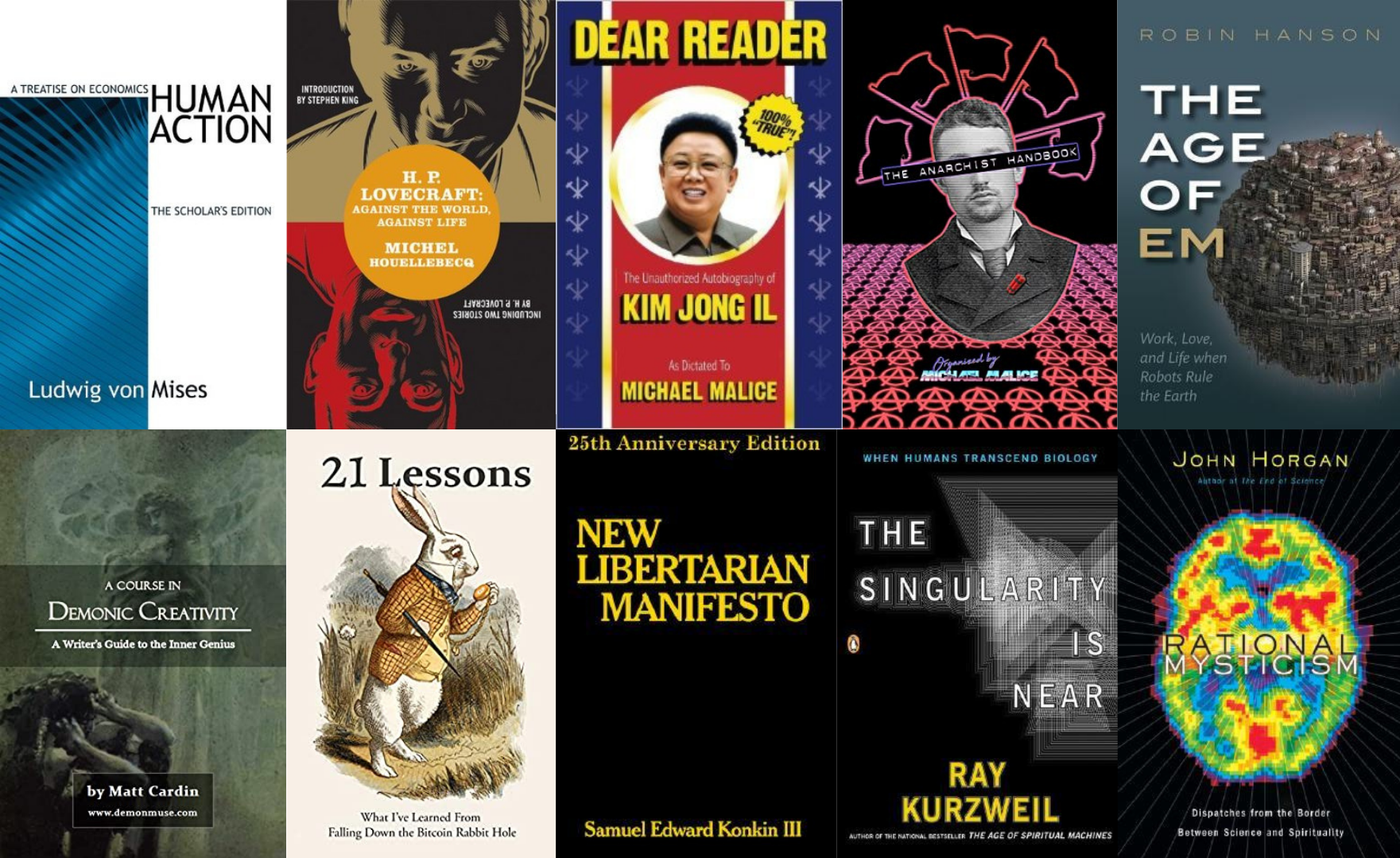
This is the bible of Austrian economics by the grandfather of Austrian economics, Ludwig von Mises. Human Action is Mises’ magnum opus on economics, philosophy, and history—or more precisely, it’s about what Mises terms “praxeology”: the study of human action, which all economic activity boils down to. This is a long book (it took me half the year to get through, which is why there are fewer honorable mentions this year) but it was worth it. You will better understand the world today by reading this 82-year-old tome than by reading today’s newspapers.
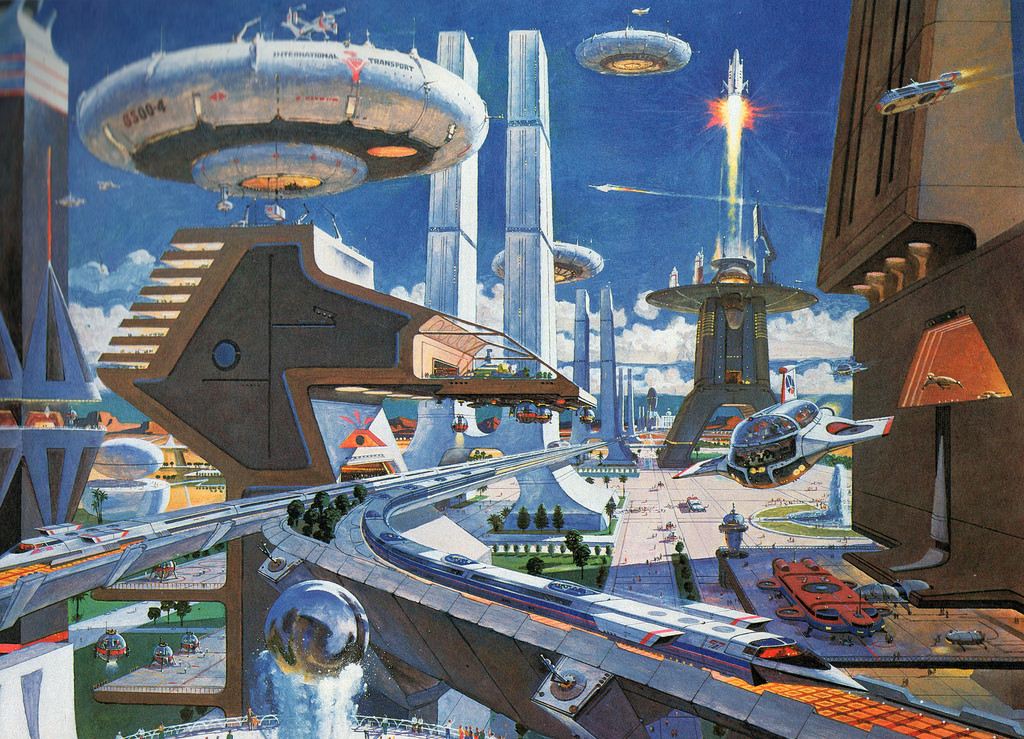
There are essentially two types of science fiction: hard and soft. Soft science fiction is more like fantasy, not obeying the laws of physics (Star Wars) while hard science fiction aims to be scientifically accurate (2001: A Space Odyssey). I love Star Wars, but my real favorite genre is near-future hard science fiction such as Blade Runner, Interstellar, The Martian, Ex Machina, and Her. I think those kinds of stories—built around accurate science and technological innovations that can conceivably happen in the near future—are perhaps the most important form of fiction. Continue reading →
Over the past couple of years, I have become obsessed with artificial intelligence (AI). If you’re not also obsessed with AI then you probably don’t know enough about AI. To remedy that, read Tim Urban’s massive 2-part post about AI on his blog Wait But Why. Continue reading →
Black Mirror is one of my favorite shows on television. It’s like a modern version of The Twilight Zone, an anthology series exploring the ramifications of technology on life in the present and near-future. “White Christmas,” the seventh overall episode of Black Mirror, touches on some ways in which technology might help people with social anxiety in the future. Continue reading →





 T.Z. Barry