Tag Archives: audiobooks

The Best Fiction Books I Read in 2025

Tier 1: Literary Masterpieces

INCEL (2023) by ARX-Han
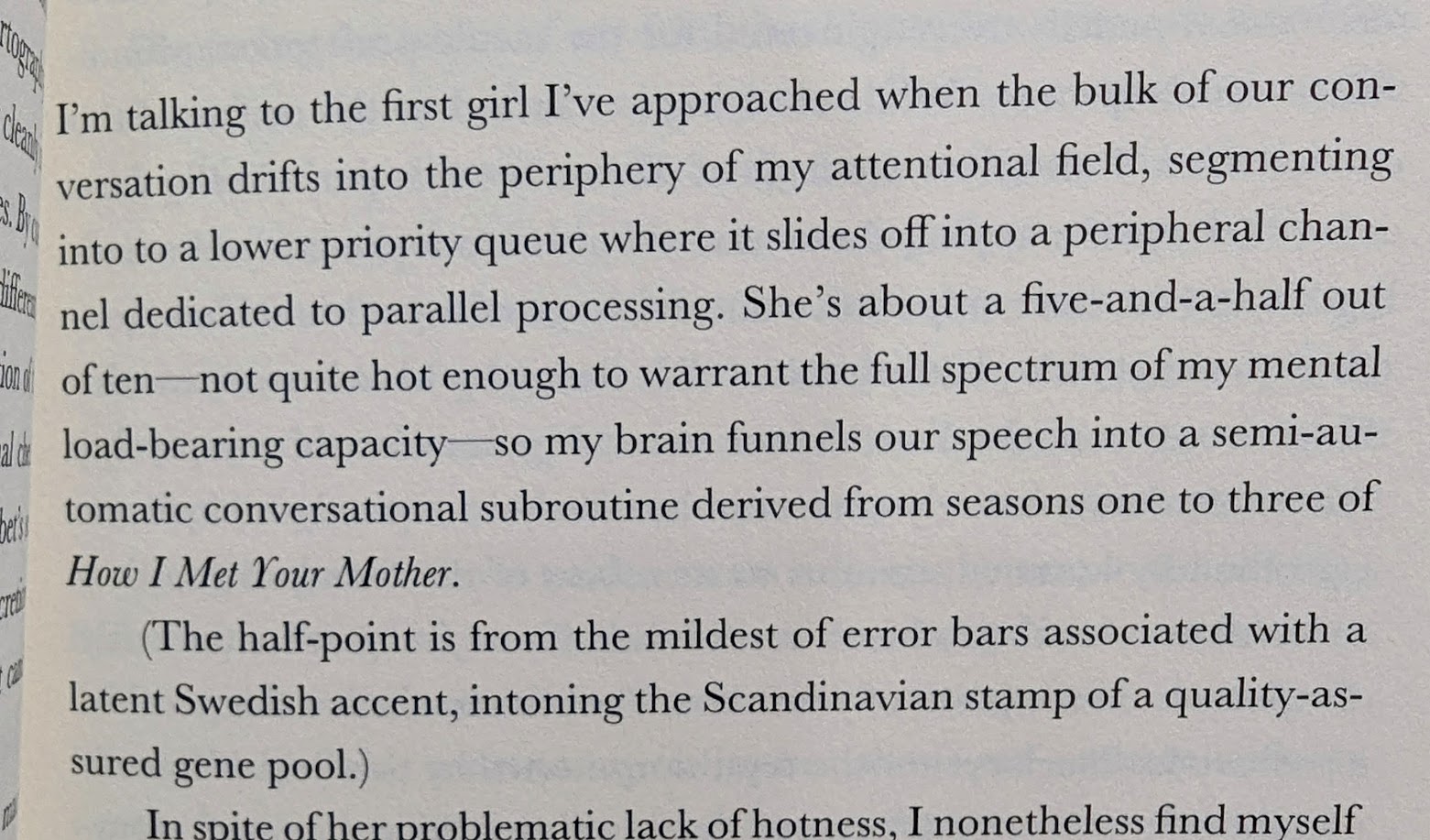
INCEL is a self-published novel by an anonymous writer, which may lead one to assume it is at best mid and more likely slop, but it is actually a modern literary masterpiece. Welcome to the state of literature in the 2020s: the absolute best stuff is being published independently. (Often not by choice but necessity.) I originally discovered ARX-Han through his Substack (Decentralized Fiction), in which he wrote about the process of independently publishing his book. Reading those posts, I could tell he was brilliant, which made me want to purchase and read his novel—which did not disappoint. In fact, it surpassed my already high expectations.

INCEL is an edgy book for sure, about a racist misogynist white male “incel”, but it doesn’t treat him as a caricature or unredemptive villain—which is why no mainstream publisher today would dare touch it. ARX-Han writes about incels in a way that is illuminating, educational, entertaining, humorous, and most of all, true. The book follows the narrator, who is unnamed and referred to as “Anon,” a graduate student studying evolutionary psychology while using his intellectual insights to try to lose his virginity. Anon is evidently on the spectrum, as his extremely detailed over-analysis of everything resembles an AI studying human behavior. He breaks down every social interaction through the lens of evo-psych, citing scientific papers and waxing philosophically about race, sex, and all the problematic things we’re not allowed to talk about. (Though the author does not condone Anon’s thoughts and actions.) Anon is also well-versed in internet culture and 4Chan memes. ARX-Han’s prose is top-notch, on the level of supreme maximalist wordsmiths like David Foster Wallace.

In a sane world this book would have been picked up by a mainstream publisher and the author proclaimed as the next Chuck Palahniuk or Bret Easton Ellis—the voice of a generation—someone who truly understands, empathizes with, and can explain the “incel” crisis facing young men worldwide. Instead the mainstream either ignores the incel problem or just chastises them, blaming incels for everything wrong with society. The New York Times publishes articles wondering why men don’t read fiction anymore… They would if you published books like this!
Continue reading

Writers Must Read

I often hear published writers say they don’t have time to read anymore. It is often in interviews while promoting their own work, when they are asked what books they have read lately. Some writers say they don’t have time to read at all, others not as much as they would like to. Those who do read often only read ARCs (advanced reader copies) of new books they have been asked to write a blurb for, or nonfiction books as research for their fiction. They are too busy writing books to be reading books for leisure, or so they say. But this is not an excuse—it is cope. All writers need to always be reading. (ABR)

Continue reading

How to Expand Your Attention Span

Many people today claim they don’t have the attention span, patience, or self-discipline to read dense books and long-form content. That is because they have become too accustomed to the quick short-form hyperactive content on the internet like tweets, Instagram stories, YouTube videos, memes, and TikToks. In this post, I wrote about breaking my Twitter addiction and focusing my efforts and time on reading books. I suggested Twitter and social media are like drugs in that they change your brain chemistry. That is not hyperbole. Social media changes your brain by shortening your attention span.

Continue reading

Best of the Rest of 2021

I already went over my favorite movies, TV shows, fiction books, nonfiction books, and comic books I consumed this past year, so now it’s time for one last look back at 2021 for the best of the rest: video games, audio dramas, and music.

Continue reading

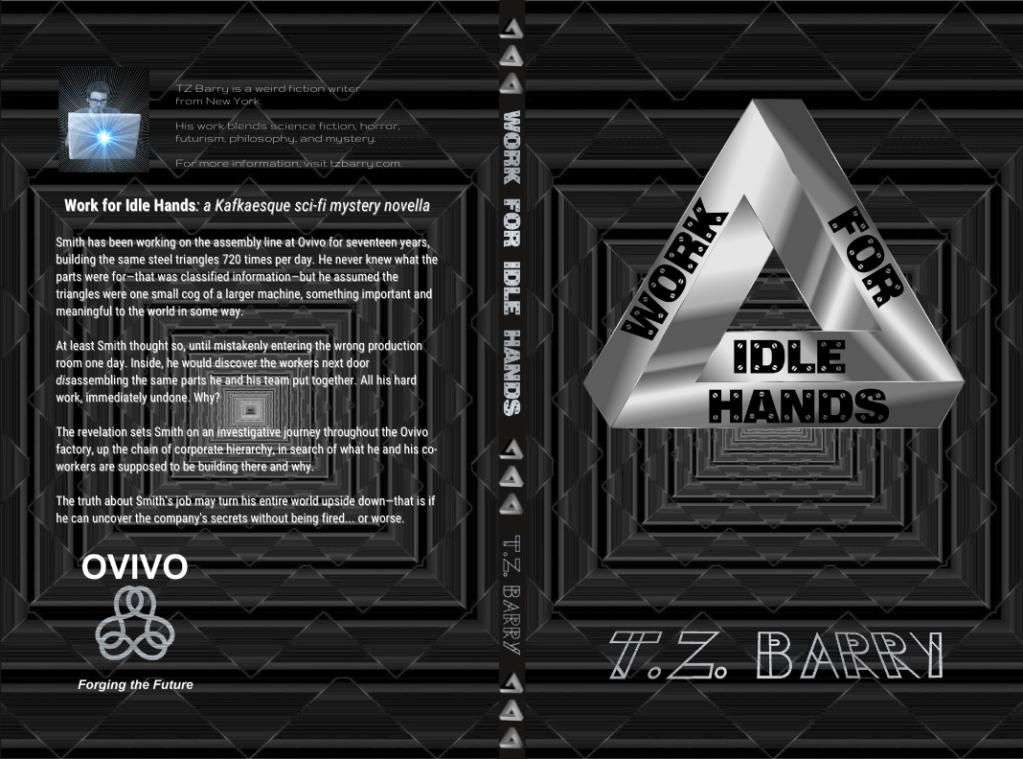
“Work for Idle Hands” Paperback, Plus Fun Facts About the Book

The paperback version of my new novella, Work for Idle Hands, is now available on Amazon.

Some fun facts about WFIH:

1. From Short Story to Screenplay to Novella

Work for Idle Hands was originally written in 2016 as a 9,000-word short story. At that time I was still pursuing screenwriting in tandem with prose writing, so I decided to adapt the story into a screenplay. But after unsuccessfully trying to pitch the screenplay to agents and producers, I decided to re-adapt it back into prose form, but longer since I had expanded the original short story when adapting it into movie form. This final version is a sort of amalgam of the short story and screenplay, which I expanded upon further. The final word count is triple the length of the original short story, at almost 30,000 words. I think this novella version is the best of the three. The novella may be my favorite form for a story. It is the perfect length to tell a full story and develop characters without getting bogged down by side-plots.

Continue reading

Best of 2020: Video Games, Comics, Music, and More

A new form of storytelling medium I got into this year was fictionalized audio drama podcasts. I prefer them to fiction audiobooks because they have a full cast of actors to voice each character in the story. Plus the scripts are written specifically for audio (as opposed to most novels), so the stories are more dialogue-driven and therefore more dynamic and easier to follow while listening. Though, as with television, I prefer self-contained miniseries audio dramas with an ending, rather than series that go on for years.

Continue reading

Audiobooks vs. Reading

audiobooks-reading

I love listening to podcasts, but for some reason I never got into audiobooks. I couldn’t quite connect with a novel by listening to it in the same way I did by reading it. Which I found odd. Oral storytelling is evolutionarily ingrained in humans, dating back to when our prehistoric ancestors told stories around the campfire. Therefore, audiobooks should be more natural than reading. Which explains why I prefer listening to podcasts over reading transcripts or articles. However, I still prefer reading books over audiobooks. Why the apparent discrepancy? Continue reading