Category Archives: Philosophy

Putting Messages in Fiction

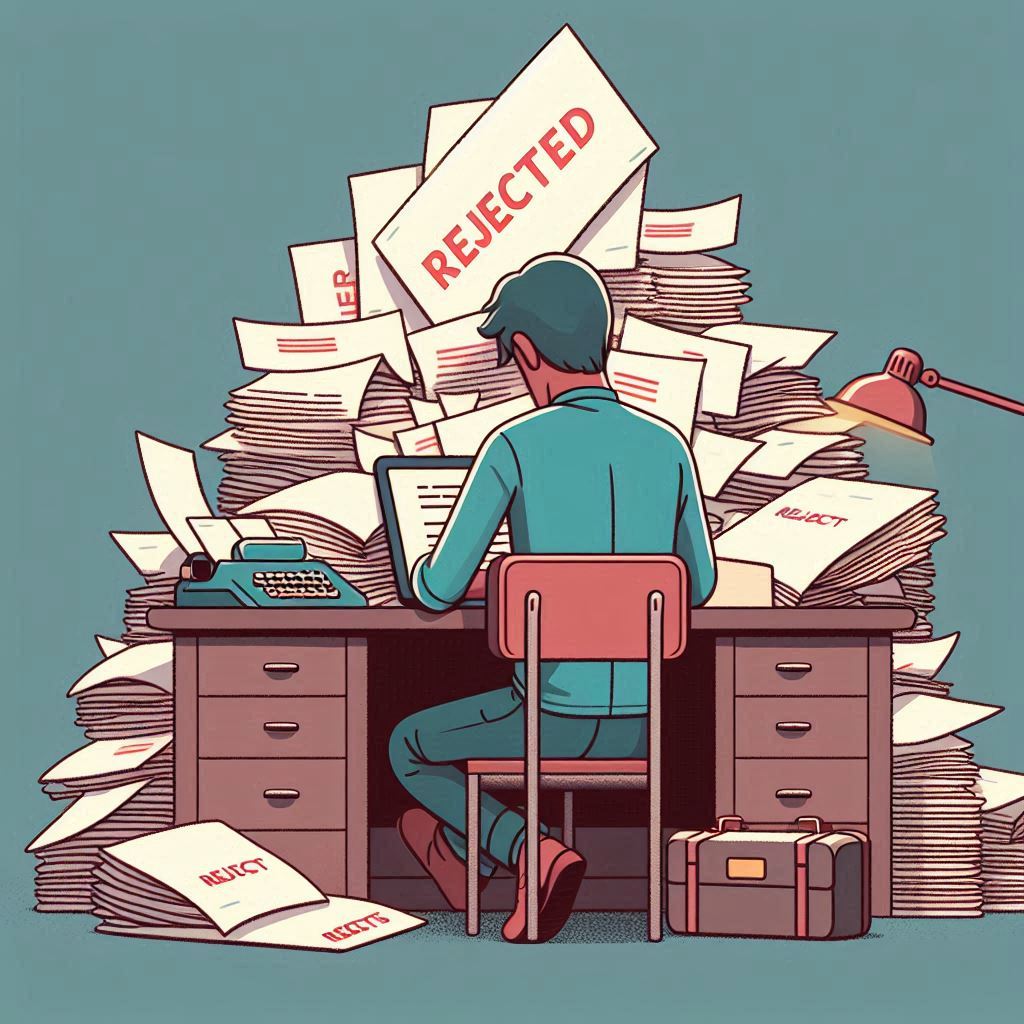
People often say that if you want to include a didactic message in your fiction story, then you should just write an essay. Which is true—but not because essays are better, or because art can’t have a message. But messages should be put in essays rather than art, more due to the audience of the medium than the medium itself.

Continue reading

Best Nonfiction Books I Read in 2024

Man and His Symbols (1968) by Carl G. Jung

I have been wanting to read Jung for a while after hearing so much about his work second-hand through podcasts, blogs, and books. Jung has been highly influential on so many writers, thinkers, and artists I admire—and I can see why. His symbolic and mythological approach to psychology is sorely needed in our overly reductionist materialistic world. This book serves as a great introduction to Jung’s work. It features one chapter by Jung himself while the rest are written by his associates. The book also features lots of images to help illustrate the points about symbols because visual symbols are so powerful. Jung writes about the unconscious and the role of the artist:

Continue reading

From TRL to TikTok: Millennial Pop Culture vs. Gen-Z

Generation-Z is the first generation to grow up entirely online. For as long as Zoomers can remember, the internet has been ubiquitous and pervasive to daily life through smartphones. As a result, Gen-Z has no consensus culture—no TV shows, movies, or music they all consumed growing up. Everything had fractured into thousands of subcultures on the internet. Each Zoomer is an island. There may be another person who shares all your same niche cultural interests, but you are unlikely to ever randomly meet that person in person. You will only ever “meet” that person online. This fragmentation of culture is not necessarily good or bad. It just is. And it is different from every other generation that came before. 

Continue reading

Domesticating the AI Wolf into an AGI Dog

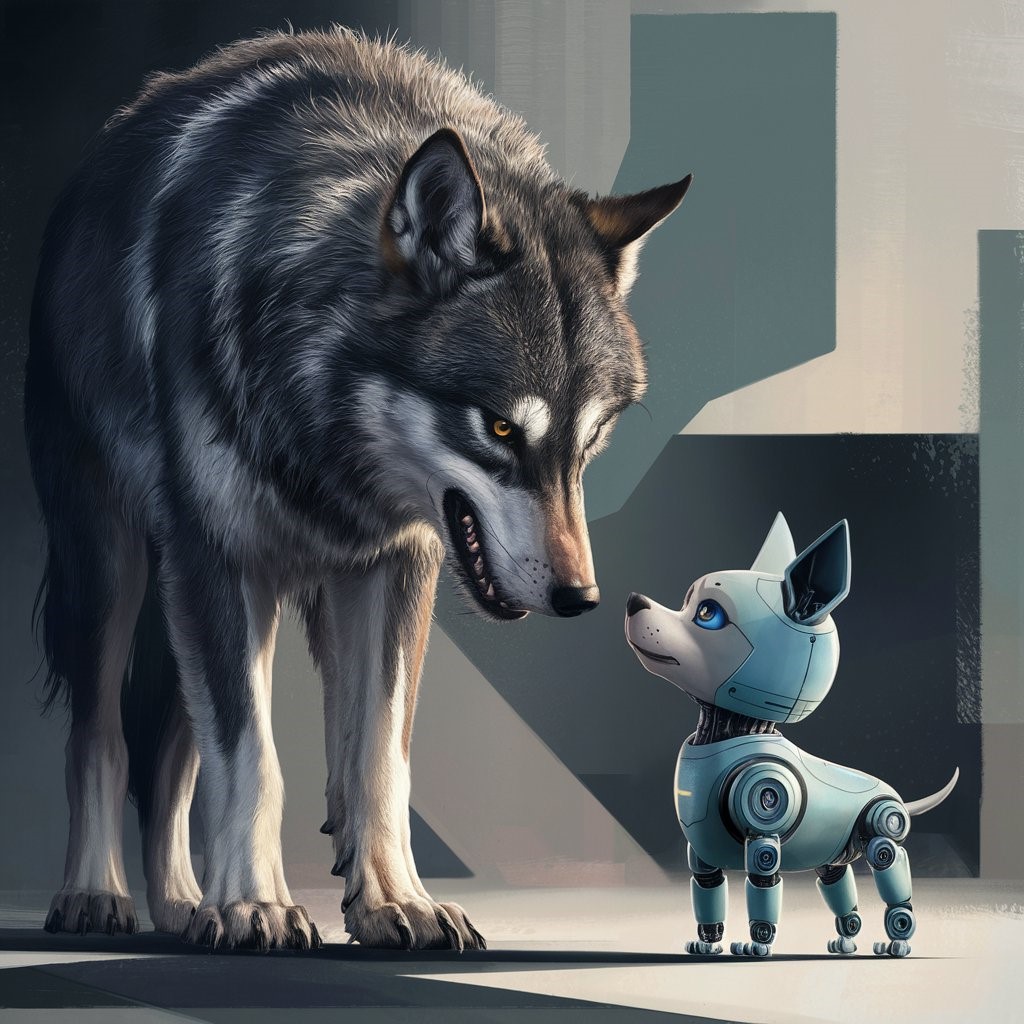
As artificial intelligence advances, many people are worrying about where it will lead. What happens if and when AI becomes more intelligent than humans? Will it grow beyond our control and have a will of its own? Will artificial general intelligence (AGI) result in the end of human civilization? To prevent such doom, AI must be aligned with humanity. 

Continue reading

Plan Your Creative Career Like Evolution

Planning your life can be difficult because there are so many possibilities. It may be best to take a lesson from nature and choose your career path like evolution. DNA evolves by reproduction with random mutations. Many variations are created, not knowing which will succeed. When one trait does succeed, it replicates and builds upon that mutation. This system of evolution clearly works—it produced us, humans, from a single cell of bacteria.

Continue reading

The Totally Surreal Experience of Seeing a Total Solar Eclipse 

On April 8, 2024 in Burlington, Vermont I witnessed my first total solar eclipse. The moment of totality in which the moon covered the sun was the most awe-inspiring act of nature I have ever seen. No photograph or video can do it justice. Words fail to convey the experience. There is no comparison to seeing a total eclipse in person with your own eyes. It is an unforgettable sight every human being should see at least once in their lives. 

The last total solar eclipse visible in the United States was in 2017. I was not in the path of totality, and I couldn’t get a pair of glasses, so I only saw the second-hand effects of the partial eclipse. I watched videos of totality, which looked impressive, and I heard accounts of people saying how transcendent it was, but there was a disconnect. It was like hearing somebody else talk about their dreams. The events in a dream may be astounding, but it doesn’t matter to anyone but the dreamer. Likewise, you can see videos of a total eclipse and hear people describe what they saw, but it will never matter as much to those who witnessed it firsthand. Regardless, I will attempt to describe my experience that day. 

Continue reading

What is it Like to be a Coyote?

One day while hiking I encountered a couple of coyotes along the trail. At first I got frightened, wondering if they were dangerous. But the coyotes just stood still, watching me from a distance and minding their own business. I walked away, continuing along the trail, while googling for information on my phone. With relief, I learned coyotes rarely ever attack adult humans—only small pets and children. (So don’t leave them out alone in coyote-populated areas.)

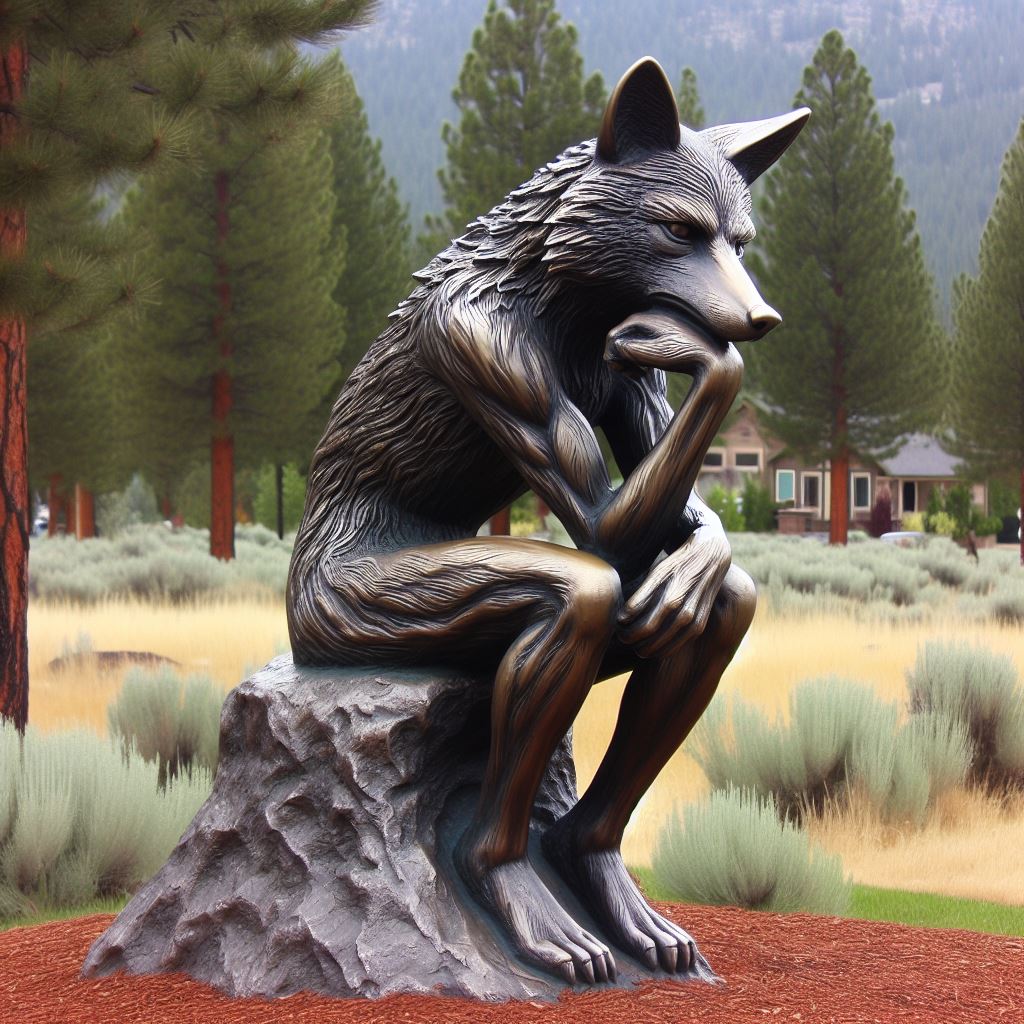
I then started wondering what it feels like to be a coyote. What was going through that creature’s mind as it watched me hiking by. Is anything going through its mind? What I mean to say is, are coyotes conscious? But not just consciousness as subjective experience, or the classic definition by Thomas Nagel—that there is something that it is like to be that thing. I mean are coyotes—or dogs, cats, and any animals other than humans—conscious in the same way humans are, with self-awareness, an inner monologue, and imagination? Does any species besides Homo Sapiens possess “sapience?”

Continue reading

Best Nonfiction Books I Read in 2023

1. A Supposedly Fun Thing I’ll Never Do Again: Essays and Arguments (1997) by David Foster Wallace

I have yet to read Infinite Jest (it is on my bucket list), but I enjoyed this collection of DFW’s long nonfiction essays, maybe even more than his short fiction. They are absolutely genius—not just in their content but in the craftsmanship of the prose on a sentence level. I read a couple of these essays several years ago but struggled with Wallace’s complicated syntax. Between the page-long sentences, invented words and acronyms, and multi-paged footnotes, you practically need a map to read a David Foster Wallace book. With my reading comprehension having expanded since then, I can now better understand and appreciate the complexity of his prose. Few writers could string words together better than DFW (RIP). The essays in this collection include: 

Continue reading

Best Fiction Books I Read in 2023

1. Blood Meridian, or, the Evening Redness in the West (1985) by Cormac McCarthy

I had been planning to read this book for a while after repeatedly hearing it recommended as one of the greatest American novels. When Cormac McCarthy passed away this year, I thought it would be a good time to finally do so. I’d seen and loved several movies based on McCarthy’s books but had never read one.

There’s not much of a plot to Blood Meridian: it’s basically a group of men riding across the Old West, encountering gruesome scenes of violence in and between skirmishes with Apaches. What really sets the book apart—why it is hailed as one of the greatest modern novels by one of the greatest modern writers—is McCarthy’s writing style, painting portraits of the scenes with beautifully simple poetry and deep philosophical insight, mostly through the character of “the judge.” Which is the second thing that sets Blood Meridian apart. The character of judge Holden is an all-time classic antihero (or outright villain). He studies nature and catalogs specimens in his journal, yet kills men, women, and children, sometimes just for the thrill of it.

The story is told from the perspective of “the kid,” a young man riding with the judge and their leader, Glanton. But whenever the focus drifted away from the judge, I wanted to return to him. He is such a fascinating character and if/when the book is made into a movie, whoever plays the judge will likely win an Oscar. The book is full of violence but not gratuitously—it is there for a reason. The book explores the very nature of violence and war, how it is fundamental to life, inescapable. Perhaps the central question of the book is who or what is Holden the judge of? 

Continue reading