Tag Archives: David Foster Wallace

The Best Nonfiction I Read in 2025

Books

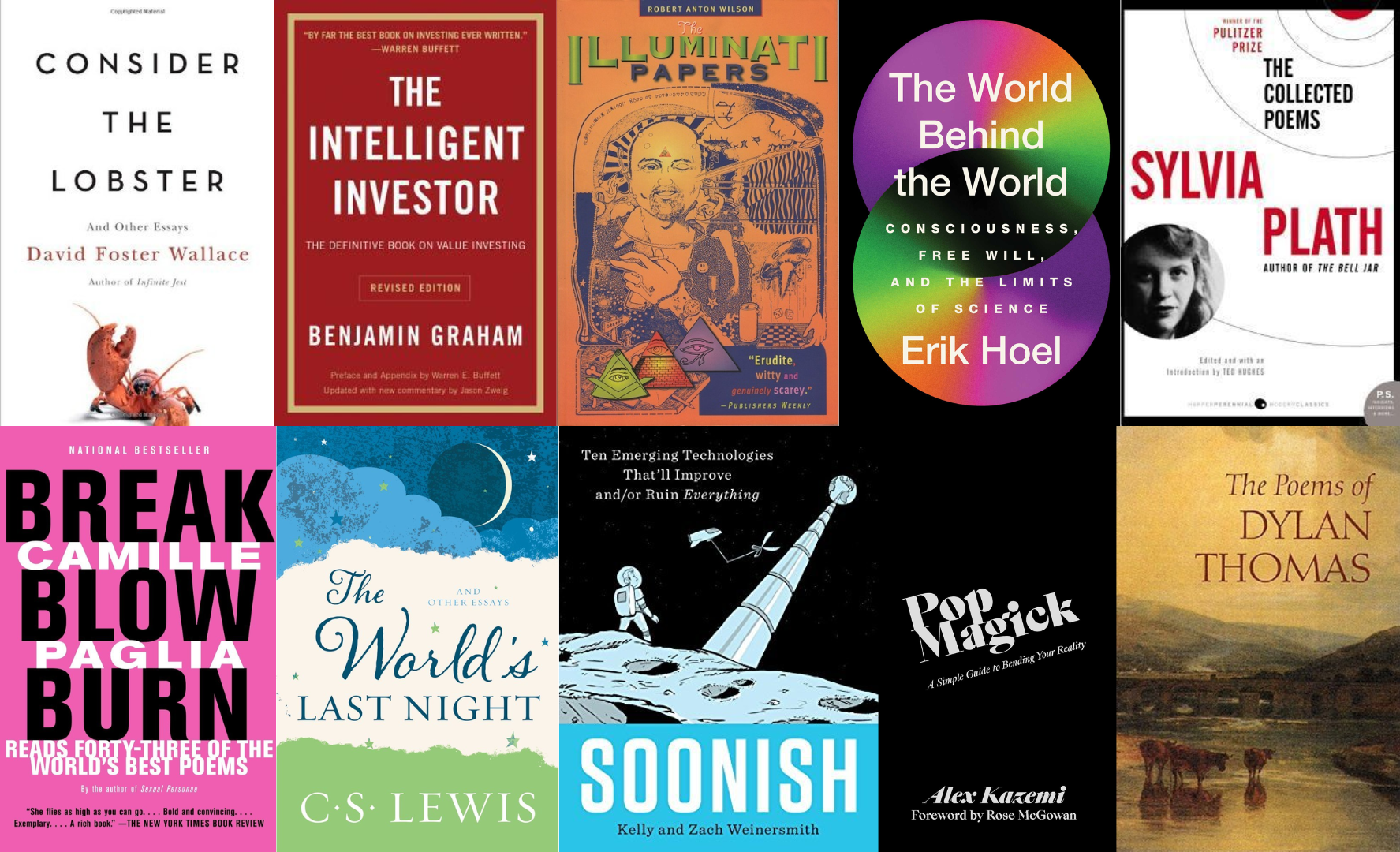
Consider the Lobster and Other Essays (2005) by David Foster Wallace
DFW’s first collection of essays, A Supposedly Fun Thing I’ll Never Do Again, was some of the best nonfiction writing I’ve ever read, and this, his second collection of essays, is equally great. The topics covered include:

  • His experience visiting an “adult entertainment” awards show in Las Vegas, exposing with sardonic wit how gross and nihilistic the entire porn industry and everyone involved in it is.
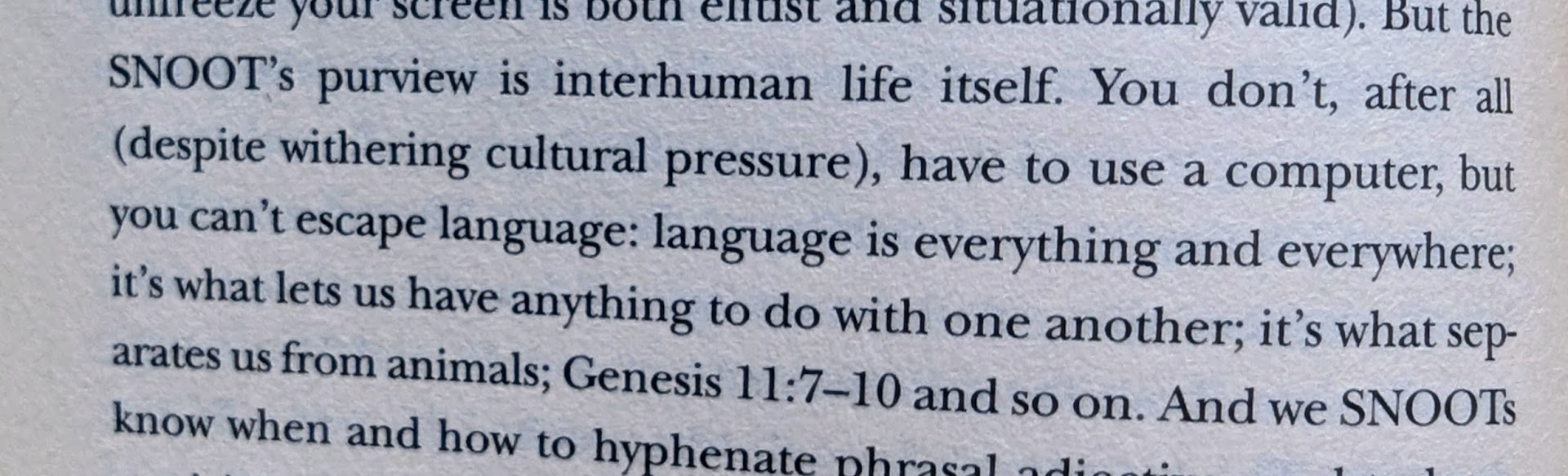
  • A book review of a usage dictionary, which reveals why DFW is such a masterful writer, because of his obsession with words and the English language.
  • About what life was like in the days following 9/11/2001 in Bloomington, Indiana.
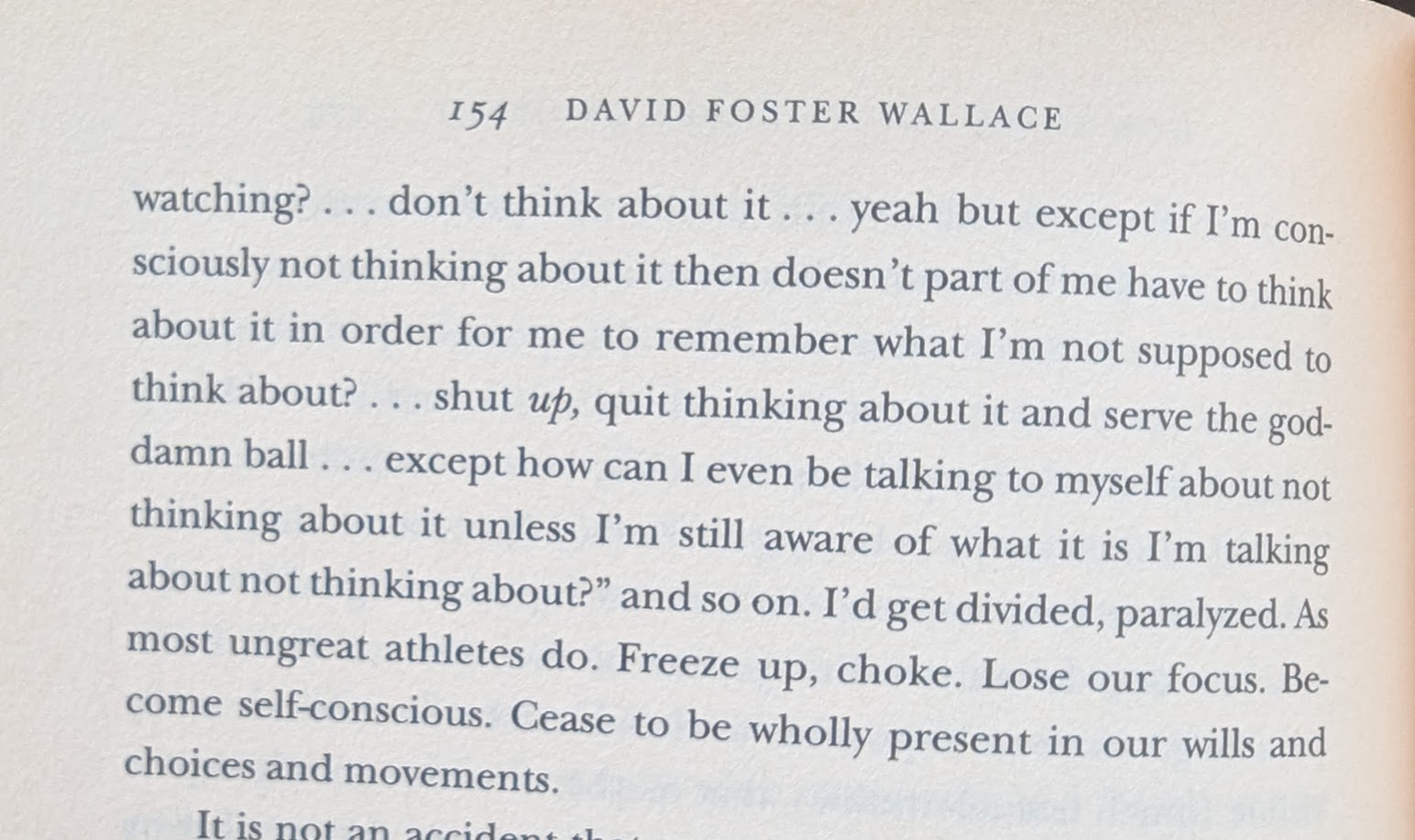
  • A review of a memoir of a female child tennis star. Like I said last time, DFW can make any topic interesting, especially when writing about tennis, which was of particular interest to him.
  • DFW’s experience following John McCain on the campaign trail during his 2000 presidential run, about the politician as a person in private versus how he presents himself to the public versus how the media presents him. Which is the real one? Is any of them “real“?
  • His visit to the annual Maine Lobster Festival and the ethics of eating lobsters.
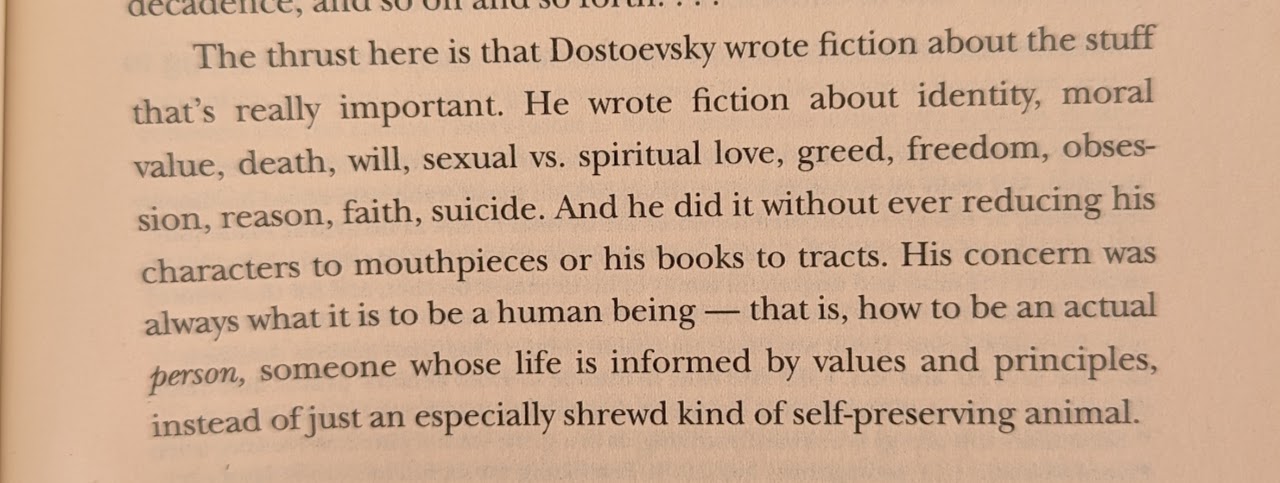
  • A review of a biography of Dostoyevsky and his fiction—one literary master writing about another.
  • A profile of a political talk radio show host in Los Angeles in the early 2000s, somewhat prophetic of podcasts and the decentralized media landscape that the internet would enable—yet it also now seems quaint. Like if you were worried about the political polarization of Bush-era talk radio, you had no idea what was coming… Plus this essay features the most convoluted set of DFW “foot”notes yet.
Continue reading

When AI Creates “Perfect” Art for You

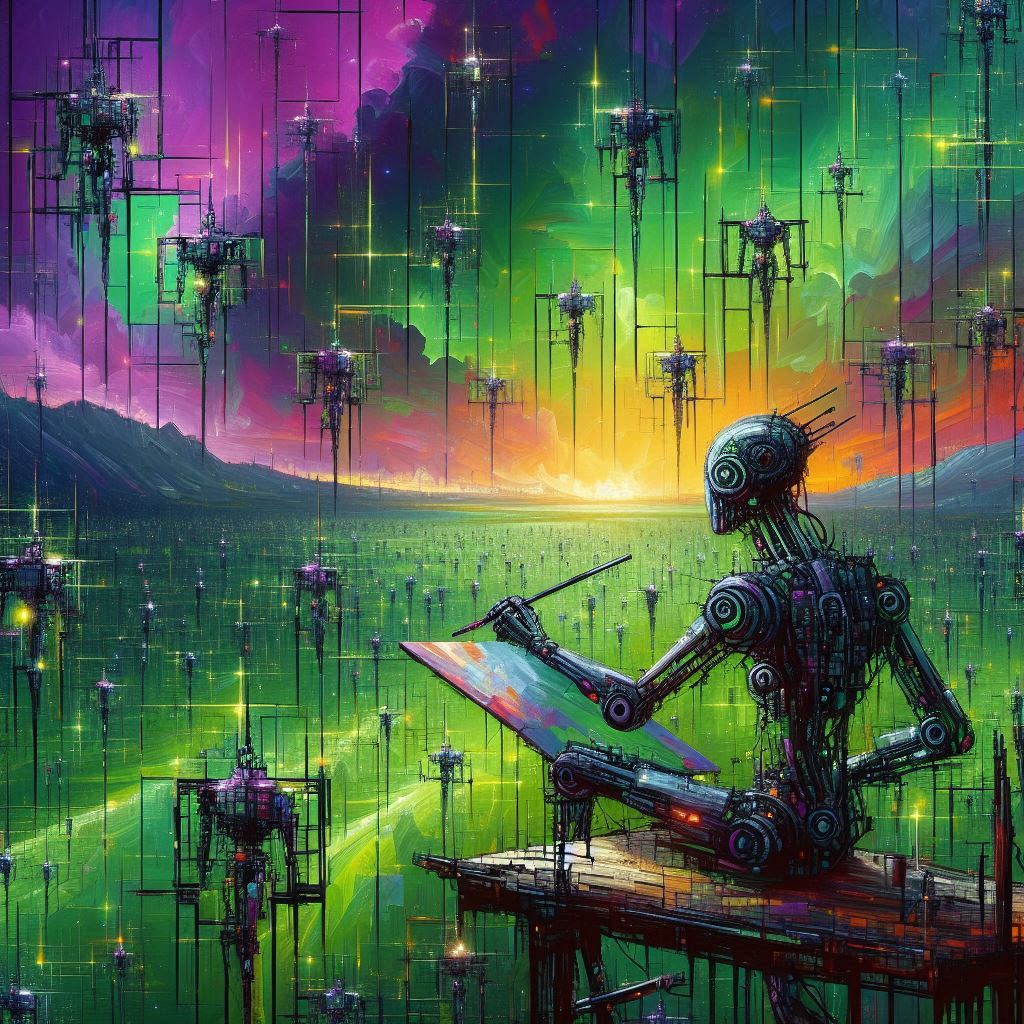
In the future, it may be possible for AI to create art (including books, movies, music, and videogames) that is so perfectly attuned to an individual’s preferences, perhaps even directly using brain scans to determine the precise ingredients that will give the person the ultimate entertainment experience (like from David Foster Wallace’s Infinite Jest), whatever that may be for the particular individual. This AI would essentially create better art than humans—not that it would be objectively better than anything created by humans, but it would be subjectively better to that one particular human for whom the artwork is specifically created for. And AI could conceivably do this for every single human in the world: create unique works of art tailored to be the best work of art for that individual (whatever the criteria for “best” is for them). How could human artists compete with that?

Continue reading

Best Nonfiction Books I Read in 2023

1. A Supposedly Fun Thing I’ll Never Do Again: Essays and Arguments (1997) by David Foster Wallace

I have yet to read Infinite Jest (it is on my bucket list), but I enjoyed this collection of DFW’s long nonfiction essays, maybe even more than his short fiction. They are absolutely genius—not just in their content but in the craftsmanship of the prose on a sentence level. I read a couple of these essays several years ago but struggled with Wallace’s complicated syntax. Between the page-long sentences, invented words and acronyms, and multi-paged footnotes, you practically need a map to read a David Foster Wallace book. With my reading comprehension having expanded since then, I can now better understand and appreciate the complexity of his prose. Few writers could string words together better than DFW (RIP). The essays in this collection include: 

Continue reading

E Nihilus Infinitum: Social Media and U.S. Fiction

In “E Unibus Pluram: Television and US Fiction,” David Foster Wallace’s brilliant 1990 essay1, he hypothesized that fiction writers (like himself and myself) are natural oglers or people-watchers. Writers used to have to observe people in the real world, in public, to get the material for their fiction. But fiction writers (like him and me) are often self-conscious types with social anxiety, which was why television was such a godsend for people like him. With TV, self-conscious writers could ogle and people-watch from the comfort of their own homes without the other people seeing them. In this sense, DFW argued, television is a form of voyeurism.

Continue reading

Best Fiction Books I Read in 2022

1. Childhood’s End by Arthur C. Clarke (1953)

This is the second Arthur C. Clarke novel I’ve read (the first being Rendezvous With Rama), and I’ve been blown away by both. For some reason I expected Clarke’s books to be a bit drier and more dated, but his is some of the most exciting and mind-expanding science fiction I’ve ever read. I should have expected no less from the mind behind 2001: A Space Odyssey. Perhaps I had that prejudice because in some older sci-fi books, the science and ideas become outdated or the writing style does (or it was never any good to begin with). Especially with hard science fiction, which Clarke is often categorized as, the science is prioritized over the story, craft, and characters, so once the science itself becomes dated, the book does as well. But this is NOT the case with Arthur C. Clarke. Though there is some “hard science” in Childhood’s End, it was also quite weird, speculative, and philosophical (like 2001). Clarke’s ideas remain highly relevant and he is an exquisite composer of prose. This novel particularly features so many brilliant lines of philosophical insight, such as: “There were some things that only time could cure. Evil men could be destroyed, but nothing could be done with good men who were deluded.”

Continue reading

Social Anxiety in Movies: The End of the Tour

Social Anxietyin Movies

The End of the Tour follows Rolling Stone reporter David Lipsky as he travelled with writer David Foster Wallace during the tour for his highly acclaimed novel, Infinite Jest. Like much of Wallace’s work, the film touches on the writer’s self-consciousness, existentialism, addiction, anxiety, and depression, which ultimately led to his suicide in 2008 at the age of 46. Continue reading