Tag Archives: art

The Ceramic Jet

When I was in the seventh grade, we had an art class assignment to make a small sculpture out of clay. It could be anything we wanted. I was fascinated by fighter jets at the time, partly inspired by the recent movie Independence Day, so I decided to make an F-16. We had art class one day a week, so I molded the clay over several weeks into a fighter jet about the size of my hand. Once it was hardened I painted it. After the paint dried, my work of art was completed and ready to be taken home.

Continue reading

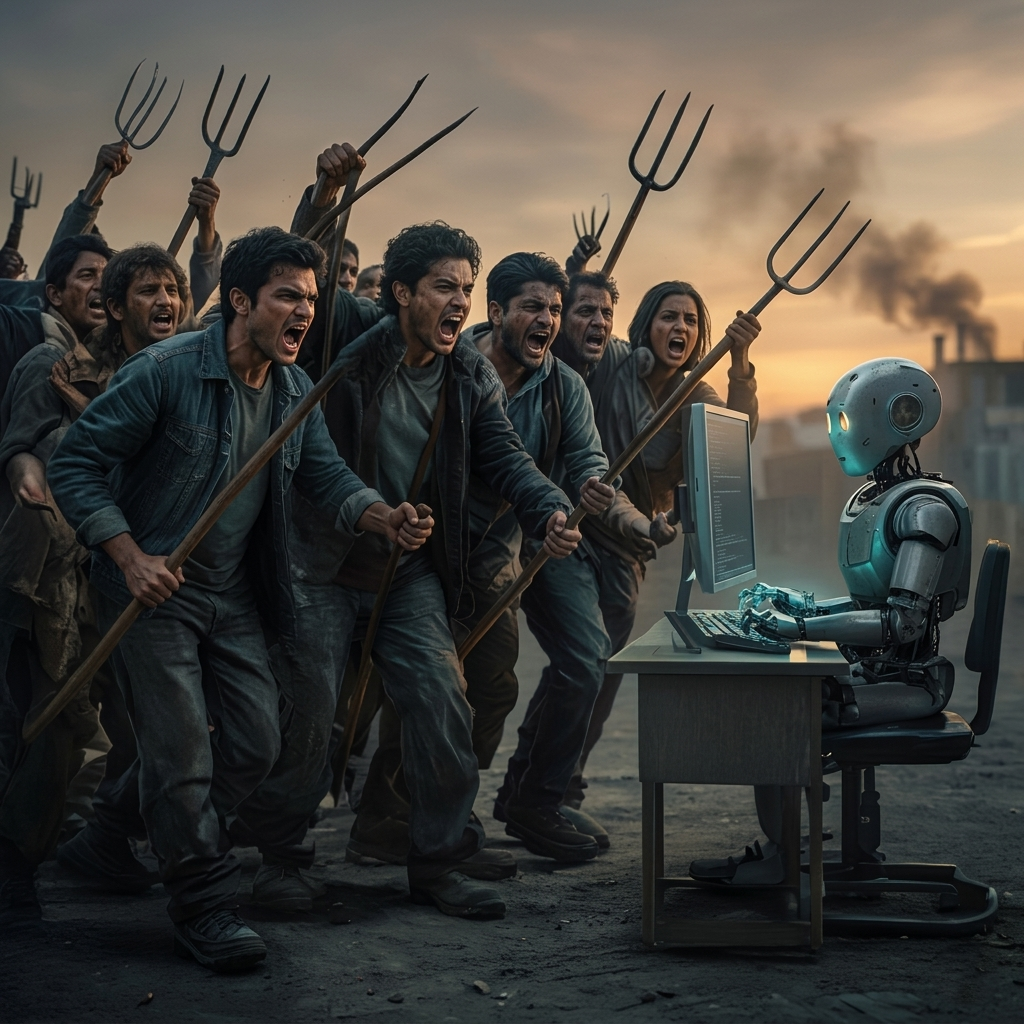
Human Creativity Beats AI in the Future

In the future, only creative people will survive. There will be no jobs. Even art could be better done by robots and AI. But humans can still be creative. And they can find purpose in creating art or music or businesses or hobbies. Anyone who is not creative will essentially be a human robot (but a less productive version of the actual robots).

Continue reading

When AI Creates “Perfect” Art for You

In the future, it may be possible for AI to create art (including books, movies, music, and videogames) that is so perfectly attuned to an individual’s preferences, perhaps even directly using brain scans to determine the precise ingredients that will give the person the ultimate entertainment experience (like from David Foster Wallace’s Infinite Jest), whatever that may be for the particular individual. This AI would essentially create better art than humans—not that it would be objectively better than anything created by humans, but it would be subjectively better to that one particular human for whom the artwork is specifically created for. And AI could conceivably do this for every single human in the world: create unique works of art tailored to be the best work of art for that individual (whatever the criteria for “best” is for them). How could human artists compete with that?

Continue reading

Putting Messages in Fiction

People often say that if you want to include a didactic message in your fiction story, then you should just write an essay. Which is true—but not because essays are better, or because art can’t have a message. But messages should be put in essays rather than art, more due to the audience of the medium than the medium itself.

Continue reading

On Titles and Naming Things

“It is a sad truth, but we have lost the faculty of giving lovely names to things. Names are everything.” — Oscar Wilde

One of my favorite parts of writing a piece of fiction is coming up with the title. I agree with Oscar Wilde: Naming a work of art is an art in itself and should always be treated as such. The name that is given to a work of art is massively influential on how that work is received. As a result, I spend an inordinate amount of time thinking about the titles of my books (and the names of my characters, but that’s a topic for another day).

Continue reading

Think Like an Artist to Create Better AI Art

One of the great upsides of AI art is the ability for artistically unskilled people to create their own artwork. Instead of spending years learning the craft of how to paint or draw, you can instantly generate a skilled painting or drawing. The most artistic part of the process in AI art becomes choosing which image to create. For that image to be artistically meaningful, prompters must learn how to think like an artist. 

Continue reading

E Nihilus Infinitum: Social Media and U.S. Fiction

In “E Unibus Pluram: Television and US Fiction,” David Foster Wallace’s brilliant 1990 essay1, he hypothesized that fiction writers (like himself and myself) are natural oglers or people-watchers. Writers used to have to observe people in the real world, in public, to get the material for their fiction. But fiction writers (like him and me) are often self-conscious types with social anxiety, which was why television was such a godsend for people like him. With TV, self-conscious writers could ogle and people-watch from the comfort of their own homes without the other people seeing them. In this sense, DFW argued, television is a form of voyeurism.

Continue reading

AI Art & the Simulacra of Simulacrum

There is growing concern that the proliferation of generative AI will remove humans from the equation of creativity because eventually most art will be AI-generated images based on previous AI-generated images until all art is simulacra with no connection to reality. But in a way, this has already happened—before the invention of AI art.

Continue reading

The Success of Succession

Since Succession premiered in 2018, I repeatedly heard so many people I respect say how great the show was, but I hesitated to start watching. It wasn’t that I doubted them; I was just waiting to find the time to dive in. (Too much content.) With the final season airing this year, I thought it would be a good time to catch up before the finale. Part of the reason I hesitated to start Succession was fear of getting absorbed in yet another series that would go on indefinitely—or get canceled prematurely. Knowing there was an end in sight allowed me to begin. Long story short, it turns out all those people were right: Succession is a great show. It is highly dramatic with surprising twists and turns, but it is also extremely funny—funnier than most sitcoms, full of classic one-liners. It ranks up there with The Wire, The Sopranos, Mad Men, and Breaking Bad as one of the top television series of all time.

Continue reading

ChatGPT on Why ChatGPT Sucks at Writing Fiction

In this post I wrote about my experiences using ChatGPT to write fiction, ultimately concluding that AI is better at non-creative writing than creative writing. I will now use ChatGPT to further prove my point. AI was much better at generating the following nonfiction blog post than generating any fiction stories. I’ll let ChatGPT explain why:

Continue reading