
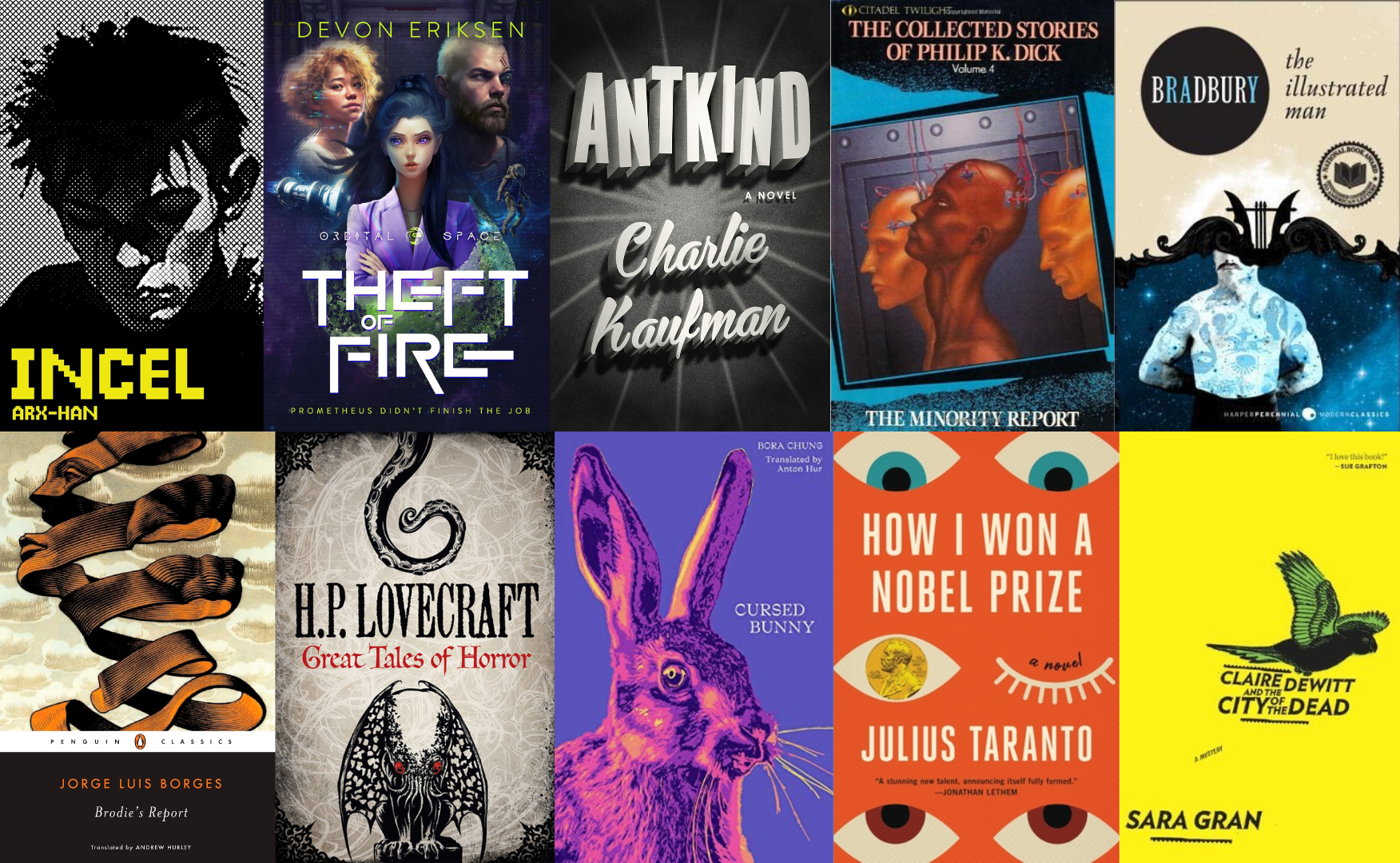
Tier 1: Literary Masterpieces
INCEL (2023) by ARX-Han
INCEL is a self-published novel by an anonymous writer, which may lead one to assume it is at best mid and more likely slop, but it is actually a modern literary masterpiece. Welcome to the state of literature in the 2020s: the absolute best stuff is being published independently. (Often not by choice but necessity.) I originally discovered ARX-Han through his Substack (Decentralized Fiction), in which he wrote about the process of independently publishing his book. Reading those posts, I could tell he was brilliant, which made me want to purchase and read his novel—which did not disappoint. In fact, it surpassed my already high expectations.
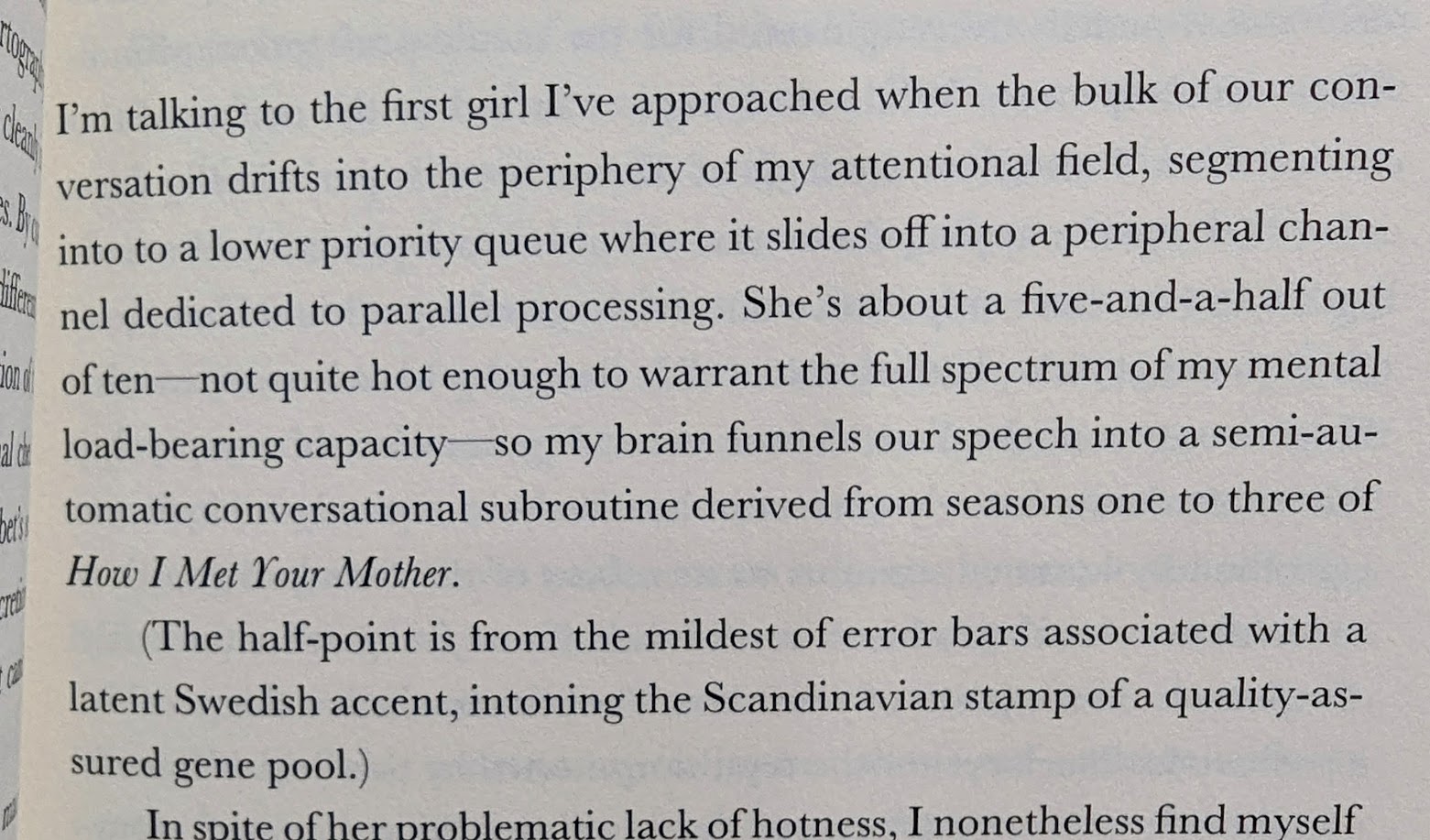
INCEL is an edgy book for sure, about a racist misogynist white male “incel”, but it doesn’t treat him as a caricature or unredemptive villain—which is why no mainstream publisher today would dare touch it. ARX-Han writes about incels in a way that is illuminating, educational, entertaining, humorous, and most of all, true. The book follows the narrator, who is unnamed and referred to as “Anon,” a graduate student studying evolutionary psychology while using his intellectual insights to try to lose his virginity. Anon is evidently on the spectrum, as his extremely detailed over-analysis of everything resembles an AI studying human behavior. He breaks down every social interaction through the lens of evo-psych, citing scientific papers and waxing philosophically about race, sex, and all the problematic things we’re not allowed to talk about. (Though the author does not condone Anon’s thoughts and actions.) Anon is also well-versed in internet culture and 4Chan memes. ARX-Han’s prose is top-notch, on the level of supreme maximalist wordsmiths like David Foster Wallace.
In a sane world this book would have been picked up by a mainstream publisher and the author proclaimed as the next Chuck Palahniuk or Bret Easton Ellis—the voice of a generation—someone who truly understands, empathizes with, and can explain the “incel” crisis facing young men worldwide. Instead the mainstream either ignores the incel problem or just chastises them, blaming incels for everything wrong with society. The New York Times publishes articles wondering why men don’t read fiction anymore… They would if you published books like this!
Theft of Fire (2023) by Devon Eriksen
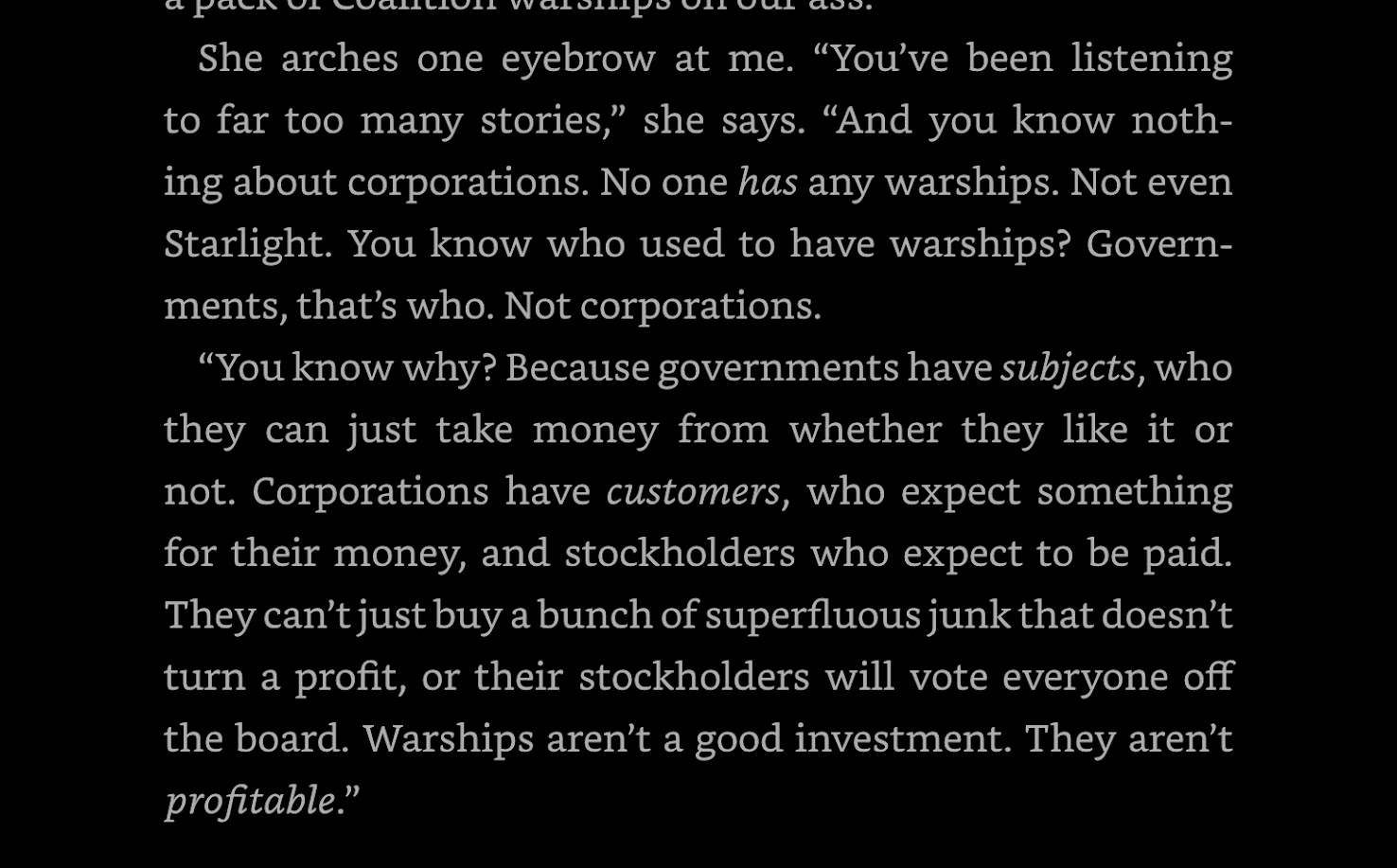
Theft of Fire is smart hard science fiction with libertarian themes, compelling characters, and great storytelling (it is rare to find all three). The story is set in an anarcho-capitalist future after the solar system has been colonized. A black market space mining junk hauler gets his ship hijacked by a tech billionaire heiress, with plans to go to a restricted planet to retrieve the remains of a crashed ship from an ancient alien civilization, hoping to harness their mysterious advanced technology. Erickson was an engineer so he has technical expertise, but he also clearly understands psychology and human nature. He is a legit genius (just read his threads on X). The book is smartly written with scientific detail but is also humorous and grounded, with rich characters that are realistic and believable. It’s probably the best science fiction novel published in the past decade, since The Martian at least, but more ambitious. This is the first book of a series, and while I generally prefer stand-alone novels, “Orbital Space” is a series that is definitely worth investing your time in.1 Like #1 on this list (and last’s year’s #1, and most books published within the past decade that I’ve enjoyed), it was published completely independently, outside of the mainstream system. “Self-published” is no longer a pejorative—that is where you’ll find the best stuff today.
Antkind (2020) by Charlie Kaufman
I have long been a massive fan of screenwriter Charlie Kaufman, especially Eternal Sunshine of the Spotless Mind, which may be my favorite movie of all time, so I was interested to read this, his first novel. In the age of AI, where stories can be generated in seconds, I am drawn to the types of books that AI cannot write—and that precisely describes Antkind. ChatGPT could never come up with something like this, as the voice of the eccentric narrator is so idiosyncratic and unique. I have never laughed out loud so hard and so often while reading a book. The narrator is B. Rosenberger Rosenberg (all of the names are equally absurd), a pretentious film critic who reminds me of Ignatius J. Reilly from A Confederacy of Dunces because of his hilariously un-self-aware pompous self-conceitedness, resulting in constant unintentional comedy. He is a parody of a super woke male feminist who constantly virtue signals, even when there’s no audience—but at the same time he laments against the excesses of political correctness. B. (as he insists on being called, so as not to gender himself, as he likewise insists on using “thon” as a pronoun) discovers a never-before-seen silent claymation film from the 1910s that is three months long. But upon seeing it, he accidentally destroys the only copy and falls into a coma that erases his memory of having seen it. So he visits a hypnotist to help him remember the film so he can novelize it to share with the world. The book is full of satirical critiques of the movie industry, including Charlie Kaufman himself and his movies which B. absolutely loathes. The story gets more and more surreal and dreamlike as it goes along. My only complaint is it went on a little too long. I would love to read a collection of short stories by Kaufman.
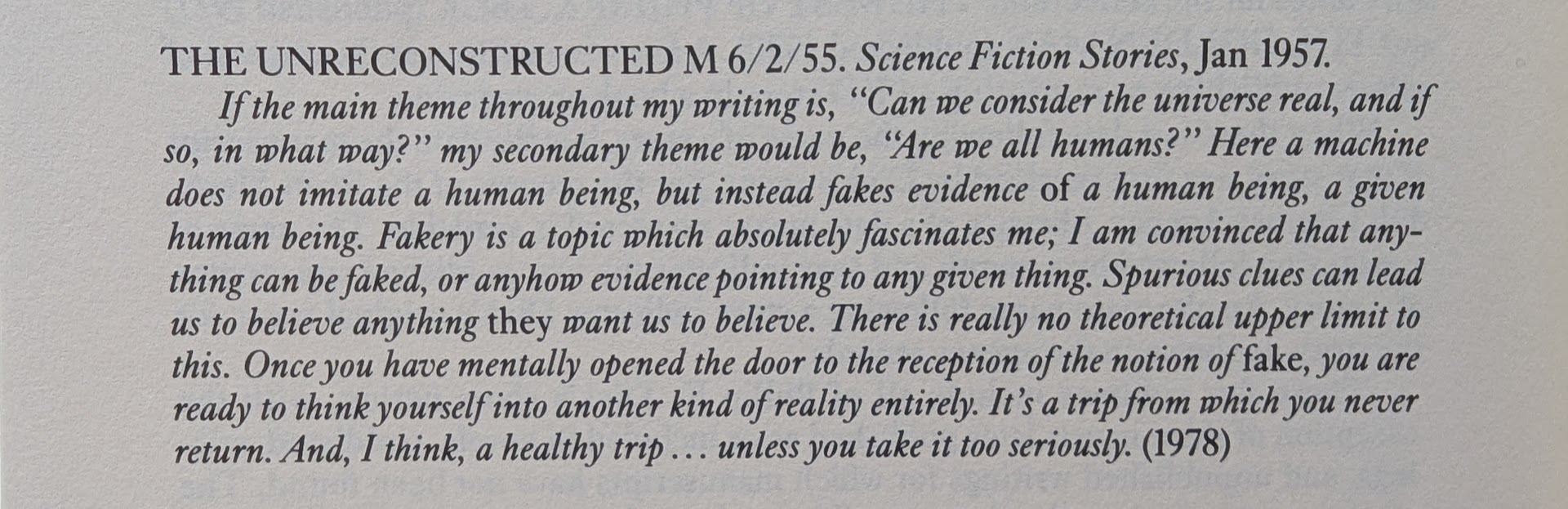
The Collected Stories of Philip K. Dick 4: The Minority Report (1954-1964) by Philip K. Dick
This is a collection of stories by PKD, most of which I hadn’t read before, and almost all of which were great. I mostly enjoy PKD’s short fiction more than his novels. “The Mold of Yancy” expanded upon his novel The Penultimate Truth, which was 100x longer, but the short story was 100x better. I also enjoyed “Orpheus with Clay Feet,” about a man who attempts to travel back in time and inspire a science fiction writer to write his great stories. The highlight of the collection was something I had read before, “The Minority Report,” which to me, is a perfect story. I love the movie adaptation, except for the sappy ending. PKD’s original ending is darker but more poetic and realistic. If only Spielberg kept that ending, Minority Report would have been a perfect movie too.
The Illustrated Man (1951) by Ray Bradbury
This is a classic collection of short stories by Ray Bradbury, bookended by the frame story about the “Illustrated Man” covered in tattoos that tell stories. Bradbury is the type of writer I would like to be—not pigeon-holed in any one particular genre. He wrote a variety of stories across science fiction, fantasy, mystery, horror, young adult, and literary fiction—and was great at them all. This collection shows his wide taste, some of my favorite stories being:
– “The Veldt” – One of the best short stories I’ve ever read, a prescient view of virtual reality.
– “The Exiles” – Set in the future, when fantasy and horror books are burned on Earth, but spirits of the authors and monsters from those books exist on Mars.
– “The Fox and the Forest” – In the future, there is a time travel tourism service, and a couple tries to run away from their dystopian future to hide in the past.
– “Marionettes” – People use robot replacements of themselves to do certain tasks.
– “Zero Hour”2 – Aliens use kids to aid their invasion of Earth.
Brodie’s Report (1970) by Jorge Luis Borges
I had never read this collection of short stories by Borges (one of my favorite writers) before. Most of the stories involved duels and knife fights. The best story was “The Encounter” about a duel between two men, driven by the knives they used, which had a life of their own.
Great Tales of Horror by H.P. Lovecraft
I own several collections of Lovecraft stories, and I read (and re-read) several of them this past year, as he is one of my favorite writers and worth revisiting to keep his cosmic horror fresh of mind, so as to influence my own weird fiction.
Tier 2: Great Books
Cursed Bunny (2017) by Bora Chung
A collection of short stories by a South Korean writer, spanning various genres from science fiction, horror, and magical realism. The writing style and tone reminded me of Kafka, which is high praise.
Acephale by Jeffrey Walker
This is not a book but a podcast where the author narrates audiobook versions of his short stories. They are all fantastic, cosmic horror in the vein of Thomas Ligotti. This along with Knifepoint Horror by Soren Narnia are the best fiction podcasts. And for science fiction, check out The Last Human by Isaac Young.
How I Won a Nobel Prize (2023) by Julius Taranto
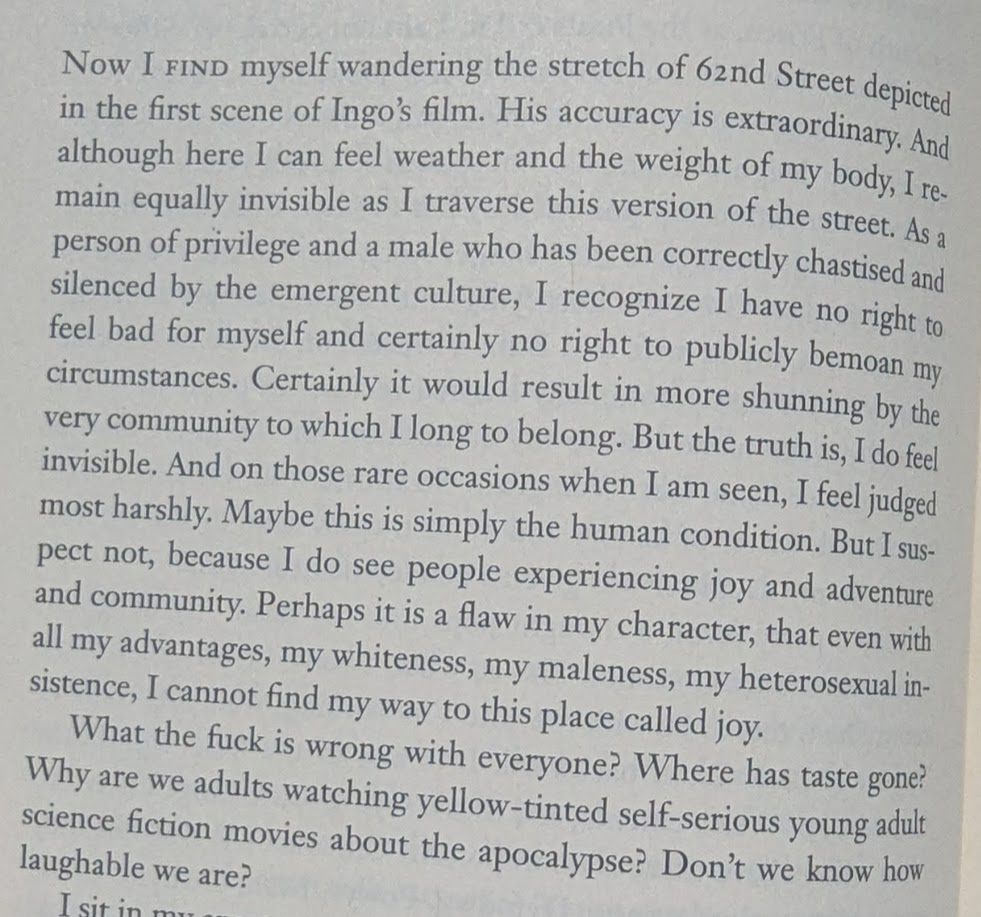
This is the ultimate book on cancel culture. A new university is founded on an island where all the greatest minds who have been canceled (some for good reason, some unfairly) go to pursue their academic research without interference. The book manages to tread a fine line of satirically critiquing cancel culture and social justice overreach while also critiquing those who truly do deserve cancellation.
Claire DeWitt and the City of the Dead (2011) by Sara Gran
I love detective mysteries, but prefer when it gets a little weird—which this book does. It’s a unique private investigator mystery set in New Orleans after the flood. Claire DeWitt is the self-proclaimed greatest detective in the world, who was trained by an esoteric French detective/philosopher who wrote a book on detection, the quotes from which are featured throughout the novel. The setting explores the inner city underworld similar to The Wire, but the detective uses the I-Ching, dreams, and drugs to help solve the case.
Gothic Violence (2021) by Mike Ma
This was similar to Ma’s first book, Harassment Architecture, technically “fiction”, but it reads more like a series of short philosophical/political rants with a vague fictional plot sprinkled in—involving a group of anarchist surfers taking over Florida. Personally, I would like more plot, but the philosophical rants are often profound.
Tier 3: Just Good
Episode 13 (2023) by Craig DiLouie
A “found footage” horror novel written in the form of a film documentary about a ghost-hunting TV show that investigates “the Foundation House,” rumored to be haunted after a paranormal science research group from the 70s performed wild paranormal experiments using psychedelics then vanished without a trace. The story is told in an epistolary form through journal entries and descriptions of the found footage from the ghost-hunting TV show. It was well done and pretty creepy, especially when they go down a well to a “haunted house under the haunted house.”
How to Make a Horror Movie and Survive (2024) by Craig DiLouie
A Hollywood horror movie director sets out to make “the perfect horror” movie by using a cursed camera that causes the people being filmed to die in horrific accidents. It works as both a Hollywood satire and as chilling horror.
No Sleep Till Wonderland (2010) by Paul Tremblay
Tremblay is known as a horror writer, but his first two novels were comedic crime mysteries about a private detective with narcolepsy. I read and enjoyed the first book, The Little Sleep, many years ago and had always planned to read the sequel, which I finally did. It’s not as great as his horror books, but it is an enjoyable read for fans of Raymond Chandler-type mysteries featuring a wisecracking P.I.
The Raft: A Micro Novel (2025) by Phil Rot
An absurdist story that starts bizarre and gets increasingly more so with each page, while consistently comedic along the way.
Tier 4: A Mixed Bag
Private Citizens (2016) by Tony Tulathimutte
I discovered Tulathimutte through his great short story, “The Feminist,” a brilliant descent into the disturbing mind of a woke male feminist. So I was eager to read his debut novel—which I did not like as much. It follows four Millennials in San Francisco as they come of age post-college, struggling to balance their careers and relationships. He does a good job of accurately portraying the lives of Millennials, at least a certain type of Millennial who went to Stanford. While I am also a Millennial, I did not live the same lifestyle as these characters, who are annoying and vacuous. But that is the point, as the novel serves as a satirical critique of those types of people, so common among our generation.
Empire of Dreams and Miracles: The Phobos Science Fiction Anthology (2002) edited by Orson Scott Card and Keith Olexa
I found this collection of sci-fi stories at a used book sale. It features a story by Ken Liu, one of my favorite writers, and two great stories from David Barr Kirtley, the host of the Geek’s Guide to the Galaxy podcast, which I’ve been listening to for many years.
Wyrd and Other Derelictions (2020) by Adam L.G. Nevill
A unique horror collection without any characters. Each story is a long detailed description of a scene in the aftermath of some kind of Lovecraftian calamity. I listened to the audiobook which felt like a David Attenborough nature documentary in a cosmic horror universe. It was more interesting conceptually than engaging as a read.
Spontaneous Human Combustion (2022) by Richard Thomas
There was really only one story in this collection of literary horror that I liked: “A poker game yields a strange prize that haunts one man, his game of chance now turned into a life-or-death coin flip.” The rest were forgettable.
Tier 5: Not For Me
Stranger in a Strange Land (1961) by Robert A. Heinlein
I am a fan of most of Heinlein’s other work, but I can’t grok why this book is so acclaimed, other than it coined a cool word. It’s a “fish out of water” story, of a human raised on Mars who returns to Earth in the future and explores the different customs between the cultures. There’s not much plot or action, more speculative philosophy and social commentary. Perhaps it was more relevant at its time of publishing, as it preceded and predicted the hippie culture that would follow in the 60s, but feels dated now.
AHH! That’s What I Call Horror: An Anthology of ‘90s Horror (2023) edited by Chelsea Pumpkins
This is a collection of short horror stories set in the 1990s, which is right up my alley. (I am planning to write my own collection of horror stories about the 90s.) Some stories in this collection were fun, but as a whole it was mediocre. It might be worth reading if, like me, you are highly nostalgic for the 90s, otherwise pass.
More Best Fiction Lists:
- For a more detailed review of Theft of Fire, read John Carter’s Substack, Postcards From Barsoom. ↩︎
- Before reading this collection I wrote a story (as yet unpublished) that is like a cross between “The Veldt” and “Zero Hour.” ↩︎
 T.Z. Barry