

Man and His Symbols (1968) by Carl G. Jung
I have been wanting to read Jung for a while after hearing so much about his work second-hand through podcasts, blogs, and books. Jung has been highly influential on so many writers, thinkers, and artists I admire—and I can see why. His symbolic and mythological approach to psychology is sorely needed in our overly reductionist materialistic world. This book serves as a great introduction to Jung’s work. It features one chapter by Jung himself while the rest are written by his associates. The book also features lots of images to help illustrate the points about symbols because visual symbols are so powerful. Jung writes about the unconscious and the role of the artist:

Jung also covers the importance of dreams, which is how the unconscious communicates through symbols.1
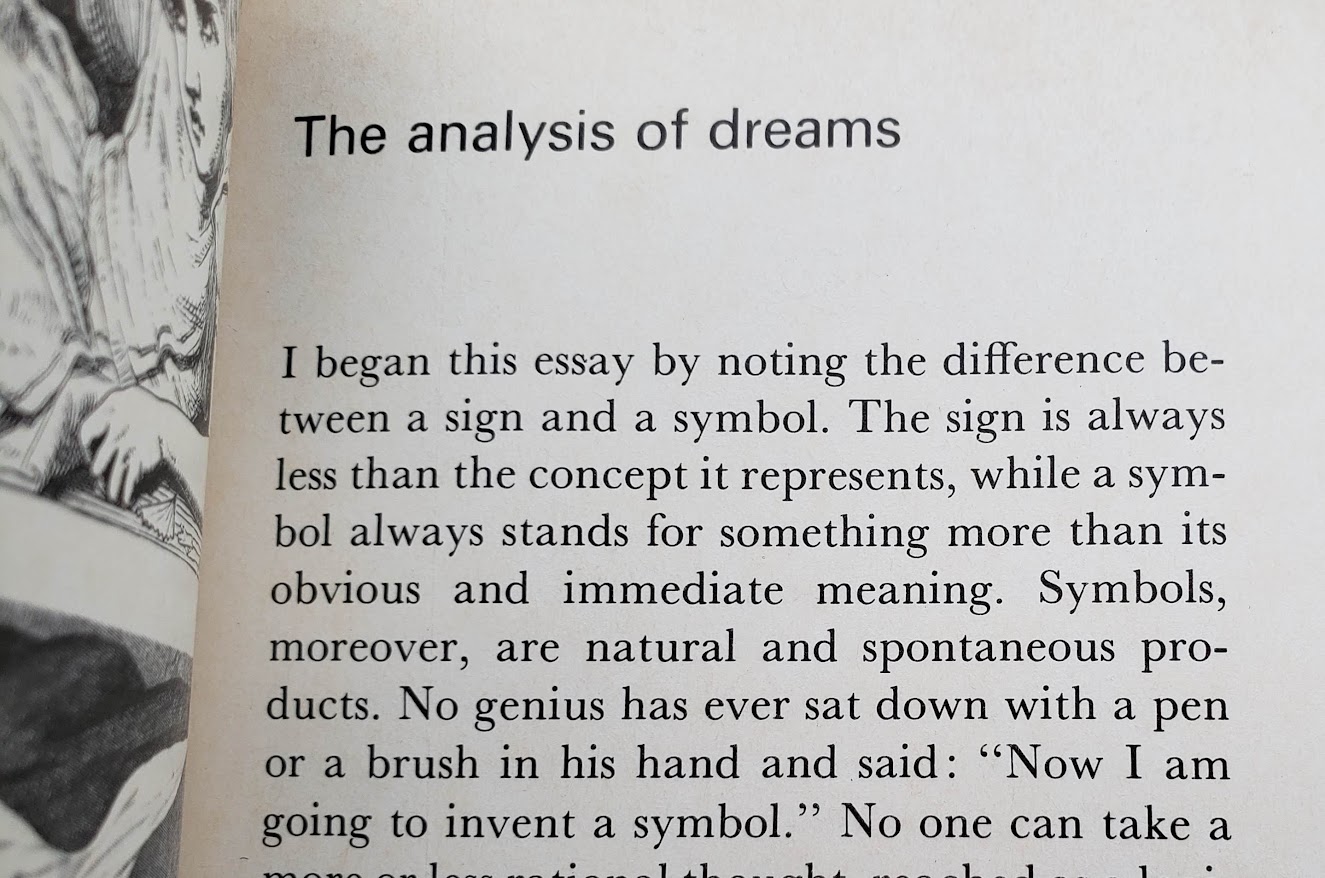
Jung talks about personality types (which the MBTI is based upon), archetypes that are seen in art and myths throughout the history of all cultures, the process of individuation, and integrating your shadow.

Jung’s concept of the shadow is especially enlightening. So much conflict today is people projecting their “shadow” (or their own unconscious faults) onto others, especially in the domain of politics.

Finally, one of Jung’s most popular concepts is the “collective unconscious.”

Carl Jung was one of the most brilliant minds of the previous century, and he accurately predicted many of the problems society would face this century. I will surely be reading more of Jung’s books in the future to dive deeper into his profound work.
The Nineties: A Book (2022) by Chuck Klosterman
“Understanding the present cannot be achieved until the present has become the past.” There is no other writer I’d rather read an entire book about the 1990s, my favorite decade, than Chuck Klosterman. He, being a Gen-Xer, can better remember the decade than me, a Millennial (I was ages 5-15 during the decade). I’ve written many times about my love for the 1990s, but I don’t think it is pure nostalgia. There was something truly special about that time, where we had the early stages of the internet but before it became pervasive through smartphones. The 90s were a brief time of geopolitical stabilization, after the fall of the Berlin Wall and before 9/11, when there were no major wars. It was before the current political polarization and outrage, when it was cool to not care about politics.

Some of my favorite movies and music were created during this decade, thanks to flourishing “indie” scenes. There was cable TV but no YouTube or Netflix, so, “It was a decade of seeing absolutely everything before never seeing it again.” The 90s were not that long ago yet it was a completely different world—and I think a better world in many ways. It’s impossible to condense an entire decade into a single book, but Klosterman does a good job of covering the major events and the minor monotonies of daily life, conveying the vibes of what it was like to live through the 90s.2

The Wave in the Mind: Talks and Essays on the Writer, the Reader and the Imagination (2004) by Ursula K. Le Guin
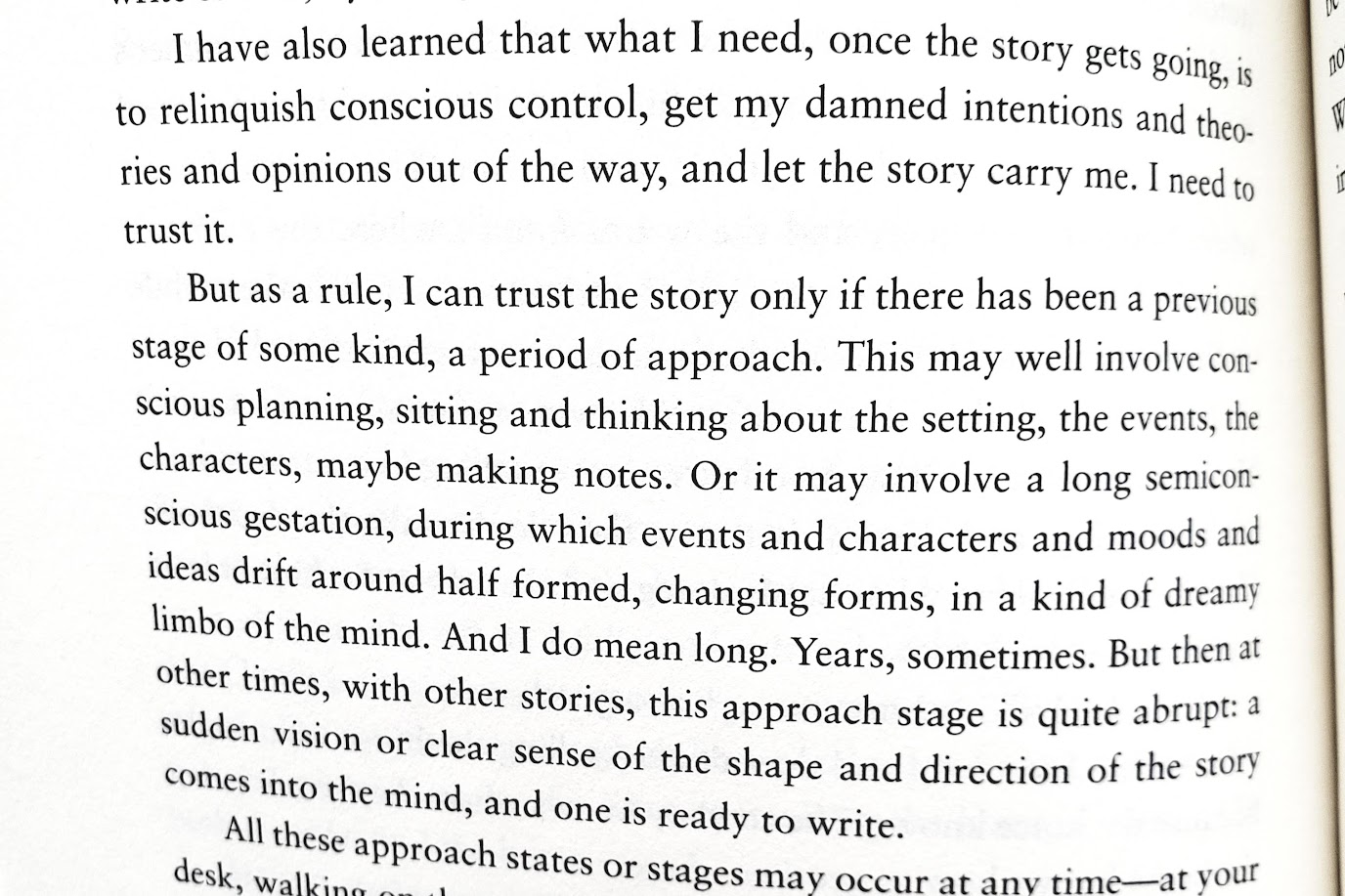
This is a collection of essays by the great fantasy author Ursula K. Le Guin about writing, reading, and life in general. I read her novel A Wizard of Earthsea a few years ago and enjoyed it, but I enjoyed her nonfiction writing about writing fiction even more. In this collection, Le Guin explores many of the same things I’ve written about on this blog, including the rhythm of writing, the necessity of reading for writers, the importance of the unconscious mind for creativity, the purpose of stories, the value of fiction over nonfiction, books vs. movies, and “where do you get your ideas?”

Her long essay on the “rhythm of writing” goes into much greater detail than mine, with explanations and examples of rhythm in prose. We appear to be on the same wavelength in our approaches to writing.
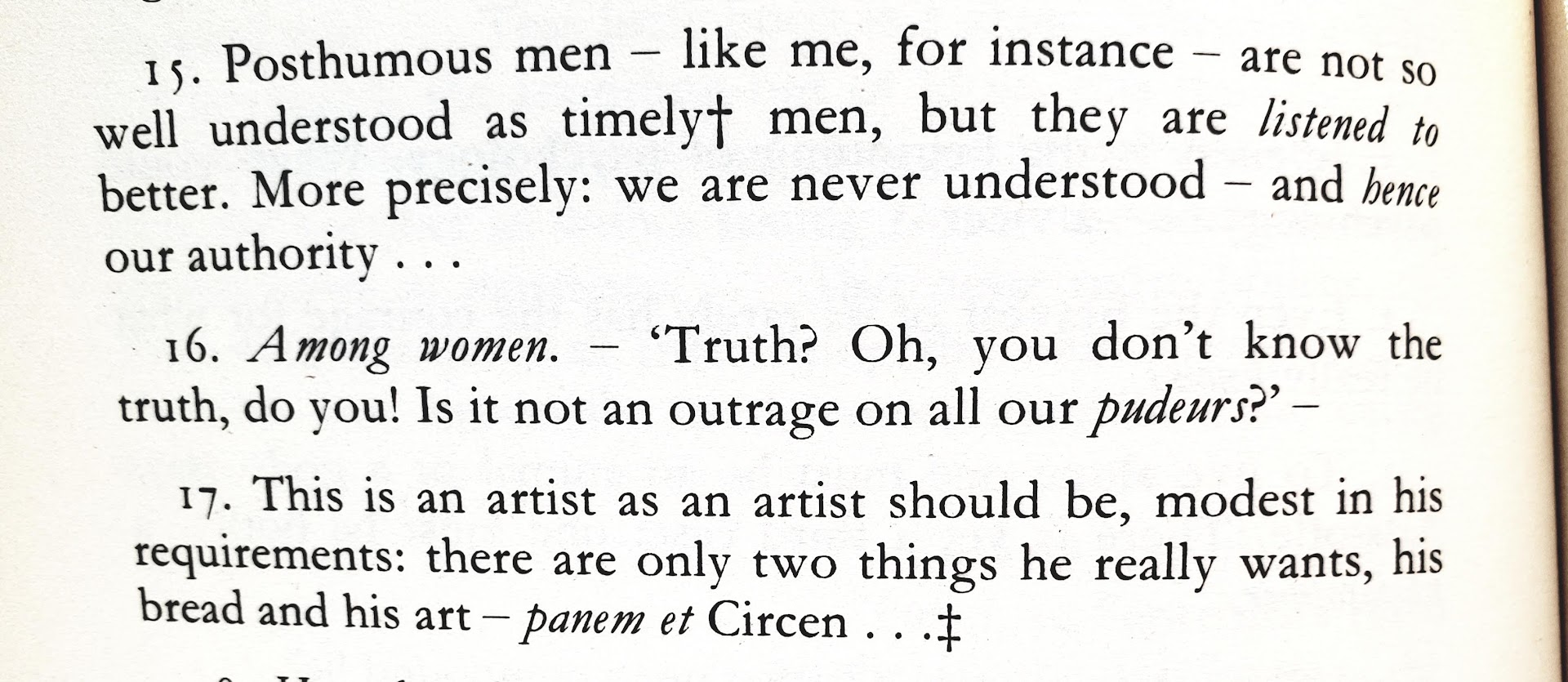
Twilight of the Idols (1889) by Friedrich Nietzsche
The book opens with classic aphorisms that would kill on Twitter/X, including brutal take-downs of Socrates and his philosophical contemporaries. The only person Nietzsche apparently liked was Goethe. Reading Nietzsche’s critiques of modern society feels as though it was written today, which is all the more remarkable considering it was written over 130 years ago. Nietzsche was so ahead of the curve, it was as if he foresaw the future through a crystal ball. But it’s really just a matter of accurately seeing your world in the present. That seems simple, but few can actually do it. Just look at our world today where so many people are too deluded by ideology to see reality clearly. If you can’t see the world as it truly is today, you have no hope of seeing the future.
The Total State: How Liberal Democracies Become Tyrannies (2024) by Auron MacIntyre
Auron MacIntyre is one of the best political commentators today because he provides deep analysis based on his vast knowledge of history and political philosophy. This book provides the foundation of his lens through which to view modern politics. It is highly influenced by James Burnham and “The Machiavellians”, Italian Elite theory, Curtis Yarvin, Nick Land, and neoreaction. I read this book as it was originally released on his Substack, and he also has a great podcast.
What’s Our Problem?: A Self-Help Book for Societies (2023) by Tim Urban
After writing great long blog posts about exciting new technology like AI and space exploration, Tim Urban spent seven years working on this book about politics because our current problems surrounding politics will prevent us from achieving those lofty technological goals. America’s core “problem” comes from the blind tribalism of the two major sides of the political spectrum. The problem is not so much what people think about politics, it’s how people think about politics (like a scientist, sports fan, lawyer, or zealot).
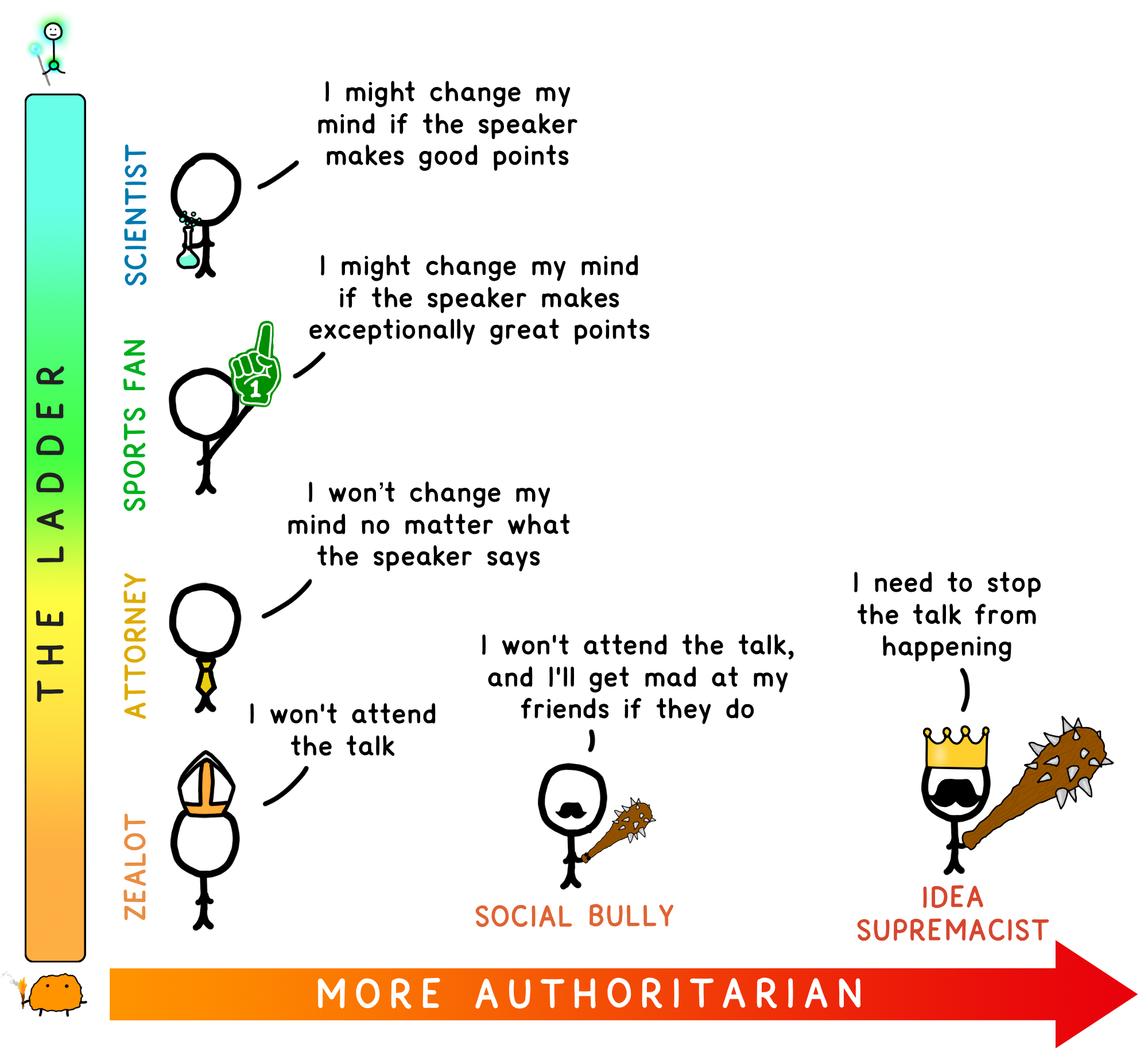
In his typical fashion, Urban creates terms and hand-drawn images to explain it all: high-rung vs. low-rung thinking, the primitive mind vs. the higher mind, idea labs vs. echo chambers, golems vs. genies, liberal social justice vs. fundamental social justice. He talks about the history of these problems and how the media and internet fueled it. He criticizes both the left and right for their low-rung primitive tribalistic thinking, and explains how the country functions best when both the left and right work together using their higher minds.

The book is essentially a call for classical liberalism that prioritizes freedom of speech. I went on a similar political journey as Tim during the same time, so reading the book was not very enlightening, as it explained the things I already learned over the years he spent writing it.3 But Urban writes in an entertaining style and the book would serve as a good explainer for honest open-minded people who haven’t yet broken out of their tribalistic echo chambers.4
Mere Christianity (1952) by C.S. Lewis
I went to Catholic school where we were taught a simplistic version of Christianity that was easily “debunked” by the “New Atheists” like Sam Harris I encountered later in life. Upon later discovering figures like Jonathan Pageau5, I learned a deeper understanding of Christianity that debunked the debunkers, so to speak. The New Atheists have a very simplistic understanding of the Bible as well, which is indeed easily debunkable. Pageau’s symbolic understanding of scripture (and the world at large) is much more profound and has given me a greater appreciation of Christianity. As Jung explained, the symbolic is more meaningful than the literal.
C.S. Lewis’s classic book is a great intro to a more intellectually sophisticated understanding of Christianity. Lewis was a true genius who, like Nietzsche, foresaw many of the societal problems that were germinating then and would go on to plague the world even more so today (though Lewis and Nietzsche provide different solutions).
The Uses of Literature (1980) by Italo Calvino
This is a collection of essays by the great Italian fiction writer Italo Calvino. Calvino is often compared to Jorge Luis Borges, but I have thus far struggled to enjoy Calvino’s fiction as much as I have Borges’. Calvino’s essays about fiction, however; were fantastic. Most of my favorite nonfiction books were written by fiction writers between their novels (Calvino, LeGuin, Lewis, DFW, Houellebecq, Murakami, Lamott, Pressfield, Franzen6). The novel is the “major leagues” of writing, with the highest degree of difficulty, so those who master that form can easily excel in the “minor leagues” of essays and memoir. Calvino covers much of the same topics as LeGuin’s book: about writing and the unconscious, though he wrote more about the philosophy of fiction (something I’ve also written about). The first half of the book (essays about writing) was more interesting to me than the second half (reviews of books and writers I have not read).

Born to Run: A Hidden Tribe, Superathletes, and the Greatest Race the World Has Never Seen (2009) by Christopher McDougall
I’ve read books that claim humans are the storytelling animal and the tool-making animal, but this book claims we are the “running animal.” The theory is that running long distances while tracking prey led to developing imagination, precipitating both storytelling and tool-making. This book is the story of a journalist who travels to Mexico to study the Tarahumara, an elusive native tribe consisting of many elite long-distance runners who wear nothing but thin sandals. That leads McDougall to learning the science and evolutionary history of how humans were born to run barefoot, and how excessively cushioned shoes are detrimental to foot health. By wearing more minimalist footwear, he helps heal his own foot pain. I’ve been wearing “barefoot shoes” myself for a few years now and plan to write more about that in a longer post.
Hillbilly Elegy: A Memoir of a Family and Culture in Crisis (2016) by J.D. Vance
I had picked up a used copy of this book a year or two ago, so when Vance was named Trump’s VP, I decided to give it a read. By recounting his tough childhood growing up in Appalachia, Vance elucidates the plight that has affected so many in that area—while also showing a way out. Vance is highly intelligent (a Yale law school graduate), worked in Silicon Valley as a protege of Peter Thiel, and he has actually read Curtis Yarvin, who may be the greatest political philosopher of the 21st century. Plus Vance is the first politician of my generation (Millennial) to reach the White House. I despise the neoconservative establishment, but J.D. Vance represents a new movement for the Republican party that I can get behind.
True Names: and the Opening of the Cyberspace Frontier (2001) by Vernor Vinge and others
This is a collection of nonfiction essays included with Vinge’s science fiction novella True Names (which I read a few years ago), covering the themes of that story, such as the early internet, cryptography, and virtual reality. The best essay was Timothy C. May’s “True Nyms and Crypto Anarchy”, which was like Balaji’s The Network State but written twenty years prior. May presciently predicted Bitcoin seven years before it existed. Could he be Satoshi Nakamoto? May’s work was at least highly influential on the creator of Bitcoin.

How to Be Alone: Essays (2002) by Jonathan Franzen
I haven’t read any of Franzen’s fiction yet, but I wanted to read this collection of his essays for the one about the death of the novel, which was worth the price of admission alone. There are also essays about his father’s battle with Alzheimer’s, the Chicago post office, cigarettes, the prison system, William Gaddis and difficult books, and being an Oprah’s Book Club pick. The best parts were when Franzen writes about writing and the role of the novelist.
The Independent Scholar: A Practical Guide (2023) by Justin Murphy
A short ebook on how to be an “independent scholar” in the modern day—that is to pursue your own intellectual and creative life as a writer in the age of the internet, including how to use the tools of the internet to your advantage. I’ve been a long-time listener of Murphy’s Other Life podcast and a fan of his work and career path, which has been inspirational for my own.
Text, Don’t Call: An Illustrated Guide to the Introverted Life (2017) by INFJoe
An insightful (and extremely relatable) book about introversion, featuring humorous comic illustrations.

The Complete Stories and Poems (1849) by Edgar Allan Poe
I didn’t read all of this book but read some of Poe’s stories and all of his poems, continuing my recent tradition of reading a poem a day. Poe has always been one of my favorite poets since being assigned to read him in school. I love his rhythmic style and rhyming schemes. His poems are mathematical but also deeply philosophical and emotional—the type of poems I try to write myself. My re-interest in Poe was partially inspired by the Netflix series, but also the Art of Darkness podcast episode about his life. Some of Poe’s fiction is a bit difficult to read because he writes in such a dense style, but what is most impressive is how creative and original he was for his time. Poe basically invented the detective story, the science fiction story, and the horror story. His influence is apparent everywhere—almost all popular fiction books, TV, and movies are derivative in some way to Poe. He was a true innovator and should have been more popular and respected during his time, but that rarely happens for true innovators because they’re too far ahead of the masses to be properly appreciated in their time. (i.e. Nietzsche and Lovecraft.)
The King James Version of the Bible
I am still making my way through a full reading of the Bible from cover to cover that I began last year (just finished the Book of Psalms). I have a copy of the Bible “Designed To Be Read As Living Literature,” with the verse numbers removed to make for a more fluid reading experience. Some parts of the Old Testament are difficult to get through while others sound like downright cosmic horror:

My nonfiction book list is not as long as my fiction list because I spend more of my nonfiction reading time on blogs and Substacks, such as…
New Substacks I started reading last year:
- Billionaire Psycho
- Ælþemplær
- Postcards From Barsoom by John Carter
- Dark Futura by Simplicius
- Decentralized Fiction by ARX-Han
- Tooky’s Mag
- Office Hours with Lomez
- Graphomane by Neal Stephenson
- Mars Review of Books
- Tao Lin
- Marty Phillips
- New Right Poast by Dudley Newright
- In the Raw by Raw Egg Nationalist
- How To Subvert Subversion with Yuri Bezmenov
- Egg Report by Randy
- Futurist Letters by Cairo Smith
- The Unreal Press
- Devon Eriksen
- Rare Candy
Plus some old favorites:
- The Abbey of Misrule by Paul Kingsnorth
- The Double Dealer
- Fictions by P.C.M. Christ
- Man’s World Magazine
- MythoAmerica
- Peachy Keenan
- Trantor Publishing by Isaac Young
- Uncharted Territories with Tomas Pueyo
- Astral Codex Ten by Scott Alexander
- Astral Flight Simulation
- The Carousel by Isaac Simpson
- Countere Magazine
- Default Wisdom by Katherine Dee
- Ecosophia by John Michael Greer
- Effluvia by God Disk
- The Egg And The Rock by Julian Gough
- From the New World by Brian Chau
- Gray Mirror by Curtis Yarvin
- IM-1776
- The Intrinsic Perspective by Erik Hoel
- Living into the Dark by Matt Cardin
- Numb at the Lodge by Sam Kriss
- The Obelisk by The Bizarchives
- Other Life by Justin Murphy
- Overcoming Bias by Robin Hanson
- Pirate Wires by Mic Solana
- The Prism by Gurwinder7
- shift sepulchre by ctrlcreep
- Teach Robots Love by Autumn Christian
- Time Zone Weird by Me
- The Total State by Auron MacIntyre
- Wait But Why by Tim Urban
- The Writings of T.R. Hudson
- Zero HP Lovecraft
FYI: Instead of ruining books with highlights and underlinings, I take photos of my favorite passages (or screenshots from blogs). You can see all my favorite quotes I’ve clipped in this Google Photos album, which is continually updated over time.
My Previous Best Nonfiction Book Lists:
- I have been keeping a dream journal of my own for five years now. ↩︎
- I read this book, not only because I’m a fan of Klosterman, but because I am planning to write a novel set in the 1990s (about people literally being stuck in the 90s) and used some of this book as research. ↩︎
- You can follow my political journey through my reviews of the nonfiction books I read over the years. Many of Urban’s ideas can be found in Jonathan Haidt’s book The Righteous Mind, which I read in 2017. ↩︎
- As a side note, Luigi Mangione was apparently also a fan of this book, which is bizarre because nowhere in any of Tim Urban’s writing does he even remotely condone violence. The entire point of his book was to ease societal tension and avoid violence at all costs. But I guess you cannot make sense of an insane person’s thoughts and actions. ↩︎
- I recommend Pageau’s podcast The Symbolic World. ↩︎
- See below (or above this footnote). ↩︎
- Another writer who Luigi Mangione was bizarrely a fan of yet didn’t seem to understand at all. ↩︎
 T.Z. Barry