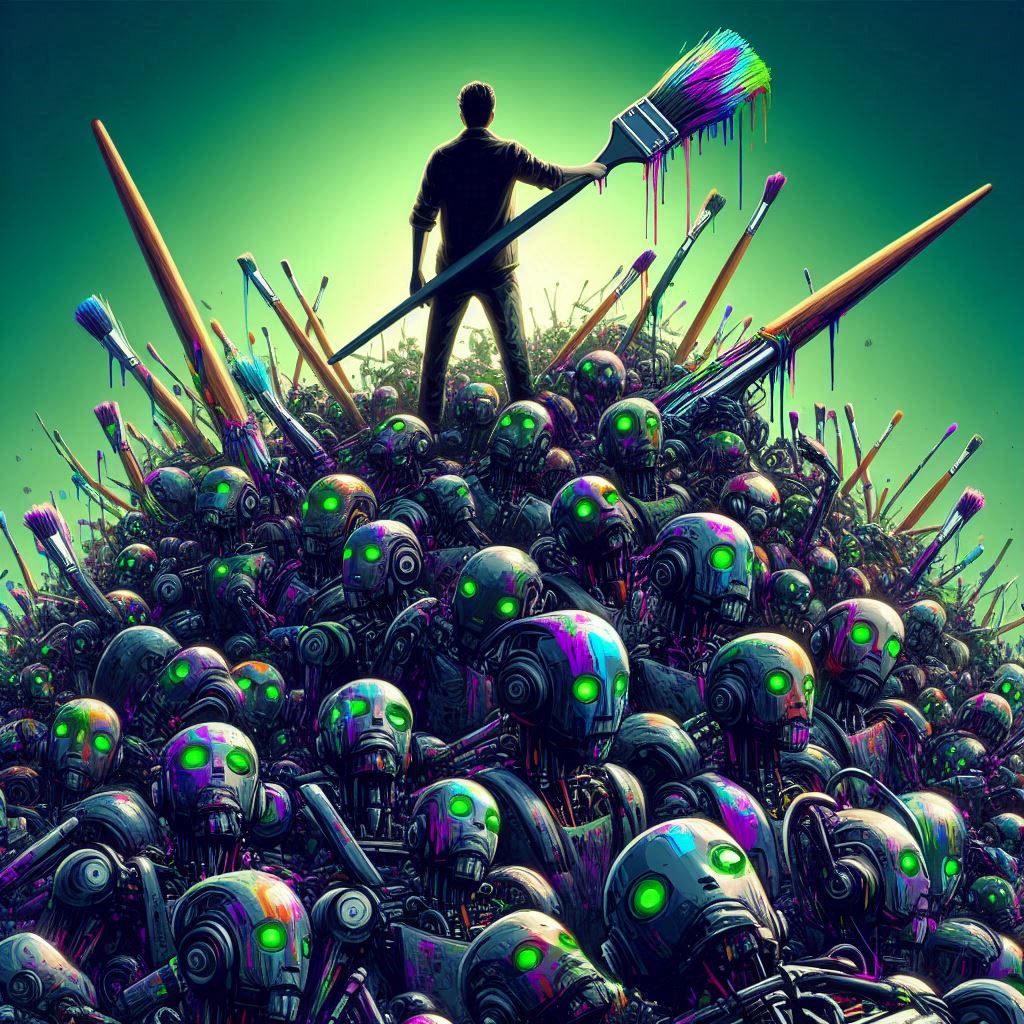
In the future, only creative people will survive. There will be no jobs. Even art could be better done by robots and AI. But humans can still be creative. And they can find purpose in creating art or music or businesses or hobbies. Anyone who is not creative will essentially be a human robot (but a less productive version of the actual robots).
In the future, it may be possible for AI to create art (including books, movies, music, and videogames) that is so perfectly attuned to an individual’s preferences, perhaps even directly using brain scans to determine the precise ingredients that will give the person the ultimate entertainment experience (like from David Foster Wallace’s Infinite Jest), whatever that may be for the particular individual. This AI would essentially create better art than humans—not that it would be objectively better than anything created by humans, but it would be subjectively better to that one particular human for whom the artwork is specifically created for. And AI could conceivably do this for every single human in the world: create unique works of art tailored to be the best work of art for that individual (whatever the criteria for “best” is for them). How could human artists compete with that?
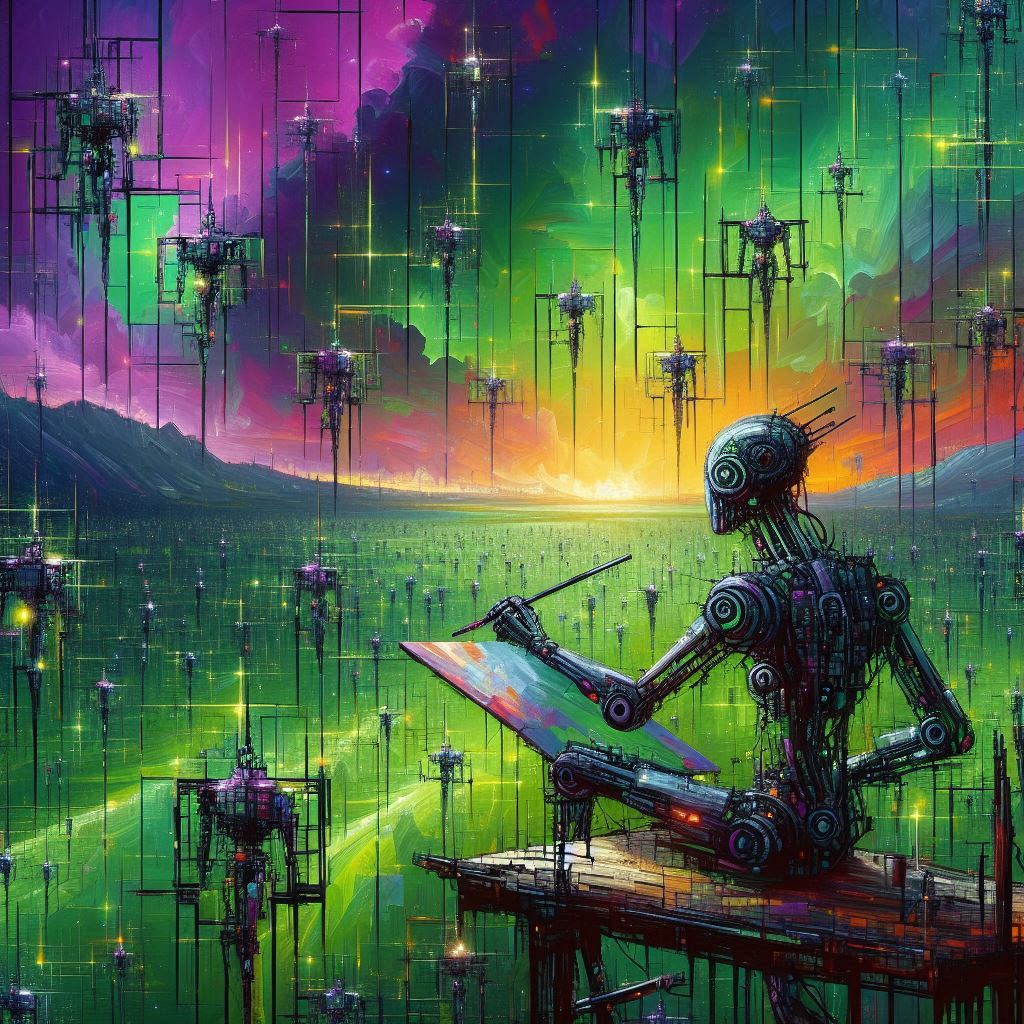
One of the great upsides of AI art is the ability for artistically unskilled people to create their own artwork. Instead of spending years learning the craft of how to paint or draw, you can instantly generate a skilled painting or drawing. The most artistic part of the process in AI art becomes choosing which image to create. For that image to be artistically meaningful, prompters must learn how to think like an artist.
There is growing concern that the proliferation of generative AI will remove humans from the equation of creativity because eventually most art will be AI-generated images based on previous AI-generated images until all art is simulacra with no connection to reality. But in a way, this has already happened—before the invention of AI art.
There was much hype on the internet upon the release of ChatGPT, OpenAI’s free-to-use text-generating artificial intelligence program based on a Large Language Model (LLM). You can write any prompt, and ChatGPT will instantly produce grammatically correct text—of just about any type (fiction, nonfiction, poetry, etc.). Some worry this could spell the end of human writers. It is admittedly impressive what GPTs can produce—though it is still limited. As an experiment, I tried writing several fiction stories with ChatGPT. I have literally thousands of story ideas, more than I could ever write myself. So I figured I’d take some of the lesser ideas at the bottom of my queue, those I’d probably never get around to, and let the AI write it for me—if it could.
One of my works in progress is a science fiction novella about the creation of an artificial general intelligence (AGI). The story features a scene where the human programmers are amazed that the AGI can create original artwork of any kind on demand. I wrote the first draft in 2018. Yes, just four years ago an AI that could create art seemed like a speculative bit of futurism. Now it appears I will need to revise that scene, as what was “sci-fi” then is now just “sci.” Reality is progressing faster than I can publish science fiction.
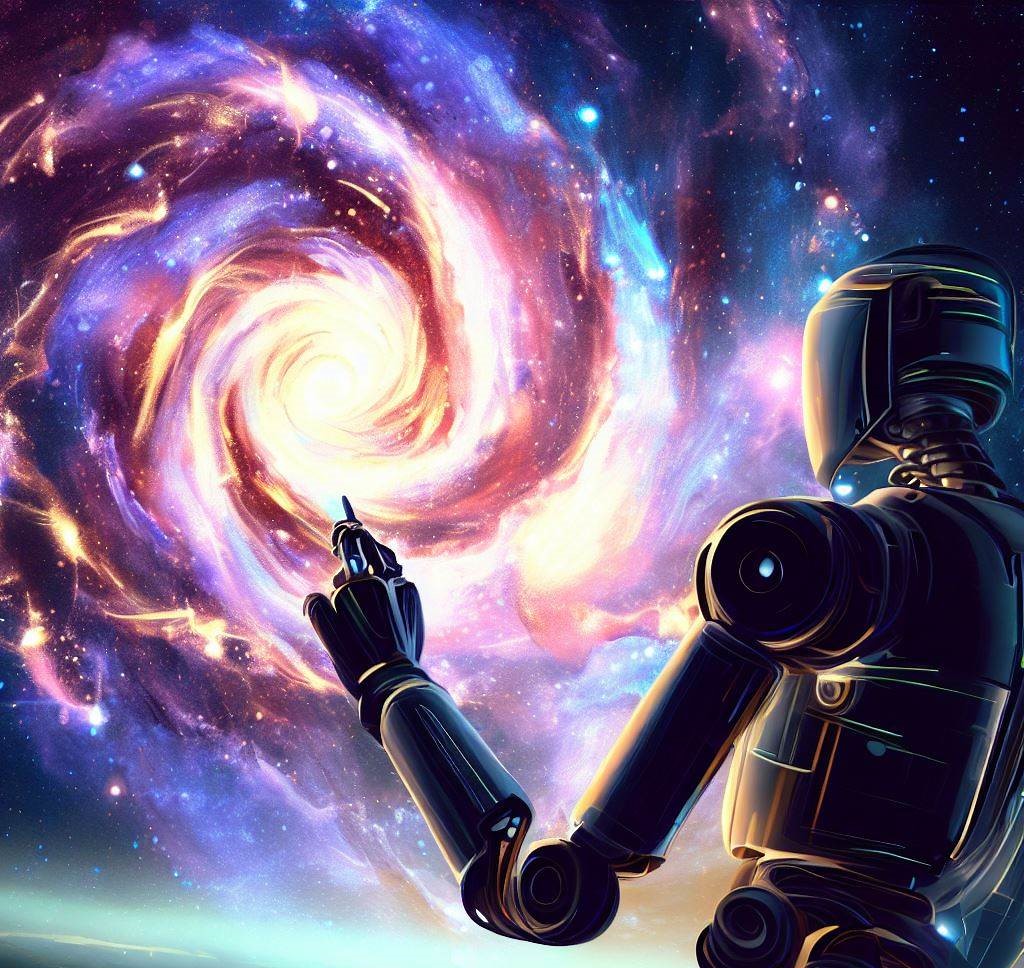
When I wrote this post about DALL-E last May, I had only seen others’ generative-AI creations; I hadn’t gotten the chance to create my own AI art yet. Now I have and am utterly addicted. There was much hype around AI image generators like DALL-E and Midjourney when they were first released. Usually when something is hyped that much in the media it is overblown; the reality is far less dramatic. But after DALL-E became public, plus the release of the free and open-source Stable Diffusion, I have had the chance to create my own AI art (thousands of images at this point—and counting). While the initial hype was quite high, I would venture to say it was not nearly high enough. Most people still don’t realize how significant generative AI is/will be. In the future, people will look back at the world pre-AI art as a distinct, unrecognizable time. Generative AI is a total game-changer, an artistic singularity.
DALL-E is the new artificial intelligence project from OpenAI that is sweeping the internet. It is an AI that can instantly produce a unique image based simply on a text description. There seem to be few limits, as the AI can create multiple high-quality images of just about anything you can think of. This has many people fearing that DALL-E will spell the end of human artists. But are the images DALL-E produces even art? Can AI ever create art?
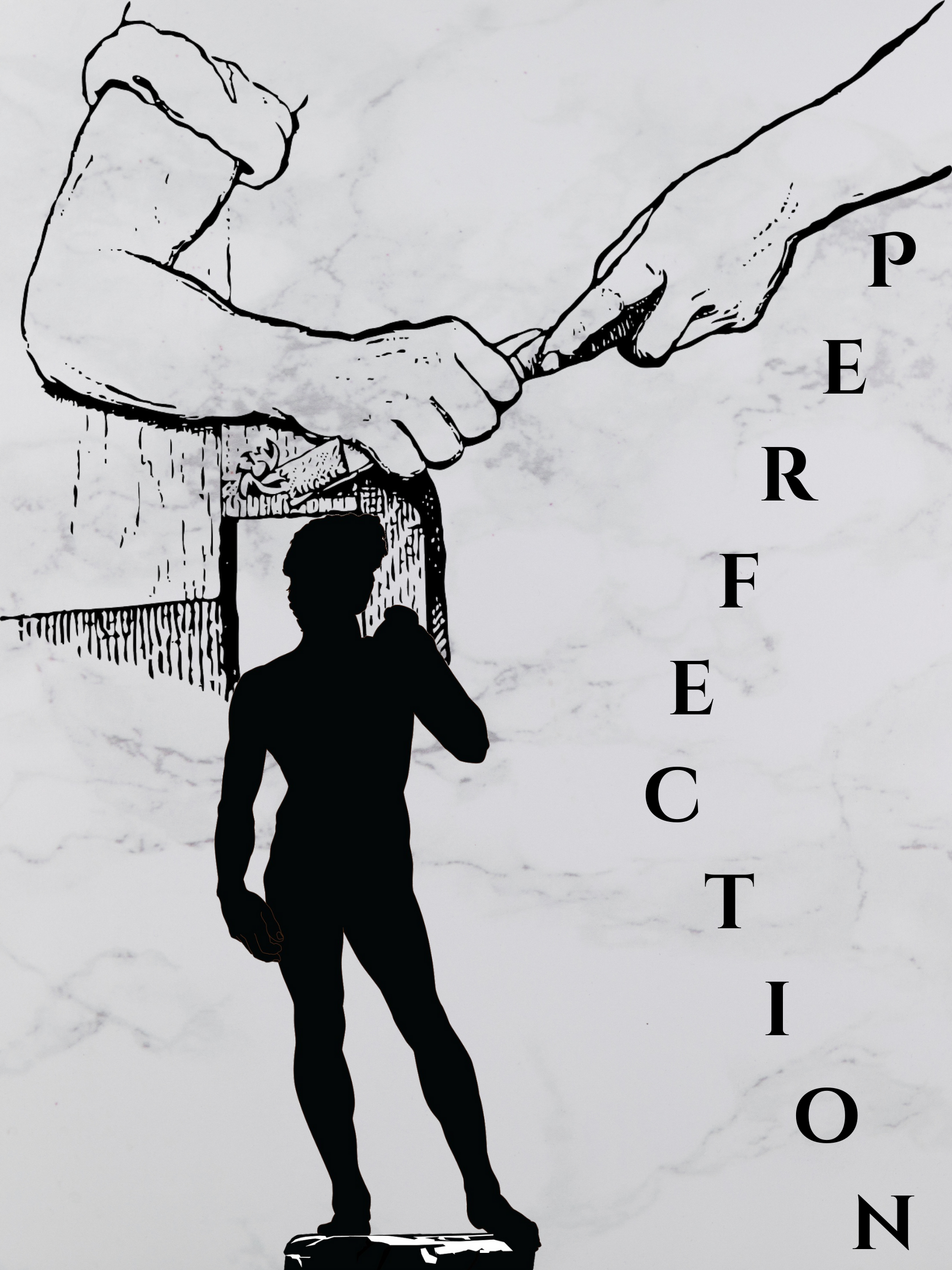
The statue of David is still on display to this day—over 500 years later—but would it be if Michelangelo didn’t attempt to make a perfect sculpture?
Perfectionism is a gift and a curse. Before publishing a work of fiction, I spend an inordinate amount of time rewriting and editing it, long after most writers would consider it “done” and publishable. I re-read the manuscript again and again, going over every sentence, every word and punctuation mark, making sure it is precisely as I wish.
Have you ever noticed that most artists tend to get less creative when they get older? A band’s first album is often their best—or maybe their second or third album is better—but rarely does a band record their most creative music on their twelfth album. Sure, some artists like The Rolling Stones continue to perform well into their 70s, but they are only rehashing the creativity of their 20s and 30s. They are not recording new songs, or if they are, those new songs are nowhere near as beloved or creative as their earlier work. That is the normal life cycle of most musical artists: they release creative music when young, get popular, then “play the hits” for the rest of their career.
I crave novelty. In music, movies, books, podcasts, articles, and documentaries, I want something completely new that I’ve never experienced before. New stories. New sounds. New information. New knowledge. Novel everything.






 T.Z. Barry