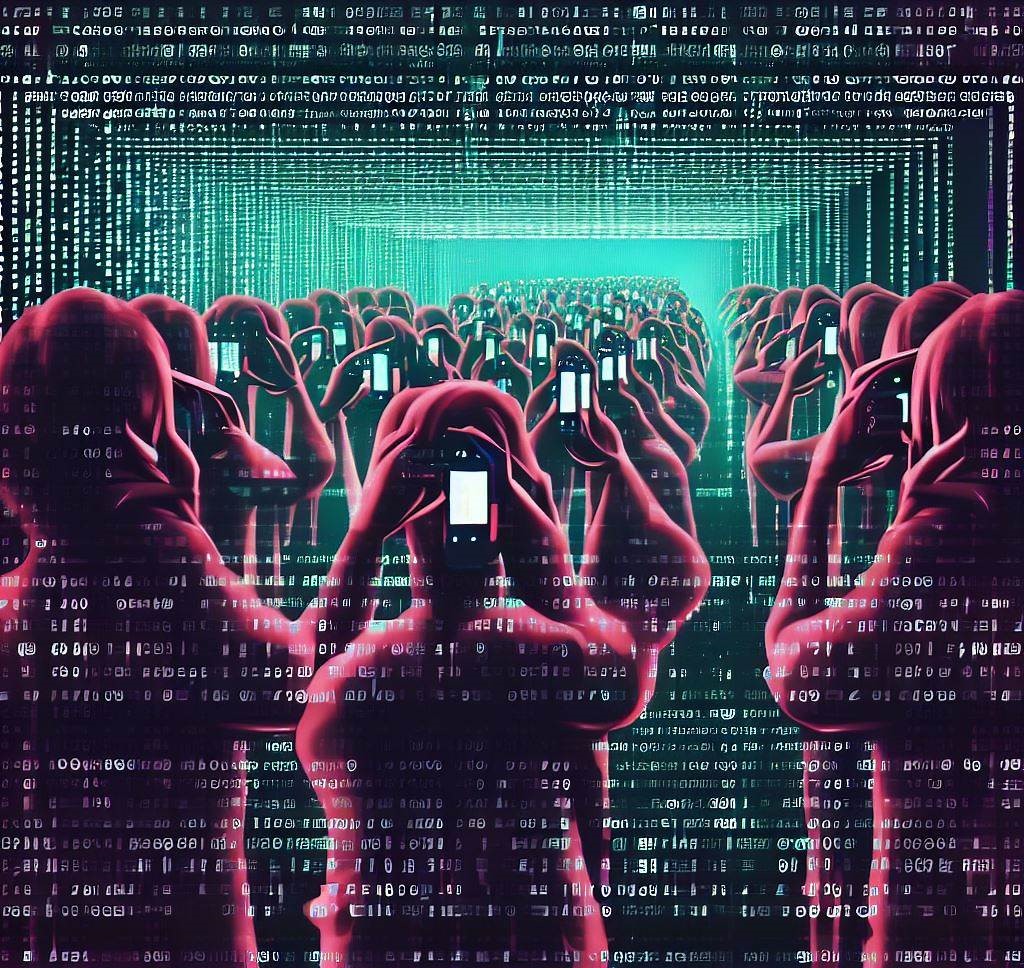
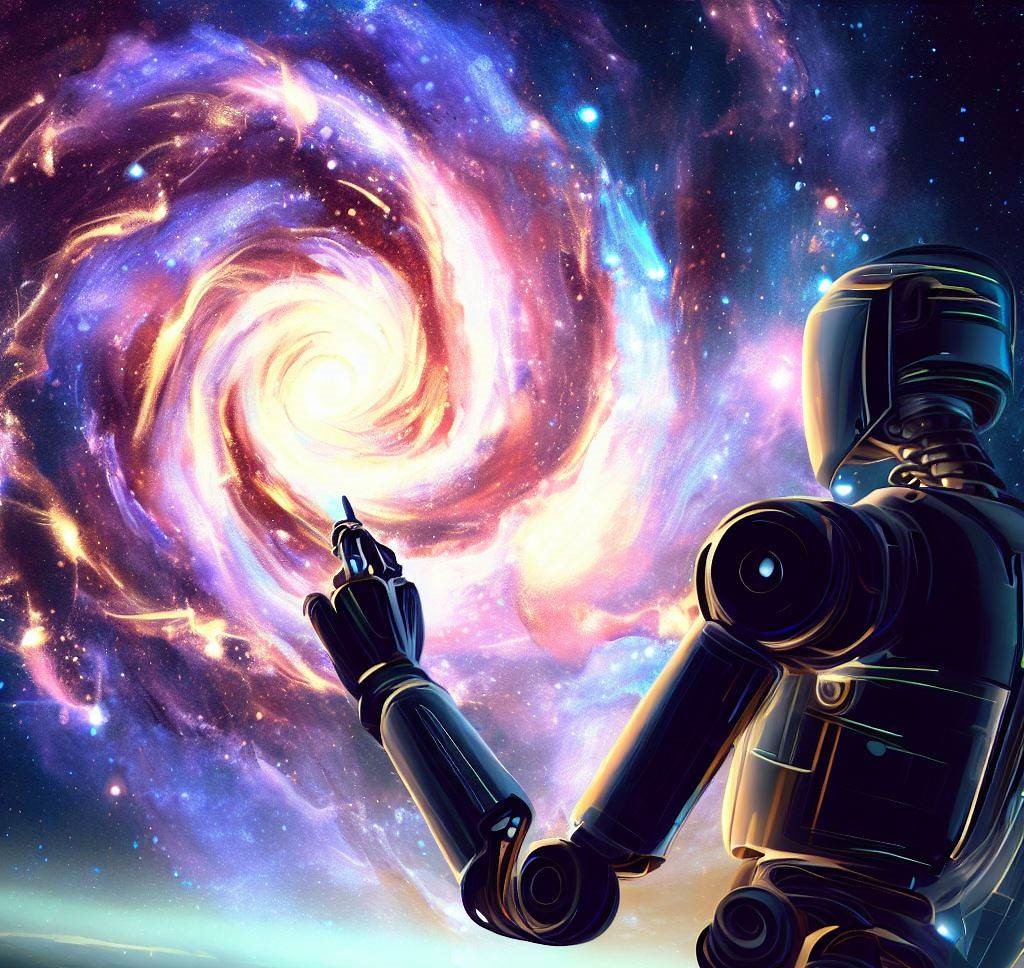
There is growing concern that the proliferation of generative AI will remove humans from the equation of creativity because eventually most art will be AI-generated images based on previous AI-generated images until all art is simulacra with no connection to reality. But in a way, this has already happened—before the invention of AI art.
One of my works in progress is a science fiction novella about the creation of an artificial general intelligence (AGI). The story features a scene where the human programmers are amazed that the AGI can create original artwork of any kind on demand. I wrote the first draft in 2018. Yes, just four years ago an AI that could create art seemed like a speculative bit of futurism. Now it appears I will need to revise that scene, as what was “sci-fi” then is now just “sci.” Reality is progressing faster than I can publish science fiction.
When I wrote this post about DALL-E last May, I had only seen others’ generative-AI creations; I hadn’t gotten the chance to create my own AI art yet. Now I have and am utterly addicted. There was much hype around AI image generators like DALL-E and Midjourney when they were first released. Usually when something is hyped that much in the media it is overblown; the reality is far less dramatic. But after DALL-E became public, plus the release of the free and open-source Stable Diffusion, I have had the chance to create my own AI art (thousands of images at this point—and counting). While the initial hype was quite high, I would venture to say it was not nearly high enough. Most people still don’t realize how significant generative AI is/will be. In the future, people will look back at the world pre-AI art as a distinct, unrecognizable time. Generative AI is a total game-changer, an artistic singularity.
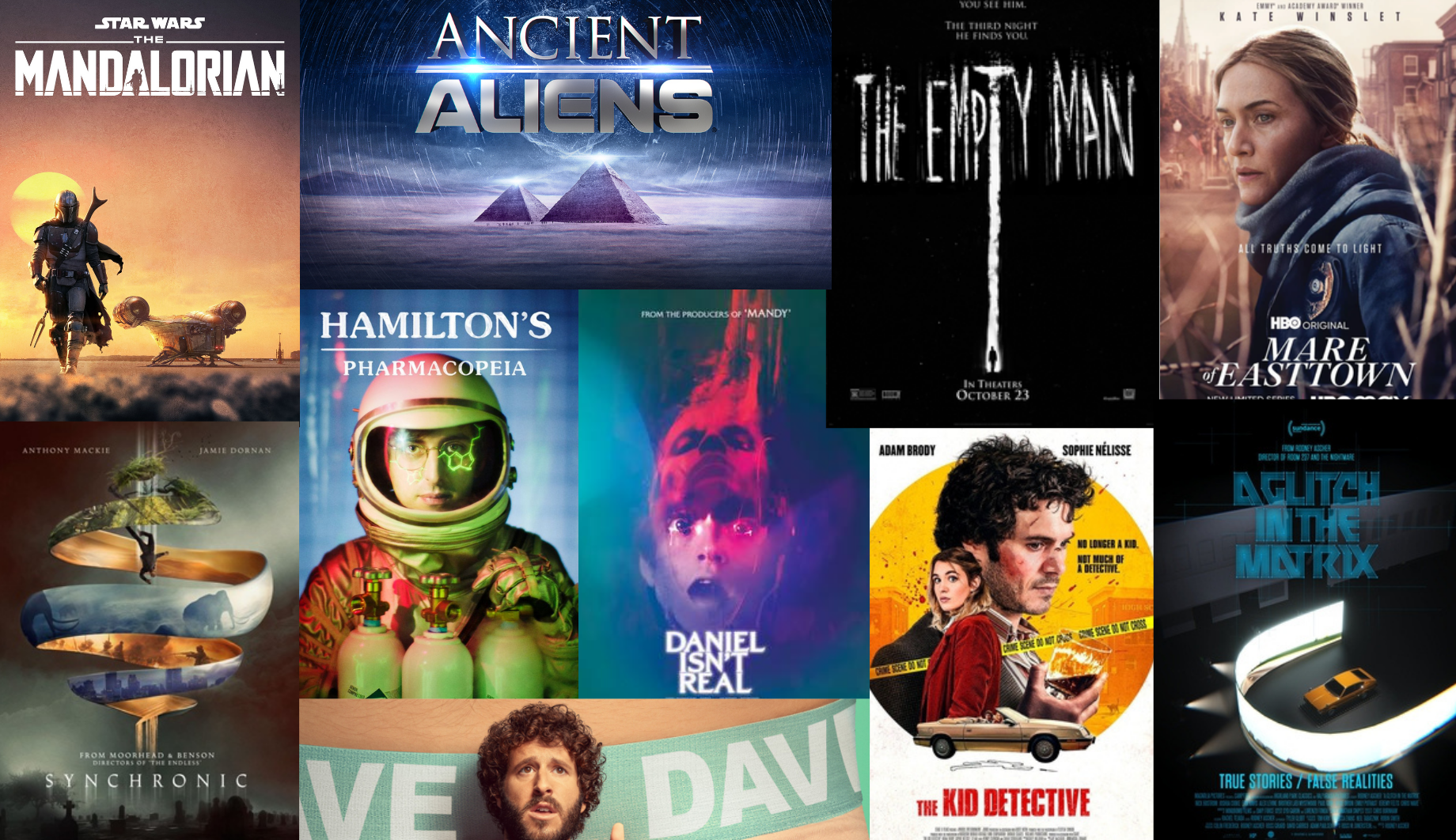
I rarely see movies in the theater anymore and instead wait until new releases are available for streaming, so my reviews of “new” movies are not so “new.” It sometimes takes me a year or two to catch up. There are still a lot of 2022 movies I want to see (look for those on next year’s list). I’ll break this year’s list into tiers, Tier-1 being the best and Tier-5 being the worst. The movies in each tier are sorted alphabetically as it’s pointless to rank equally great works of art over each other. One is not better than the other—they are just different. (Check JustWatch.com to see where movies on this list are currently streaming.)
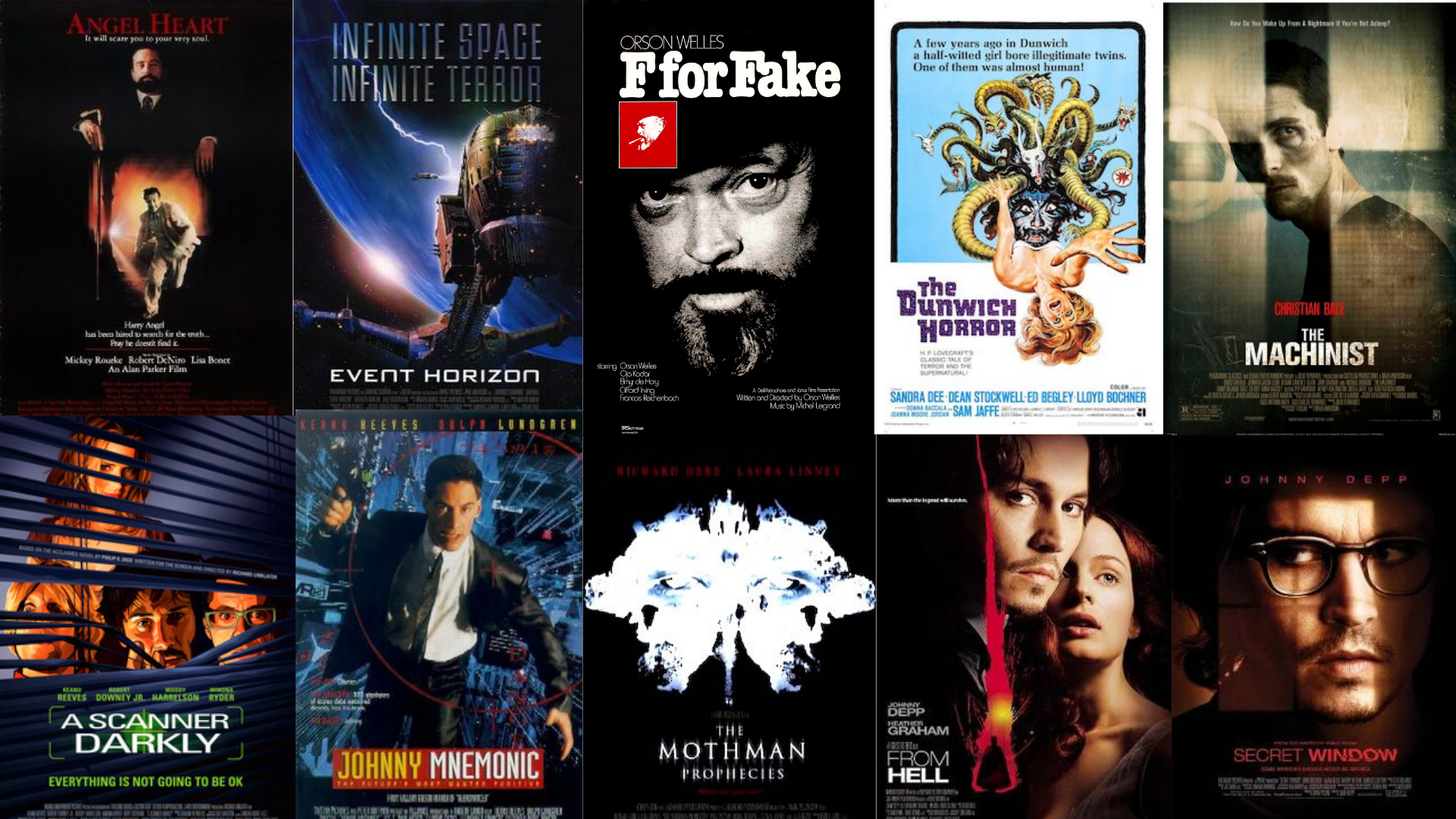
With 2022 winding down, it’s time for my seventh annual list of the ten best films (at least ten years old) that I watched over this past year. The list is somewhat random and arbitrary, based on the movies I happen to choose to watch (or re-watch). The only theme I noticed from this year’s list is that the 1970s truly were a Golden Age of Hollywood filmmaking. Even some of the deeper cuts from that decade are great.
I would say they don’t make movies like this anymore, except they did—at least once with The Revenant in 2015, which was clearly influenced by Jeremiah Johnson. This is a powerful film, so different from most of the CGI-reliant movies made today. You can tell the cast and crew were actually there on location in the remote wilderness of Utah filming this movie—and simply seeing that natural landscape on the big screen was captivating. It makes you realize just how extraordinary the pioneers who ventured out West were, considering the lengths it took to survive mother nature. The film also portrays the tragic violence that took place between humans—the pioneers and the Native Americans. Sometimes I feel the desire to become like Jeremiah Johnson and move out to the remote mountains, build my own cabin, and live a quiet life alone in nature to read and write—but only sometimes.
The genre of “true crime” is growing in popularity in the form of documentaries and podcasts that cover real crimes pulled from news headlines in detail. There are also fictionalized movies and television series about true crimes. I am not especially interested in true crime, but it is the fictionalized narratives about real crimes that interest me least. Fictional crime stories are better—or have the potential to be better—than true crime stories. The difference between them can best be seen in two of director David Fincher’s films about serial killers: Se7en (1995) and Zodiac (2007).
I heard great things about The Mandalorian when it premiered a couple years ago and had been wanting to see it, but I did not have Disney+ (until this past year). So I finally got around to watching the first two seasons of the show and really enjoyed it. I normally prefer movies over TV series, but The Mandalorian was better than the recent Star Wars film trilogy. That’s probably because the showrunner (John Favreau) had more creative freedom since he wasn’t working with the core franchise characters. There were likely too many cooks in the kitchen for the movies, with producers, studio execs, marketing experts, toy manufacturers, and Disney brand advisors all having a say in the plot and characters. Plus there were different writers and directors for the three movies and they apparently didn’t plan together. Beyond that, so much was on the line for the Disney mega-corporation with those movies because of the production and marketing budgets. The Mandalorian had a relatively high budget (~$120 million per season), but the budgets of each Star Wars movie were 2-3x that. They surely saved a lot on marketing by just dropping the show on Disney+ (while people were stuck at home during a pandemic with nothing else to do but watch TV).
It is time for my sixth annual list of the best movies at least ten years old that I arbitrarily watched this past year. There isn’t much of a method to the movies I choose to watch, some of which are re-watches and others I’m seeing for the first time. The common themes that emerged from this year’s list are psychological horror, literary adaptations, twist endings, plus a lot of Johnny Depp and Keanu Reeves.
In anticipation of the new Dune movie, directed by one of my favorite filmmakers, Denis Villeneuve, I decided to read the classic novel by Frank Herbert before seeing the film adaptation. Dune is one of those books that appears on every all-time best of list for science fiction. Sometimes you read a book like that and it feels dated or over-hyped (such as Ringworld by Larry Niven, which I also read this past year), but not in this case. Dune not only met but exceeded my expectations.
As a child I was terrified of horror movies and avoided watching them. Two of my favorite movies were Jurassic Park and Independence Day, and while they were not directly horror, there were certain scenes in each film that I had to close my eyes during because I was so terrified. (They were when the raptors popped out and when they showed the alien body in the Area 51 base). Though I avoided explicit horror, I enjoyed spooky movies and TV shows intended for children, such as Disney’s Legend of Sleepy Hollow and Nickelodeon’s Are You Afraid of the Dark?. I liked PG horror because it was merely spooky and creepy, not outright terrifying. The first true horror movie I remember seeing was Scream, which came out in 1996 when I was ten years old. Though that movie was meant to be somewhat comedic, the Ghostface mask nevertheless remained burned in my mind and gave me nightmares for months after.
Tenet is Christopher Nolan’s most ambitious film conceptually to date, which is saying something considering he made Memento, The Prestige, Inception, and Interstellar. Without spoilers, Tenet involves time travel, but it is a unique version of time travel—perhaps the most inventive form of time travel I’ve ever seen in a movie—and the most complex.