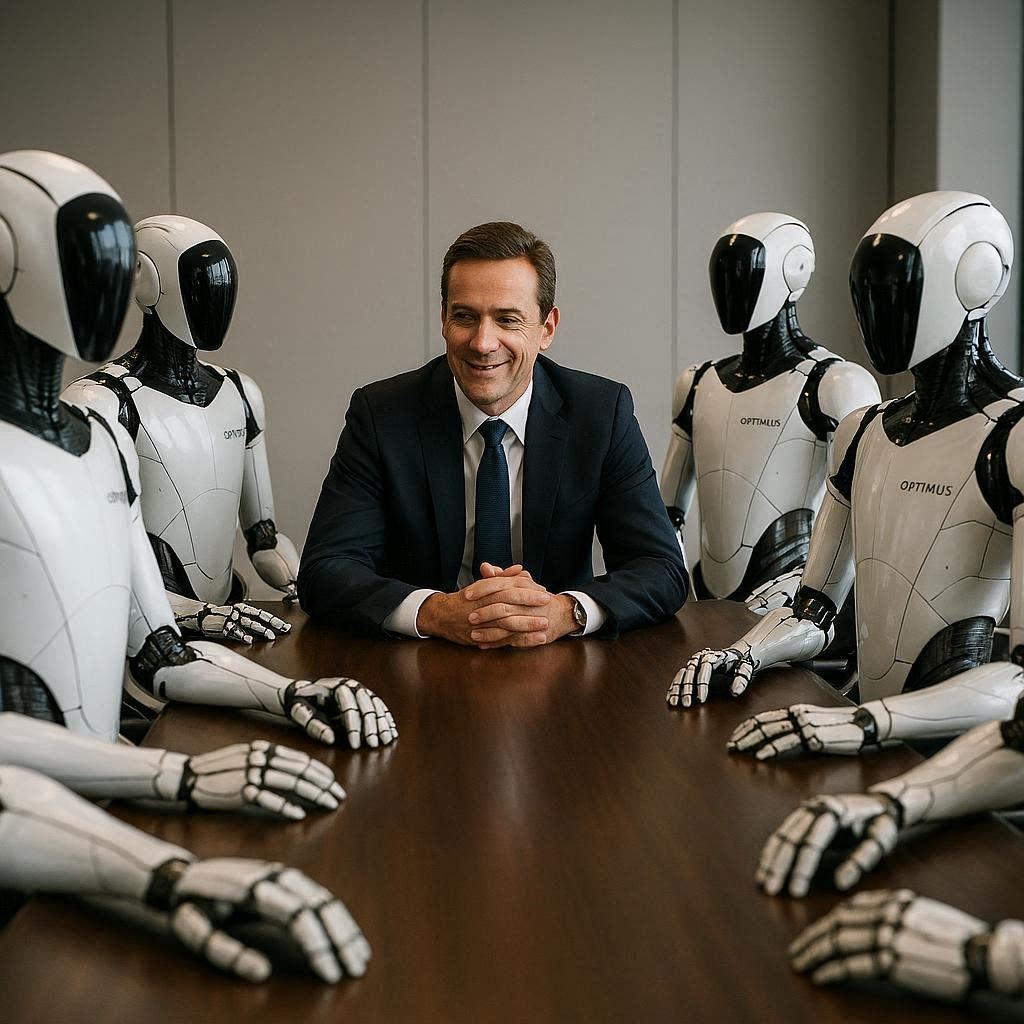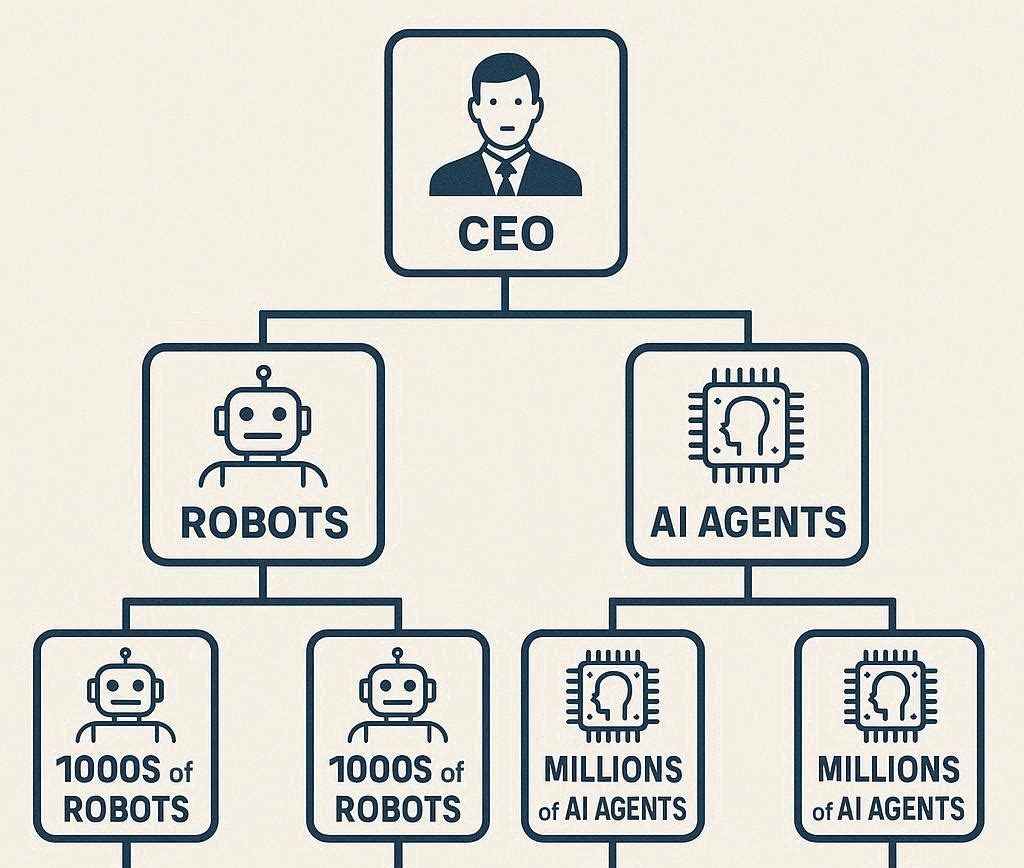
The best companies in the world are led by a genius founder with a vision. This founder envisions how the company can become successful, then delegates that vision to subordinates. Lower-level employees are essentially like drones. The founder/CEO tells them exactly what to do to fulfill his vision, then they do it.
Take Jeff Bezos and Amazon for example. Bezos has specific detailed protocols for all his managers (now including his successor CEO), telling them what to do, then they tell their lower-level employees exactly what to do, so on and so on, to the lowest-level warehouse worker and delivery driver. It’s all designed by the leader at the top. Essentially what all great business leaders like Jeff Bezos and Elon Musk really want (or what they wish they could have) is an entire company made of clones of themselves.
If a visionary founder/CEO could, they would do everything themselves. But no one person has the time or energy to do that. So they must delegate tasks to others. The leaders do their best to create a simple plan with protocols, outlining what their employees must do. This can work very well (as in the case of Amazon), but delegation has its limits. Leaders often get frustrated with their subordinates for not doing exactly what they wanted, whether from miscommunication or incompetence. This is inevitable, because if the subordinates were capable of perfectly emulating their leader, then they wouldn’t be subordinates—they would be the CEO of their own company (which is what happens to the best employees, such as Tim Cook taking over Apple).
The “delegation issue” is a constant problem in business. How does a visionary leader at the top of a company ensure that all of the employees below him share that same vision? In the near future, visionary leaders may be able to create entire companies composed of exact clones of themselves (or clones of their thinking patterns) in the form of AI agents. These AI agents would be trained by the leader to think how he thinks and do exactly what he would do in every situation. That’s what CEOs have always wished they could do with human employees. But humans are human and will not behave like drones, doing exactly what you want them to in every situation. AI agents, on the other hand, are perfect drones that only do precisely what you tell them to (assuming the hallucination problem is solved).
At first, AI agents will be limited to tasks that can be done via software. But many businesses are entirely software-based anyway, with most employees doing all their work from a computer. AI agents can replace all of that very soon, if not now. OpenClaw only came onto the scene this year, but it is already having an enormous impact. Further in the future, as humanoid robots become more advanced, business leaders will be able to replace humans who do physical tasks as well.
The future company that disrupts Amazon could be a one-man business led by a genius human leader, backed by millions of AI agents and thousands of humanoid robots doing exactly what he wants at all times. That is essentially what Elon Musk is building with Tesla and xAI. The endgame is to delegate everything to Optimus and Grok. But it’s not just about billionaires becoming trillionaires. This technology will enable an average joe with a great idea to build a billion-dollar company from scratch.