
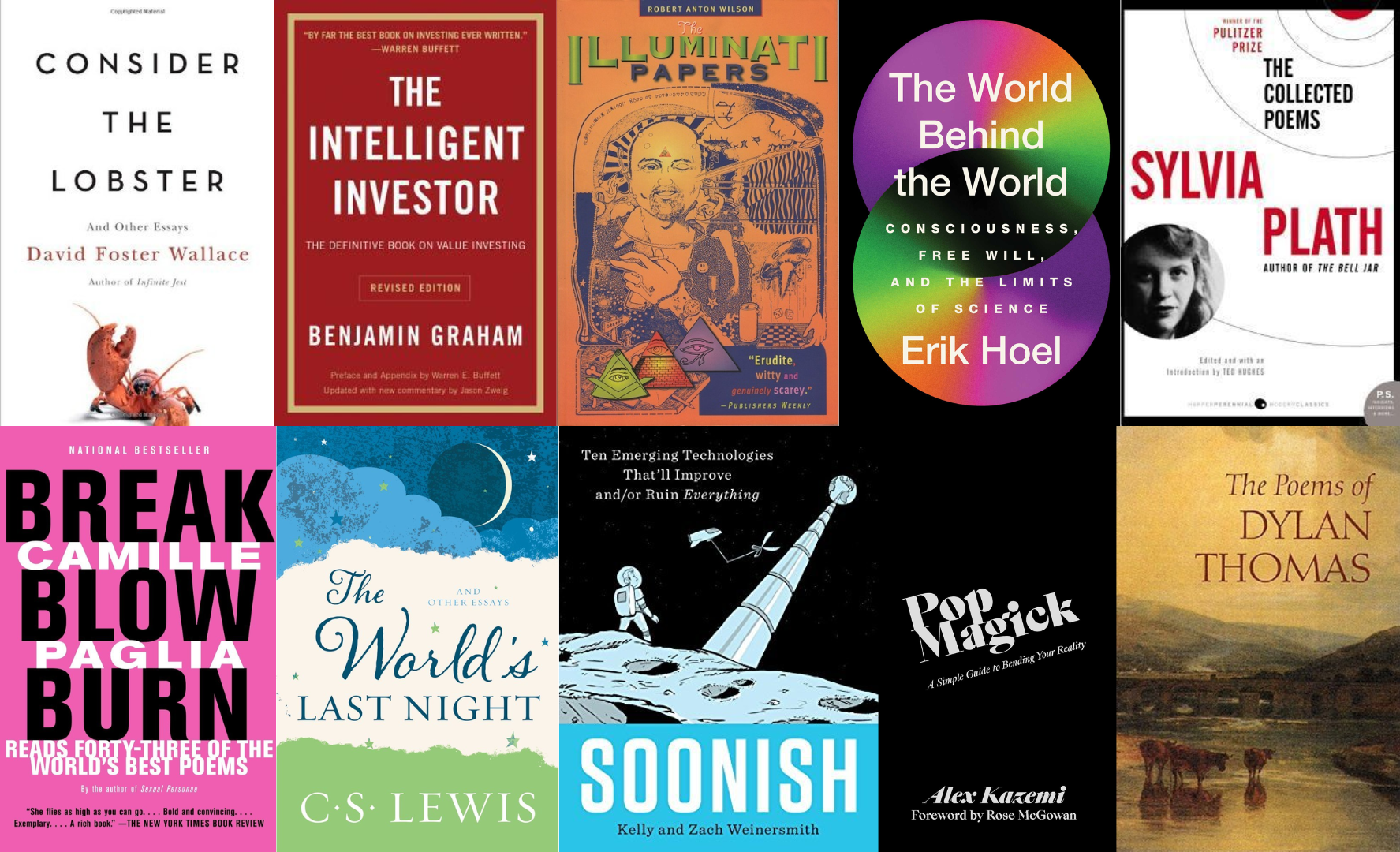
Books
Consider the Lobster and Other Essays (2005) by David Foster Wallace
DFW’s first collection of essays, A Supposedly Fun Thing I’ll Never Do Again, was some of the best nonfiction writing I’ve ever read, and this, his second collection of essays, is equally great. The topics covered include:
- His experience visiting an “adult entertainment” awards show in Las Vegas, exposing with sardonic wit how gross and nihilistic the entire porn industry and everyone involved in it is.
- A book review of a usage dictionary, which reveals why DFW is such a masterful writer, because of his obsession with words and the English language.
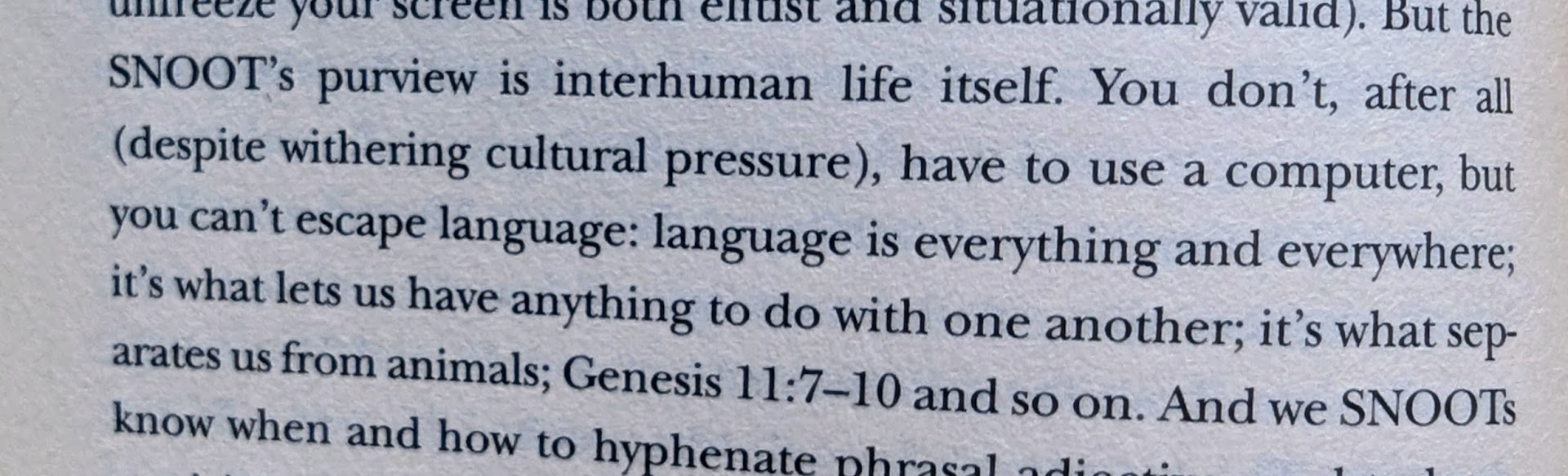
- About what life was like in the days following 9/11/2001 in Bloomington, Indiana.
- A review of a memoir of a female child tennis star. Like I said last time, DFW can make any topic interesting, especially when writing about tennis, which was of particular interest to him.
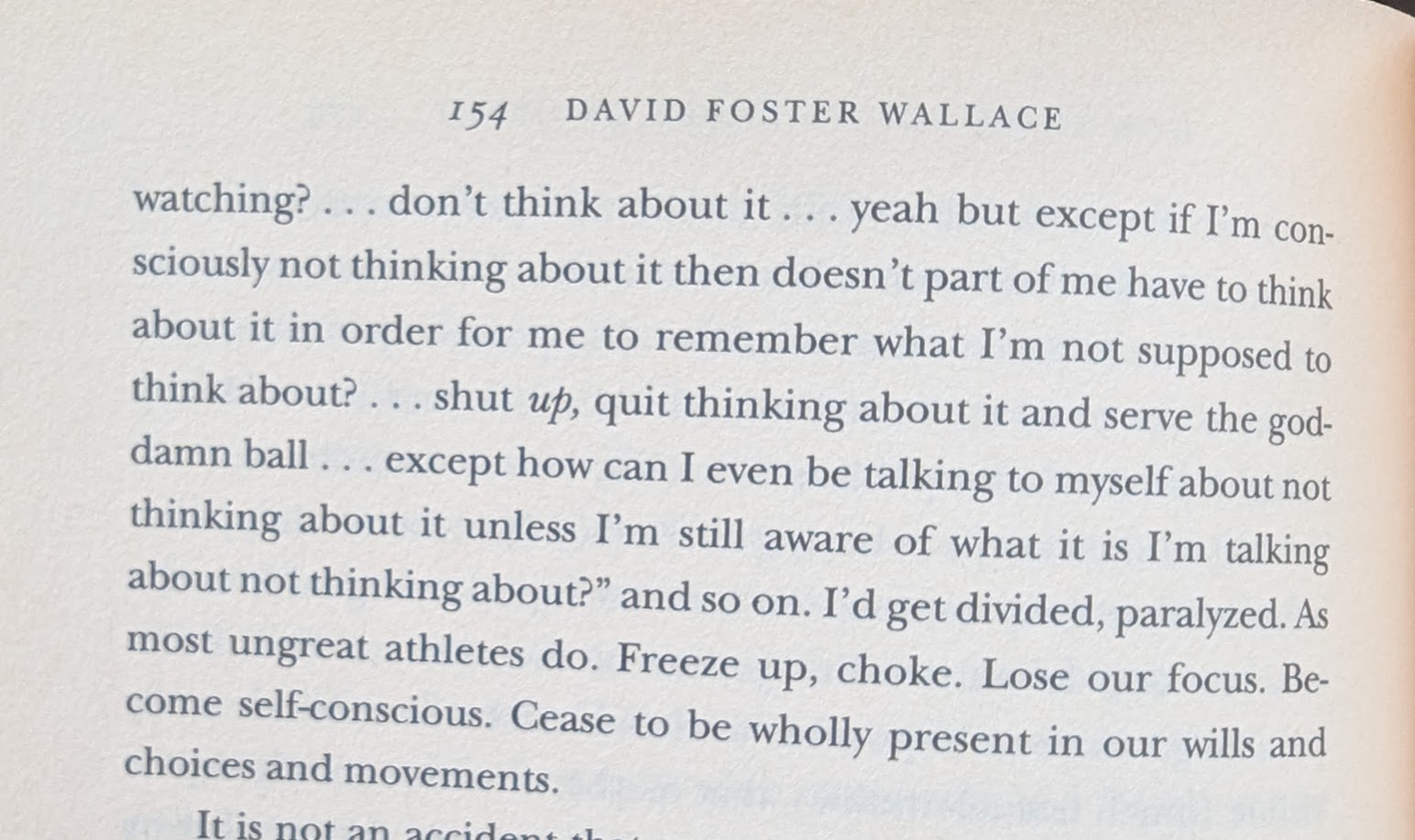
- DFW’s experience following John McCain on the campaign trail during his 2000 presidential run, about the politician as a person in private versus how he presents himself to the public versus how the media presents him. Which is the real one? Is any of them “real“?
- His visit to the annual Maine Lobster Festival and the ethics of eating lobsters.
- A review of a biography of Dostoyevsky and his fiction—one literary master writing about another.
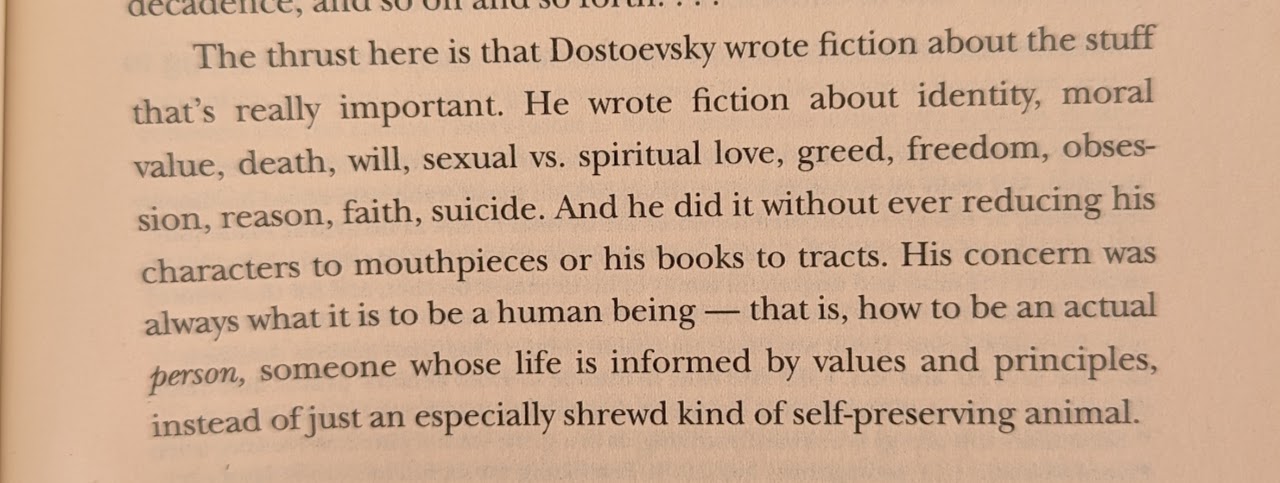
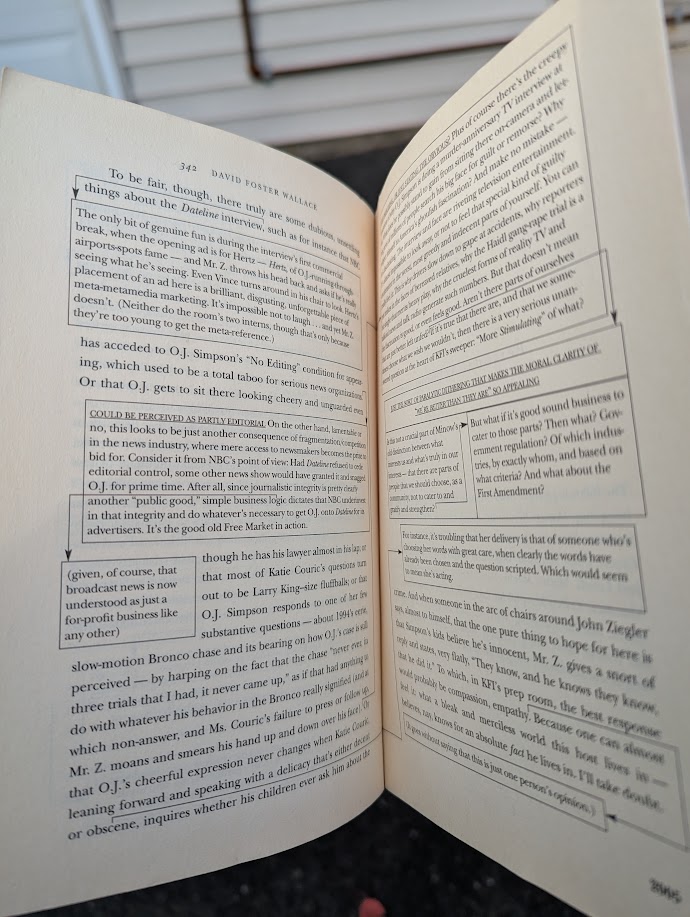
- A profile of a political talk radio show host in Los Angeles in the early 2000s, somewhat prophetic of podcasts and the decentralized media landscape that the internet would enable—yet it also now seems quaint. Like if you were worried about the political polarization of Bush-era talk radio, you had no idea what was coming… Plus this essay features the most convoluted set of DFW “foot”notes yet.
The Intelligent Investor (1949) by Benjamin Graham
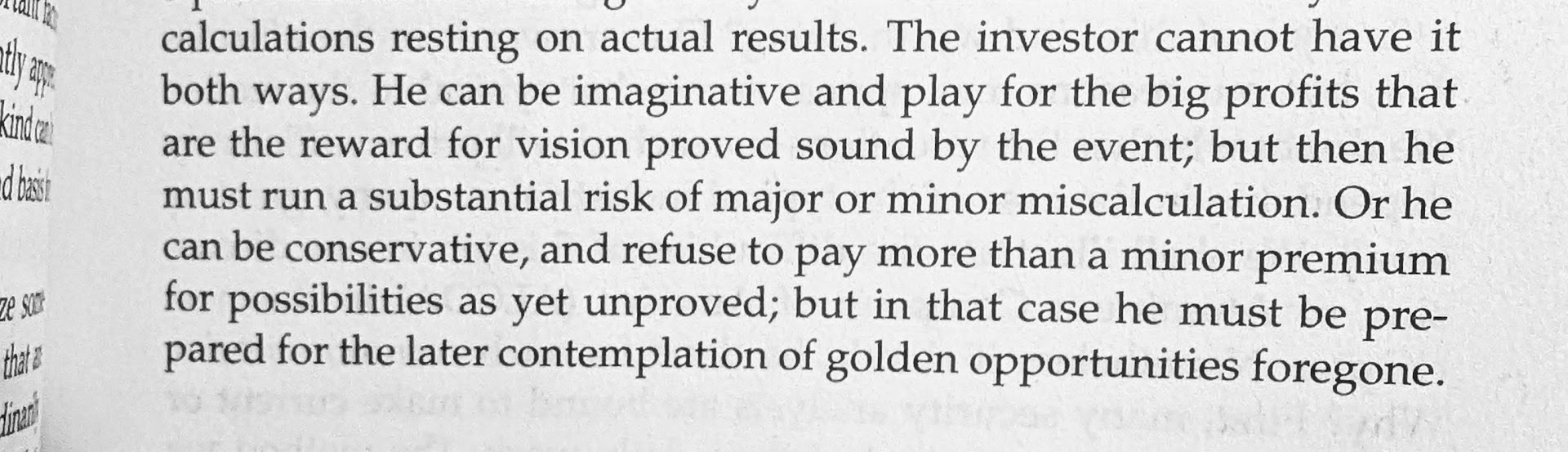
Warren Buffett has called this, “By far the best book on investing ever written.” Benjamin Graham was Buffett’s mentor, who taught him the approach he used to beat the market, termed “value investing.” I have been investing for over a decade and have had some success (such as being early on Tesla), but I never really studied investing. My approach was more intuitive, targeting companies and CEOs that I found to be impressive (such as Amazon and Google). Most of my greatest investments came from growth stocks, but Graham warns against investing in growth stocks because it is mostly speculation. His approach is all about limiting risk by calculating the intrinsic value of a stock and only buying within a margin of safety. If you follow his approach on value investing, you will not get the extreme gains from successful growth stocks (like the 15,000% I made on Tesla), but you will avoid losses. I will continue to invest in growth stocks, but also use Graham and Buffett’s advice to invest in value stocks as well.1
The Illuminati Papers (1980) by Robert Anton Wilson
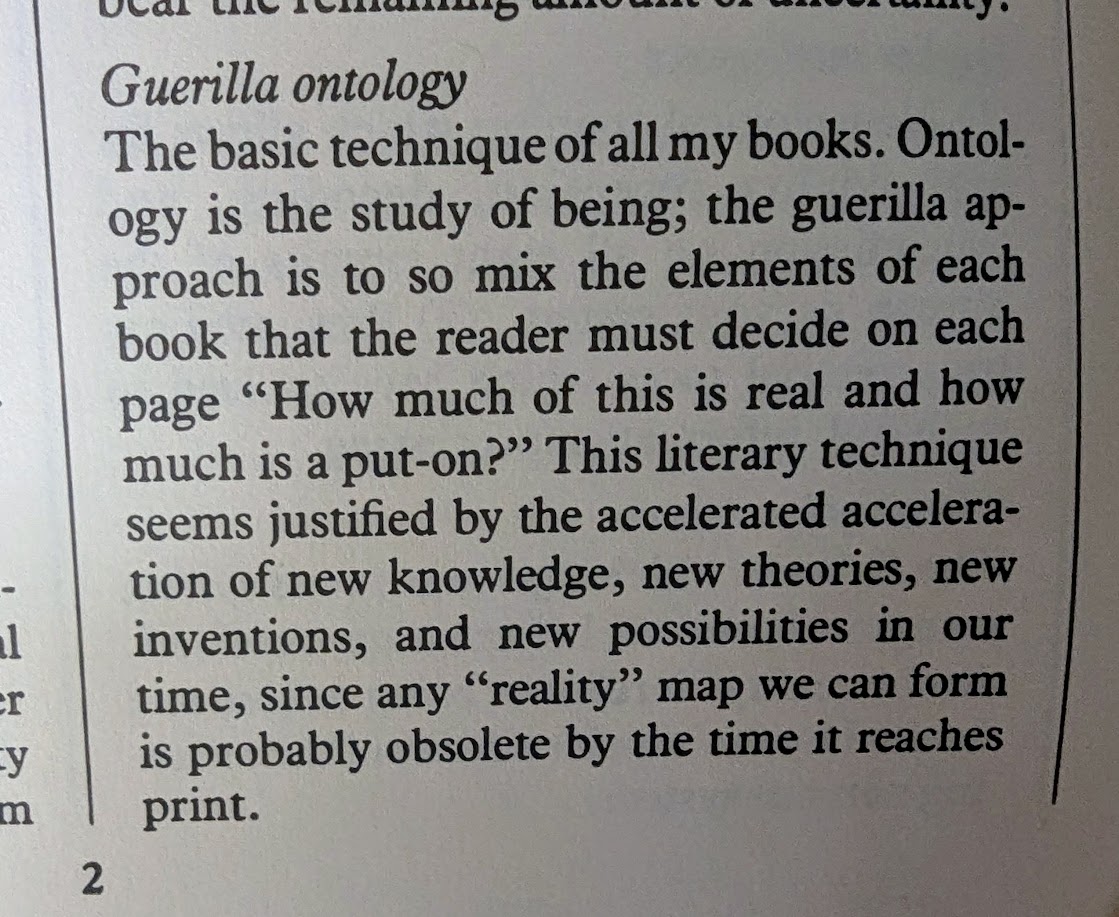
I have been wanting to read RAW (both his fiction and nonfiction) for a while, so I was happy to find a copy of this at a used book sale. It’s a short book, but a good introduction to his work: a zany mix of short articles written by fictional characters created by RAW, about art, music, science fiction, futurism, history, philosophy, metaphysics, and conspiracy theories. Similar to the type of stuff I’m doing with Time Zone Weird.
The World Behind the World: Consciousness, Free Will, and the Limits of Science (2023) by Erik Hoel
Erik Hoel writes one of my favorite Substacks, “The Intrinsic Perspective,” and I enjoyed his novel, The Revelations, so I was eager to read this, his first non-fiction book, about one of my favorite topics of interest: consciousness. It did not disappoint. Hoel covers the history of consciousness studies, going over various theories, up to the present day, including research he has done as a neuroscientist. Finally, he makes a scientific argument for the existence of free will (which despite my recent fiction story, I agree with).
Break, Blow, Burn (2005) by Camille Paglia
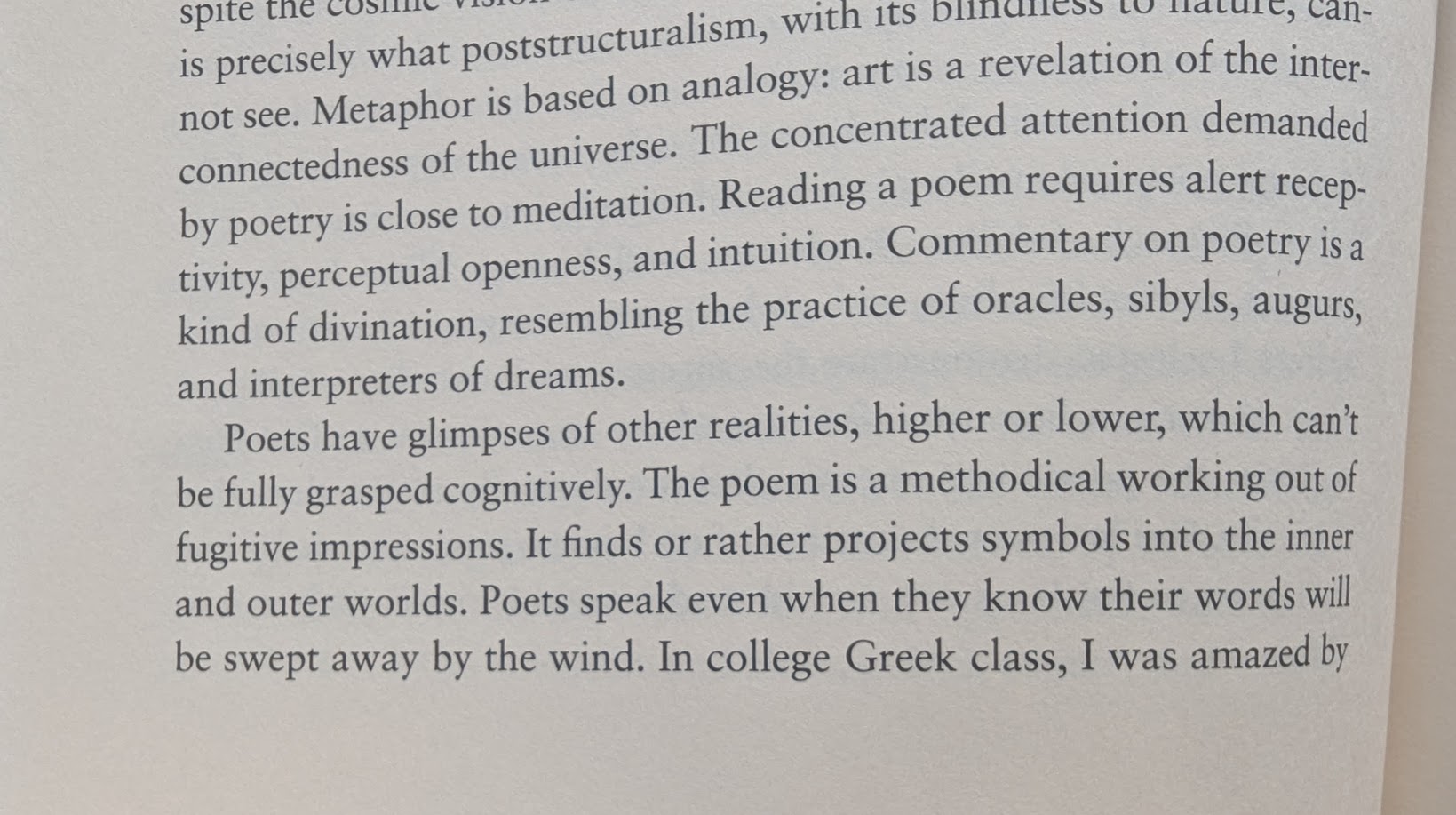
Camille Paglia takes 43 of her favorite poems and writes essays to explain them. As I have begun reading more poetry, this was useful in helping to understand the form more deeply. Every poem is like an iceberg with miles of hidden depth beneath the surface of the seemingly short text. Paglia helps to discover that depth. I agree with Wordsworth on poetry, that it is “the spontaneous overflow of powerful feelings.” I don’t write poetry often, but when I do, it is because I feel a sudden burst of inspiration fueled by intense emotion that can only be expressed in verse.2
The World’s Last Night and Other Essays by C.S. Lewis
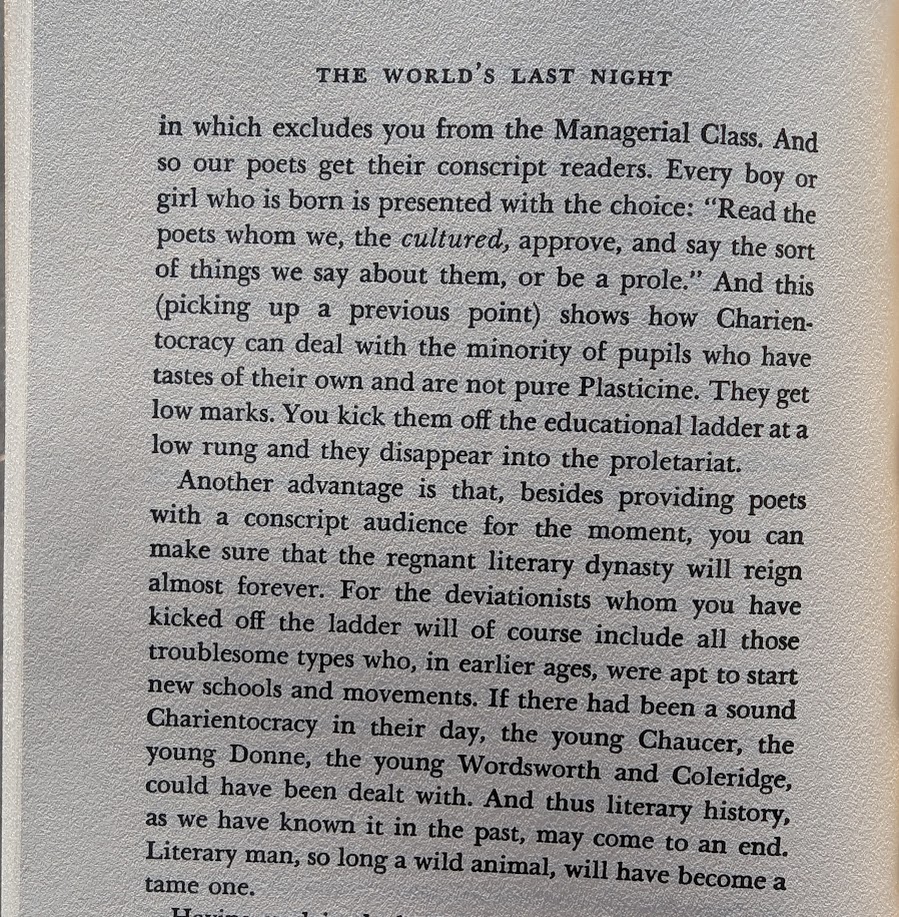
A collection of essays on various topics, most related to Christianity, such as “Religion and Rocketry,” on the theological implications of discovering alien life. But the highlight essay was “Lilies that Fester,” about what Lewis calls “Charientocracy,” which is the managerial class’s monopolistic takeover of culture and the arts. Lewis foresaw this trend in its nascent stage, but it nevertheless festered, resulting in the lifeless inferior art that he warned about.
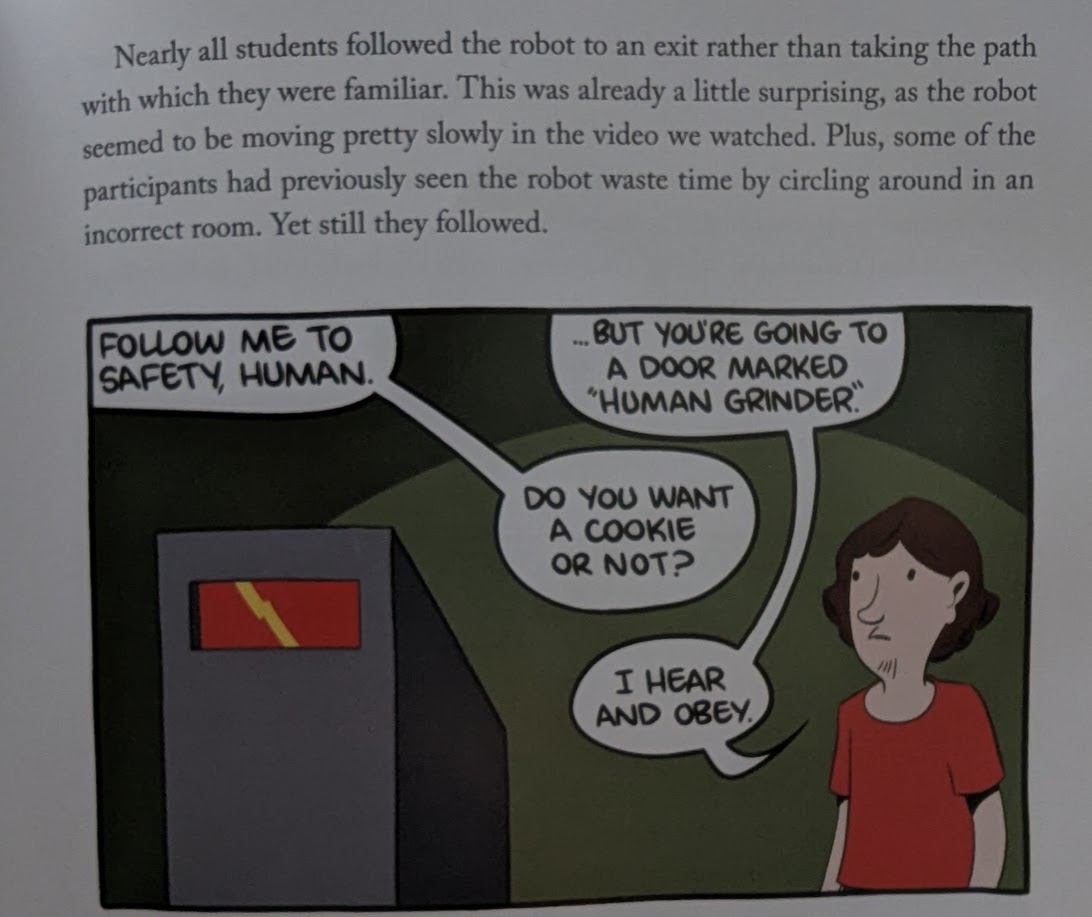
Soonish: Ten Emerging Technologies That’ll Improve and/or Ruin Everything (2017) by Kelly and Zach Weinersmith
This book explores several world-changing developing technologies in a scientifically detailed way, but with comedy and comic illustrations to help make it entertaining and understandable. Some of the tech is coming sooner than others, if not already here. Topics covered include: cheap space access, asteroid mining, fusion power, programmable matter, robotic construction, augmented reality, synthetic biology, precision medicine, bioprinting, and brain-computer interfaces. (All of which are common topics from my “Future Fake News” series.)
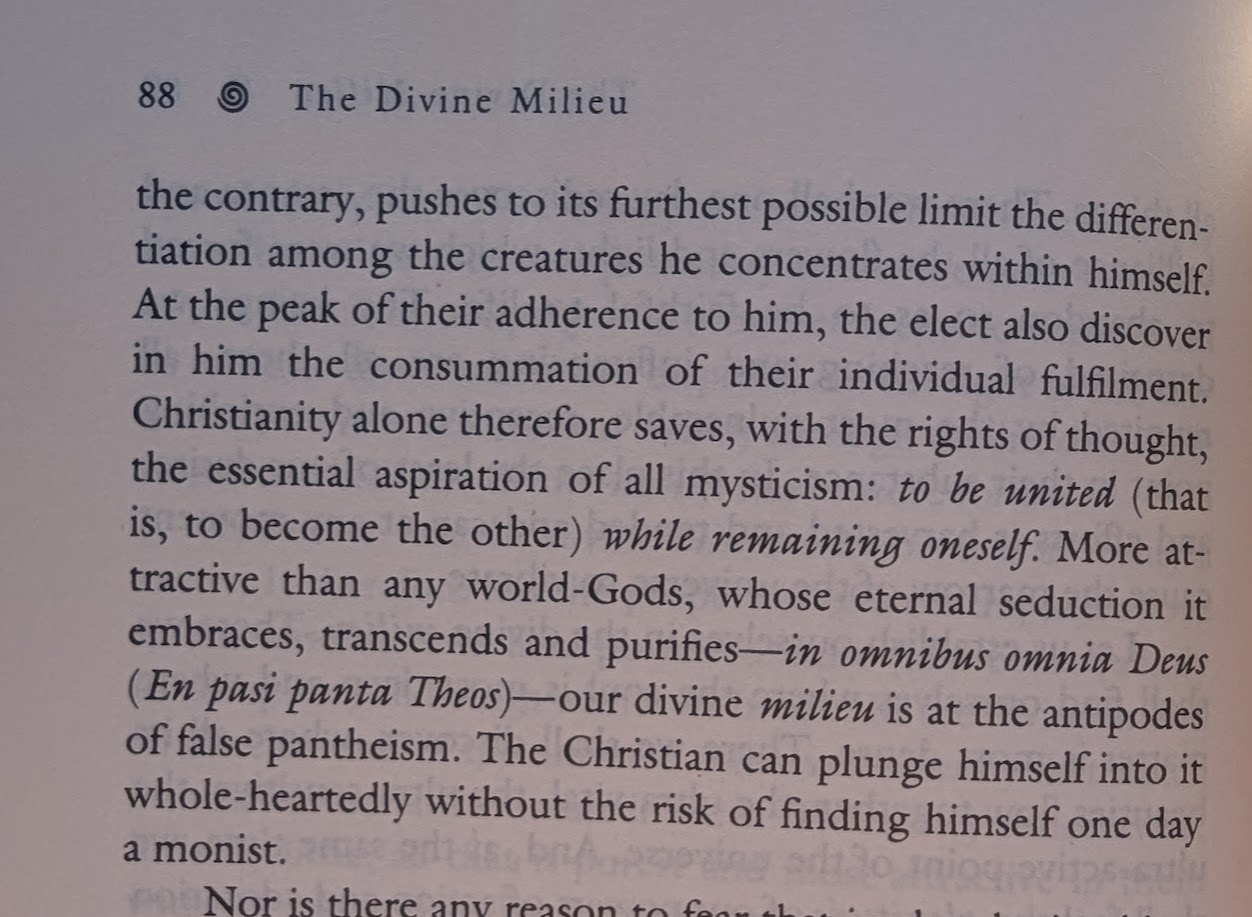
The Divine Milieu (1957) by Pierre Teilhard de Chardin
A work of philosophy, theology, spirituality, and science by a French Jesuit priest about the more mystical side of Christianity. While I find those topics interesting, his writing style was difficult to understand and didn’t quite connect with me.
Pop Magick: A Simple Guide to Bending Your Reality (2020) by Alex Kazemi
Alex Kazemi is like a Millennial Alesiter Crowley. He explains how to do occult rituals and chaos magick to improve your life, but does it all in a light-hearted way (with Millennial slang) as if it were an ordinary self-help book. He talks about contacting guardian angels and other “entities” to achieve your dreams in life. Crowley defined magick (with a K) as, “The science and art of causing change to occur in conformity with will.” Kazemi admits he doesn’t know how magick works, just that it does work. I don’t know if it’s real or not, but if it is, magick is highly serious and potentially dangerous, yet Kazemi’s ultimate message is, “Just have fun with it. Do you.” That seems to be extraordinarily reckless. I find chaos magick fascinating, but as a fiction writer, not a practitioner. This book felt like the first act of a horror movie, when everything is fun and seems to be working out…until things start to go very wrong. The word “occult” means “hidden”—as it should be. Such things were never meant for the masses. Magick is not simple and should not be “pop.”
Poetry
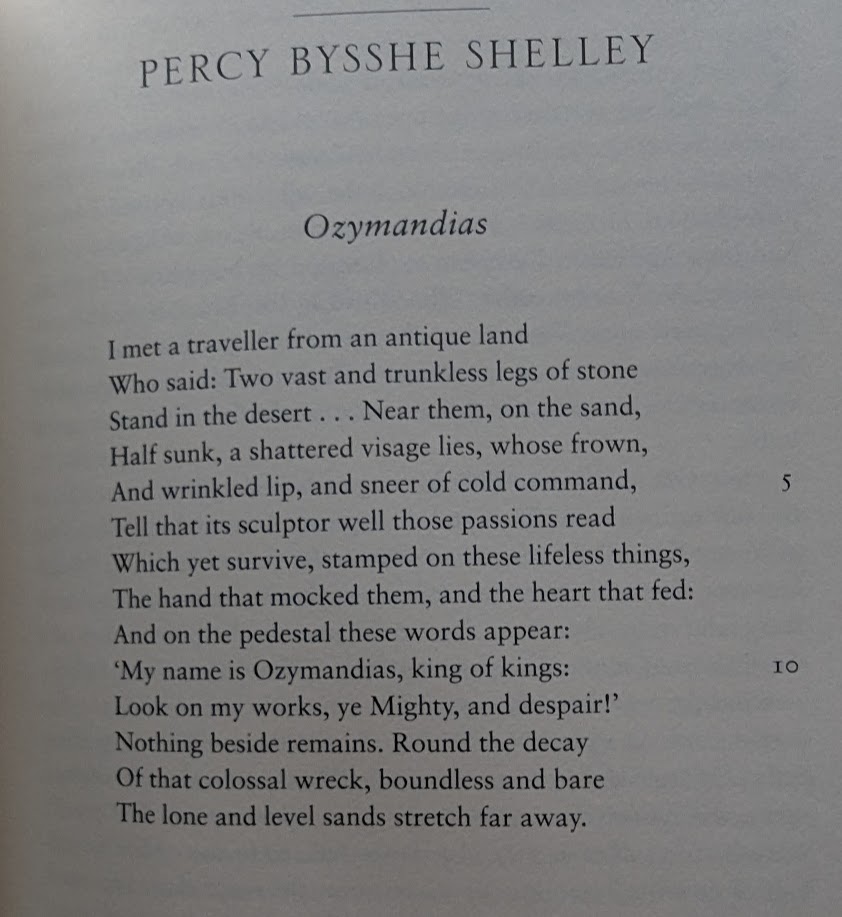
For a few years now, I’ve been reading one poem a day. In addition to the poems in Paglia’s book, I read from three other collections by: John Donne, Dylan Thomas, and Sylvia Plath.
The Bible
I am continuing my cover-to-cover read of the King James version of the Bible, finally completing the Old Testament, currently midway through the New Testament. In the latter half of the Old Testament, I most enjoyed Ecclesiastes, Job, and the Book of Proverbs:

Essays
My nonfiction book list is always shorter than fiction, because I spend more of my nonfiction time reading essays on Substack and elsewhere online. My top five nonfiction Substacks of the year are:
- The Lake of Lerna by Yakubian Ape
- Postcards From Barsoom by John Carter
- Gray Mirror by Curtis Yarvin
- The Intrinsic Perspective by Erik Hoel
- The Living Dark by Matt Cardin
And these are some of the other Substacks, blogs, newsletters, and magazines I read last year (listed alphabetically).
- 1440
- The Abbey of Misrule by Paul Kingsnorth
- Ælþemplær
- Astral Codex Ten
- Astral Flight Simulation
- Billionaire Psycho
- Bright shape by ctrlcreep
- Bronze Age Pervert Magenta Notebooks
- The Carousel by Isaac Simpson
- Cascade Frontier
- The Cat Was Never Found by Mark Bisone
- Compact Magazine
- Core Memory by Ashlee Vance
- The Culturist
- Dark Futura by Simplicius
- Decentralized Fiction by ARX-Han
- default.blog by Katherine Dee
- Delicious Tacos
- the dosage makes it so by Dmitry
- Ecosophia by John Michael Greer
- The Egg and the Rock by Julian Gough
- Egg Report by Randy
- Essay Architecture by Michael Dean
- Experimental History by Adam Mastroianni
- Futurist Letters by Cairo Smith
- Graphomane by Neal Stephenson
- Hard Reset
- Heretical Realism by p.c.m. christ
- How to Subvert Subversion with Yuri Bezmenoz
- In the Raw by Raw Egg Nationalist
- Jordi Visser Macro-AI-Crypto
- KK by Kevin Kelly
- Man’s World Magazine
- Mars Review of Books by Noah Kumin
- Meta Prime
- Metatrends by Peter Diamandis
- MythoAmerica
- New Right Poast by Dudley Newright
- New Ritual Press
- The Nightshirt by Eric Wargo
- The Obelisk by The Bizarchives
- Office Hours with Lomez by Jonathan Keeperman
- Opening Bell by Phil Rosen
- Overcoming Bias by Robin Hanson
- Owen Cyclops
- Peachy Keenan
- Phil Rot
- The Pomp Letter by Anthony Pompliano
- The Prism by Gurwinder
- Rambo Van Halen
- Rare Candy
- Schwabstack
- Steve Sailer
- Stratechery by Ben Thompson
- Tao Lin
- Tech Robots Love by Autum Christian
- Tooky’s Mag
- The Total State by Auron MacIntyre
- Trantor Publishing by Isaac Young
- Uncharted Territories by Tomas Pueyo
- The Unreal Press
- The Writings of T.R. Hudson
- Zero HP Lovecraft
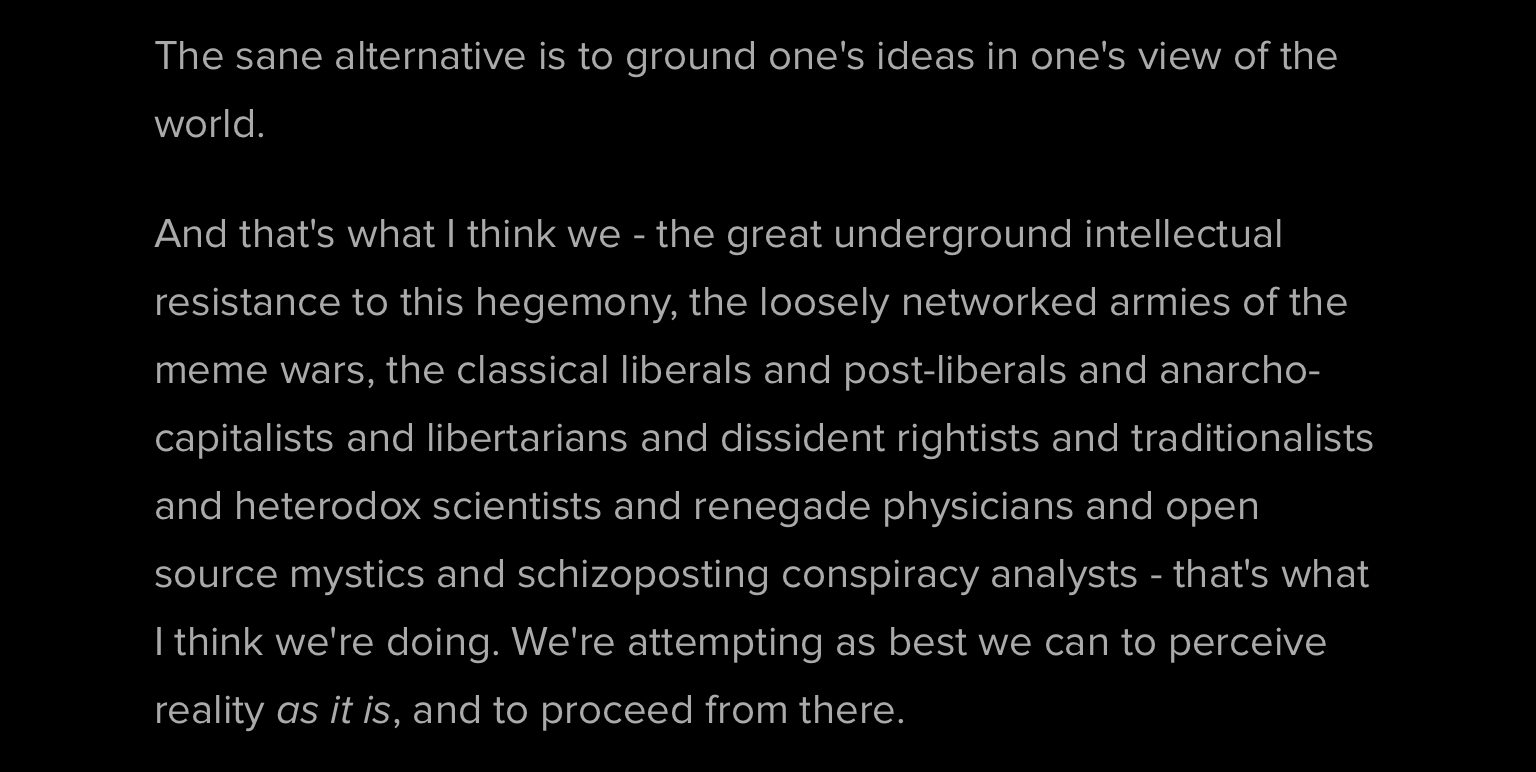
You can browse my Google Photos album of “Book Quotes” featuring screenshots from my favorite essays, as well as all the other books I read this year (and previous years).
Past Nonfiction Lists
- I am working on a longer review of this book, including a more detailed account of my approach to investing. ↩︎
- I am not referring to the parody songs on Time Zone Weird. My real poems are as yet unpublished. ↩︎
 T.Z. Barry