Tag Archives: economics

The Top 10 Movies (At Least 10 Years Old) I Watched in 2025

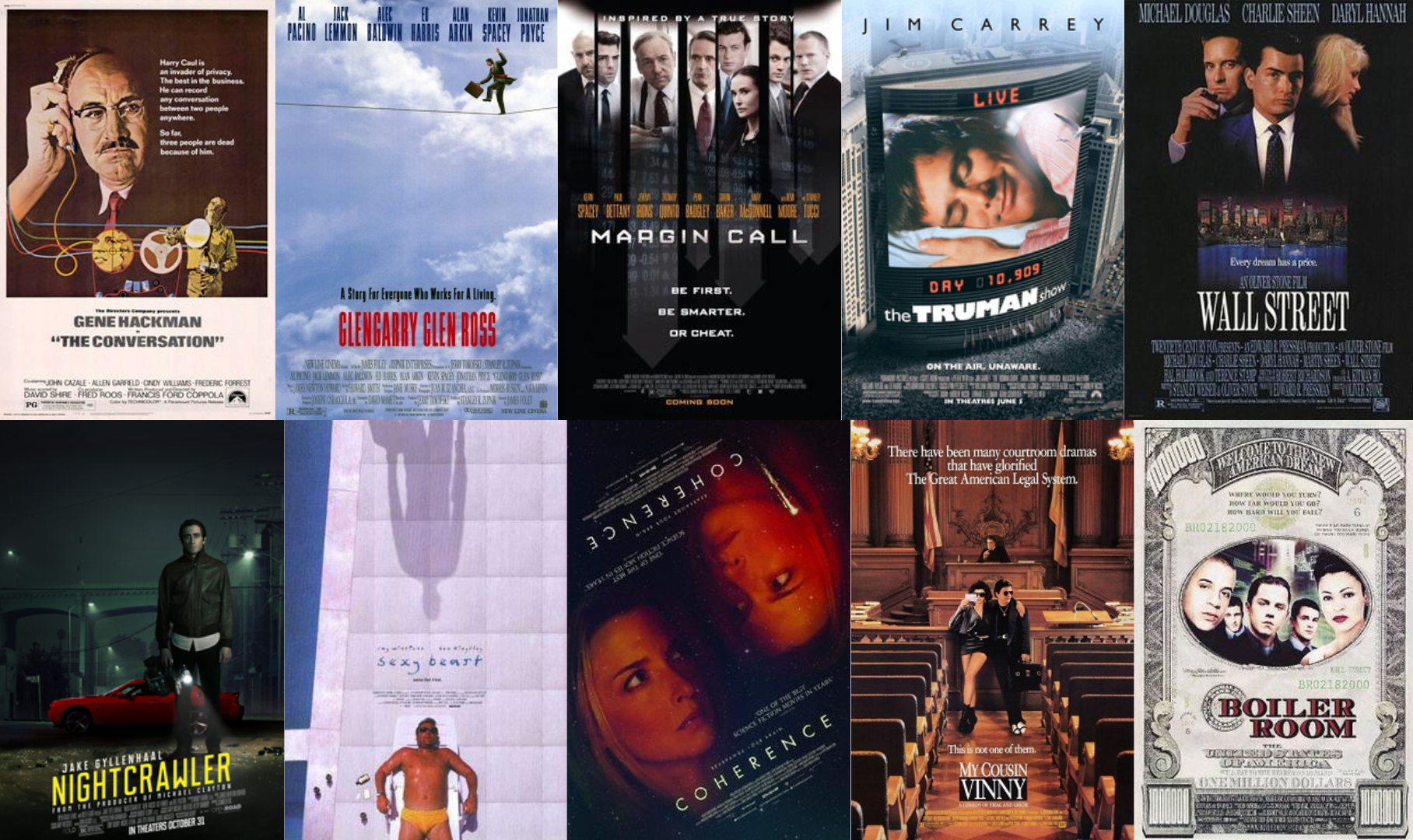
With 2025 winding down, it is time for my annual list of the best movies at least a decade old that I watched this past year. Once again, the list is somewhat random and arbitrary, based on the movies I happened to choose to watch (or re-watch) over the course of the past year. The films are sorted into five tiers and listed alphabetically within each tier. (In case you missed it, I made a separate list for the best horror movies I watched in 2025.)

Tier 1: Cinematic Masterpieces

The Conversation (1974) directed by Francis Ford Coppola
I saw this movie years ago when I first started studying screenwriting and decided to watch all the greatest films from history. I remember being blown away by The Conversation at the time, but over the years I had forgotten the plot details, so I had been planning to re-watch it. The recent passing of Gene Hackman propelled me to do so—and I feel the same way as the first time around—that it is an absolute cinematic masterpiece. As the title implies, The Conversation is built entirely around a conversation that Hackman’s character (a surveillance technician) records. A gripping noir plot follows, with twists and turns, but equally fascinating is the psychological study of Hackman’s character, Harry Caul—a lonely man who devotes his life to perfecting his craft of audio surveillance and wiretapping—but as a result, he feels great guilt for the repercussions of what his clients do with his tapes, and he lives in constant paranoia of who might be listening to him.

Continue reading

Are We in an AI Bubble?

It seems fairly obvious at this point that AI is going to have a massive impact on the future. I wrote about this seven years ago, and it has only become more evident since then.1 However, financial “experts” are saying the stock market is in the midst of an AI bubble akin to the dot-com bubble of the early 2000s. They think AI companies are overvalued and advise selling off your AI investments. But the lesson from the dot-com bubble was not to NOT invest in internet companies. It was quite the opposite.

Continue reading

Indie Publishing is Free Market Publishing

Professional publishing is fiat publishing, while indie publishing is free market publishing. The professional publishing industry, which consists of the “Big 5” book publishers (Penguin Random House, HarperCollins, Macmillan, Hachette Book Group, and Simon & Schuster) and literary agencies, are like central banks in the economy: they manipulate the market and create artificial scarcity by limiting which authors and books can be published. Indie publishing (self-publishing and small independent presses) is the free market for books, as it has a more natural flow of supply and demand. Everyone has the same opportunity, and success is more closely correlated with merit—or how much readers actually enjoy a book.

Continue reading

Hollywood Thinks They Know Everything

The great screenwriter William Goldman had a famous quote about Hollywood: “Nobody knows anything.” His full quote elaborated: “Not one person in the entire motion picture field knows for a certainty what’s going to work. Every time out it’s a guess and, if you’re lucky, an educated one.” Goldman meant that, beforehand, nobody (neither the producers, studio executives, directors, actors, or critics) could accurately predict which movies would be breakout hits or which would be box office duds. There are always surprises in both directions: movies everyone thinks will succeed end up bombing, while surefire flops become smash hits. At least that’s the way the movie industry used to work. Now Hollywood thinks they know everything.

Continue reading

Why Isn’t Bitcoin Fixing This (Yet)?

A common meme among Bitcoin enthusiasts is the phrase “Bitcoin fixes this,” used in response to any current societal problem. Whether it’s an economic issue, political conflict, or social ill, many bitcoiners believe the root cause is the money supply and the Federal Reserve’s inflationary policy—therefore a decentralized cryptocurrency like Bitcoin can provide the solution. “Fix the money, fix the world” is another popular meme phrase among bitcoiners.

However, Bitcoin and its supporters have their critics. Many do not care for the “Bitcoin maximalists,” their toxicity, and their repeated claims that “Bitcoin fixes this” for every societal problem. I cannot claim to be a full-on Bitcoin maximalist since I hold several alt-coins, but I am a Bitcoin mostlyist—as the majority of my crypto hodlings are BTC, and I think Bitcoin is the best and most important cryptocurrency in the world. I agree with the Bitcoin maximalists on most things, including that bitcoin will fix many of society’s current problems, which are often economic in nature. (Read Robert Breedlove for more on this.)

Continue reading

Algorithmic Fiction is Not For Me

Welcome to the age of algorithmic fiction. Thanks to tools like GPT-4, a human writer with a library of previously written books can simply write a one-page outline for a new novel, and AI can write an entire novel in their style. In many cases the book will be good enough to pass as if it was written by the human authors themselves, allowing writers to publish more frequently. However, GPT fiction will only work with formulaic writers whose books are all similar. In other words, those writers who were already writing algorithmic fiction before the aid of AI.

Continue reading

Sunk Cost Writing: Use AI to Kill Your Darlings

One of the most difficult parts of writing is “killing your darlings.” That might mean cutting out a part you liked to make the story as a whole better. Or, more generally, it can simply mean deleting the boring parts of your story. (As Elmore Leonard said, there should be no boring parts.) Perhaps one of the greatest upsides of writing with AI is that it can help eliminate the “sunk cost fallacy” that authors often face with the words they have already written.

Continue reading

Content Creation in the Coming Attention-Based Economy

Writers have always struggled to get adequately paid for their work. Before the internet, publishing companies (for books, newspapers, and magazines) had the power as gatekeepers to take advantage of writers who had no other means to get their writing to the public. Publishers would take a large percentage of the pay—because they could. Today, the internet provides a way around traditional gatekeepers, but some writers still struggle to get paid. This could change in the future with the development of currently existing technology.

Continue reading

Time is Money is Bitcoin

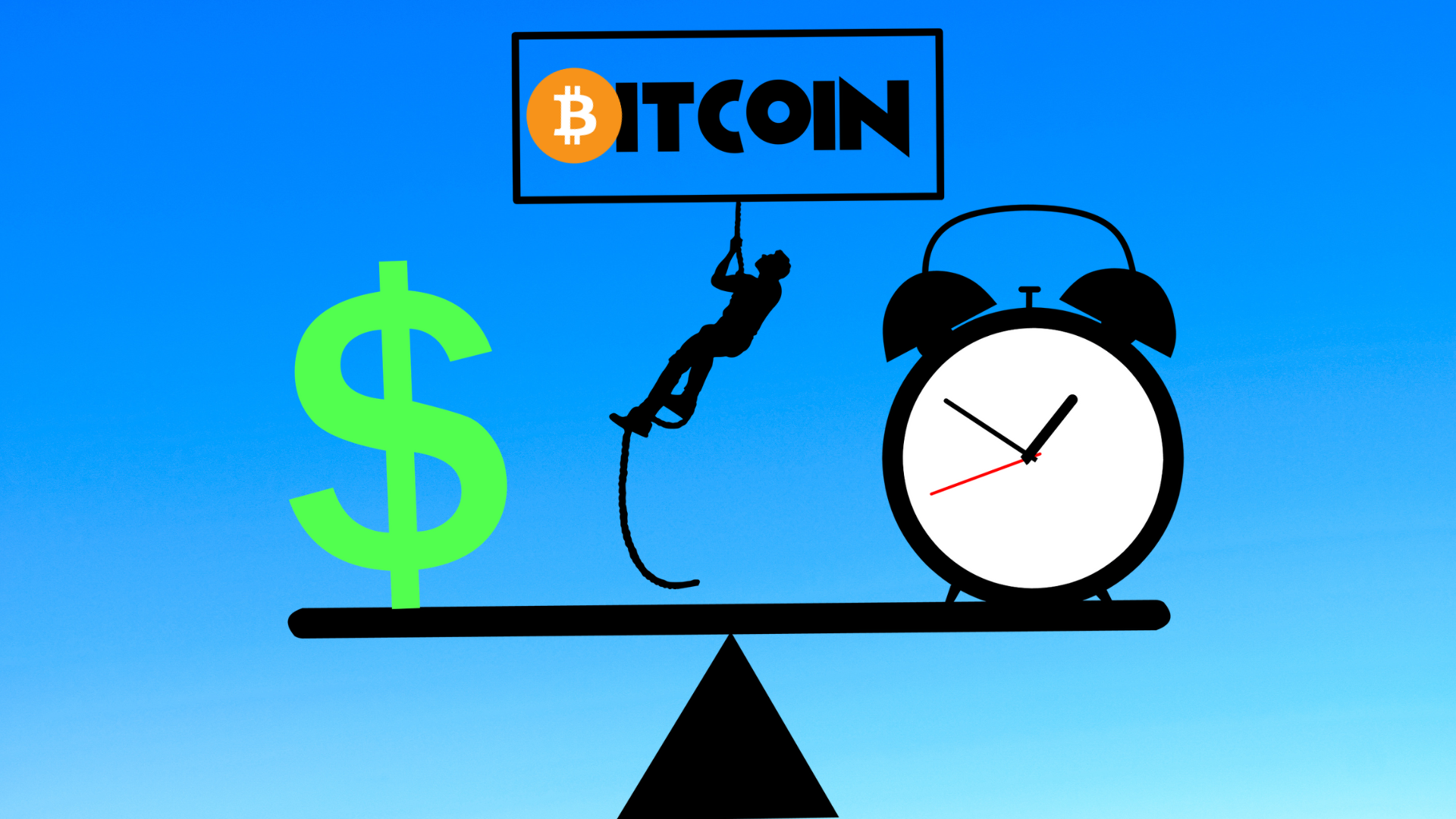
The idea of money is warped in most people’s minds. Cash has no inherent value. Neither does gold, diamonds, or anything else used as currency. The only thing in the world of true value is time. In that respect, every human being on the planet is born of equal worth. We all have an average of 80 years, or 30,000 days, or 720,000 hours, and every second of those hours is extremely valuable.

Continue reading

Best Nonfiction Books I Read in 2021

Note: The books from this list that aren’t available online for free are available for purchase through my Bookshop.org page.

1) Human Action: A Treatise On Economics (1940) by Ludwig von Mises

This is the bible of Austrian economics by the grandfather of Austrian economics, Ludwig von Mises. Human Action is Mises’ magnum opus on economics, philosophy, and history—or more precisely, it’s about what Mises terms “praxeology”: the study of human action, which all economic activity boils down to. This is a long book (it took me half the year to get through, which is why there are fewer honorable mentions this year) but it was worth it. You will better understand the world today by reading this 82-year-old tome than by reading today’s newspapers.

Continue reading