“It is a sad truth, but we have lost the faculty of giving lovely names to things. Names are everything.” — Oscar Wilde
One of my favorite parts of writing a piece of fiction is coming up with the title. I agree with Oscar Wilde: Naming a work of art is an art in itself and should always be treated as such. The name that is given to a work of art is massively influential on how that work is received. As a result, I spend an inordinate amount of time thinking about the titles of my books (and the names of my characters, but that’s a topic for another day).
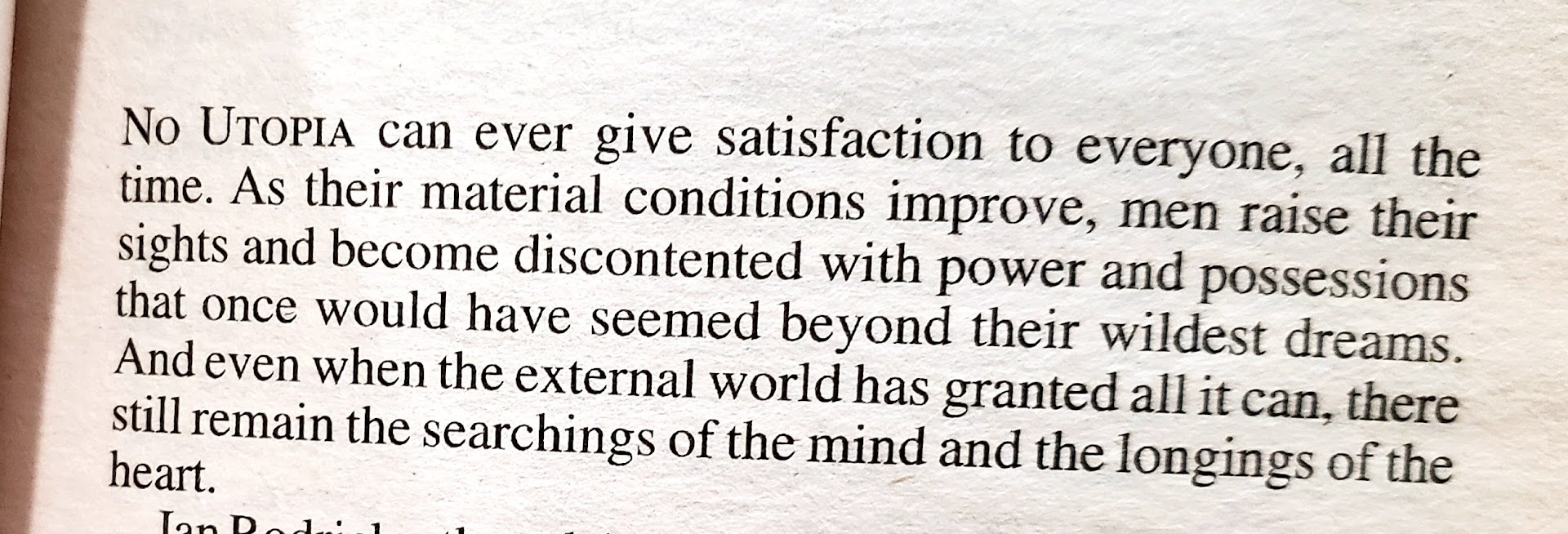
This is the second Arthur C. Clarke novel I’ve read (the first being Rendezvous With Rama), and I’ve been blown away by both. For some reason I expected Clarke’s books to be a bit drier and more dated, but his is some of the most exciting and mind-expanding science fiction I’ve ever read. I should have expected no less from the mind behind 2001: A Space Odyssey. Perhaps I had that prejudice because in some older sci-fi books, the science and ideas become outdated or the writing style does (or it was never any good to begin with). Especially with hard science fiction, which Clarke is often categorized as, the science is prioritized over the story, craft, and characters, so once the science itself becomes dated, the book does as well. But this is NOT the case with Arthur C. Clarke. Though there is some “hard science” in Childhood’s End, it was also quite weird, speculative, and philosophical (like 2001). Clarke’s ideas remain highly relevant and he is an exquisite composer of prose. This novel particularly features so many brilliant lines of philosophical insight, such as: “There were some things that only time could cure. Evil men could be destroyed, but nothing could be done with good men who were deluded.”


 T.Z. Barry