
In 2024 I read and reviewed Born to Run, a nonfiction book about a journalist (Christopher McDougall) who traveled to Mexico to study the Tarahumara, an elusive native tribe consisting of many elite long-distance runners who wear nothing but thin sandals. That led him to learning the science of how humans evolved to run barefoot, and how excessively cushioned shoes are detrimental to foot health. By wearing more minimalist footwear, he helped heal his own foot pain. I had already learned about barefoot shoes before reading the book, so it was like preaching to the choir. I’ve been wearing “barefoot shoes” for several years now, healing some foot problems of my own. At this point, I don’t think I could ever wear traditional shoes again.
During childhood, my primary footwear was basketball sneakers, the signature models of my favorite players (Nike Jordans and Reebok Answers), despite the fact that the majority of the time I wore those shoes I was not playing basketball. In my teenage years, I shifted to skateboarding sneakers, usually based on style—the shoes I thought looked the coolest. I did skate—not very well and not very often—but skateboarding shoes like Vans were fairly comfortable and suitable as casual footwear. So when I stopped skateboarding in college, I continued wearing skateboarding shoes. After college, I started jogging and hiking, so I wore running shoes like New Balance and Adidas, even when not running.
Over time, I naturally gravitated toward more minimalist shoes in larger sizes than normal so that I had more room for my toes. I did this without knowing anything about the science behind it, but simply because they felt better on my feet. I enjoyed how minimalist shoes felt, giving my feet more flexibility, so I became intrigued when I first learned of actual barefoot shoes. The only problem was they were rather expensive, so I was hesitant to buy a pair. Plus the Vibram Five-Finger shoes looked too ugly to wear in public.
I eventually found a pair of Merrell Vapor Gloves at a discount, so I bought them as my first pair of true “barefoot shoes.” Barefoot shoes (aka minimalist footwear) feature a wide foot-shaped toe box, are zero-drop (meaning flat on the bottom with no elevated heel), and are flexible with a thin sole and no cushioning. The Vapor Gloves were so comfortable that it felt like wearing no shoes at all. They were extremely flexible, allowing my foot to move freely, but there was zero cushioning and a very thin sole, which I was not used to. I would wear them occasionally, along with my other traditional shoes.
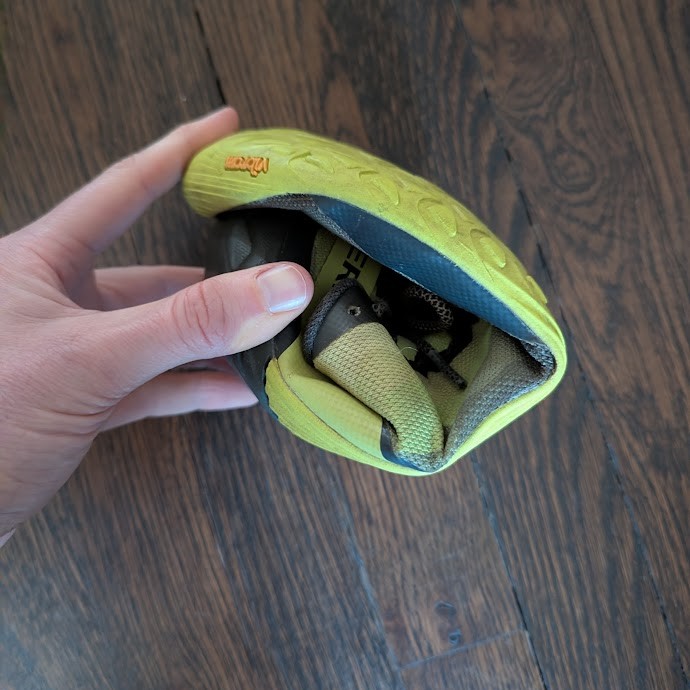
Despite the initial comfort of the Vapor Glove barefoot shoes, I developed some foot problems while wearing them, especially when running on pavement. I had never learned how to properly run or walk in minimalist footwear, so with prolonged use I would experience heel pain, blisters/corns on my forefoot, and metatarsal pain. To prevent such issues, I would only use the barefoot shoes in small doses, like a short run or simply walking around the house. The pain issues were not the shoe’s fault but my own because I never learned proper walking form. I later bought a pair of Merrells similar to Altras1 that had the foot-shaped wide toe box but a thicker sole and more cushioning, which seemed to alleviate my issues. So I wore those shoes more often than the true barefoot ones.
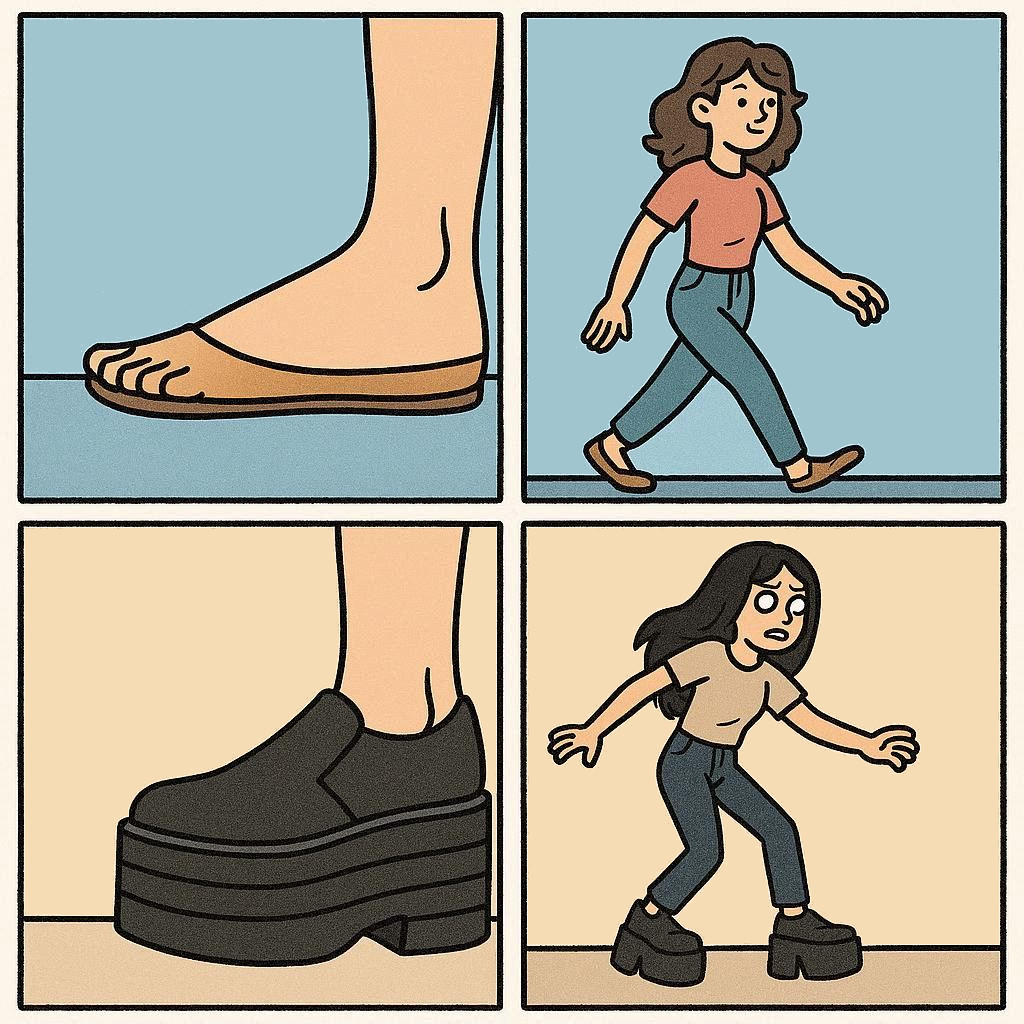
My heel pain vanished, but the forefoot corns/blisters remained. That led me to researching and learning about the science behind minimalist footwear, gait, and the kinetics of walking and running. The wide toe box is the most essential ingredient in any shoe. Narrow pointed shoes deform your foot shape over time, leading to all sorts of problems. Wearing stiff shoes with lots of cushioning is like wearing a cast on your hand—you lose strength and mobility in the joints and muscles. Once you’re used to barefoot shoes, thicker soled shoes feel like walking on stilts.
Most people would benefit from transitioning to more minimalist footwear, but if you wear barefoot shoes without first learning how to walk and run properly, you will hurt your feet because of poor form. You may get sore heels from heel-striking too hard, which I sometimes suffered from. But if you use too much of a forefoot strike, then you can develop metastasis, which I also suffered from. People in the minimalist footwear community recommend a transition period to gradually ease your way into barefoot shoes by using them in small doses at first until your feet adjust. And of course you must learn the proper barefoot walking/running form to prevent injury.
I eventually learned how to walk and run with more of a mid-foot strike, using shorter strides, and landing softer on the ground (rather than pounding your feet into the pavement)2. Doing this, I could wear barefoot shoes longer without any pain, and it helped heal my previous foot issues. So I started wearing barefoot shoes more often, and purchased more pairs (for hiking, running, casual, snow, and sandals), so that I could wear barefoot shoes all the time. Now I cannot go back. If I ever wear regular shoes, it feels a thousand times worse, like wearing casts on my feet. Running in some of these super-thick cushioned shoes like Hoka is like playing basketball with boxing gloves on your hands. You lose all sense of feel and connection with your surroundings.
The common wisdom is that you need rugged boots to go hiking, but I wear minimalist hiking shoes as well, even on rocky trails. Hiking with barefoot shoes on natural terrain feels like giving your feet a massage. It connects you to the environment—though you need to be more aware of your surroundings and avoid stepping on sharp rocks, sticks, or other objects that thick boots would absorb the impact of. But you should be more focused on the terrain while hiking, rather than blindly plodding along.
Some critics of barefoot shoes contend that pavement isn’t natural, so more cushioned shoes are required for that environment. And indeed, all my initial problems came from walking and running on pavement. But once I learned to walk and run with proper form, I never had any issues using barefoot shoes on pavement. The only “problem” with barefoot shoes on pavement is that walking on such a flat surface becomes boring. I find myself veering toward curbs, dirt, cracks, and gravel along the side of the road just to give my feet some more tactile feedback. You don’t realize how perceptive your feet can be if you leave them trapped in thick shoes all the time.
Part of my issue when first wearing minimalist footwear was that I never spent enough time truly barefoot, as in unshod, wearing no shoes at all. Even when inside my house, I would wear shoes or thickly cushioned slippers. This is bad for your feet because it weakens your foot muscles. Your feet are the foundation of your body, so foot issues can affect other joints and muscles throughout your frame. To strengthen your feet, you need to spend some time each day truly barefoot.
Another issue I didn’t realize I had was flat feet (or a collapsed arch)—but only in my left foot. As a result, I needed to get larger-sized shoes for my left foot. But by being barefoot more often, I helped strengthen and raise the arch in my left foot, so I no longer have that issue. I now spend most of my time indoors barefoot (or in socks or sock-like slippers) and try to spend some time fully barefoot outside each day (when it is warm enough), which also gives you the benefits of grounding.
When kids first start walking, they hate to wear shoes because footwear feels unnatural. Toddlers have much more biofeedback and control when barefoot, which helps them learn how to walk. Their toes are much wider, stronger, and more flexible before wearing shoes, which constrain your toes and deform the shape of your foot over time. Parents have to force their kids (often through tears) to put on shoes. But children are right to resist wearing shoes—at least in theory. When going outside, shoes are necessary for kids, but the shoes should be minimalist with a wide toe box to help maintain their natural foot shape, strength, and flexibility. And if you’re an adult, it’s not too late. Your feet will strengthen and return to their natural shape if you wear the proper shoes.
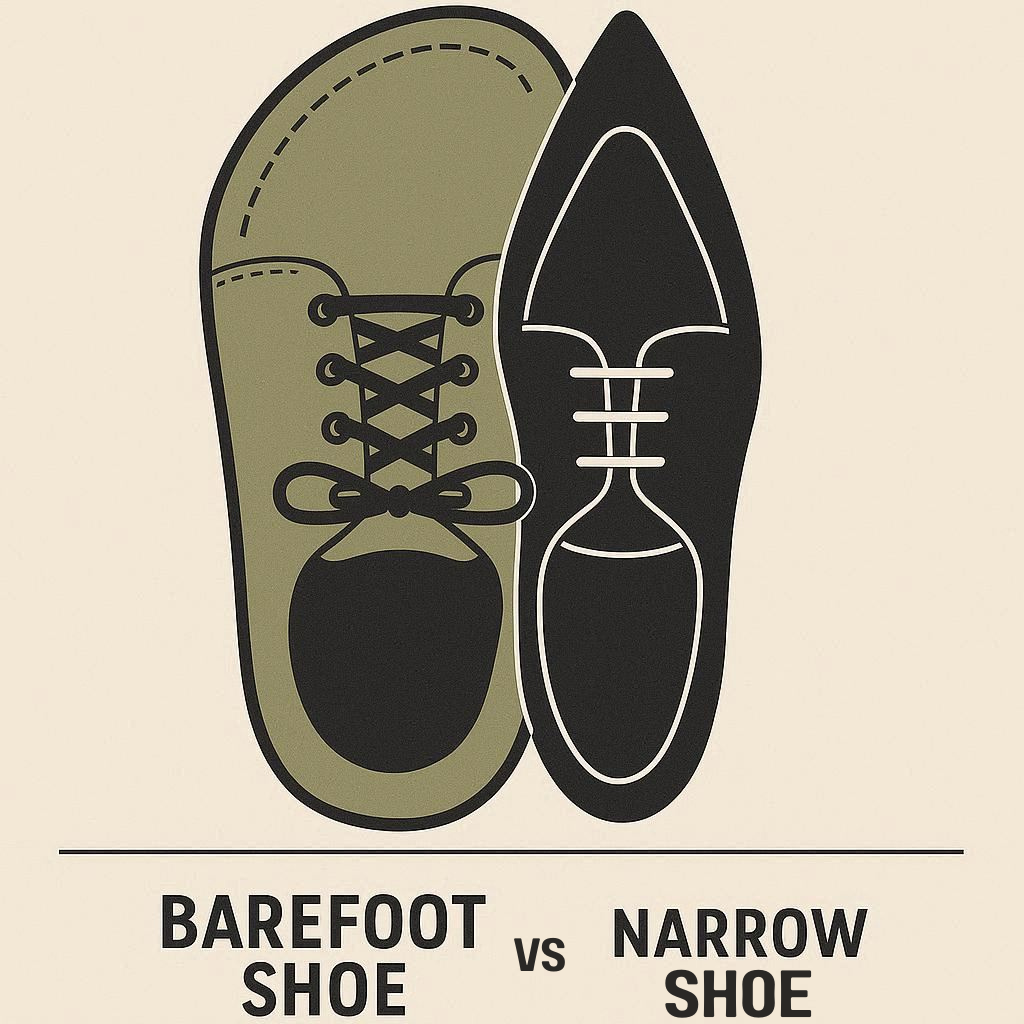
The barefoot shoe brands I’ve worn are Merrell, Vivobarefoot, Xero, and Whitin. Whitin are the cheapest, a Chinese company on Amazon. They’re lower quality but a decent intro to try barefoot shoes without spending too much money. Vivo are the most expensive, and they are definitely high-quality, but I’ve found them to be a bit overrated comfort-wise (at least the model I have), compared to Xero, which are my favorite. The Xero Prios are hands-down the most comfortable shoes I’ve ever worn. I particularly like how they have a high volume toe box to give extra space for my toes to move around. I bought several other pairs of Xeros because I was so satisfied.3
After wearing minimalist shoes, I can never wear “maximalist” shoes again. Even shoes that used to be comfortable to me feel so uncomfortable now because of the raised heel, excess cushioning, and narrow toe box. The good news is the barefoot shoe industry is growing in popularity, so the selection options are increasing. There are numerous types and styles from the brands mentioned above as well as others. You don’t need to be the weird person with the “finger shoes” anymore. Many barefoot shoes look stylish and normal. But I would much rather wear shoes that are comfortable than stylish.
 T.Z. Barry