
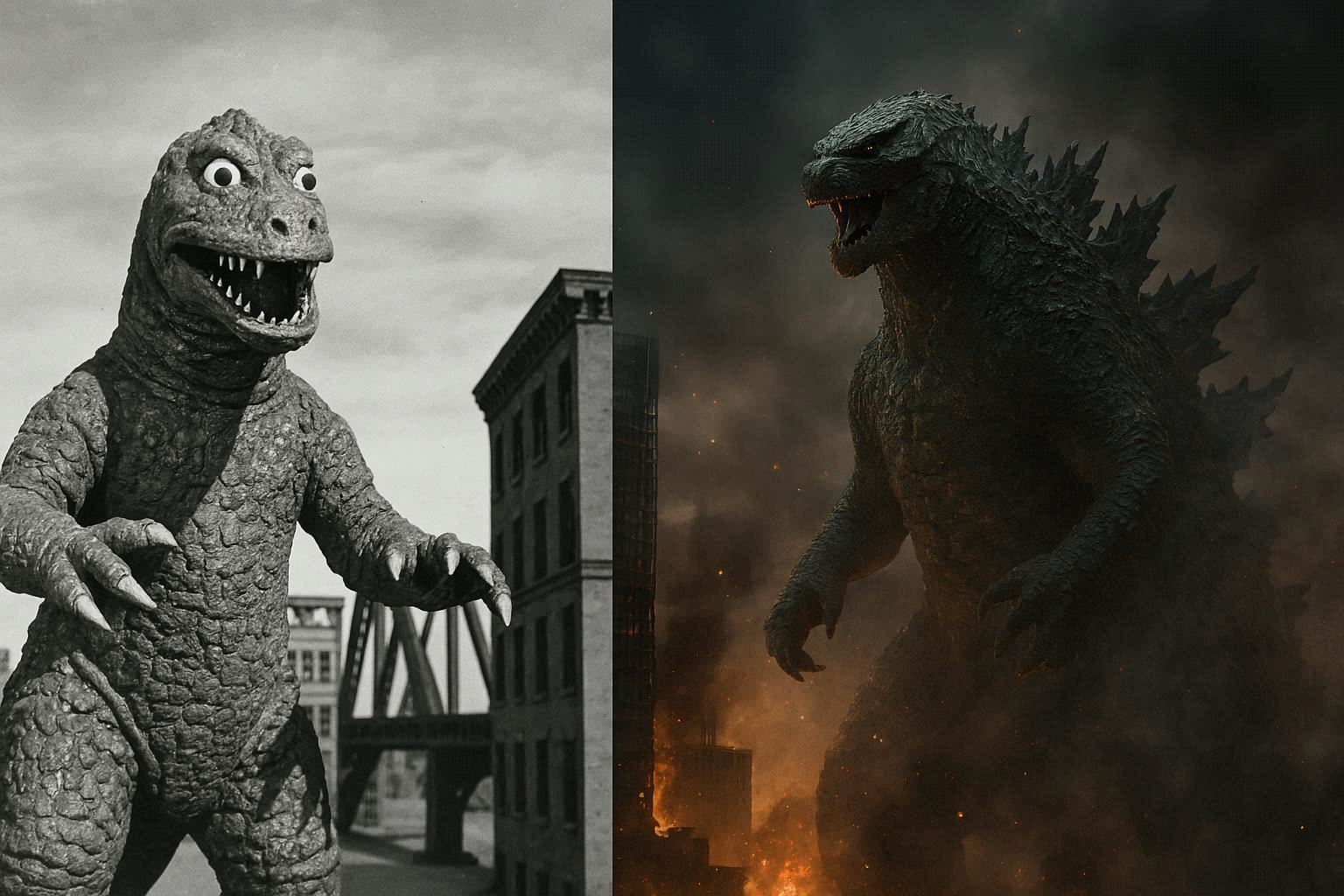
Consider some of the classic great movies from the past, such as the monster movies of the 50s, the Spaghetti westerns of the 60s, the action thrillers of the 70s, and the horror slashers of the 80s. These movies were not great technically. Often the acting was mediocre, the ADR dialog was not synced, the lighting and color were off, and the special effects were cheap and cheesy. The monster was often a man in a suit—or a rubber shark that constantly malfunctioned. Yet the best King Kong is still the original from 1933, despite newer versions having much more realistic-looking giant apes. These movies are considered great despite their technical flaws because they were full of originality, creativity, and most of all vitality.
Contrast that to the movies Hollywood is producing today. They have advanced tremendously in every technical aspect of filmmaking. There are no more flaws in the sound and lighting. The special effects are expensive and convincing. Yet nobody loves these movies in the same way as those cult classics from the past because they are devoid of vitality, or the passionate creative energy of a singular artistic vision. Modern movies are simply updated retreads of the creative movies we loved from the past. Not only are their technical aspects updated but also their ideological.
Jaws is considered to be the first “blockbuster” movie. It was full of vitality because it was made by a hungry unproven artist with a strong creative vision, young Steven Spielberg. Modern blockbusters are made by a committee of businessmen, not a singular artist. Hollywood will not willingly return to the vitality of the past and allow filmmakers to harness their full creative energy—because too many artists will crash and burn. They’ll make films that are deemed too “problematic” because they offend certain people. Or their films will simply fail to make a profit—or not enough profit compared to the IP blockbusters.
Instead, the revitalization of filmmaking must come from outside the Hollywood system. The rare vital films that have been made over the past decade were produced independently, not by major Hollywood studios. For more vital films to be made in the future, due to the extraordinary expense of producing movies, it will require the heavy use of artificial intelligence.
Skeptics claim AI will never be as good at creating art as humans—which may be true—but humans can use AI to create great art. There are filmmakers today yearning to make creative movies full of vitality, but they will never get financed by the Hollywood gatekeepers. The only way they can achieve their creative vision is if the cost of filmmaking drastically comes down—which can happen through the aid of AI tools.
Aspiring directors will use AI-generators to create their passion projects. At first there will be many technical flaws and glitches. Early AI films will not be as technically precise as the $100-million blockbusters being made entirely by humans today. But they will contain a vitality the likes of which Hollywood hasn’t seen in decades. We’re already seeing this with the short videos being created with AI. They are full of technical flaws and glitches—but they are also full of creative energy, making me laugh harder than any Hollywood comedy from the past decade. Most AI videos now are parody, but with time, they will become longer and more sophisticated. The Hollywood gatekeepers had been blocking certain creative ideas for decades, which have been building up like a dam. AI will open the floodgates and let those creative ideas be made into movies.
It is the creative vitality of the director that movie viewers are most drawn to—not their technical cinematic abilities. Though when both are combined, as in a true master like Stanley Kubrick, it results in the greatest of cinematic art. As generative AI technology advances in the coming years, a future “Garage Kubrick” may be able to achieve the artistic heights of Stanley himself.
 T.Z. Barry