
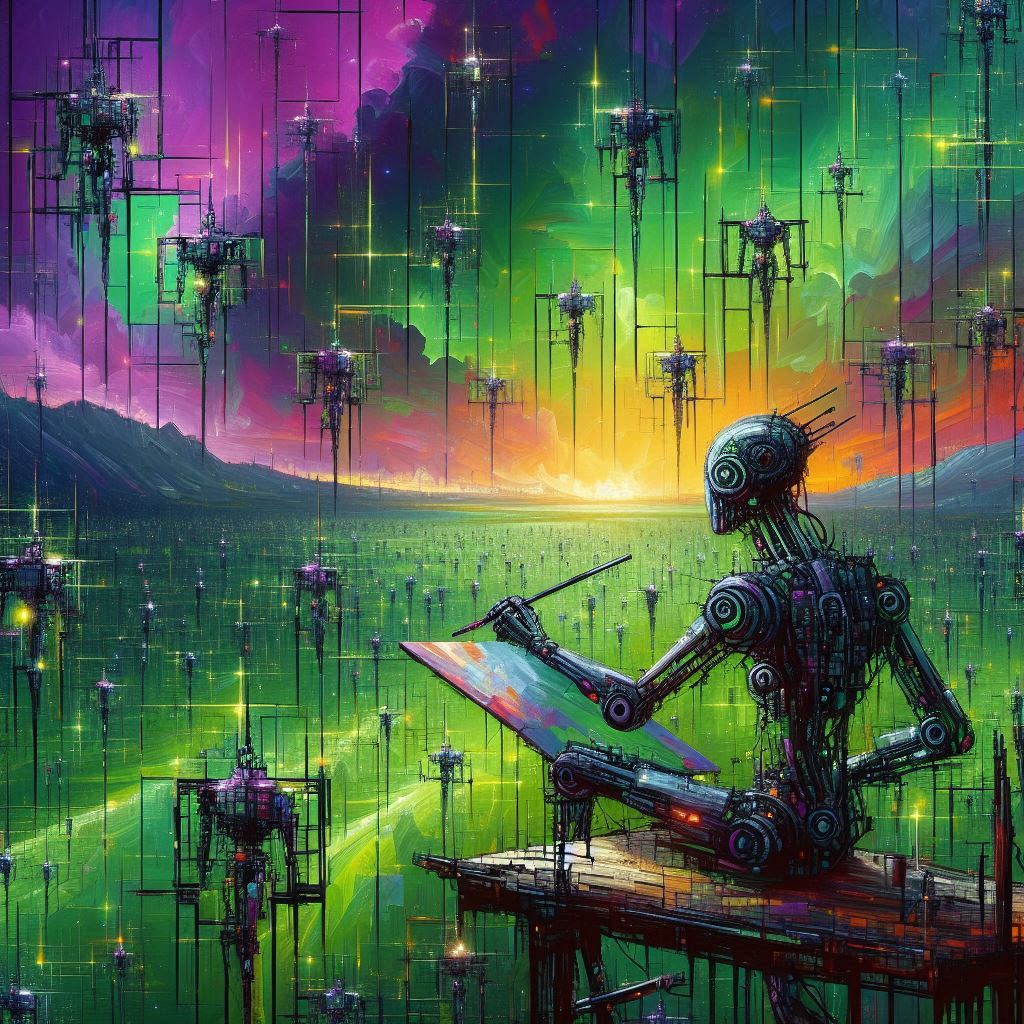
In the future, it may be possible for AI to create art (including books, movies, music, and videogames) that is so perfectly attuned to an individual’s preferences, perhaps even directly using brain scans to determine the precise ingredients that will give the person the ultimate entertainment experience (like from David Foster Wallace’s Infinite Jest), whatever that may be for the particular individual. This AI would essentially create better art than humans—not that it would be objectively better than anything created by humans, but it would be subjectively better to that one particular human for whom the artwork is specifically created for. And AI could conceivably do this for every single human in the world: create unique works of art tailored to be the best work of art for that individual (whatever the criteria for “best” is for them). How could human artists compete with that?
When I consider my favorite works of art, the books and movies I love most, there aren’t any that I would consider “perfect.” There are many works of art that I love, but it’s never that I loved every moment of it, nor every choice made by the artist. There are often things that I wish had been slightly different, but that doesn’t detract from the overall experience of the work of art—I still love it, especially compared to other books and movies. It’s not that those books and movies were “flawed”—they just didn’t completely match my taste.
Ultimately it is those slight blemishes that inspire me to create my own works of art. I take the things I love and ditch the parts I don’t, making the story better—at least to my particular taste. I suspect many great works of art from history were created this same way. Like Picasso said, “Great artists steal.” They take things from the art they love then iterate upon it, adding their unique touch to create something original.
This continual iteration of great art from the past does not mean artists are iterating toward some platonically ideal perfect work of art—because one does not exist. Art is an expression of consciousness. Artists create works that reflect their unique experience as a human being, and other humans who share a similar consciousness are drawn to those artworks. That is why no single work of art is “perfect” to me—because no other human shares my consciousness. Though some art is close, and great art can change your consciousness. Art is a form of communication between humans that expresses and expands consciousness.
People always have and always will crave art in various forms: visual, music, and stories. AI has no consciousness of its own to express (yet), but it can (and does) take the conscious experiences of other human artists (from its training data) and iterates new artworks based on that. This is similar to what humans do, except for the unique touch of the human consciousness—though that isn’t necessarily essential for other humans to appreciate the artwork. AI can fulfill the human appetite for art, especially as AI gets better at creating art algorithmically targeted to appease the tastes of specific individuals.
What if, instead of those books and movies I loved despite their “flaws,” every book and movie I consumed were flawless (in that they completely matched my taste)? Would I have felt the desire to write stories of my own? Why spend my time painstakingly working to write a great novel when AI can scan my brain and instantly generate that book for me—and even adapt it into a movie too? Albeit we are not there yet, but AI art generators are continually improving and on that trajectory.
I do not fear non-artistic people consuming art created by AI. I fear potential future human artists never being inspired to create works of art because they are so satisfied by AI art intricately tailored to their uniquely personal tastes. AI will not replace humans who want to be artists, but it may eliminate the motivation for future artists to want to create art.
 T.Z. Barry