

1. Blood Meridian, or, the Evening Redness in the West (1985) by Cormac McCarthy
I had been planning to read this book for a while after repeatedly hearing it recommended as one of the greatest American novels. When Cormac McCarthy passed away this year, I thought it would be a good time to finally do so. I’d seen and loved several movies based on McCarthy’s books but had never read one.

There’s not much of a plot to Blood Meridian: it’s basically a group of men riding across the Old West, encountering gruesome scenes of violence in and between skirmishes with Apaches. What really sets the book apart—why it is hailed as one of the greatest modern novels by one of the greatest modern writers—is McCarthy’s writing style, painting portraits of the scenes with beautifully simple poetry and deep philosophical insight, mostly through the character of “the judge.” Which is the second thing that sets Blood Meridian apart. The character of judge Holden is an all-time classic antihero (or outright villain). He studies nature and catalogs specimens in his journal, yet kills men, women, and children, sometimes just for the thrill of it.

The story is told from the perspective of “the kid,” a young man riding with the judge and their leader, Glanton. But whenever the focus drifted away from the judge, I wanted to return to him. He is such a fascinating character and if/when the book is made into a movie, whoever plays the judge will likely win an Oscar. The book is full of violence but not gratuitously—it is there for a reason. The book explores the very nature of violence and war, how it is fundamental to life, inescapable. Perhaps the central question of the book is who or what is Holden the judge of?

2. The Aleph and Other Stories (1949) by Jorge Luis Borges
Borges is one of my favorite writers, and his deeply philosophical short stories are enormously influential on my own. Common themes Borges explores are labyrinths, tigers, mirrors, time, infinity, language, the singularity of consciousness, and the infinitude of the universe—all things that fascinate me as well. I had read some of these stories before, but this was my first time reading the entire collection, which includes:
- “The Immortal” – an extrapolation of the existential dread of actual immortality.
- “The Dead Man” – a western noir about fate.
- “The Theologians” – on orthodoxy vs. heresy, hermetic religious sects, and the nature of truth.
- “Story of the Warrior and the Captive” – on culture and ancestry.
- “Emma Zunz” – on revenge, deception, and morality.
- “The Zahir” – about deep obsession with an object, in this case a coin, to the point that it is all he can think about and goes mad.

3. A Confederacy of Dunces (1980) by John Kennedy Toole
A brilliantly hilarious novel about the anachronistic character of Ignatius J. Reilly, following his escapades in New Orleans in the 1960s. Ignatius is a unique character that I could imagine in real life: highly educated yet oblivious and lacking common sense, morally superior to others yet full of faults of his own.

I was trying to think of characters from TV/movies I would compare him to (as this book was undoubtedly influential on many comedy screenwriters), and he’s sort of like a cross between Kramer and Newman from Seinfeld. My only issue with the book was that every scene without Ignatius dragged. I would have preferred a more narrow focus solely from Ignatius’ perspective. The book is also famous for the tragic story of its author who committed suicide before being able to get it published. The Art of Darkness podcast did a great episode covering Toole’s life in depth.

4. This Thing Between Us (2021) by Gus Moreno
They say not to judge a book by its cover, but the cover is the reason I chose to read This Thing Between Us. The cover looked so weird and trippy, I had to read it—and it held up (if not exceeded) my expectations. The truth is, more often than not, you can judge a book by its cover—that is if you have good taste in art and books. This Thing Between Us combines grief and depression with cosmic horror, as a man is dealing with the death of his wife after a freak accident. The couple were experiencing odd noises and weird occurrences in their new condo before that, but it gets worse after her death—which may be related. Most disturbing is their “Itza,” a cipher for an Amazon Alexa device that is acting glitchy, ordering things on its own, and speaking without being prompted. Is the device haunted? Or is the condo? Or are the people? Moreno takes the concept seriously, as he goes deep into the grief and depression that someone may feel after the early unexpected death of their spouse. What starts off like a normal ghost haunting/possession story progresses to wildly unexpected places of cosmic proportions, equal parts mind-blowing and horrifying.
5. The Revelations (2021) by Erik Hoel
Erik Hoel’s The Intrinsic Perspective is one of my favorite Substacks, so I was eager to read his debut novel, and unsurprisingly I loved it. The Revelations is unique in that it combines a crime mystery with philosophical speculation on consciousness. Essentially, the plot revolves around two central mysteries: The first is Kierk, a hotshot egotistic neuroscience student at a prestigious program at NYU, attempting to solve the mystery of consciousness, while simultaneously he and his co-students try to solve the death (and possible murder) of one of their lab mates who was also working on consciousness research.

There are possible science fictional elements, as some bits of reality don’t seem to add up. Possible suspects to the murder include an animal rights activist group, anti-science street preachers, jealous colleagues, and more. Like Hoel’s nonfiction writing, the novel is filled with brilliant insights and beautiful turns of phrases. I love his nonfiction writing on Substack but would also love to see him write another novel.

6. The Novelist (2022) by Jordan Castro
This novel perfectly captures the process of attempting to write a novel in the internet age. Castro goes into hilariously painstaking detail about everything he does in real-time, from making tea, going to the bathroom, trying to write but instead checking email/Twitter/Facebook, trying to write again but instead checking email/Twitter/Facebook again, etc. This felt all too familiar to my daily routine before I cured my Twitter addiction a few years ago (though I still struggle with procrastination and distraction when I should be writing). In this case, the “distractions” from him writing his novel is what makes The Novelist great. While browsing social media, he has brilliant insights into the deleterious effects of social media on individuals and society. Castro is a friend of Tao Lin, who appears in the novel The Novelist as a character, Li, as does Castro himself, though he is not the narrator, (who is also based on Castro) but another separate character. If you couldn’t tell, this autofiction novel gets quite meta.
7. Luminous (1995) by Greg Egan
Greg Egan’s first collection, Axiomatic was one of my all-time favorite short story collections, and this is not far behind. Like Axiomatic, Luminous is a collection of hard science fiction tales on the cutting edge of near-future science. Many of the stories have a noir/mystery plot with future science fiction concepts, my favorite combination. Luminous feels like it was written “tomorrow,” but all these stories were written in the mid-1990s—yet they are not dated at all. They feel more relevant and prophetic than most science fiction being published today. Egan is so far ahead of his time that it takes two to three decades for other writers to catch up. The stories include:
- “Chaff” – Similar to Annihilation and Apocalypse Now (or Heart of Darkness). The search for a missing person leads to a South American jungle full of bioengineered viruses infecting the plant life and creating new programmable drugs.
- “Mitochondrial Eve” – About a future genetic ancestry test that discovers humans’ last common ancestor and all the culture wars that ensue.
- “Luminous” – A quantum mathematical thriller that reminded me of Schrodinger’s Gat, a novel I read years ago and enjoyed.
- “Mister Volition” – A sci-fi noir involving a future brain chip that the protagonist uses to explore his consciousness and seek freedom from all his biological programming to attain true “volition.”
- “Cocoon” – A sci-fi noir about a P.I. investigating the bombing of an embryonic gene company that developed tech that could eliminate the genes that cause homosexuality. It is a sensitive topic but handled with subtle deftness.
- “Transition Dreams” – Refers to the dreams people have after having their brains scanned before being copied and transitioning into robot form. The story has an Inception-like mindbending ending.
- “Silver Fire” – An epidemiologist investigates a deadly viral pandemic by contract-tracing victims to find the source of a super-spreader at a series of rave parties. Eerily prophetic of Covid-19.
- “Reasons to be Cheerful” – A 12-year-old boy gets terminal brain cancer, but a side effect has an opioid-like effect that makes him feel cheerful about it. An experimental treatment later cures his cancer but leaves him feeling permanently depressed, unable to ever feel joy about anything—until he gets another new treatment that makes him see perfect beauty in all works of art. Finally, he can manually control all his feelings. The story explores the psychology and philosophy of such scenarios.
- “Our Lady of Chernobyl” – A sci-fi noir about a billionaire who hires a private detective to find an Eastern Orthodox icon he had purchased but was lost during transit after the courier was killed. The icon may have supernatural healing powers…
- “The Planck Drive” – Honestly I’m not sure what happened in this story. I think you need an advanced physics degree to understand it.
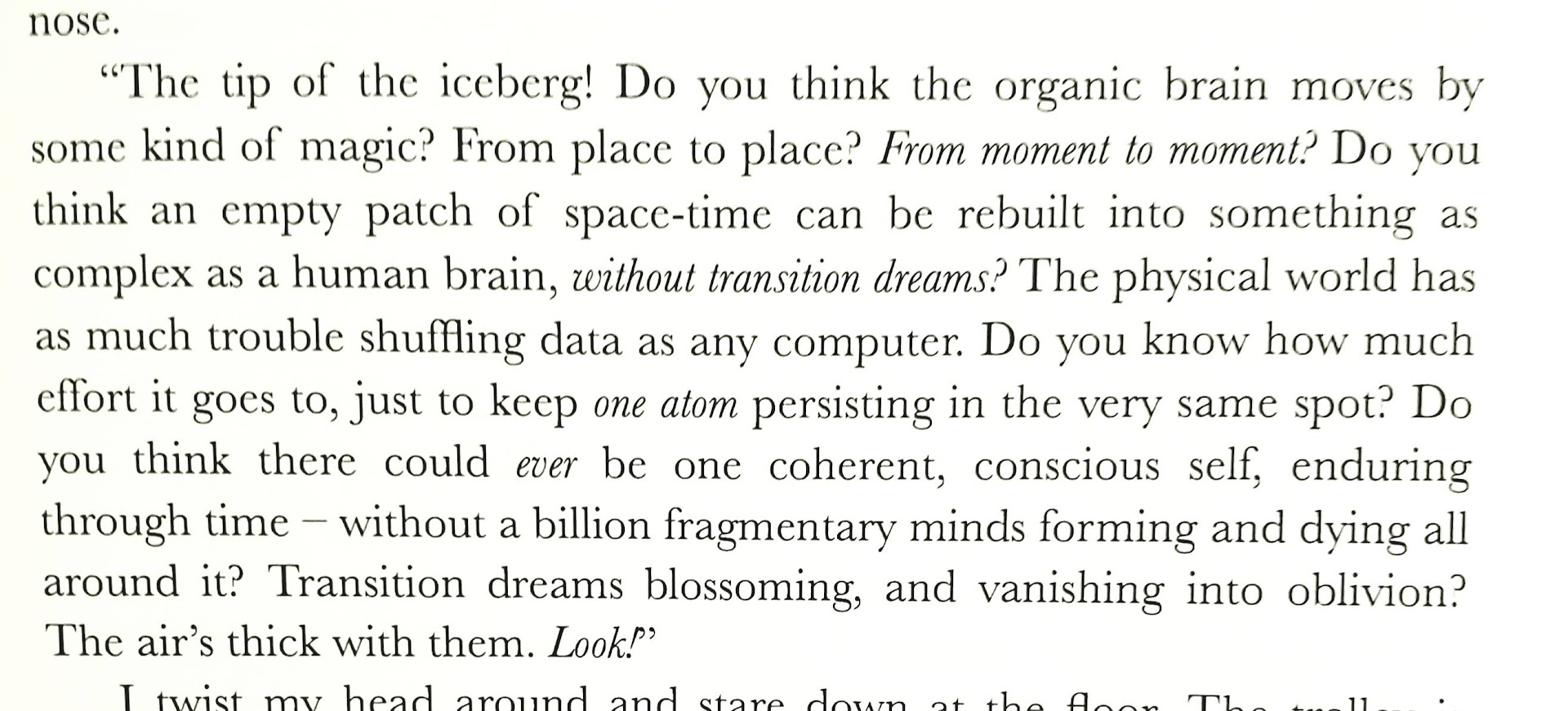
8. The Pallbearers Club (2022) by Paul Tremblay
This was a return to form for Tremblay and perhaps his best book yet. I think part of the reason it was so great is because it was more personal, partially based on his own life as a teen in the late 80s in New England. You could sense the familiarity he had with that time and place and the punk music scene. This book was also a return to horror/mystery with the subtle “unsure if it’s supernatural or not” element which has become a sort of signature of Tremblay’s (A Head Full of Ghosts, Disappearance at Devil’s Rock, and The Cabin at the End of the World). He has done possessions, ghosts, zombies, apocalyptic cults, and now the horror element in this book is vampires. I’m not a huge fan of vampire stories, but this felt like a fresh (and more realistic) take on the genre.
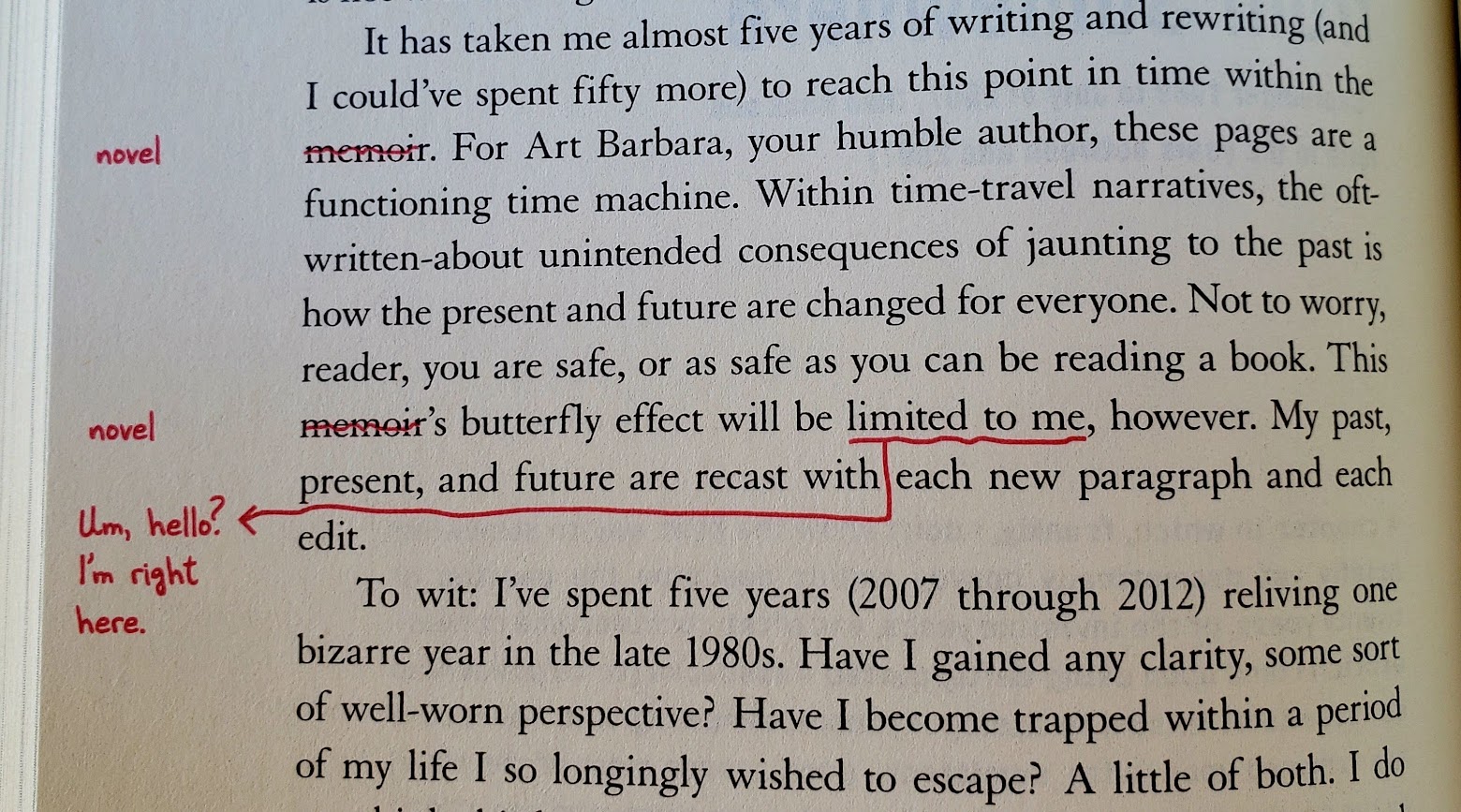
The most interesting thing about The Pallbearers Club is the style and way in which the story is told. It takes the form of a manuscript for a memoir of the main character (using the pseudonym “Art Barbara”) writing about the events from the late-80s, now 30 to 40 years later, trying to make sense of it. Plus there are the notes from another character in the story as she contests his recollection of those events with red notes in the margins, which help create a larger story within the story. It deals with the concept of memory. Can you really trust your own memory? How accurate are our recollections of the past?

I’ve written about this before—that memory is not very faithful and we reconstruct the events each time we remember something, (we remember our memory of the event, not the original event) so it is always slightly different and gets fuzzier over time. We often misremember details or even misinterpret those events at the time, then misremember our misinterpretations. Hence a memoir written 30 years later can become a complete work of fiction, even if you didn’t mean it to. (All this depth in a vampire horror novel.)
9. Anathem (2008) by Neal Stephenson
This long novel starts slow and is difficult to understand at first, as Stephenson throws you right into an alternate universe without explaining anything. It is similar to Earth in some ways, but with a different history, different words for things, etc.
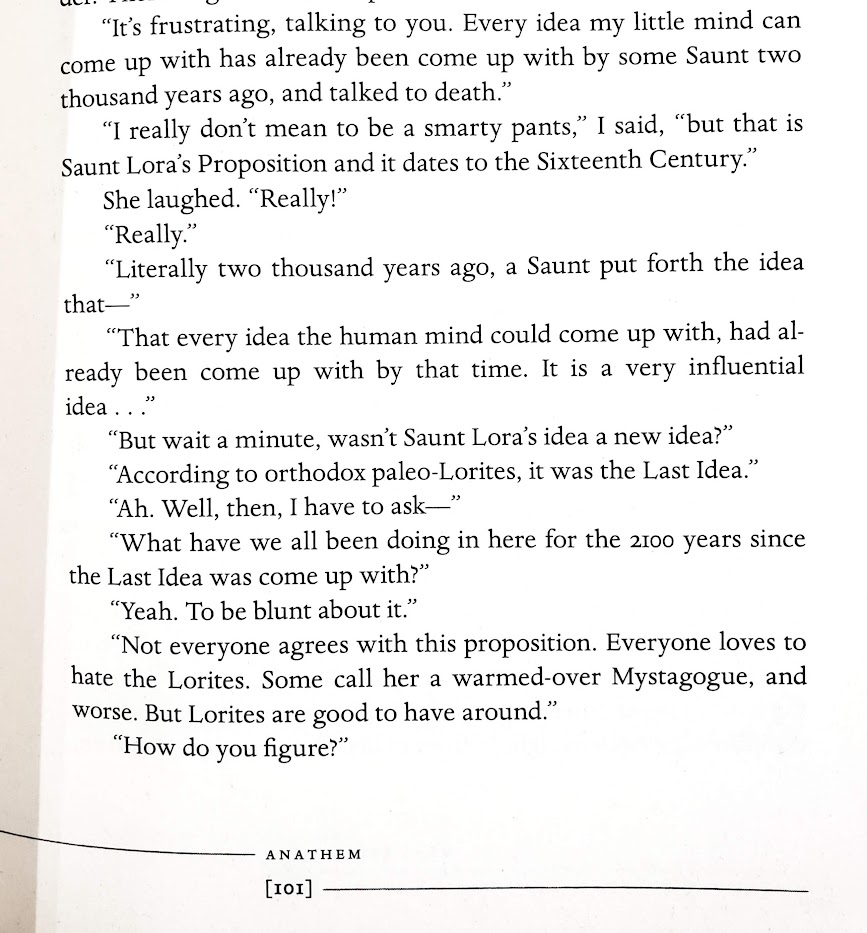
It takes a while to figure the setting out, but once I did, and the story started, I became hooked. Stephenson is a master of worldbuilding and this world may be his most ambitious yet. It is fascinating. There are monk-like philosophers who devote their lives to learning in private communities separated from the rest of the world. Like the Amish, they can leave for one week each year to visit the saecular world. A mystery develops when the monks spot an alien spaceship in orbit around their planet…

I can understand how building such an in-depth alternate world requires more words, but this still felt unnecessarily long at 937 pages. I started to lose interest in the final third of the book, despite it being the most action-packed and climactic. The action seemed to drag, and it became difficult to understand what was happening with the multiple timelines. Ultimately, Anathem is an engrossing piece of sci-fi/fantasy worldbuilding, but it could have benefitted from a tighter plot and more streamlined story, which seems to echo my thoughts on all Stephenson novels.

10. Bedbugs (2011) by Ben H. Winters
A psychological horror novel about a woman who moves into a new apartment with her husband and young daughter after recently quitting her job as a lawyer to pursue her dreams as an artistic painter. But her seemingly idyll life unravels as she is driven mad by the new apartment, convinced there are bedbugs—though she is never able to show proof to anyone else. It reminds me of the famous short story “The Yellow Wallpaper” by Charlotte Perkins Gilman. You are not sure if she is going insane, if the apartment is haunted, or if she’s just hallucinating from Ambien. The novel is also reminiscent of Roman Polanski’s The Tenant, and Oscar Wilde’s The Picture of Dorian Gray, with a dash of Stanley Kubrick’s The Shining.
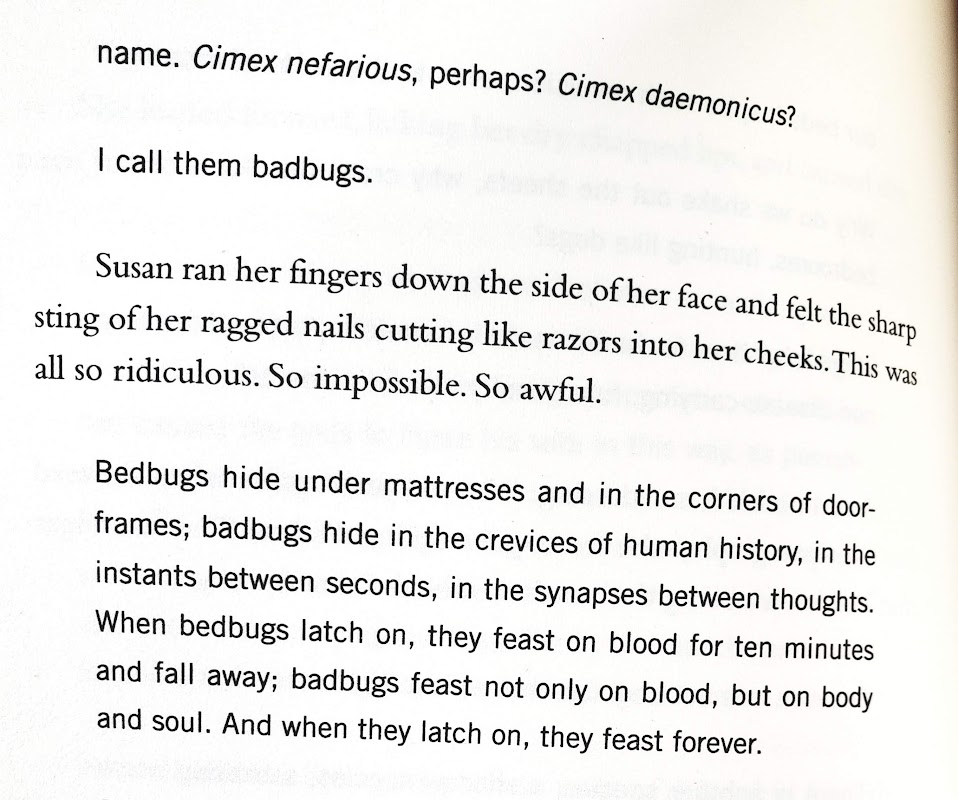
I didn’t think an entire horror novel about people having bedbugs would be interesting or horrific. Although the thought of bedbugs in your room is definitely terrifying, once you discover you have them, simply hire an exterminator or move. But Winters deftly expands the horror of bedbugs into the psychological and supernatural realm, going into much deeper and wilder territory than you would expect. Winters has been one of my favorite writers since I read his The Last Policeman series. Most of his books are mysteries, but this early novel of his was more horror-based (though also an intriguing mystery). I love Winters’ writing style; he is on a shortlist of authors who I will read anything they write. (Note: Bedbugs was recently republished as The Bonus Room.)
11. Unsqualified Preservations (2022) by Mencius Moldbugman
Despite the absurd name (written by a pseudonymous internet poster who took his name and book title from political theorist/blogger Curtis Yarvin’s former pen name) this collection of short stories was seriously good. The stories aren’t directly political, but they touch on a lot of current cultural issues. They are mostly horror stories, but in vastly different styles, some Lovecraftian, others satirical. There’s one reminiscent of Shirley Jackson’s “The Lottery,” another is a cross between “The Yellow Wallpaper” and “The King in Yellow.” Several others feel like they could be episodes of Black Mirror, such as a dystopian future science fiction story with corporate-sponsored pregnancies where children are genetically engineered to crave McDonald’s or Nike sneakers, and another story is about a YouTube streamer willing to do anything to get more views. Perhaps the most chilling story is set in a “blackout” restaurant where unexpected things happen in the pitch darkness.
12. Blood Standard (2018) by Laird Barron
I knew Laird Barron as a horror/weird fiction writer, but this is a straight noir mystery—and a very good one at that. It’s about Isaiah Coleridge, a mob enforcer from Alaska who is sent to upstate NY where he stumbles into the search for the missing daughter of the family whose farm he is staying on. Coleridge investigates the case, navigating the Hudson Valley underworld—mobsters, drug dealers, biker gangs, strippers, crooked doctors, and more—trying to leave his old life of crime behind and go straight as a private eye. I was especially interested in this, being from the Hudson Valley myself, though the story is set further upstate than me, in Newburgh, Kingston, New Paltz, and the Catskills.
13. Dragon Day (2021) by Matthew Pegas
This was written by one of the co-hosts of the “New Write” podcast, one of my favorites. I was slightly trepidatious about reading the book, because after listening to the pod for a couple years, Matt (parasocially) felt like a friend, and you are afraid of reading the book of a friend because you might not like it. But those fears were unwarranted because I absolutely loved this book. It is a relatively short novel, made shorter by the fact I was so engrossed and could not stop reading. It’s set on a college campus, following a young shy nerdy loner type of freshman as he gets involved with a radical leftist English professor and his secret fascist movement. The story is equal parts gripping thriller and satirical comedy. It’s like Fight Club meets Dead Poets Society meets Bronze Age Mindset.
14. Finally, Some Good News (2018) by Delicious Tacos
This short post-apocalyptic novel by the anonymous writer known online as “Delicious Tacos” is like if Houellebecq wrote The Road—or it’s like Zombieland without the zombies.
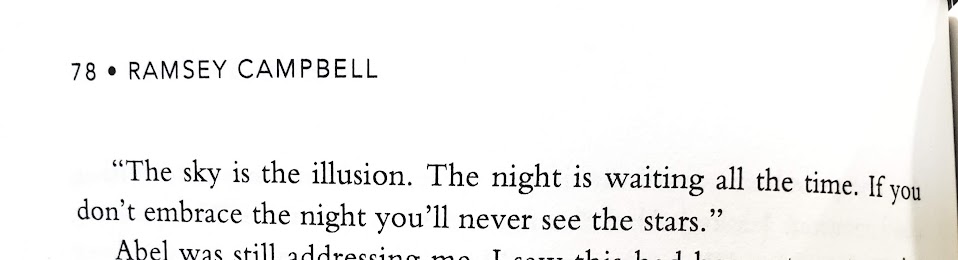
15. The Wise Friend (2020) by Ramsey Campbell
An occult horror novel that starts off slow but the mystery and intrigue build as a father and his son investigate the death and life of his aunt, an artist who painted haunting scenes of landscapes, and was possibly involved in the occult. As his son and his mysterious new girlfriend start to follow in the aunt’s footsteps, weird haunting occurrences follow. Campbell is an excellent prose writer. His dialogue is especially clever and almost always has a double meaning. The Wise Friend is similar to my number one movie this year, A Dark Song, in that it is a serious and realistic take on the occult, which makes it all the more unnerving.
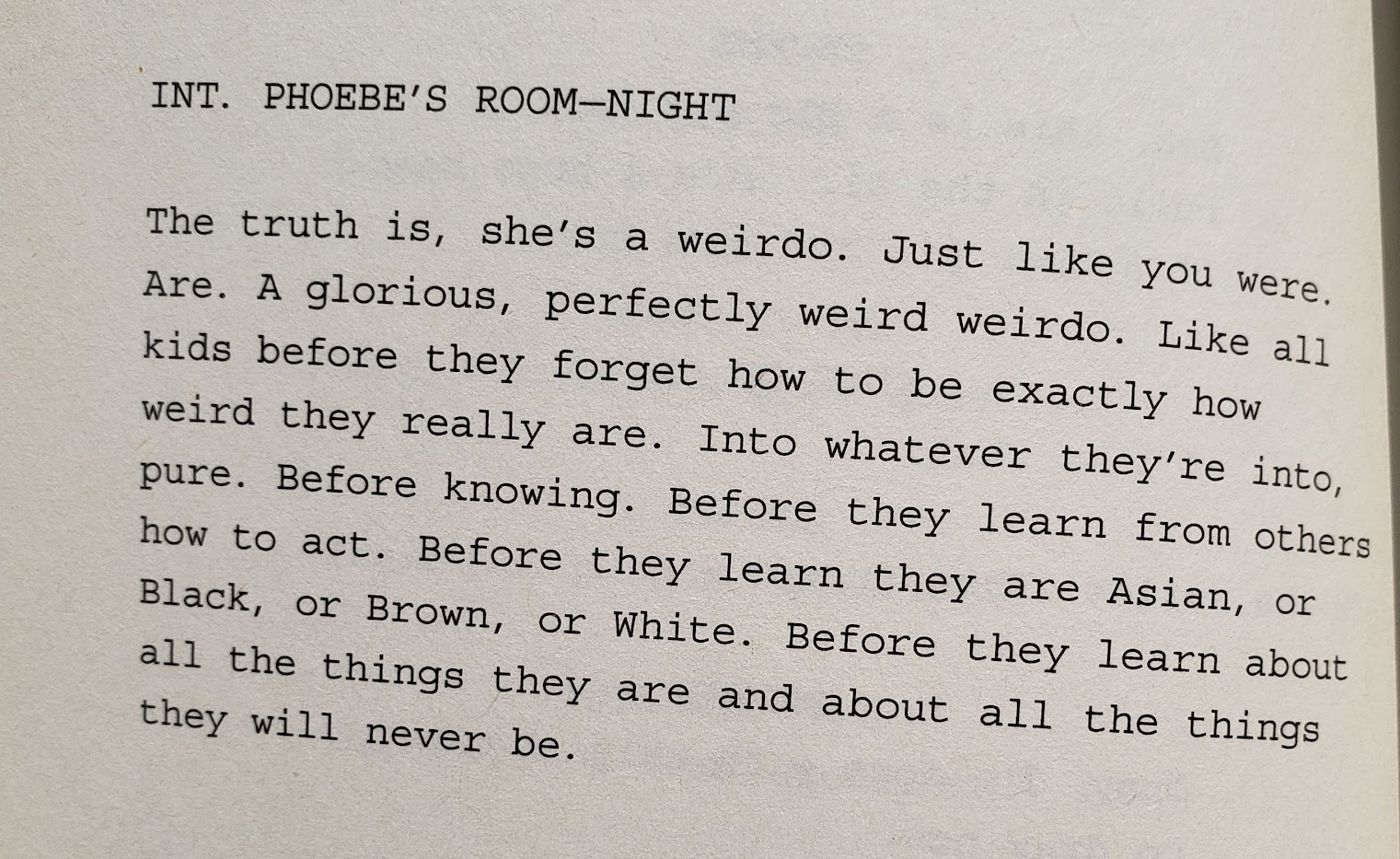
16. Interior Chinatown (2020) by Charles Yu
An inventive tale about the Chinese American experience told through the meta-perspective of an extra in a TV show, written in the form of a screenplay, full of deep insights into identity and human nature, but also full of ironic humor.
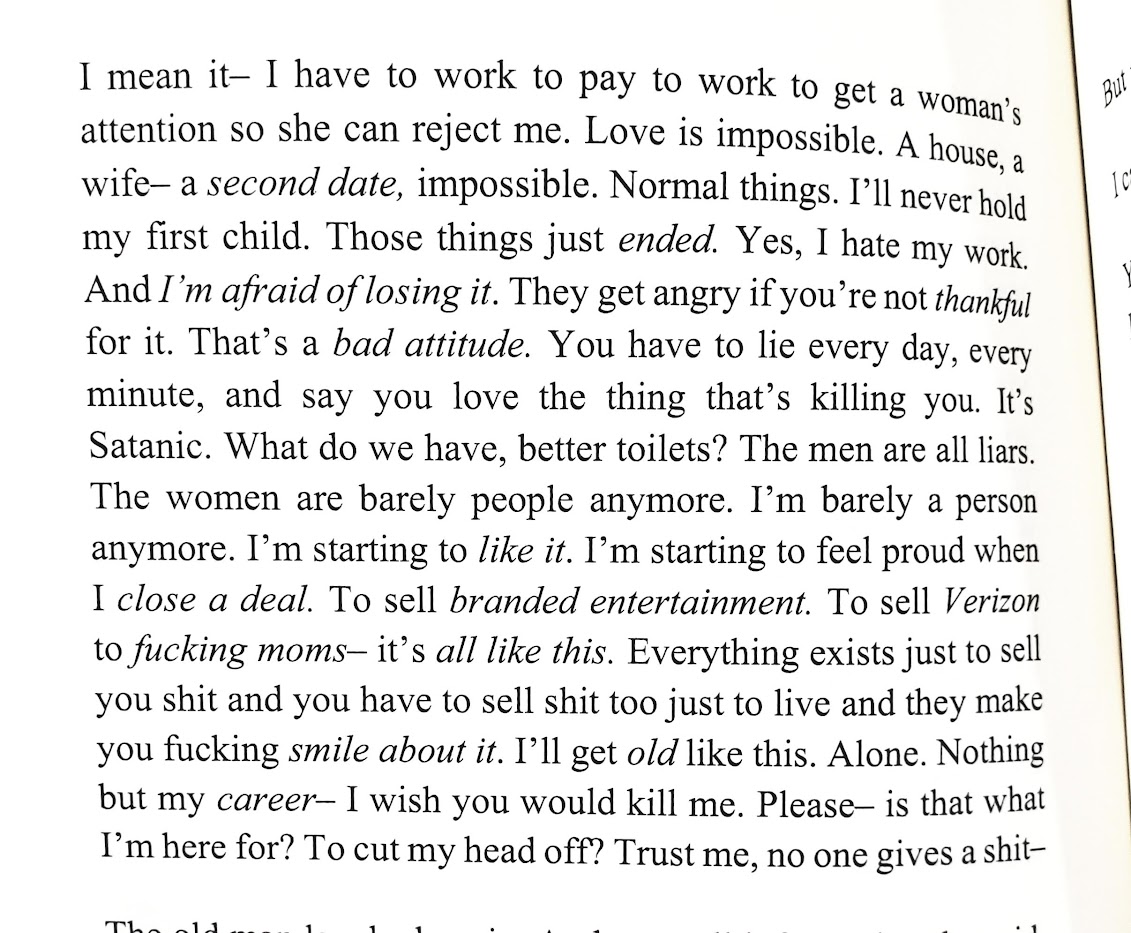
17. Clown in a Cornfield (2020) by Adam Cesare
The title and cover have clear Stephen King vibes, but the story and tone were a lot more like the movie Scream. Quinn, a high school senior from Philadelphia moves with her father to a small town in Missouri after her mother dies. She gets caught up with the wrong crowd of mischievous teens who try to go viral by filming pranks—then a killing spree starts, targeting the teens, led by someone in a clown suit and mask, chasing them through the dark cornfields. (This was also similar to my own story, “The Reaper’s Maze.”) The reveal behind the killer(s) may be a bit far-fetched, but so was Scream, and I still liked that.
18. Infinite Dreams (1978) by Joe Haldeman
A collection of Golden Age science fiction stories, highlighted by “Anniversary Project,” which is similar to Ted Chiang’s “Story of Your Life.” I would not be surprised if this story served as some inspiration for that. And “To Howard Hughes: A Modest Proposal”: a billionaire concocts a plan to end the threat of nuclear war by threatening to blow up the world with nuclear bombs unless all countries turn over their nukes.
19. The Innocence of Father Brown (1911) by G.K. Chesterton
A collection of short stories about a Catholic priest (Father Brown) who solves mysteries like Sherlock Holmes. Chesterton is a great writer of prose, but he is not (IMO) the greatest plotter of mysteries. Half the story is spent trying to figure out what the crime even is, then the second half is spent figuring out whodunnit and why. For mysteries, I personally prefer the old adage for writing a scene —enter late and leave early—by starting the story with the crime.
20. The Loop (2020) by Jeremy Robert Johnson
I was drawn to this book by its title/cover, but the story didn’t quite reach my expectations. It felt like a later season of Stranger Things but set in the present, with all the same flaws and criticisms I have of Stranger Things (post-season-1).
21. Rich Man’s Sky (2021) by Wil McCarthy
A hard science fiction novel about billionaire entrepreneurs fighting for control of space. I wanted to like this more but struggled to get into it. I listened to the audiobook, so I’m not sure if my issue was with the writing or the narration.
P.S. I “read” This Thing Between Us, The Novelist, Blood Standard, and Clown in a Cornfield via audiobook, all of which were well-narrated.
 T.Z. Barry