One of the most difficult parts of writing is “killing your darlings.” That might mean cutting out a part you liked to make the story as a whole better. Or, more generally, it can simply mean deleting the boring parts of your story. (As Elmore Leonard said, there should be no boring parts.) Perhaps one of the greatest upsides of writing with AI is that it can help eliminate the “sunk cost fallacy” that authors often face with the words they have already written.
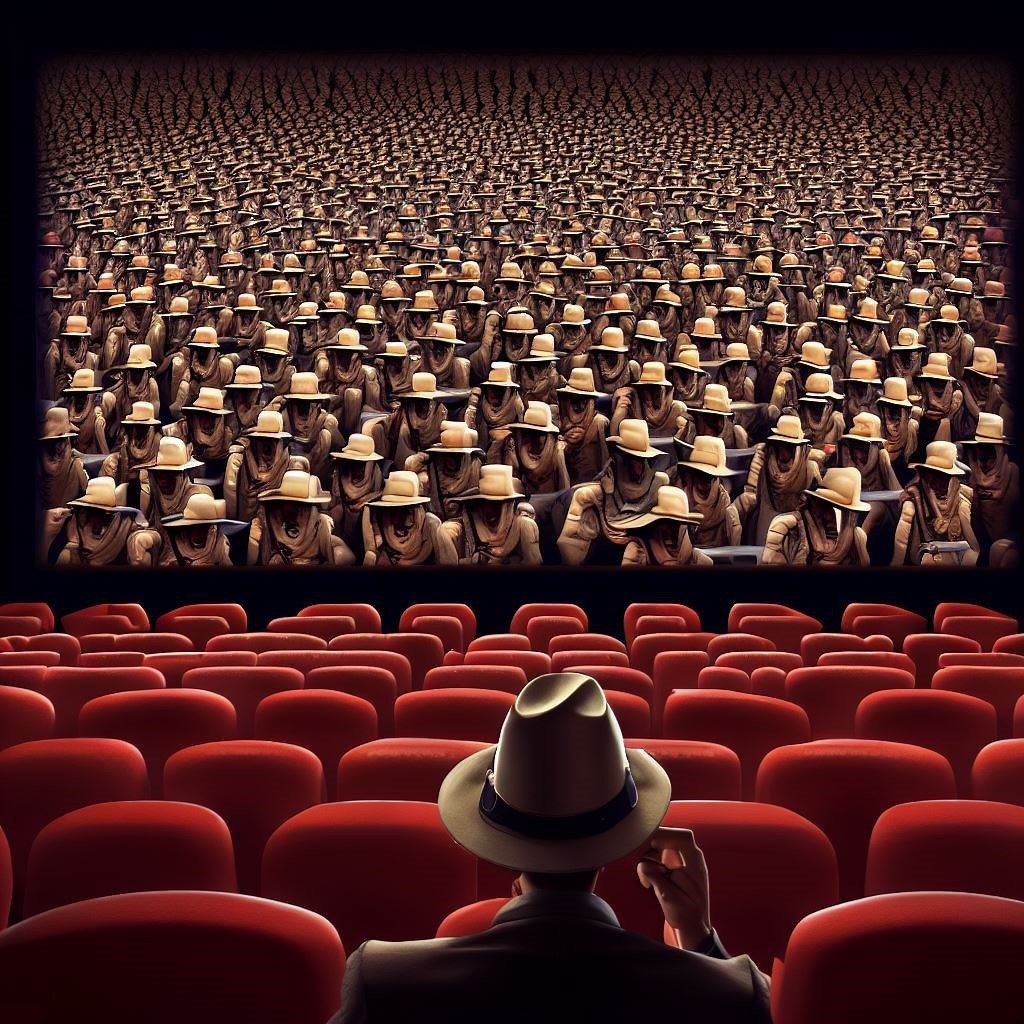
I used to work at a job where I had to watch cable TV all day. (It sounds more fun than it was.) One of the networks I had to watch would often replay the same movies over and over again. At that time I was studying screenwriting and wanted to write movies myself, so it was instructive to watch a single movie multiple times to deconstruct it and figure out what the filmmakers did right or wrong, how and why. I tend to avoid rewatching movies unless it’s one of my absolute favorites, and even then, only years later when I don’t remember it too well. But for this job, I wound up seeing the same movie multiple times in a single day, or two days in a row, or several times over the course of a week/month/year. I saw both good movies and bad movies this way—and some movies that I thought were good when I first saw them, but by the fifth or tenth time realized it wasn’t very good in the first place. One movie (or group of movies) that I repeatedly watched at my job was the Indiana Jones franchise.


 T.Z. Barry