
The NBA has had a tanking problem for a while. Tanking is when teams deliberately try to lose games in order to improve their odds of receiving a top pick in the draft lottery. You can’t really blame teams for tanking, as a top pick is often the best way to attain a potential superstar and improve your roster. Tanking has worked for teams in the past, like the 76ers (Joel Embiid) and Thunder (Durant, Westbrook, Harden), and most recently the Spurs (Victor Wembanyama). The NBA has changed the lottery odds to try to address the tanking issue, but that is not enough. My previous proposal of abolishing the draft would completely solve this problem, but that is something the NBA is unlikely to do anytime soon. Luckily there is another option: relegation.
The NBA could introduce a system of relegation like European soccer leagues. In the English Premier League, at the end of the season the three last-placed teams are relegated to a lower league, while the top three teams in the lower league are promoted to take their place. The problem for the NBA is that the lower league (the G-League) is nowhere near competitive enough to do this. The worst NBA team is vastly better than the best G-League team. G-League teams are more like minor league teams in the MLB that are affiliates of the NBA team (as opposed to independent professional organizations as in English soccer). The NBA could not adopt that type of relegation system because there is not a lower league of teams strong enough to compete, but there is an amended type of relegation that could work in the NBA.
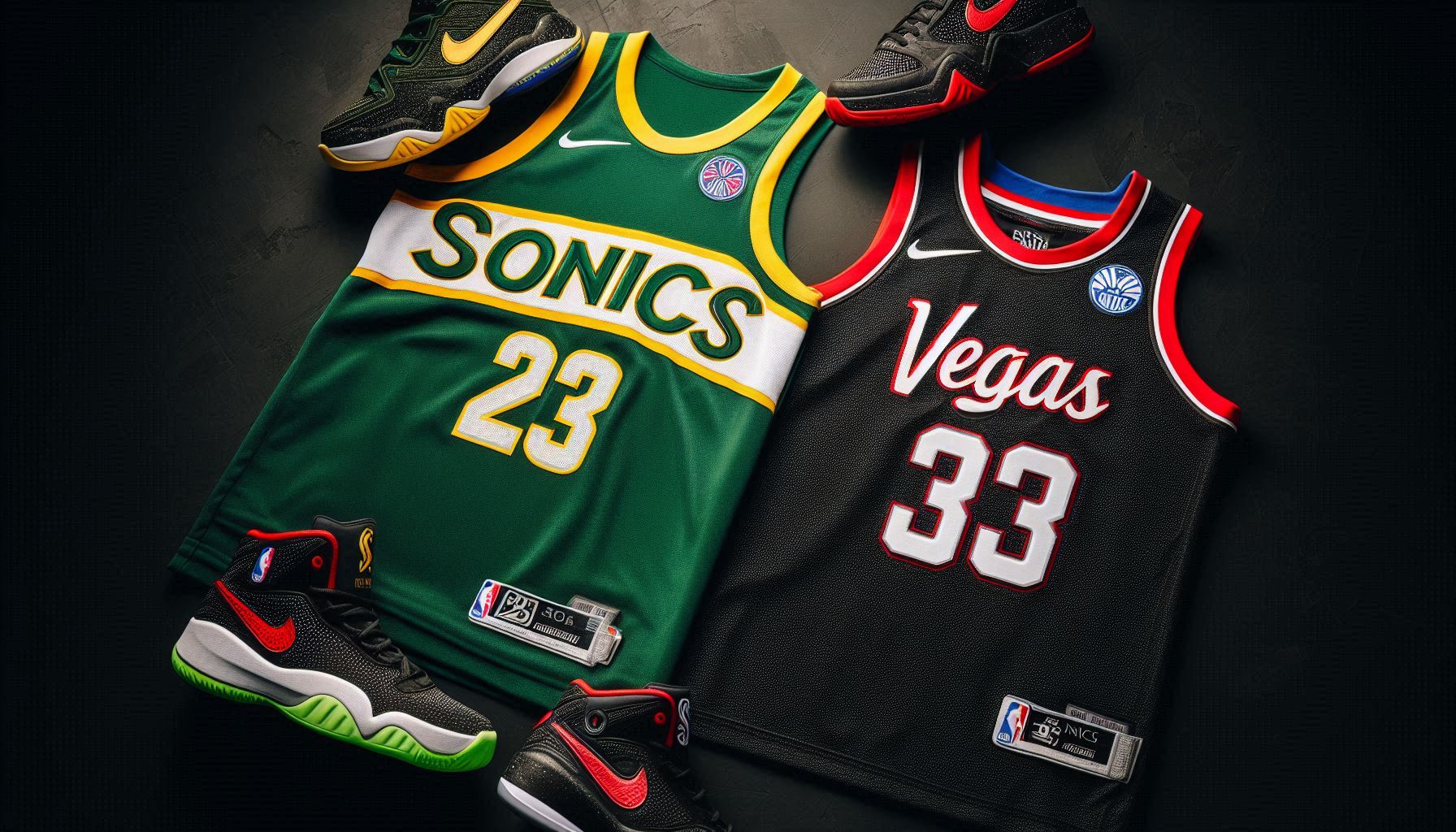
Instead of relegating the teams/players, you relegate the owners/cities. The two last-placed teams would be relegated for the following season—but not the players—only the franchise itself would suffer. The players on those teams would remain in the NBA and move to alternate cities (Seattle and Las Vegas) for the following season. There will remain 30 teams in the league, but there will be 32 cities with franchises (each with distinct ownerships and front offices). If the NBA expands to 32 teams in the next few years, as they are rumored to do, then the relegation system would expand to 34 cities (perhaps Mexico City and Vancouver), two more than the current number. The two last-place teams each season will lose their teams the next season. (Or expand relegation to the four last-place teams and add more alternate cities into the mix.)
Rather than being relegated to a lower league, you lose your team entirely (for one season). Is there any greater reason not to tank than losing your whole team? The owners of the worst teams would not only lose their draft pick, but all their current players and an entire season’s worth of ticket/TV revenue. With that much on the line, nobody would ever try to lose a game on purpose. The owners would never willingly agree to such a relegation system, which is why it is unlikely to happen—though it should.
For example, if the Washington Wizards finish in last place in 2024-2025, then in the 2025-26 season, the Seattle Supersonics (and their owner/front office) would get the entire roster of players from the Wizards. The team would change uniforms and play in a new city for new fans. If the Sonics avoid finishing in last place in 2025-26, they can remain in Seattle for another year. But if they finish in last place, they’ll move back to DC (or another alternate city waiting to get a team back).
This system of franchise relegation can expand the NBA to other cities without diluting the talent pool of players. Both fans and ownership would root extremely hard not to be one of those two last-place teams, which would eliminate any tanking. Owners lose money while fans lose a team to root for. If a franchise does get relegated, fans will still follow the league closely the next year, scouting who they might get on the roster when a team returns to their city the following season. The worst teams would still get top draft picks to help improve, but it would be different cities/owners/fans who are rewarded with that lottery pick, rather than directly rewarding incompetence to a losing franchise. Of course, the franchise will eventually get rewarded two years later—but they must pay a “no team tax” for one year.
One problem of relegation would be that a city losing their players will prevent fans from developing long-term rooting affiliation for those players. Then again, if those players were bad enough to finish in last place, they probably weren’t worth developing deep fandom for anyway. Plus, between trade requests and free agency, players are already switching teams frequently as it is. (Can it get any worse than what happened to Dallas with Luka Doncic?) An owner losing the team they paid for seems drastic, but it is only for one season. They will save money from having to pay player salaries (and there will be more nights to rent the arena for other live events like concerts), and it will give them time to improve their front office (which obviously wasn’t good enough). The relegation system would create a lot more interest for fanbases of the bottom-tier teams, as some fans will worry about losing their teams, while fans in the alternate cities will eagerly follow who they might be able to root for next year. Relegation adds a whole new dimension of drama and interest for fans (and the sports media).
Another potential problem with this system is the issue of trades. One franchise would be making trades that another franchise will pay the price for—such as trading away future draft picks. To address this, trading future draft picks will not be allowed—at all. You can only trade draft picks on draft day (for that year’s draft only). This prevents teams from sabotaging their futures by foolishly trading away future picks, which can become more valuable than anticipated. General managers can still trade draft picks for veteran players, but only on draft day. Any player can be traded for any other player after the draft (as long as it fits within the salary cap).
Relegation shouldn’t affect in-season player-for-player trades because of the trade deadline. Franchises won’t yet know if they are going to be in last place, but relegation would incentivize them to make trades pre-deadline to improve their rosters rather than tank. The trade deadline would prevent last-place franchises from sabotaging the cities/owners that will replace them the following season. After the final game of the regular season, the new franchise will take over the team and begin planning for the draft and free agency (though they will have been planning for this over the past two years).
Another potential issue with franchise relegation is the development of young players. The bottom-tier teams might not spend as much time and energy developing rookies when they will likely end up losing those players to another franchise the next year. In fact, they might not want to play inexperienced players at all, as rookie mistakes can lead to losing games (and therefore losing your franchise). But gaining experience and making mistakes is the only way young players learn and get better. This is a conundrum that NBA coaches/teams already face now, but it will become more pronounced with relegation.
As a result, franchises would be incentivized to create more of a balance between novice and experienced players on each roster. In the current system there are often two poles: bad teams full of young players and good teams full of veterans. It makes sense for the bad teams to go fully young, lose games, and get high draft picks to add more good young players. And it makes sense for top teams with established All-Stars to only add experienced veterans to the roster and not worry about developing young players. Once those vets become too old and washed up, the team can simply tank and rebuild through the draft. However, with the relegation system, tanking would not be an option. This would incentivize young teams to add vets and veteran teams to develop young players. As a result, the entire league would become more balanced and competitive. A truly bad team will become rare because no one will be incentivized to ever lose games.
Finally, my last tweak to improve the NBA (whether they add relegation or not) is to reduce the schedule to 60 games (or 64 if they expand to 32 teams). Create a perfectly balanced schedule where each team plays every other team twice: home and away. This eliminates the current unbalanced system where some teams get to play easier schedules because they play more games versus bad teams in a weaker division. This also solves the issue of teams resting healthy players during the regular season for “load management.” With the shortened schedule, each team would play twice a week (similar to college basketball), always with at least one day of rest between games. This scarcity would make each game more important—to both the teams and the fans. Plus with more rest, players would have more energy and have better performances in each game. This is another change that owners would not want to make because they’d be afraid of losing money with fewer games. But with fewer games, each game becomes more valuable. And it would help benefit the popularity of the league as a whole, which would benefit the owners’ bottom lines in the long run.
 T.Z. Barry